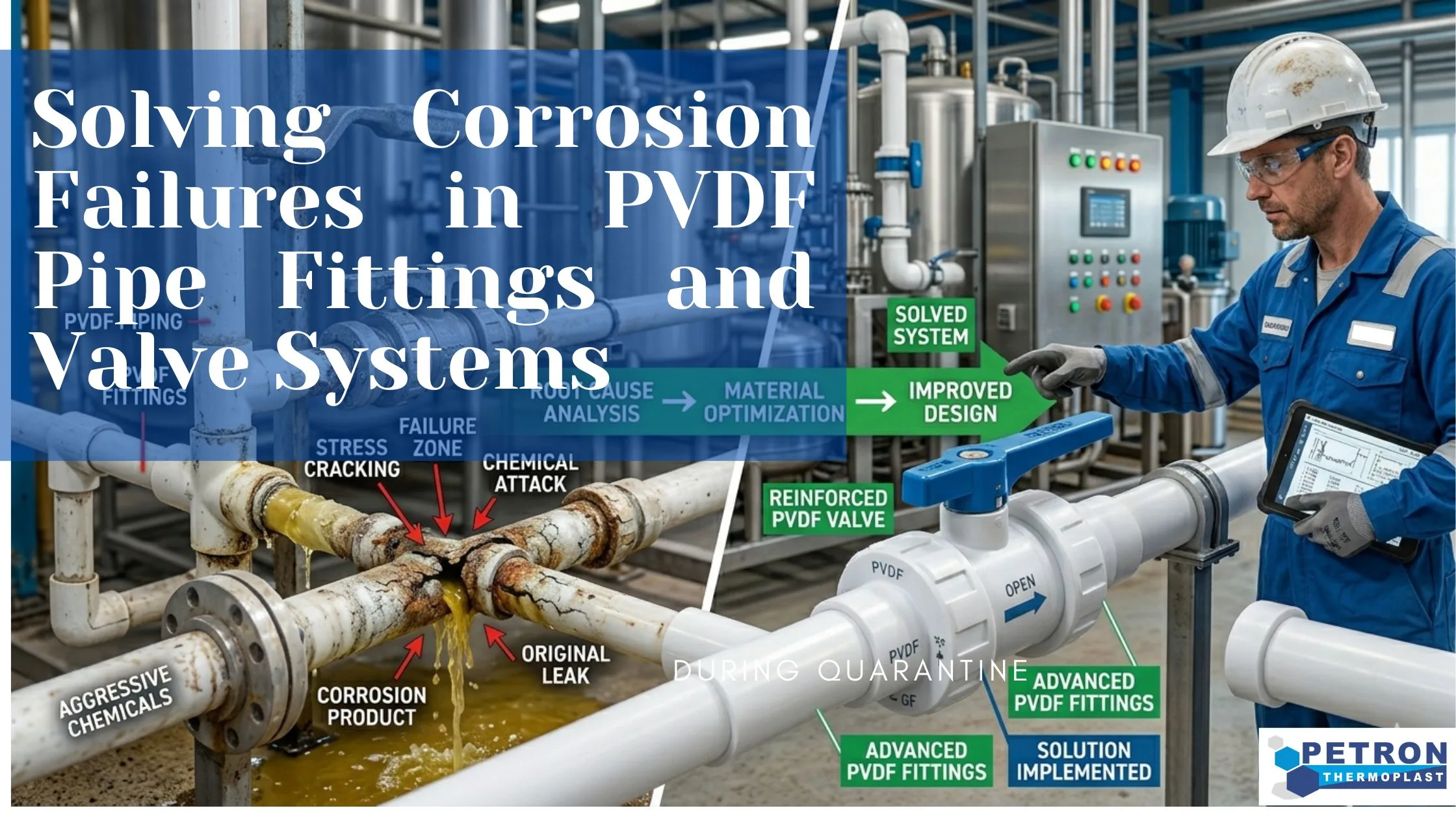
Solving corrosion failures in PVDF pipe fittings and valve systems means identifying why components made from Polyvinylidene Fluoride—which is normally highly corrosion-resistant—are degrading, and then applying design, material, process, and operational fixes to prevent recurrence. Although PVDF is highly resistant to acids, solvents, and harsh environments, failures can still occur under certain conditions. Even though PVDF performs well, failures can still occur due to Chemical incompatibility (unexpected reactions with specific media), Thermal stress or over-temperature exposure, Mechanical stress (pressure surges, vibration, improper support), Poor installation or welding defects, Permeation, or long-term aging effects.
Why is PVDF widely used in chemical piping and valve systems?
Polyvinylidene Fluoride is widely used in chemical piping and valve systems because it strikes a rare balance between chemical resistance, mechanical strength, and long-term reliability—especially in harsh industrial environments. PVDF is widely used because it offers a “best-of-all-worlds” combination:
Chemical resistance + strength + durability + safety
That’s why industries choose it over alternatives like Polypropylene (lower temperature resistance) or Polytetrafluoroethylene (more expensive and harder to fabricate).
Types of Failures in PVDF Systems
1. Chemical Degradation (True Corrosion)
Although PVDF is highly resistant, it can still degrade when exposed to:
- Strong oxidizing agents (e.g., chlorine, bromine at high conditions)
- Certain solvent mixtures at elevated temperatures
- Surface erosion
- Softening or embrittlement
- Loss of mechanical strength
2. Stress Cracking (Environmental Stress Cracking)
One of the most common failures.
- Combination of chemical exposure + mechanical stress
- Improper installation or excessive tightening
- Fine cracks (often near joints or threads)
- Sudden brittle failure
3. Thermal Degradation
Occurs when PVDF is exposed to temperatures beyond its limit.
- Warping or deformation
- Reduced pressure-handling capacity
- Accelerated chemical attack
4. Creep and Mechanical Fatigue
PVDF under continuous load can slowly deform over time.
- Constant pressure
- Poor pipe support
- Long-term stress
- Sagging pipes
- Joint misalignment
- Eventual leakage
5. Joint & Welding Failures
Failures often occur at the weakest points—connections.
- Poor welding technique
- Contamination during joining
- Misalignment
- Leakage
- Weak bonding
- Early system failure
6. Pressure-Related Failures
- Sudden pressure surges (water hammer)
- Operating beyond rated pressure
- Cracking or bursting
- Valve damage
7. Permeation & Long-Term Aging
Some chemicals can slowly diffuse into PVDF.
- Material swelling
- Loss of strength
- Microstructural changes
How to Solve These Failures?
1. Identify the Root Cause
- Inspect failed components
- Review operating conditions (temperature, pressure, chemical exposure)
- Check whether the failure is chemical, mechanical, or both
2. Verify Material Suitability
- Ensure PVDF is appropriate for the application
- In highly aggressive environments, consider alternatives like:
- Polytetrafluoroethylene
- Polypropylene
3. Improve System Design
- Add proper pipe supports to reduce stress
- Use expansion loops or flexible connectors
- Select the right type of valves for the application
4. Correct Installation Practices
- Ensure proper welding and jointing techniques
- Avoid misalignment and excessive tightening
- Follow manufacturer guidelines strictly
5. Control Operating Conditions
- Keep temperature and pressure within safe limits
- Avoid sudden pressure surges or thermal shocks
6. Implement Preventive Maintenance
- Conduct regular inspections
- Monitor for early signs of wear or degradation
- Replace components before failure occurs
Corrective Actions and Repair Solutions
Corrective actions and repair solutions in PVDF piping systems refer to the steps taken to fix failed or damaged components and eliminate the root cause of failure in systems made from Polyvinylidene Fluoride.
- Corrective actions focus on identifying and removing the cause of failure (such as improper installation, chemical incompatibility, or excessive pressure).
- Repair solutions focus on physically restoring the system by replacing, fixing, or redesigning damaged pipes, fittings, or valves.
Conclusion
Solving corrosion failures in systems made from Polyvinylidene Fluoride pipe fittings and PVDF valve assemblies requires a complete engineering approach, not just surface-level repairs. Although PVDF is highly resistant to chemicals, failures can still occur due to improper material selection, installation errors, mechanical stress, thermal overload, or exposure to harsh chemical conditions.
A reliable solution involves:
- Identifying the root cause of failure
- Applying the right corrective actions and repair methods
- Improving system design and installation practices
- Ensuring proper operating conditions and maintenance
Ultimately, long-term performance depends on combining correct material use, sound engineering design, and preventive maintenance. When these factors are managed properly, PVDF piping and valve systems can deliver safe, durable, and corrosion-resistant performance in demanding industrial environments.