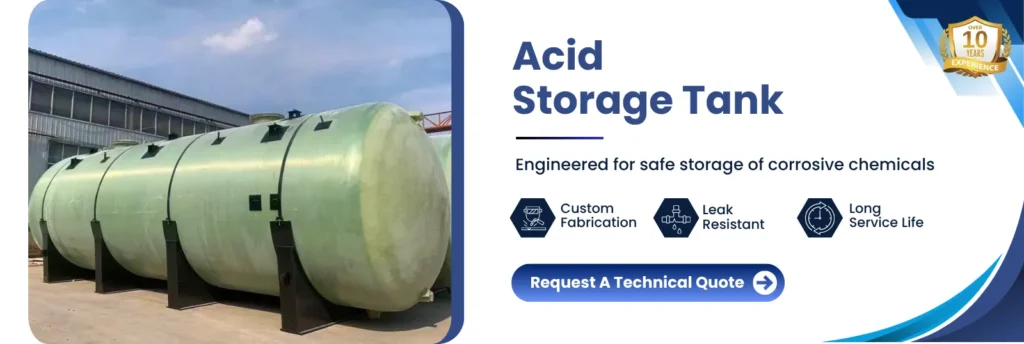






Acid Storage Tank Final

Acid Storage Tank

An acid storage tank is a specially engineered and corrosion-resistant vessel. They are designed for the safe, long-term containment and transport of hazardous, acidic substances (e.g., sulfuric, hydrochloric, nitric acid). These tanks prevent leaks and spills. They are protecting personnel and the environment in an industrial setting. An Acid Storage Tank is a specially designed industrial container used for the safe storage, handling, and transportation of corrosive acids and chemical liquids. 

These are the tanks manufactured using highly chemical-resistant materials. Such as HDPE, PP, FRP, PVC, PVDF, stainless steel, or rubber-lined steel.  Withstand the aggressive chemical reactions and prevent leakage or contamination. Petron Thermoplast helps you quickly identify the most suitable Acid Storage Tank based on common application conditions. 

defence

Excellent Chemical Resistance

Resistant to Acids, Alkalis, Corrosive, Industrial solvents

weather (1)

Temperature Resistance

-10°C to 120°C (depends on material)

layer

Corrosion-Free Construction

No rusting when exposed to chemicals & moisture.

grade

Long Service Life

Excellent durability and can operate for many years

guarantee

ASTM, ASME, ISO, DIN Certified

Manufactured to international quality standards

-10°C to 120°C

Operating Temperature

100 L – 100K L

Capacity (Customizable)

ASTM, ASME, ISO, DIN

Certified quality standards

5 mm – 50 mm

Wall Thickness

corrosion

Excellent Chemical Resistance

Acid storage tanks are manufactured using highly chemical-resistant materials such as HDPE, FRP, PP, PVDF, and stainless steel, providing excellent protection against corrosive acids and chemicals.

fire

Temperature Resistance

Designed to handle a wide range of operating temperatures depending on the material used.

accuracy

Long Service Life

The anti-corrosive and durable construction ensures long operational life with minimal maintenance requirements.

shield

Leak-Proof Welded Joints

These tanks are designed with strong welded joints and secure connections to prevent leakage and ensure safe chemical storage.

Technical Details

ParameterTechnical Details
Product NameAcid Storage Tank
Material OptionsHDPE, PP, FRP, PVDF, PVC, Stainless Steel, Rubber-Lined Steel
Tank TypeVertical, Horizontal, Cylindrical, Rectangular
Storage Capacity100 Liters to 100,000+ Liters
Wall Thickness5 mm to 50 mm (depending on capacity & application)
ShapeCylindrical / Rectangular
Design StandardASTM, ASME, ISO, DIN Standards
Operating Temperature-10°C to 120°C (depends on material)
Pressure RatingAtmospheric to customized pressure rating
Chemical CompatibilitySuitable for acids, alkalis, solvents, and corrosive chemicals
Corrosion ResistanceExcellent chemical and corrosion resistance
UV ResistanceAvailable with UV-stabilized material
Color OptionsNatural, Black, White, Yellow, Customized
Mounting TypeGround Mounted / Skid Mounted
Outlet ConnectionFlanged, Threaded, Socket Weld
Inlet TypeTop inlet / Side inlet
Lining OptionsPTFE, Rubber, FRP, HDPE, PVDF
ReinforcementFRP reinforcement / Steel support structure
Fabrication MethodExtrusion welding, Butt welding, Molding, Fabrication
Surface FinishSmooth finish / Anti-corrosive finish
Leak ProtectionLeak-proof welded construction
Ventilation SystemOptional vent and pressure release system
Level IndicatorOptional level gauge installation
Agitator ProvisionAvailable on request
Manhole ProvisionAvailable in customized sizes
Drainage SystemBottom drain outlet available
Safety FeaturesAnti-corrosion, UV protection, chemical resistance
Maintenance RequirementLow maintenance
Service LifeLong operational life
ApplicationsChemical industries, Water treatment, Pharmaceuticals, Electroplating, Fertilizer plants
Installation TypeIndoor & Outdoor installation
CustomizationAvailable as per the client’s requirement

Chemical compatibility is the most of critical factor when the selecting an acid storage tank. The tank material must be resist corrosion, degradation, swelling, stress cracking, and chemical attack to caused by the stored acid. Proper compatibility to ensure the safe storage, long service life, reduced maintenance, and protection to against  the leaks and environmental hazards.

Why Chemical Compatibility is Important

Acids can react aggressively with unsuitable materials, leading to:

  • Corrosion and material deterioration
  • Cracking and embrittlement
  • Loss of mechanical strength
  • Leakage and environmental contamination
  • Reduced tank lifespan
  • Increased maintenance and replacement costs

Therefore, selecting a tank material that is chemically compatible with the stored acid is essential.

Common Materials Used for Acid Storage Tanks

PPH (Polypropylene Homopolymer)

PPH is widely used for storing a variety of industrial acids due to its excellent corrosion resistance.

Suitable for:

  • Hydrochloric Acid (HCl)
  • Sulfuric Acid (various concentrations)
  • Phosphoric Acid
  • Chromic Acid (limited concentrations)
  • Pickling solutions

Advantages:

  • Excellent chemical resistance
  • High impact strength
  • Good weldability
  • Long service life

HDPE (High-Density Polyethylene)

HDPE is a popular material for chemical and acid storage applications.

Suitable for:

  • Hydrochloric Acid
  • Sulfuric Acid (certain concentrations)
  • Acetic Acid
  • Dilute Nitric Acid
  • Water treatment chemicals

Advantages:

  • Lightweight construction
  • Excellent corrosion resistance
  • Cost-effective solution
  • Good flexibility

PVDF (Polyvinylidene Fluoride)

PVDF offers outstanding resistance to highly aggressive acids and elevated temperatures.

Suitable for:

  • Concentrated Sulfuric Acid
  • Nitric Acid
  • Hydrofluoric Acid
  • Mixed Acid Solutions
  • Strong Oxidizing Acids

Advantages:

  • Superior chemical resistance
  • High-temperature capability
  • Excellent mechanical properties
  • Low permeation rates

FRP-Lined Thermoplastic Tanks

These tanks combine the chemical resistance of thermoplastics with the structural strength of Fiber Reinforced Plastic (FRP).

Suitable for:

  • Bulk acid storage
  • Large-capacity tanks
  • Highly corrosive industrial environments
  • Chemical processing plants

Advantages:

  • Excellent structural integrity
  • Corrosion-resistant inner liner
  •  
  • Lightweight compared to steel tanks
  • Long service life

Compatibility of Common Acids

Acid TypePPHHDPEPVDF
Hydrochloric Acid (HCl)ExcellentExcellentExcellent
Sulfuric Acid (H₂SO₄)ExcellentGood to ExcellentExcellent
Nitric Acid (HNO₃)GoodFair to GoodExcellent
Phosphoric Acid (H₃PO₄)ExcellentExcellentExcellent
Acetic AcidExcellentExcellentExcellent
Hydrofluoric Acid (HF)GoodGoodExcellent
Chromic AcidGoodFairExcellent

Testing and quality control are the critical aspects of acid storage tank to manufacturing. Since these tanks are designed to store the highly corrosive chemicals, they must be undergo rigorous inspections and testing to ensure the structural integrity, leak-tight performance, chemical resistance, and long-term operational safety. A comprehensive quality to assurance the program to helps the prevent failures, environmental contamination, and costly downtime.

Importance of Quality Testing

Quality testing ensures that the acid storage tank:

  • Meets design specifications
  • Safely withstands chemical exposure
  • Maintains structural stability
  • Prevents leaks and spills
  • Complies with industry standards
  • Delivers long service life

1. Raw Material Inspection

Quality control begins with the inspection of incoming raw materials.

Inspection Parameters:

  • Material grade verification
  • Material Test Certificate (MTC) review
  • Sheet thickness measurement
  • Surface condition inspection
  • Dimensional verification
  • Traceability confirmation

Only approved materials are used for tank fabrication.

2. In-Process Fabrication Inspection

During manufacturing, inspections are carried out at various stages.

Checks Include:

  • Sheet cutting accuracy
  • Component dimensions
  • Shell alignment
  • Bottom and roof fit-up
  • Nozzle positioning
  • Reinforcement placement

Continuous monitoring helps maintain fabrication quality.

3. Visual Inspection

Visual inspection is performed throughout fabrication and after completion.

Inspection Covers:

  • Surface defects
  • Scratches and dents
  • Material damage
  • Weld appearance
  • Accessory installation quality
  • Overall workmanship

This is the first step in identifying potential defects.

4. Welding Quality Inspection

Welds are critical to the performance of thermoplastic acid storage tanks.

Weld Inspection Parameters:

  • Uniform weld bead formation
  • Proper fusion
  • Weld continuity
  • Surface finish
  • Absence of cracks
  • Absence of porosity and voids

Qualified inspectors verify compliance with approved welding procedures.

5. Dimensional Inspection

Dimensional checks ensure that the finished tank conforms to approved drawings.

Parameters Measured:

  • Tank diameter
  • Tank height
  • Wall thickness
  • Roof dimensions
  • Nozzle locations
  • Manhole positioning
  • Verticality and roundness

Accurate dimensions ensure proper installation and operation.

6. Hydrostatic Testing

Hydrostatic testing is one of the most important quality tests performed on acid storage tanks.

Purpose:

  • Verify leak-tightness
  • Evaluate structural integrity
  • Confirm weld performance

Test Procedure:

  1. The tank is filled with clean water.
  2. The water level is gradually increased.
  3. The tank is held under test conditions for a specified period.
  4. Welds, joints, and fittings are inspected for leaks or deformation.

Successful completion confirms the tank’s ability to withstand service conditions.

7. Spark Testing (Holiday Testing)

Spark testing is commonly used for lined or dual-laminate tanks.

Purpose:

  • Detect pinholes
  • Identify liner defects
  • Verify liner continuity

This test helps ensure complete protection against chemical attack.

8. Vacuum Testing

Vacuum testing may be performed on tanks designed for vacuum service.

Evaluation Includes:

  • Vacuum retention capability
  • Structural stability
  • Joint integrity

The tank must withstand specified vacuum conditions without deformation.

9. Leak Testing of Nozzles and Connections

All process connections are checked for leak-tight performance.

Components Tested:

  • Inlet nozzles
  • Outlet nozzles
  • Drain connections
  • Vent connections
  • Instrument ports

Leak-free connections are essential for safe acid storage.

10. FRP Reinforcement Inspection (For Dual-Laminate Tanks)

For FRP-backed thermoplastic tanks, the FRP layer is inspected.

Inspection Parameters:

  • Laminate thickness
  • Resin curing quality
  • Air void detection
  • Structural reinforcement placement
  • Surface finish

Proper reinforcement enhances mechanical strength and durability.

Industries We Serve

chemical

Chemical & Petrochemical Processing

Safely storing raw acids (e.g., H₂SO₄, HCl, HNO₃) used in synthesizing compounds.

wafer-probing-test

Pharmaceutical Manufacturing

Storing chemicals used in the production of medicines

electrophoresis

Metal Treatment and Electroplating

Holding acid for pickling (removing impurities from steel) and surface finishing.

sewage-plant

Water and Wastewater Treatment

Storing acids to treat wastewater and for pH adjustment.

mining

Mining and Metallurgy

Containing acids used for ore processing, leaching, and refining metals.

Features of Acid Chemical Storage Tanks

tube

Excellent Chemical Resistance

Acid storage tanks are manufactured using highly chemical-resistant materials such as HDPE, FRP, PP, PVDF, and stainless steel, providing excellent protection against corrosive acids and chemicals.

leak

Leak-Proof Construction

These tanks are designed with strong welded joints and secure connections to prevent leakage and ensure safe chemical storage.

determination

High Chemical Compatibility

Suitable for storing various industrial acids, including:
Hydrochloric Acid (HCl)
Sulfuric Acid (H₂SO₄)
Nitric Acid (HNO₃)
Phosphoric Acid
Acetic Acid

lock

Strong & Durable Structure

Acid storage tanks are built with robust construction to withstand harsh industrial environments and heavy-duty operations.

weather

UV & Weather Resistance

UV-stabilized materials protect the tank from sunlight exposure, making them suitable for outdoor installations.

high-temperature

High Temperature Resistance

Designed to handle a wide range of operating temperatures depending on the material used.

deadline

Long Service Life

The anti-corrosive and durable construction ensures long operational life with minimal maintenance requirements.

purity

Lightweight Design

Plastic and hybrid acid storage tanks are lightweight, making transportation and installation easier.

construction

Low Maintenance

The smooth internal surface and corrosion-resistant materials reduce cleaning and maintenance costs.

switch

Customizable Design

Available in customized:
Sizes
Shapes
Capacities
Thicknesses
Connection types

layer

High Mechanical Strength

Designed to withstand industrial pressure, chemical load, and environmental stress conditions.
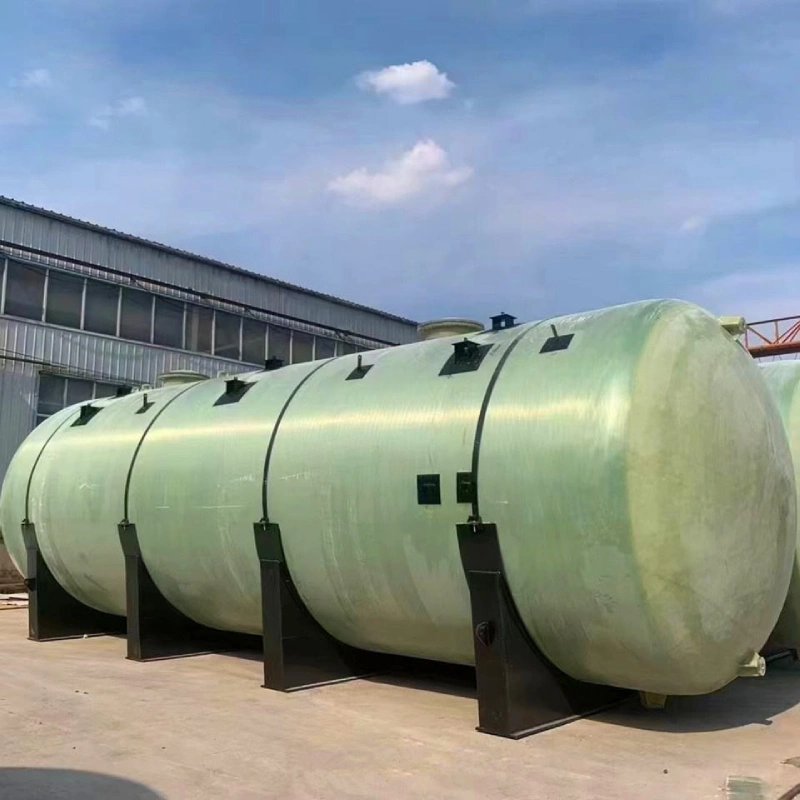
Manufacturing Process of Acid Storage Tank

The manufacturing process of an Acid Storage Tank to involves the careful engineering, material selection, fabrication, welding, testing, and quality control to ensure the safe storage of corrosive acids. Acid storage tanks are commonly manufactured to using the thermoplastic materials such as PPH, HDPE, PVDF, or FRP-lined thermoplastics due to their excellent chemical resistance and long service life.

How to Select the Right Acid Storage Tank

Selecting the right acid storage tank is essential for ensuring safe chemical storage, regulatory compliance, operational efficiency, and long service life. Since acids can be highly corrosive, the tank material, design, and construction must be carefully matched to the specific chemical and operating conditions.

Repairing Service

Custom Product Manufacturing Available

If you are searching for customized product designs that meet your requirements, don’t worry. Petron Thermoplast also offers custom product manufacturing services to meet the unique needs of various industries. Work with our expert engineers to create custom designs suited for your application.

Why Choose Petron Thermoplast

Petron Thermoplast helps you quickly identify the most suitable Acid Storage Tank based on common application conditions. Final selection should always consider detailed operating requirements.

Valve Structure Type

An acid storage tank is commonly used in water systems, HVAC, and low to medium-pressure applications.

Seat Material

NBR seat: Suitable for oil-containing and fuel media.

Body Connection Type

An acid storage tank allows single-side pipe removal, suitable for pipeline ends or equipment connections.

Frequently Asked Questions