






Diesel Generator (DG) Systems
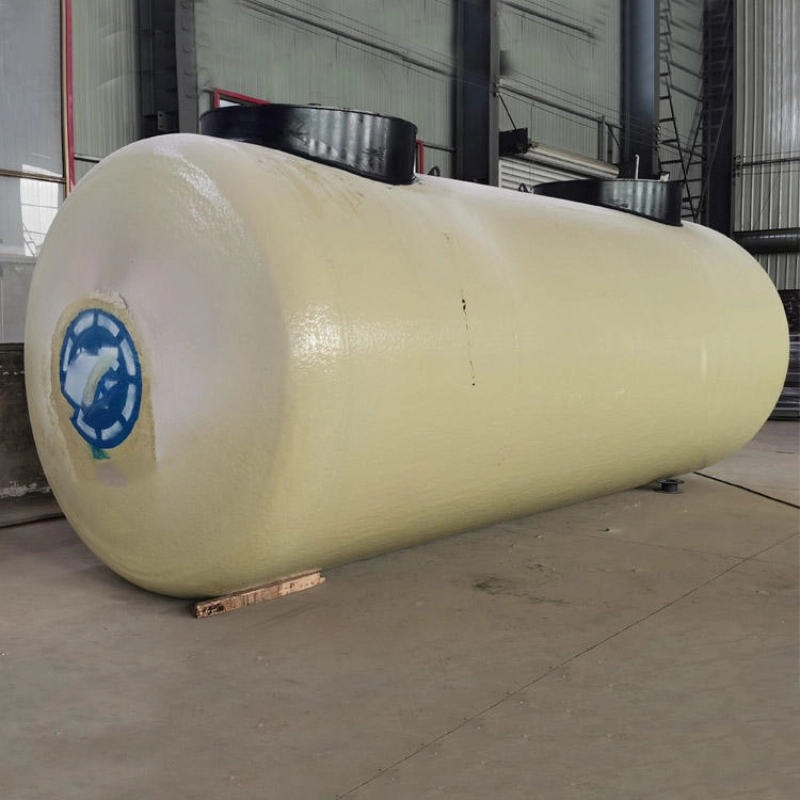
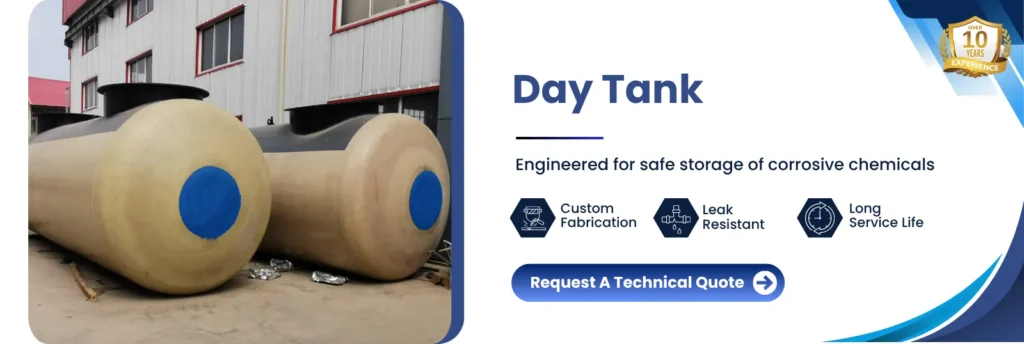
Day tanks are widely used in generator applications for:
Daily diesel fuel storage
Continuous fuel supply to DG sets
Emergency power backup systems
Automatic fuel feeding systems

Boiler Fuel Supply Systems
In boiler plants, day tanks are used for:
Fuel oil storage
Diesel supply to burners
Controlled fuel feeding systems
Continuous boiler operation
Water Treatment Plants
Day tanks are commonly used for storing and dosing:
Sodium hypochlorite
Caustic soda
Alum solution
Chlorine chemicals
pH correction chemicals
Effluent Treatment Plants (ETP)
In ETP systems, day tanks are used for:
Chemical dosing operations
Neutralization chemical storage
Coagulant preparation
Flocculant solution storage

Sewage Treatment Plants (STP)
The corrosion-resistant nature of HDPE makes these tanks suitable for:
Saltwater environments
Coastal industrial plants
Marine chemical storage systems

Chemical Processing Industry
Chemical industries use day tanks for:
Intermediate chemical storage
Process liquid feeding
Additive dosing systems
Continuous chemical supply

Lubrication Systems
Day tanks are used for:
Lubricating oil storage
Hydraulic oil supply
Continuous lubrication systems
Industrial machinery operation
Power Plants
Power generation facilities use day tanks for:
Diesel fuel systems
Turbine lubrication oil
Boiler chemical dosing
Fuel oil storage

Marine Industry
Marine applications include:
Engine fuel supply systems
Lubrication oil storage
Auxiliary machinery fuel systems
Emergency fuel storage

Pharmaceutical Industry
Day tanks are used in pharmaceutical plants for:
Process liquid storage
Purified water systems
Chemical preparation systems
Controlled dosing operations
Oil & Gas Industry
In oil & gas operations, day tanks are used for:
Fuel storage systems
Chemical injection systems
Hydraulic oil storage
Process fluid handling

Mining Industry
Mining operations use day tanks for:
Fuel storage
Chemical reagent handling
Hydraulic systems
Process liquid supply
Short-Term Liquid Storage
Day tanks are specially designed for:
Daily operational liquid storage
Intermediate storage applications
Continuous process supply systems
They provide a steady and controlled liquid supply to industrial equipment.

Continuous Supply Capability
Day tanks ensure uninterrupted supply of:
Diesel fuel
Fuel oil
Chemicals
Lubricants
Process liquid
This improves operational efficiency and reduces downtime.
Compact Design
The compact structure allows:
Easy installation
Space-saving arrangement
Convenient equipment integration
especially in limited industrial spaces.

Strong Structural Construction
Day tanks are manufactured using durable materials such as:
HDPE
Mild Steel (MS)
Stainless Steel (SS)
FRP
Polypropylene (PP)
High mechanical strength
Structural stability
Long service life
Excellent Chemical Resistance
Chemical-grade day tanks offer strong resistance against:
Corrosive chemicals
Acids
Alkalis
Water treatment chemicals
ensuring safe chemical handling.

Leak-Proof Construction
Precision welding and fabrication provide:
Leak-resistant joints
Safe liquid containment
Reliable storage performance

Corrosion Resistance
Depending on material selection, day tanks offer protection against:
Rust formation
Chemical corrosion
Environmental degradation
This reduces maintenance requirements.
Easy Level Monitoring
Day tanks can be equipped with:
Level indicators
Float switches
Sight glass system
Electronic monitoring systems
for accurate liquid level control.

Customizable Design
Day tanks can be customized according to:
Storage capacity
Process requirement
Installation space
Nozzle arrangement
Operating conditions
Multiple Shape Options
Available configurations include:
Vertical tanks
Horizontal tanks
Cylindrical tanks
Rectangular tanks
Depending on application requirements.
Safe Fuel & Chemical Handling
Day tanks provide:
Controlled liquid storage
Safe transfer systems
Reduced spill risk
Improved operational safety
Agitator & Mixer Provision
Chemical dosing day tanks may include:
Agitator mounting
Mixing systems
Chemical blending arrangement for process applications.
Easy Maintenance
The tanks are designed for:
Simple cleaning
Easy inspection
Low maintenance operation
which reduces operational costs.

UV & Weather Resistance
Outdoor day tanks may include:
UV-resistant coating
Weatherproof construction
Environmental protection
for long-term outdoor operation.

High Operational Reliability
Day tanks provide:
Stable liquid supply
Consistent process operation
Reliable industrial performance

Flexible Installation Options
These tanks can be installed:
Indoor
Outdoor
Above ground
On skids or support frames
According to plant layout requirements.

Compatibility with Pumping Systems
Day tanks are compatible with:
Fuel transfer pumps
Dosing pumps
Metering systems
Automation systems
for efficient liquid handling.

Long Service Life
Properly manufactured day tanks offer:
Durable operation
Reduced replacement frequency
Long-term reliability