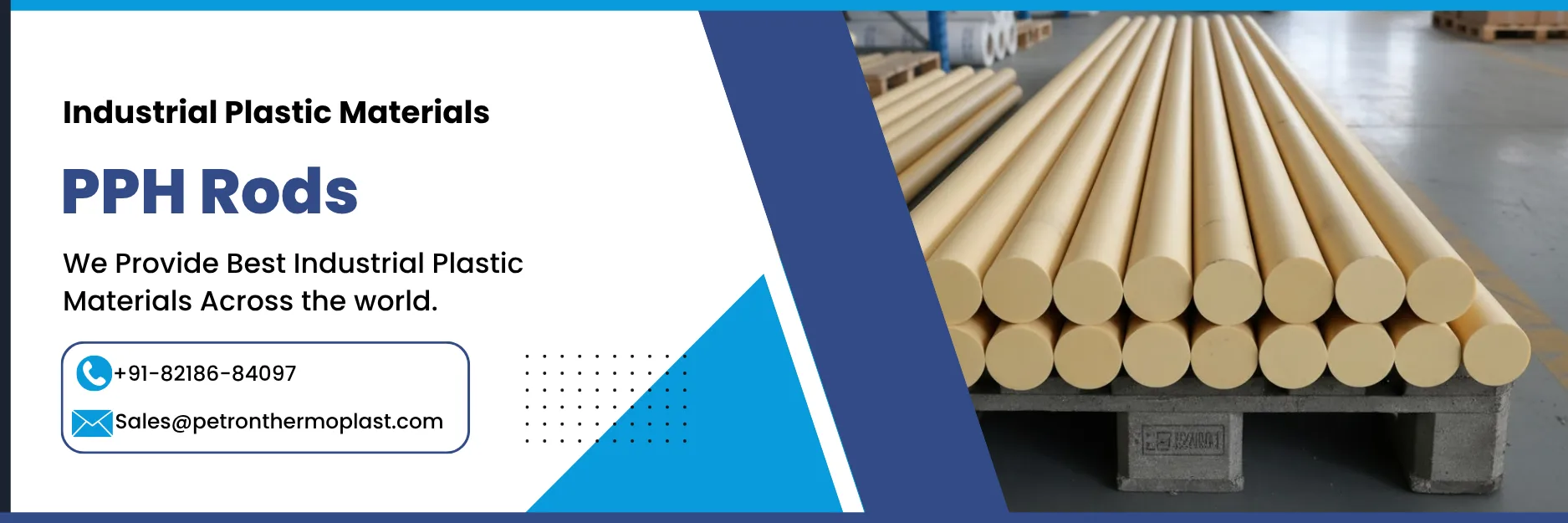
PPH Rods
PPH (Polypropylene Homopolymer) is a thermoplastic polymer produced by the polymerization of propylene monomer, consisting of a single type of monomer unit. It is known for its high stiffness, excellent chemical resistance, and good thermal stability. It is widely used in industrial piping systems, chemical storage tanks, and fabrication applications due to its corrosion resistance and durability.PPH is lightweight, easy to fabricate, and can withstand moderate temperatures (up to ~90–100°C). It is commonly used in pipes, fittings, tanks, and chemical processing systems, especially where handling of corrosive fluids is required.
PPH is a rigid and strong form of polypropylene that offers excellent resistance to chemicals, heat, and corrosion, making it suitable for demanding industrial environments. These rods provide exceptional mechanical strength, chemical resistance, and thermal stability—making them a preferred material for a wide range of industries.PPH is a durable, cost-effective, and reliable plastic material for industrial and chemical applications.

PPH Rod Details
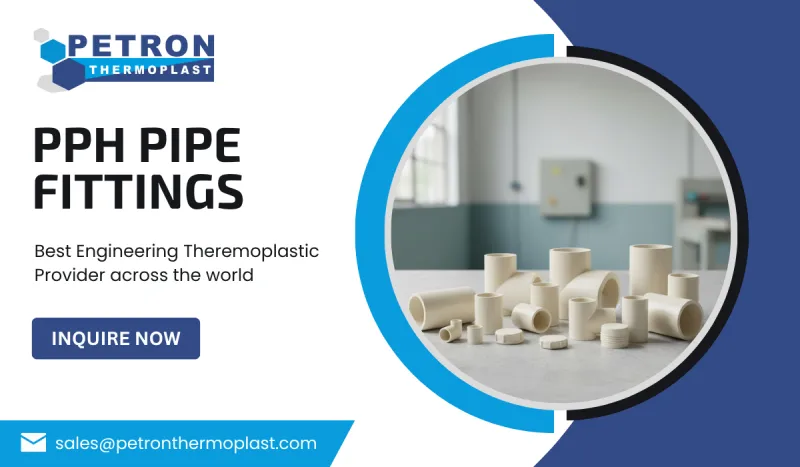
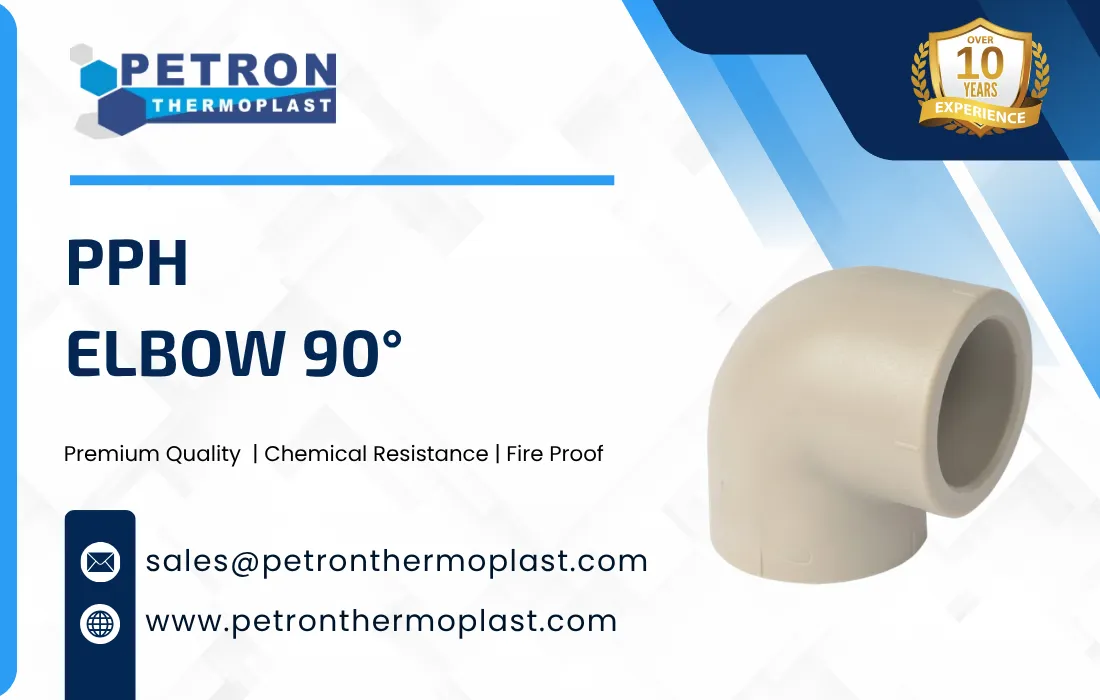
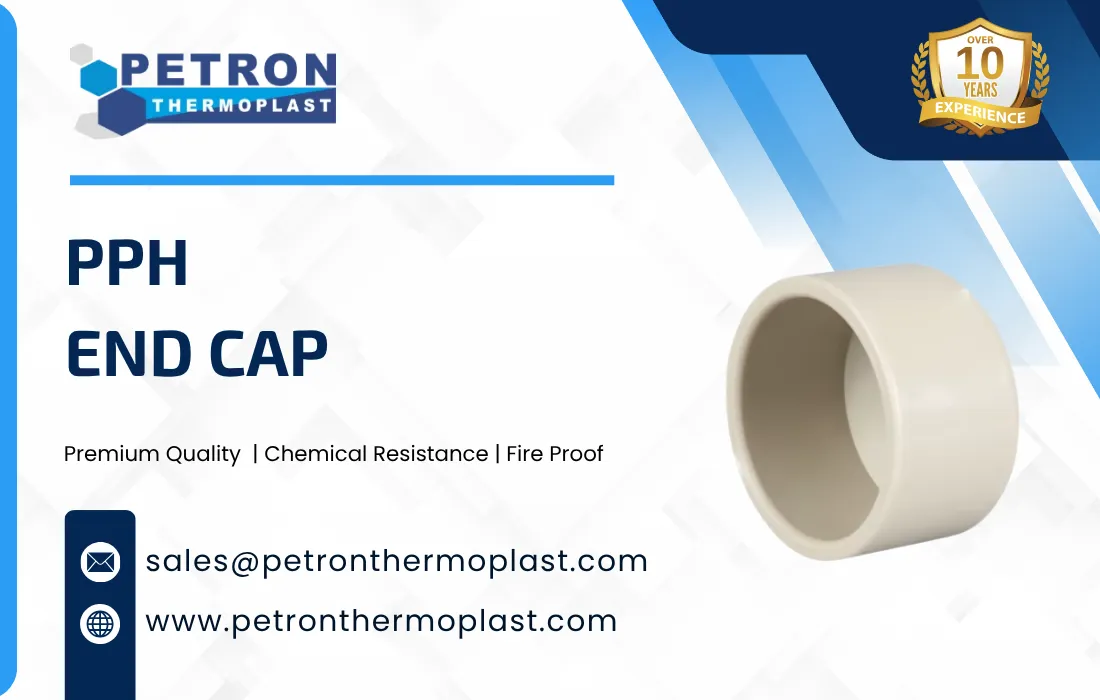
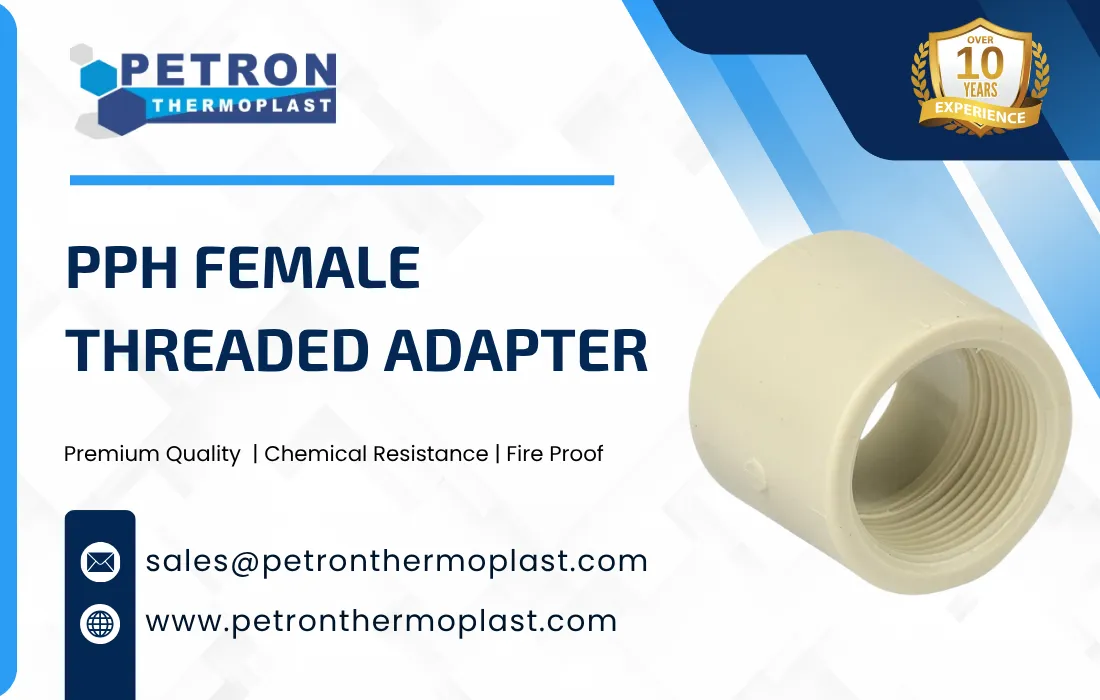
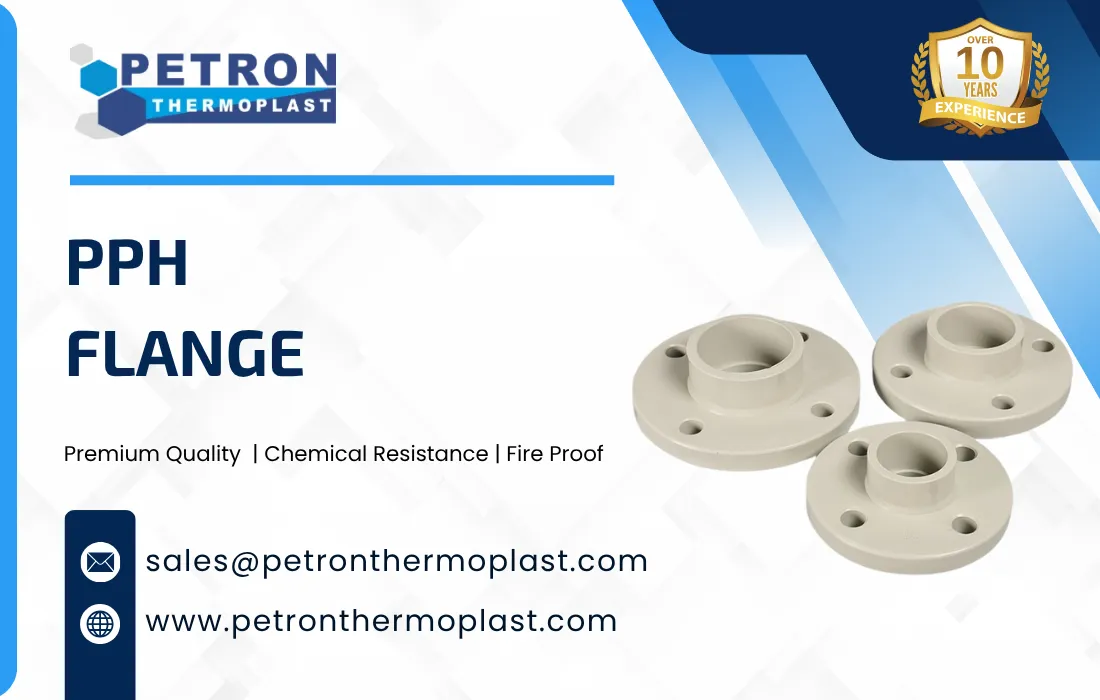
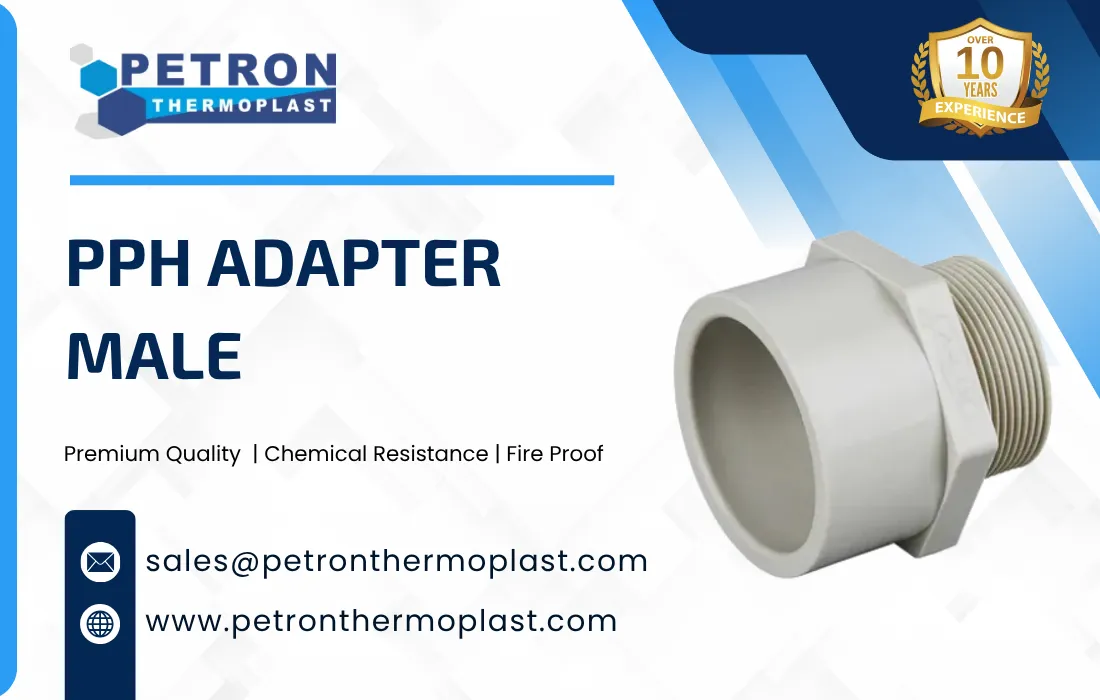
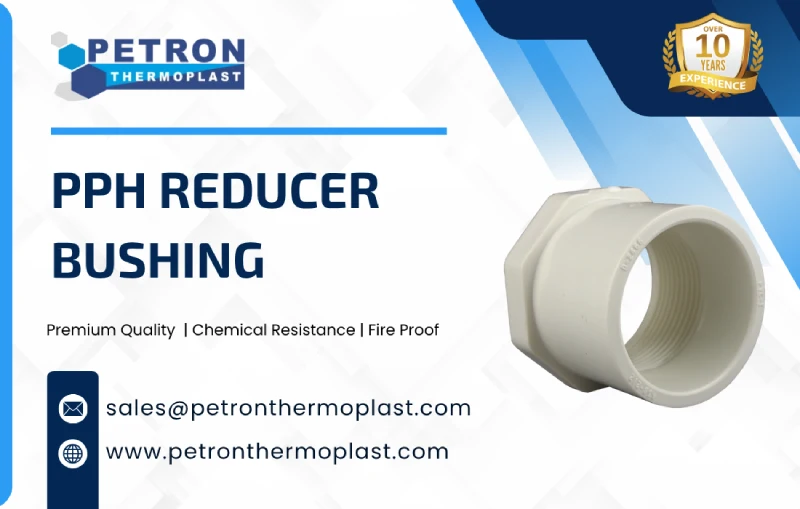
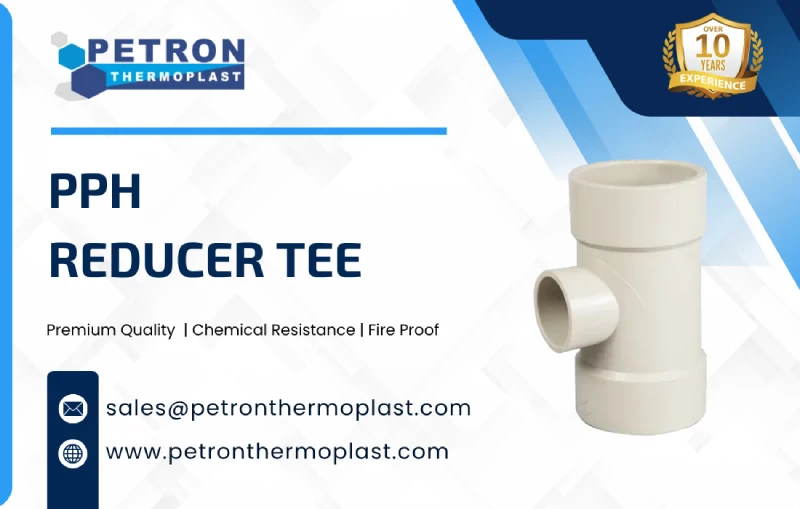
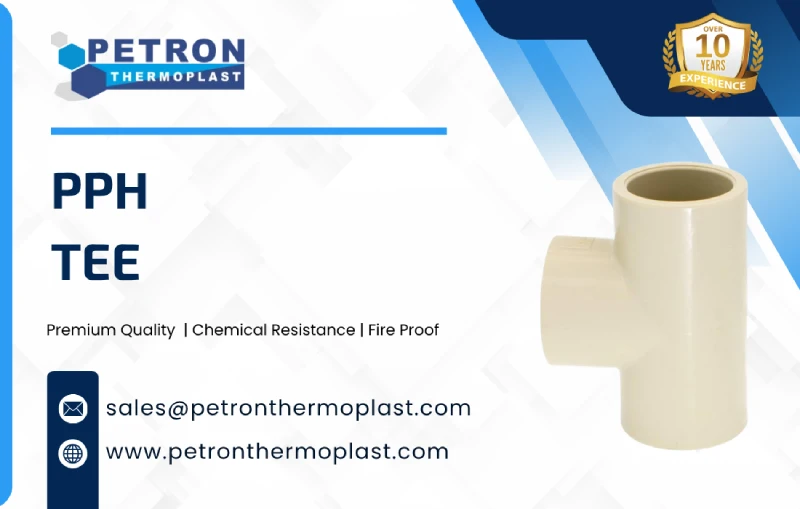
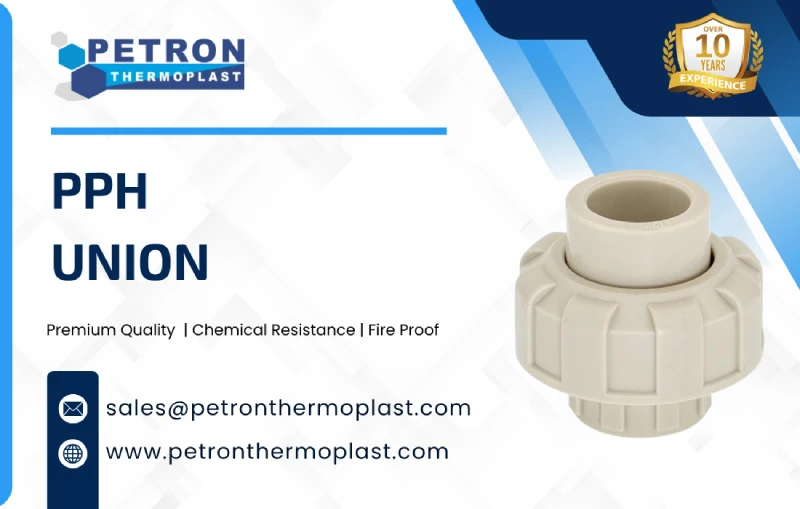
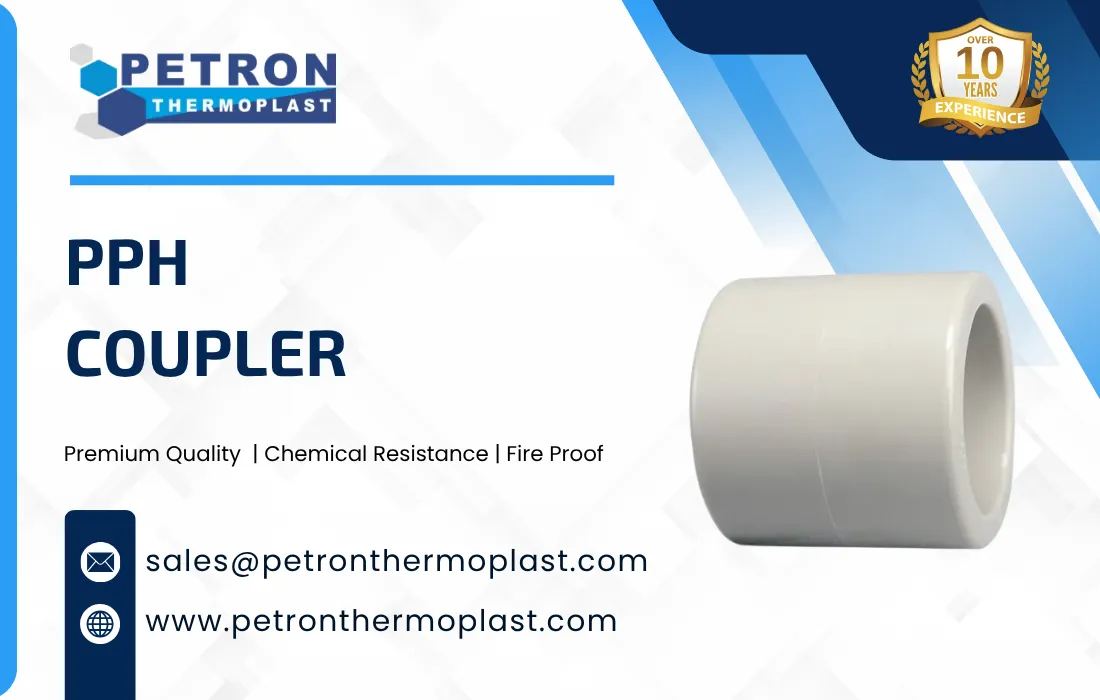
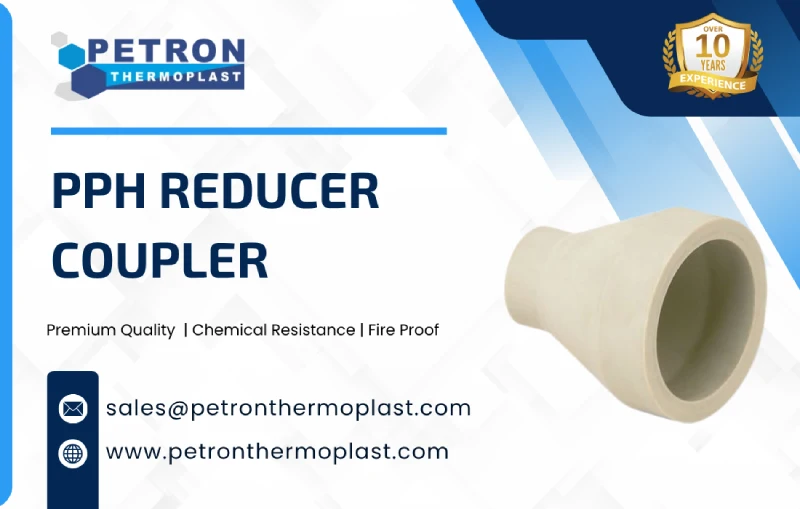
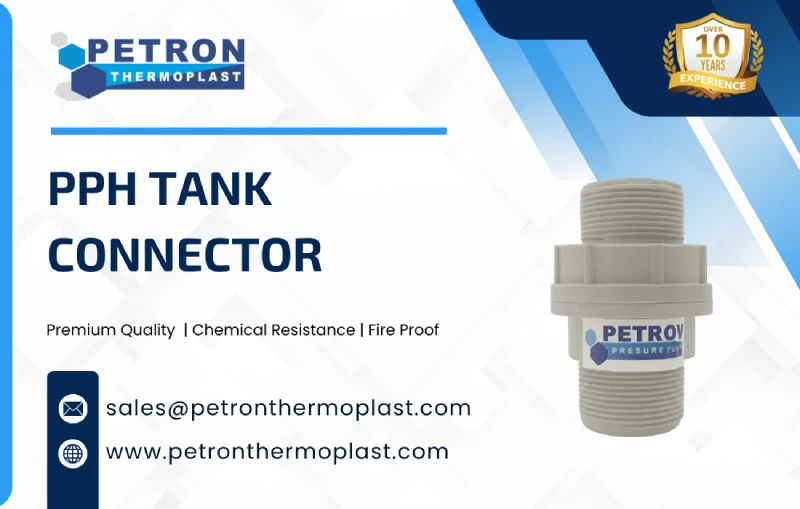
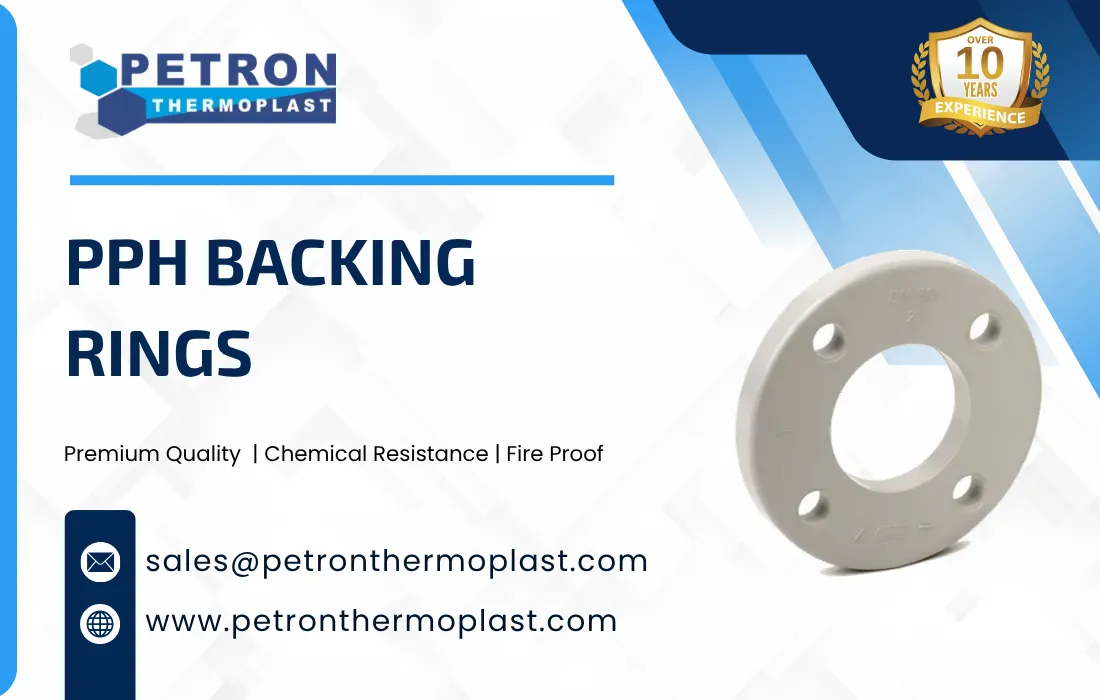
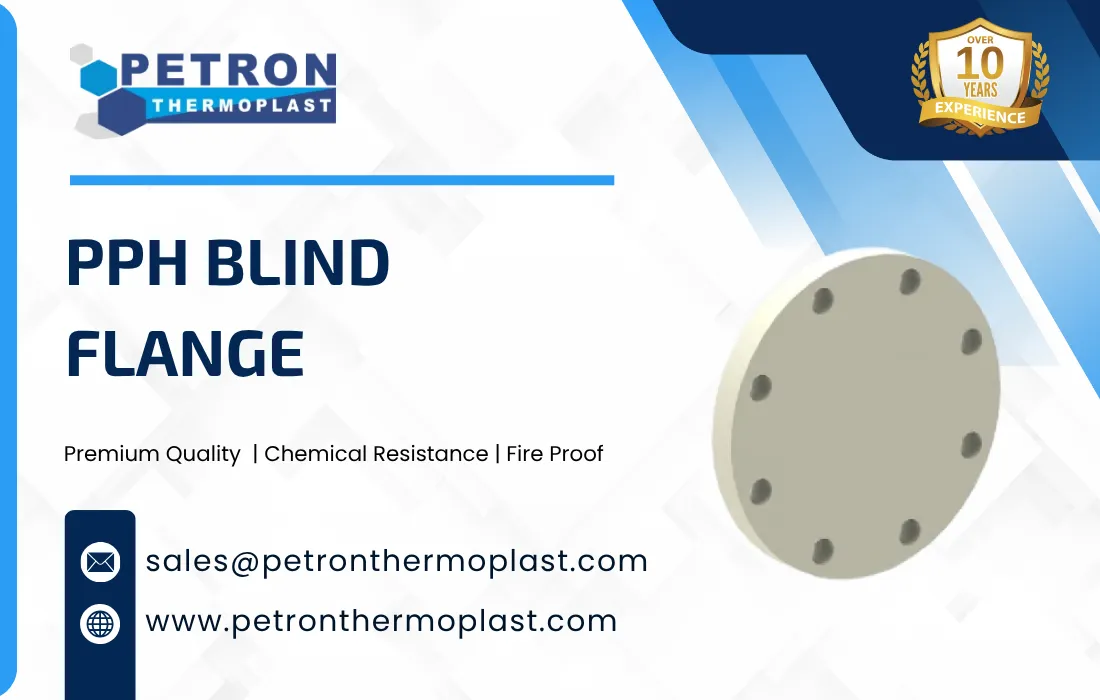
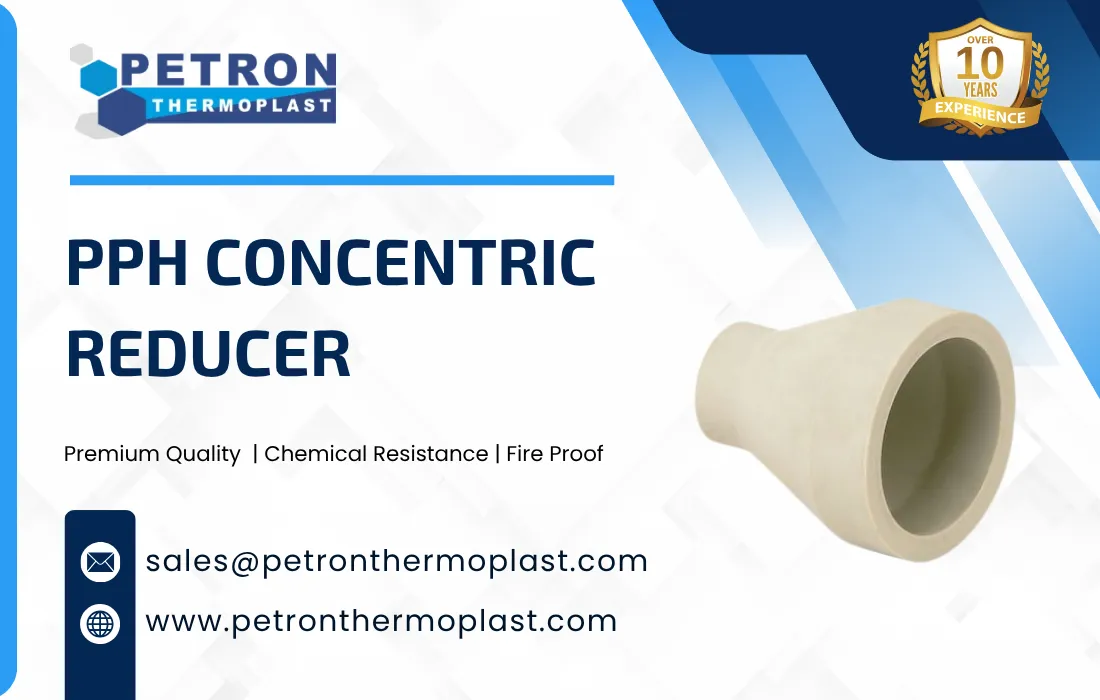
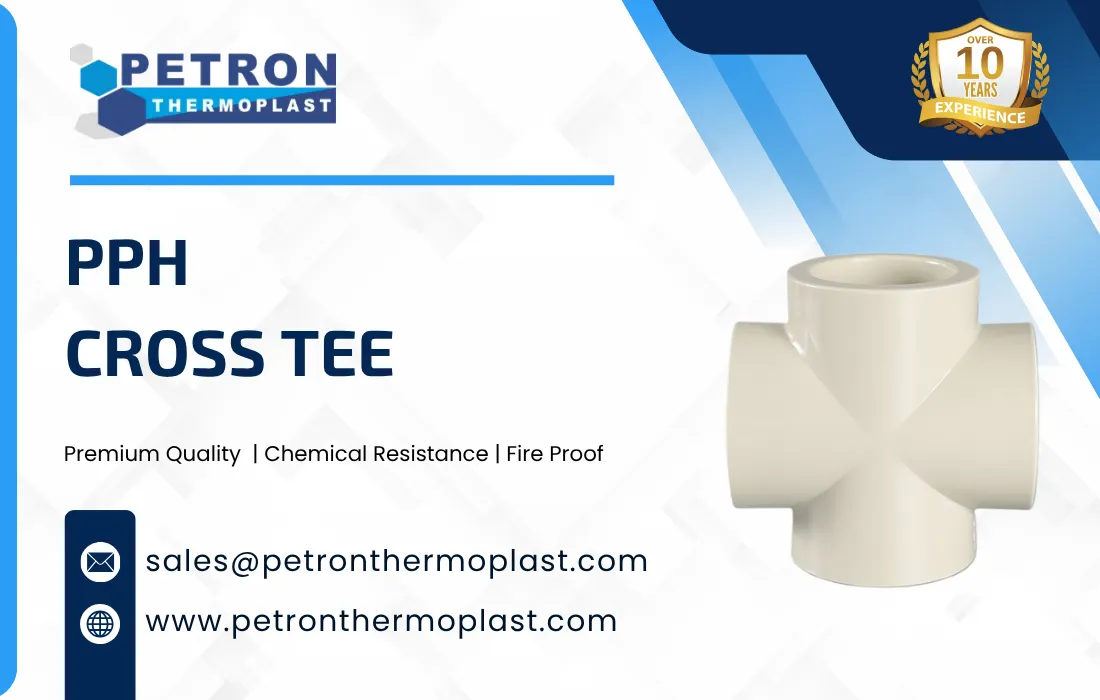
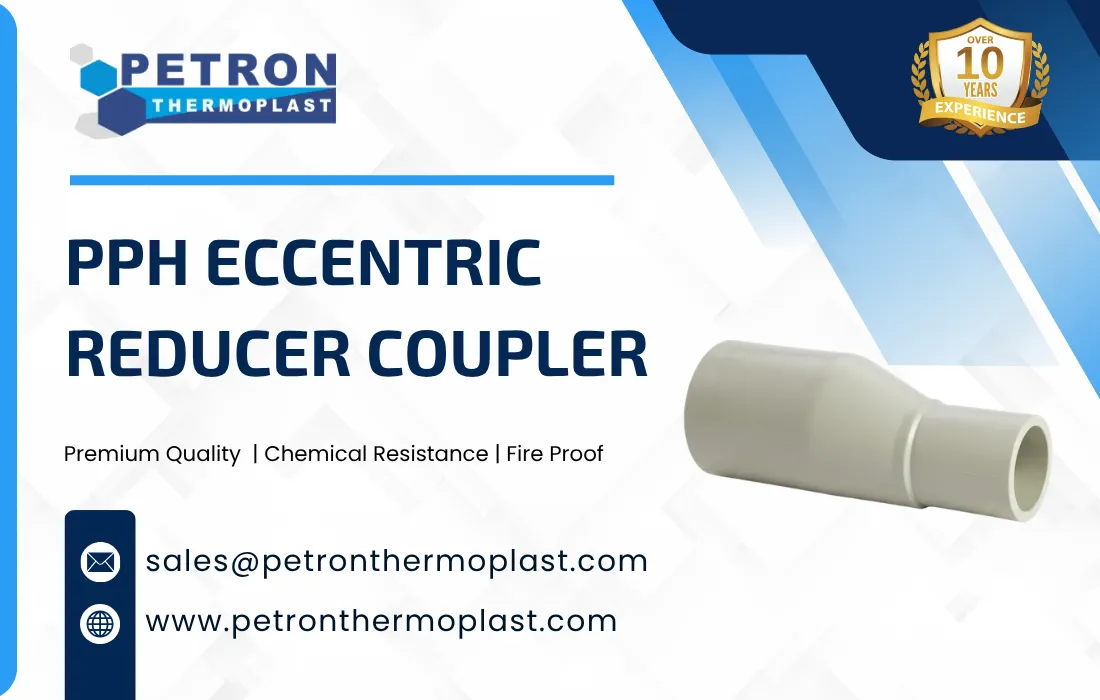
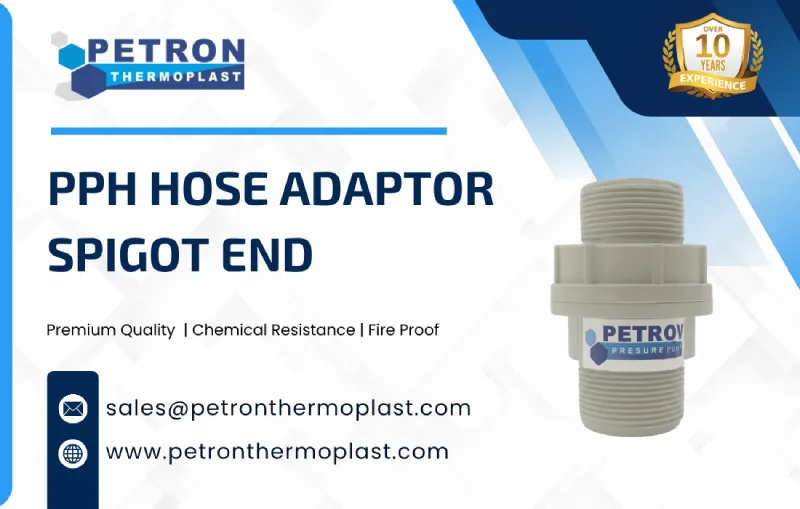
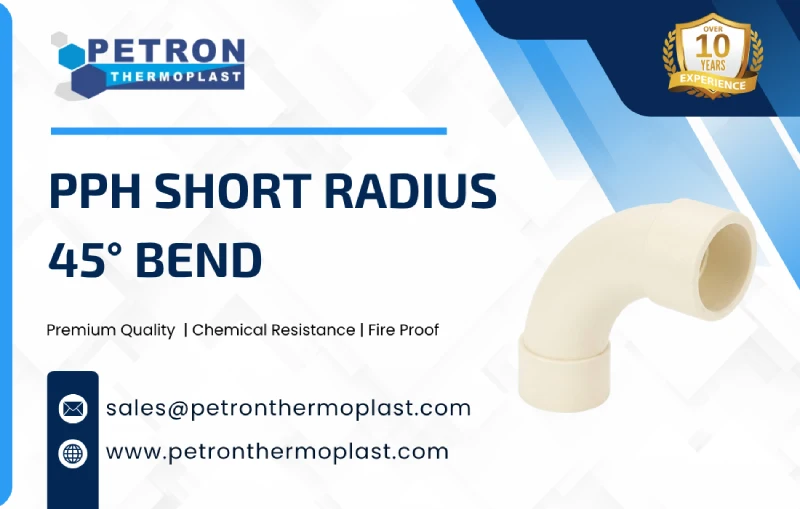
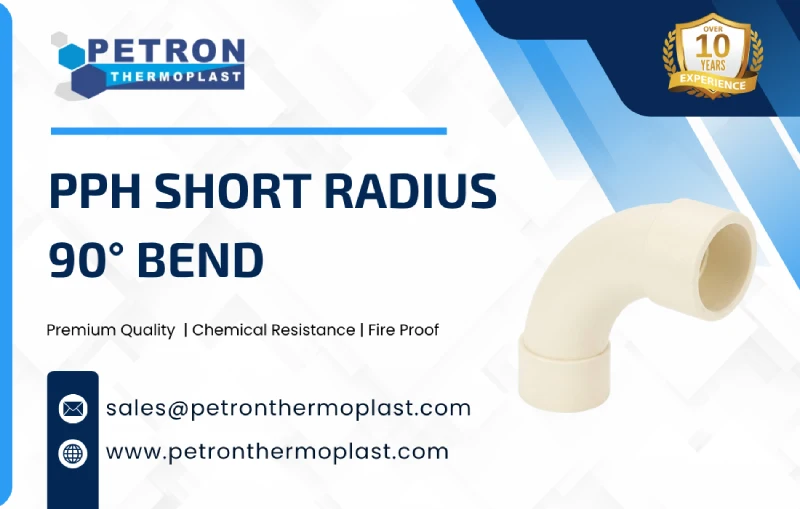
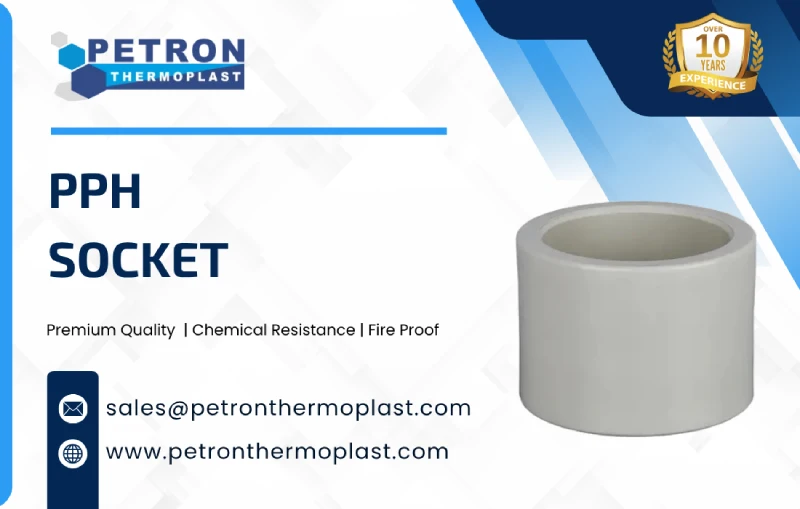
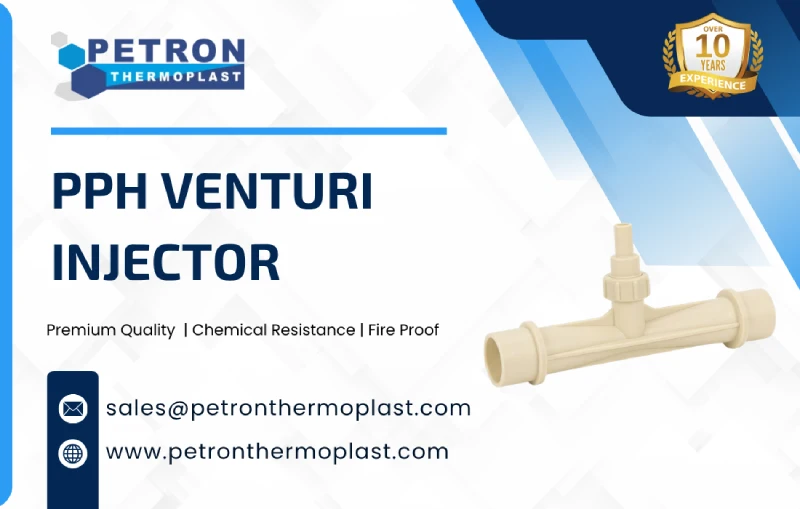
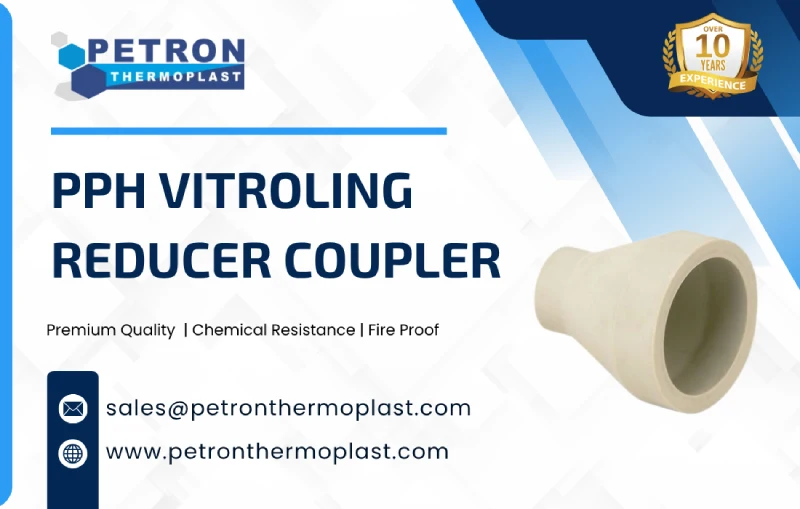
PPH Pipe Fittings
| Category | Property | Details |
| General Info | Material Type | Polypropylene Homopolymer (PPH) |
| Shape | Solid Round Rod | |
| Color | Natural (White), Grey | |
| Standard Length | 1000 mm / 2000 mm | |
| Diameter Range | 10 mm – 300 mm (or more) | |
| Physical Properties | Density | ~0.90 – 0.91 g/cm³ |
| Water Absorption | < 0.01% | |
| Surface Finish | Smooth | |
| Transparency | Opaque | |
| Moisture Resistance | Excellent | |
| Mechanical Properties | Tensile Strength | ~30 MPa |
| Flexural Strength | Good | |
| Impact Strength | Moderate | |
| Hardness (Rockwell R) | ~90 – 100 | |
| Rigidity | High | |
| Thermal Properties | Melting Point | ~160 – 170°C |
| Working Temperature | 0°C to 100°C | |
| Heat Resistance | Good | |
| Low Temp Behavior | Becomes brittle below 0°C | |
| Chemical Resistance | Chemical Resistance | Excellent (acids, alkalis) |
| Corrosion Resistance | 100% corrosion-free | |
| Solvent Resistance | Good (limited for strong solvents) | |
| Electrical Properties | Electrical Conductivity | Very low (insulator) |
| Dielectric Strength | High | |
| Insulation Property | Excellent | |
| Processing | Machinability | Excellent (cutting, drilling, milling) |
| Weldability | Good (hot gas, extrusion welding) | |
| Forming | Easy to shape and fabricate |
- PPH Pipe Fittings offers high rigidity, strength, and chemical purity, ideal for demanding industrial applications.
- Withstands continuous service temperatures up to 100 °C, with short-term resistance to even higher temperatures.
- High impact toughness and tensile strength ensure excellent mechanical performance without metal reinforcement.
- Smooth inner surface provides abrasion resistance and prevents sediment buildup; UV and aging resistant for outdoor durability.
- Lightweight and easy to install using butt fusion welding, flanged, or threaded connections without special tools.
- Reliable sealing with O-rings or fusion joints ensures leak-proof performance under pressure.
| Diameter (mm) | Standard Length (mm) |
| 8 mm | 300 / 600 / 1000 / 2000 |
| 10 mm | 300 / 600 / 1000 / 2000 |
| 16 mm | 500 / 1000 / 2000 |
| 20 mm | 500 / 1000 / 2000 |
| 25 mm | 500 / 1000 / 2000 |
| 32 mm | 500 / 1000 / 2000 |
| 40 mm | 500 / 1000 / 2000 |
| 50 mm | 500 / 1000 / 2000 |
| 63 mm | 500 / 1000 / 2000 |
| 75 mm | 500 / 1000 / 2000 |
| 90 mm | 500 / 1000 / 2000 |
| 110 mm | 500 / 1000 / 2000 |
| 125 mm | 500 / 1000 / 2000 |
| 160 mm | 500 / 1000 / 2000 |
| 200 mm | 500 / 1000 / 2000 |
| 250 mm | 500 / 1000 / 2000 |
| 300 mm | 500 / 1000 / 2000 |
1. General Pressure Capability of PPH Rod
| Condition | Approximate Value |
| Compressive Strength | ~60 – 80 MPa |
| Tensile Strength | ~30 – 35 MPa |
| Safe Working Stress (Design) | ~10 – 15 MPa |
2. Equivalent Pressure Concept (Reference Only)
| Application Type | Equivalent Pressure Capacity |
| Static load components | Medium pressure resistance |
| Machined parts (bushes) | 5 – 10 bar (approx.) |
| Structural support | Depends on design & thickness |
3. Comparison with PPH Rod
| Material Form | Pressure Rating |
| PPH Pipe | 6 – 16 bar (standard PN) |
| PPH Rod | Not standardized (solid material) |
1. Standard Temperature Limits
| Property | Value / Range |
| Continuous Working Temp | 0°C to 90°C |
| Maximum Short-Term Temp | Up to 100°C |
| Melting Temperature | 160°C to 170°C |
| Minimum Service Temp | 0°C (becomes brittle below this) |
2. Temperature Behavior
- 0°C to 90°C: Stable performance with good strength
- Above 90°C: Mechanical strength starts decreasing
- Below 0°C: Material becomes brittle and less impact-resistant
- At ~160–170°C: Material melts
3. Thermal Characteristics
| Property | Value |
| Thermal Conductivity | Low |
| Coefficient of Expansion | High |
| Heat Resistance | Good |
| Thermal Stability | Moderate |
4. Practical Application Range
| Application Type | Recommended Temp |
| Chemical processing parts | Up to 90°C |
| Water treatment systems | Up to 80°C |
| Machined components | Up to 90°C |
| Outdoor use | Depends on UV protection |
5. Standard Density Value
| Property | Value |
| Density (g/cm³) | 0.90 – 0.91 g/cm³ |
| Density (kg/m³) | 900 – 910 kg/m³ |
User Manual for PPH Rod
1. Handling & Preparation
- Storage: Keep rods in a cool, dry place, away from direct sunlight to prevent warping.
- Cutting: Use sawing, milling, or lathe machines for precise sizing.
- Deburring: Smooth all edges after cutting to avoid stress points.
- Pre-Drilling: For bolts, screws, or mounting, drill before assembly to prevent cracking.
2. Machining Installation
- Drilling & Boring: Use low-speed cutting tools to avoid melting.
- Threading: Can be done with taps for smaller components.
- Slotting or Grooving: Use proper cutting speeds and coolant to maintain integrity.
3. Mounting & Fixing
- Fasteners: Use bolts, screws, or clamps designed for plastic components. Avoid over-tightening.
- Adhesives: Suitable industrial adhesives may be used to fix parts together.
- Welding (Optional): For some applications, hot gas or extrusion welding can join rods with other PPH parts.
4. Environmental Considerations
- Avoid excessive heat during installation; PPH softens around 160–170°C.
- Maintain spacing for thermal expansion, especially in long rods.
- Use UV-stabilized rods for outdoor installations.
5. Safety Tips
- Wear protective gloves and goggles during cutting or drilling.
- Ensure proper ventilation when machining, as small plastic particles may form.
- Avoid excessive force to prevent cracking or deformation.
Maintenance
1. Regular Inspection
- Check for cracks, wear, or deformation.
- Inspect machined surfaces for signs of stress or chemical attack.
- Ensure fasteners or fittings holding the rod are secure.
2. Cleaning
- Use mild detergents or water; avoid harsh solvents unless PPH is chemically resistant to them.
- For chemical exposure, rinse after use to prevent accumulation.
- Avoid abrasive cleaning tools that can scratch the surface.
3. Environmental Protection
- Protect rods from prolonged UV exposure (use UV-stabilized PPH for outdoors).
- Store in cool, dry places away from direct sunlight or heat sources.
- Avoid contact with strong oxidizing agents or incompatible chemicals.
4. Handling
- Avoid dropping or striking the rod; PPH can crack under high impact.
- Use proper lifting tools for large-diameter rods.
- Prevent mechanical stress during storage or transport.
5. Machining & Fabrication Maintenance
- Keep cutting tools sharp to prevent excessive friction and heat.
- After machining, de-burr and polish edges to prevent stress points.
- Periodically check welded or joined parts for integrity.
6. Periodic Replacement
- Replace rods that show significant wear, cracking, or chemical degradation.
- In high-temperature or chemically aggressive environments, check more frequently.
1. Size & Diameter Customization
- Available in diameters from 8 mm up to 300 mm (or larger on request).
- Length can be cut to order, e.g., 500 mm, 1000 mm, 2000 mm.
- Tolerance adjustments are possible for precision machining applications.
2. Color Customization
- Standard colors: Natural (white), Grey.
- Custom colors: Blue, Black, Green, Red, etc., for identification or branding.
- UV-stabilized colors for outdoor or sunlight-exposed applications.
3. Material Property Customization
- Reinforced rods: Glass-fiber or mineral-filled for higher strength and rigidity.
- UV-stabilized rods: For outdoor environments.
- Flame-retardant rods: For electrical or safety applications.
- Food-grade rods: Certified for contact with food or pharmaceuticals.
4. Machining & Fabrication Customization
- Pre-machined rods: Cut, drilled, or turned to specific shapes.
- Holes, threads, or slots added for assembly or equipment integration.
- Welded or joined rods for complex structures.
5. Surface Finish Customization
- Smooth, polished, or textured surfaces.
- Custom finishes for wear reduction, aesthetics, or friction control.
6. Special Functional Customization
- Anti-static or conductive PPH rods for electrical applications.
- Rods with specific dimensional tolerances for high-precision engineering components.
1. Machining / Fabrication
- Cutting:
- Bandsaw, circular saw, or lathe cutting for precise lengths.
- Use moderate speeds to avoid melting due to friction.
- Drilling / Boring:
- Standard drill bits for plastics.
- Use cooling or lubricant if needed for large diameters.
- Milling / Turning:
- CNC or manual machining for precision components.
- Slotting / Grooving:
- Easily done on rods for industrial fittings or mechanical parts.
2. Welding / Joining
- Hot Gas Welding:
- Used to join PPH rods to PPH sheets or other rods.
- Butt Welding / Extrusion Welding:
- Creates strong, permanent joints.
- Adhesive Bonding:
- Suitable for non-load-bearing applications using industrial plastic adhesives.
3. Forming / Shaping
- Thermoforming:
- Heating PPH rod allows bending or shaping for certain designs.
- Maintain temperature below melting point (~160°C).
- Cold Bending:
- Only small-diameter rods can be bent carefully at room temperature.
4. Surface Treatment
- Polishing:
- Mechanical or flame polishing for smooth finish.
- Texturing:
- Machined or etched for friction reduction or aesthetics.
5. Quality Control in Processing
- Dimensional checks: Diameter and length tolerances.
- Surface inspection: No cracks, burrs, or scratches.
- Mechanical test (optional): For tensile strength or impact resistance.
- Chemical compatibility: Especially for rods used in chemical industries.
1. Mechanical Testing
| Test | Purpose / Standard |
| Tensile Strength Test | Measures pulling force resistance. Standard: ASTM D638 |
| Compressive Strength Test | Checks resistance to crushing or load-bearing |
| Flexural Test | Measures bending strength and stiffness (ASTM D790) |
| Impact Test | Determines resistance to sudden loads or shocks (Izod or Charpy test) |
2. Physical & Dimensional Testing
- Diameter & Length Measurement: Ensures compliance with specified tolerances
- Surface Finish Inspection: Check for smoothness, scratches, or cracks
- Density Measurement: Confirms material consistency and quality
3. Chemical Resistance Testing
- Acid & Alkali Exposure: Test rod performance in aggressive chemicals
- Solvent Resistance: Ensures rod does not deform or dissolve
- Moisture Absorption Test: Should be <0.01% for PPH rods
4. Electrical Testing
- Dielectric Strength Test: Measures electrical insulation capacity
- Volume Resistivity: Confirms rod is a good electrical insulator
5. Quality & Standards Compliance
- ISO / ASTM Standards ensure PPH rods meet international specifications
- Certification may include:
- Food-grade compliance (for food & pharma applications)
- Industrial chemical-grade certification
1. Chemical Industry
- Applications: Pump parts, valve components, chemical tanks, and piping supports
- Reason: Excellent resistance to acids, alkalis, and corrosive chemicals
2. Water & Wastewater Treatment
- Applications: Flow control components, valve stems, bushings, and fittings
- Reason: Corrosion-resistant, dimensionally stable in water and chemicals
3. Food & Pharmaceutical Industry
- Applications: Food-grade machined parts, laboratory equipment, tanks, and fittings
- Reason: Non-toxic, safe for direct contact with food or pharma products
4. Electrical & Electronics Industry
- Applications: Insulating components, bushings, non-conductive supports
- Reason: Excellent electrical insulation and flame-retardant grades available
5. Engineering & Manufacturing
- Applications: Gears, rollers, washers, bushings, precision components
- Reason: High mechanical strength, machinability, and chemical resistance
6. Marine & Outdoor Applications
- Applications: Outdoor structural components, UV-stabilized fittings
- Reason: Lightweight, UV and corrosion resistance
7. Laboratory & Research
- Applications: Lab rods, supports, chemical-resistant holders
- Reason: Stable under chemical and temperature variations
1. Base Material
- Polypropylene Homopolymer (PPH):
- Thermoplastic polymer made from polymerization of propylene monomers.
- Provides high chemical resistance, low density, and good mechanical strength.
2. Additives
To enhance specific properties, PPH rods may include:
| Additive | Purpose / Benefit |
| UV Stabilizers | Protects against sunlight degradation for outdoor use |
| Colorants / Pigments | Provides custom colors for identification or aesthetics |
| Reinforcements | Glass fiber or mineral fillers increase rigidity & strength |
| Flame Retardants | Adds fire-resistant properties for electrical or safety applications |
| Anti-Static Agents | Reduces static electricity buildup in sensitive environments |
3. Manufacturing Process
- Polymerization: Propylene monomers are polymerized to form PPH resin.
- Extrusion / Casting: Resin is melted and formed into rods of desired diameter.
- Cooling & Cutting: Rods are cooled, cut to standard or custom lengths, and sometimes machined.
- Quality Checks: Dimensional, mechanical, and chemical resistance testing ensures consistent material quality.

Custom Product Manufacturing Available
If you are searching for customized product designs that meet your requirements, don’t worry. Petron Thermoplast also offers custom product manufacturing services to meet the unique needs of various industries. Work with our expert engineers to create custom designs suited for your application.
Benefits of PPH Rods
Excellent Chemical Resistance
- Resistant to acids, alkalis, and many chemicals
- Ideal for chemical processing and storage applications
Lightweight Material
- Low density (~0.90 g/cm³)
- Easy to handle, transport, and install
High Strength & Rigidity
- Good mechanical strength and stiffness
- Suitable for load-bearing and machined components
Corrosion-Free
- Does not rust or corrode like metals
Good Thermal Resistance
- Works efficiently up to 90°C
- Maintains properties under moderate heat conditions
Excellent Machinability
- Easy to cut, drill, mill, and fabricate
- Ideal for precision engineering parts
Low Moisture Absorption
- Water absorption < 0.01%
- Maintains dimensional stability
Electrical Insulation Properties
- Very low electrical conductivity
- Suitable for insulating components
Cost-Effective
- Lower cost compared to high-performance plastics like PVDF or PTFE
- Reduced maintenance and replacement costs
Non-Toxic & Food Grade (Specific Grades)
- Safe for food and pharmaceutical applications (when certified)
Types of PPH Rods
Natural PPH Rod
- Color: Milky white / off-white
- Suitable for general industrial and food-grade applications
- Non-toxic (in certified grades)
Grey PPH Rod
- Color: Grey
- Most commonly used in industrial piping and chemical applications
- Offers good UV resistance (limited)
Standard PPH Rod
- General-purpose grade
- Used for machining and fabrication
Reinforced PPH Rod
- Filled with glass fiber or mineral fillers
- Higher strength and rigidity
- Used in heavy-duty applications
UV Stabilized PPH Rod
- Contains UV stabilizers
- Suitable for outdoor applications
- Better resistance to sunlight degradation
Flame Retardant PPH Rod
- Special grade with fire-resistant properties
- Used in electrical and safety applications
Extruded PPH Rod
- Most common type
- Uniform structure and smooth surface
- Used for general industrial applications
Molded (Cast) PPH Rod
- Produced by molding process
- Better for thicker diameters
- Improved internal strength
Industrial Grade Rod
- Used in chemical plants, tanks, and piping systems
Food Grade Rod
- Approved for food and pharmaceutical use
Engineering Grade Rod
- Used for precision machined parts like:
- Bushings
- Bearings
- Valve components
Applications of PPH Rods
1. Industrial Applications
- Machined components: Bushings, gears, rollers, and washers
- Pump and valve parts: Seats, impellers, and diaphragms
- Tank and vessel parts: Fittings and supports
- Bearings and spacers in industrial equipment
2. Chemical Industry
- Components for chemical processing equipment
- Resistant to acids, alkalis, and corrosive fluids
- Used in mixers, piping supports, and chemical tanks
3. Water Treatment
- Valve stems, connectors, and fittings
- Pump parts exposed to water and chemical solutions
- Components for industrial water treatment systems
4. Food & Pharmaceutical Industry
- Food-grade rods used for machined components
- Safe for direct contact with food or pharma products (certified grades)
- Laboratory equipment and containers
5. Electrical & Insulation
- Electrical insulating components
- Low conductivity makes it suitable for electrical housings
- Flame-retardant rods used in safety applications
6. Outdoor Applications
- UV-stabilized PPH rods used in outdoor structures
- Resistant to sunlight and moisture
7. Engineering & Fabrication
- Custom machined parts for precision applications
- Components for machines, valves, and chemical processing units
- Prototyping and mechanical testing parts
Why Choose Petron Thermoplast?
Petron Thermplast has an extremely wide collection of PPH Rods. With our experience in the field of industrial manufacturing, we guarantee the best quality products. Petron Thermoplast has a professional team; we are all experienced and highly skilled in Manufacturing. For our safety it is a top priority to have modern machinery and facilities for safety purposes. So it’s well worth the investment in safety. Petron Thermoplast has a large scale of PPH rods; we are a leading name in the industrial sector, and we believe in hard work and innovation to pursue excellence.
Conclusion
PPH rods are lightweight, durable, and chemically resistant solid rods widely used in industrial, chemical, food, and engineering applications. They offer excellent machinability, low maintenance, and stability under moderate temperatures, making them ideal for custom components, valves, bushings, and structural parts.PPH rods are a versatile and cost-effective solution for industries requiring chemical resistance, strength, and reliability.
Their high machinability, durability, and low maintenance make them ideal for producing valve components, bushings, bearings, and custom-machined parts.
With stable performance under moderate temperatures, excellent chemical and corrosion resistance, and options for reinforced or UV-stabilized variants, PPH rods provide a cost-effective and reliable solution for diverse industrial needs. PPH rods combine strength, chemical stability, and ease of fabrication, making them a preferred choice for long-lasting and high-performance industrial components.
Frequently Asked Questions
A PPH rod is a solid thermoplastic rod made from polypropylene homopolymer, known for its chemical resistance, lightweight, and machinability.
- Diameters typically range from 8 mm to 300 mm or larger on request.
- Lengths are usually 500 mm, 1000 mm, or 2000 mm, customizable per requirement.
Approximately 0.90 – 0.91 g/cm³, making it lightweight and easy to handle.
- Are PPH rods chemically resistant?
Yes, they are resistant to acids, alkalis, most chemicals, and water, making them suitable for chemical and industrial applications.
Yes, they are easy to cut, drill, mill, and fabricate into custom components.
Yes, food-grade PPH rods are certified for safe contact with food and pharmaceutical products.
Yes, UV-stabilized PPH rods can withstand sunlight exposure, though standard rods may degrade over time in direct sunlight.
- Industrial components like bushings, gears, and rollers
- Chemical industry valve and pump parts
- Food & pharmaceutical machined parts and lab equipment
- Electrical insulation and structural components
- Keep clean and dry
- Avoid mechanical stress or high heat
- Inspect periodically for wear, cracks, or chemical damage
Yes, they can be custom-diameter, length, color, reinforced, UV-stabilized, flame-retardant, or pre-machined for specific applications.
PPH rods are solid material and do not have a standard pressure rating like pipes. Their strength is measured by tensile, compressive, and flexural properties.