CPVC Sheet
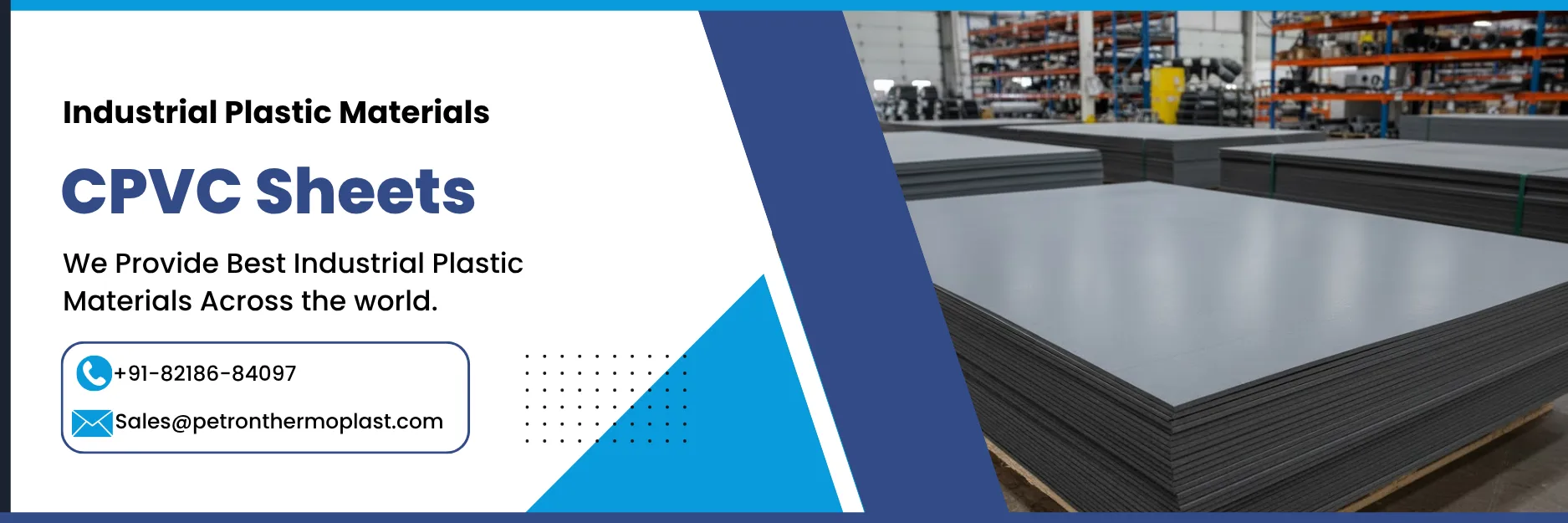
A CPVC (Chlorinated Polyvinyl Chloride) sheet is a rigid thermoplastic sheet made from chlorinated polyvinyl chloride resin. It is produced by processing CPVC material into flat sheets that offer excellent chemical resistance, high temperature stability, corrosion resistance, and mechanical strength. CPVC sheets are commonly used for chemical tank linings, industrial equipment, electrical insulation panels, and corrosion-resistant structures where durability and chemical resistance are required. CPVC sheets provide a dependable and durable solution. Designed to meet stringent industry standards, our sheets are ideal for both structural and lining applications in corrosive settings.
CPVC sheets are widely used in industrial, chemical, and construction applications because they can withstand harsh environments, corrosive chemicals, and elevated temperatures better than many standard plastic materials. These sheets are lightweight, easy to fabricate, and can be cut, drilled, welded, or machined for various industrial uses. Our CPVC (Chlorinated Polyvinyl Chloride) sheets are widely used in industrial environments where reliable performance under aggressive chemicals and elevated temperatures is essential.
CPVC Sheet Details
| Parameter / Property | Technical Details |
| Material Type | Chlorinated Polyvinyl Chloride (CPVC) |
| Form | Rigid Thermoplastic Sheet |
| Color | Grey, Off-White, or Custom Colors |
| Standard Thickness | 1 mm – 25 mm |
| Standard Sheet Size | 1000 × 2000 mm, 1220 × 2440 mm, 1500 × 3000 mm |
| Density | 1.50 – 1.60 g/cm³ |
| Continuous Service Temp | Up to 90°C – 95°C |
| Vicat Softening Temp | Around 110°C – 115°C |
| Tensile Strength | 50 – 70 MPa |
| Flexural Strength | 80 – 100 MPa |
| Impact Strength | Good Impact Resistance |
| Hardness | Rockwell R110 – R120 |
| Water Absorption | Very low (less than 0.1%) |
| Thermal Conductivity | 0.14 – 0.17 W/m·K |
| Coefficient of Thermal Expansion | 6.0 – 7.0 × 10⁻⁵ /°C |
| Chemical Resistance | Resistant to acids, alkalis, and corrosive chemicals |
| Flammability | Self-extinguishing material |
| Surface Finish | Smooth and Uniform |
| Fabrication Method | Can be cut, drilled, welded, and machined |
| Standards | ASTM, ISO, BIS (depending on manufacturer) |
| Applications | Chemical tanks, industrial equipment, electrical insulation |
| Diameter (mm) | Diameter (inch) | Standard Length (mm) | Standard Length (m) |
| 6 mm | ¼ inch | 1000 / 2000 | 1 m / 2 m |
| 10 mm | ⅜ inch | 1000 / 2000 | 1 m / 2 m |
| 12 mm | ½ inch | 1000 / 2000 | 1 m / 2 m |
| 16 mm | ⅝ inch | 1000 / 2000 | 1 m / 2 m |
| 20 mm | ¾ inch | 1000 / 2000 | 1 m / 2 m |
| 25 mm | 1 inch | 1000 / 2000 | 1 m / 2 m |
| 32 mm | 1¼ inch | 1000 / 2000 | 1 m / 2 m |
| 40 mm | 1½ inch | 1000 / 2000 | 1 m / 2 m |
| 50 mm | 2 inch | 1000 / 2000 | 1 m / 2 m |
| 63 mm | 2½ inch | 1000 / 2000 | 1 m / 2 m |
| 75 mm | 3 inch | 1000 / 2000 | 1 m / 2 m |
| 90 mm | 3½ inch | 1000 / 2000 | 1 m / 2 m |
| 110 mm | 4 inch | 1000 / 2000 | 1 m / 2 m |
- High Temperature Resistance
CPVC rods can handle temperatures up to 90–95°C, making them suitable for hot water and high-temperature industrial applications. - Excellent Chemical Resistance
They resist a wide range of acids, alkalis, salts, and corrosive chemicals, which makes them ideal for chemical processing industries. - Corrosion and Rust Resistance
CPVC rods do not rust, corrode, or deteriorate when exposed to moisture or harsh environments. - High Mechanical Strength
The material provides good rigidity, strength, and durability, allowing it to withstand mechanical stress. - Good Dimensional Stability
CPVC rods maintain their shape and size under varying temperatures and environmental conditions. - Easy Machinability
They can be easily cut, drilled, shaped, and machined to manufacture custom parts and industrial components. - Lightweight Material
CPVC rods are lighter than many metal materials, making handling and installation easier. - Electrical Insulation Properties
Being a non-conductive material, CPVC rods provide good electrical insulation. - Smooth Surface Finish
CPVC rods generally have a smooth surface, which improves machining quality and product finish.
| Sheet Thickness | Approximate Pressure Resistance* | Typical Application |
| 2 mm – 3 mm | Up to 1 – 2 bar | Light chemical lining |
| 4 mm – 6 mm | Up to 2 – 3 bar | Small tanks and industrial panels |
| 8 mm – 10 mm | Up to 3 – 5 bar | Medium chemical tanks |
| 12 mm – 20 mm | Up to 5 – 8 bar | Heavy-duty chemical storage tanks |
| 25 mm and above | Up to 8 – 10 bar | Industrial fabrication structures |
| Property | Temperature Value |
| Maximum Continuous Service Temperature | 90°C – 95°C |
| Short-Term Maximum Temperature | Up to 100°C |
| Minimum Service Temperature | 0°C to -10°C |
| Glass Transition Temperature | Approximately 110°C – 115°C |
| Recommended Working Temperature | 0°C – 90°C |
| Property | Value |
| Density | 1.50 – 1.60 g/cm³ |
| Density (kg/m³) | 1500 – 1600 kg/m³ |
CPVC (Chlorinated Polyvinyl Chloride) sheets are produced using a combination of base polymers and additives that improve strength, durability, and processing performance. The main materials used in the manufacturing process include the following:
- CPVC Resin
CPVC resin is the primary raw material used to manufacture CPVC sheets. It is produced by chlorinating PVC resin, which increases the chlorine content and improves the material’s temperature resistance, chemical resistance, and mechanical strength. - Stabilizers
Heat stabilizers are added to protect the material during the manufacturing process. They prevent degradation of the CPVC resin when exposed to high temperatures during extrusion or molding. - Lubricants
Lubricants help reduce friction during processing and ensure the smooth flow of the material in manufacturing equipment. They also help improve the surface finish and uniformity of the CPVC sheet. - Impact Modifiers
Impact modifiers are added to improve the toughness and impact resistance of the CPVC sheet, making it less brittle and more durable during handling and use. - Fillers
Certain fillers may be added to enhance dimensional stability, strength, and cost efficiency. They help improve the overall structural properties of the sheet. - Processing Aids
Processing aids improve the melt strength and processing performance of the material, ensuring consistent sheet thickness and smooth production. - Pigments or Colorants
Pigments are added to give the CPVC sheet its color and appearance. They can also provide additional benefits such as UV resistance for outdoor applications.
User Manual for CPVC Sheet
- Surface Preparation
- Ensure the installation surface is clean, dry, and free from dust, oil, or grease.
- Proper surface preparation helps achieve strong bonding and stability.
- Cutting and Sizing
- CPVC sheets can be cut using circular saws, jigsaws, or fine-tooth blades.
- Ensure accurate measurements and smooth edges for proper fitting.
- Drilling and Machining
- Use standard plastic machining tools to drill holes or create openings for fasteners or fittings.
- Welding or Bonding
- CPVC sheets can be joined using hot air welding, extrusion welding, or solvent cement, depending on the application.
- Fastening and Support
- Sheets can be installed using bolts, screws, clamps, or structural frames to provide proper support.
- Thermal Expansion Allowance
- Leave small expansion gaps during installation to allow for temperature-related expansion and contraction.
Maintenance
- Regular Inspection
- Check for cracks, deformation, or damage in the sheet surface.
- Cleaning
- Clean sheets using mild detergents and water to remove dust, chemical deposits, or contaminants.
- Avoid Mechanical Damage
- Prevent heavy impacts, scratches, or excessive loads on the sheet surface.
- Temperature Monitoring
- Ensure the operating temperature stays within the recommended limits (around 90°C–95°C).
- Repair and Replacement
- If any damage occurs, repair using plastic welding techniques or replace the affected sheet section.
- Size Customization
CPVC sheets can be manufactured in different lengths and widths depending on project requirements. - Thickness Customization
Sheets are available in various thicknesses,such as 1 mm to 25 mm or more, to meet different strength and pressure requirements. - Color Customization
CPVC sheets can be produced in grey, off-white, or other custom colors for identification and aesthetic purposes. - Surface Finish
Sheets can be customized with smooth, matte, or textured surfaces based on the application. - Chemical Resistance Enhancement
Special formulations can improve resistance to specific chemicals and corrosive environments.
- Special Shapes and Designs
Sheets can be fabricated into custom shapes, panels, or components for industrial equipment.
Processing
- Extrusion Process
Molten CPVC material is passed through a flat die to produce sheets with uniform thickness. - Compression Molding
CPVC resin is molded under heat and pressure to form thick and strong sheets. - Cutting and Machining
Sheets can be cut, drilled, milled, or shaped using standard plastic machining tools. - Thermoforming
Heated CPVC sheets are molded into specific shapes using molds. - Welding
Sheets can be joined using hot air welding or extrusion welding for the fabrication of tanks and industrial structures. - Finishing Operations
After processing, sheets may undergo trimming, polishing, or surface finishing for improved appearance and performance.
Testing Parameters
| Test Name | Purpose of the Test |
| Tensile Strength Test | Measures the maximum stress the CPVC sheet can withstand before breaking when stretched. |
| Impact Strength Test | Determines the ability of the sheet to resist sudden shocks or impacts. |
| Flexural Strength Test | Evaluates the bending strength of the CPVC sheet. |
| Heat Deflection Temp Test | Determines the temperature at which the sheet begins to deform under load. |
| Vicat Softening Temp Test | Measures the temperature at which the CPVC sheet starts to soften. |
| Chemical Resistance Test | Checks resistance to acids, alkalis, and corrosive chemicals. |
| Density Test | Confirms the uniformity and composition of the CPVC material. |
| Water Absorption Test | Determines how much moisture the sheet absorbs over time. |
| Dimensional Stability Test | Ensures the sheet maintains its size and shape under temperature changes. |
| Surface Quality Test | Inspects the sheet for cracks, bubbles, or surface defects. |
Quality Parameters
| Quality Parameter | Description |
| Material Purity | Made from high-grade CPVC resin with proper additives for stability. |
| Uniform Thickness | Sheets maintain consistent thickness across the surface for better fabrication. |
| Surface Finish | Smooth and defect-free surface without cracks, bubbles, or irregularities. |
| Mechanical Strength | Good tensile and flexural strength for long-lasting performance. |
| Chemical Resistance | High resistance to acids, alkalis, salts, and corrosive chemicals. |
| Heat Resistance | Capable of operating at temperatures up to 90°C–95°C. |
| Dimensional Stability | Maintains shape and size under varying temperatures and loads. |
| Low Water Absorption | Absorbs very little moisture, preventing swelling or deformation. |
| Fire Resistance | Self-extinguishing properties that reduce flame spread. |
| Standards Compliance | Manufactured according to ASTM, ISO, or BIS standards. |
- High Temperature Resistance
CPVC sheets can withstand temperatures up to 90°C–95°C, making them suitable for hot and chemical processing environments. - Excellent Chemical Resistance
They are highly resistant to acids, alkalis, salts, and corrosive chemicals, making them ideal for chemical industries. - Corrosion and Rust Resistance
Unlike metal sheets, CPVC sheets do not rust or corrode when exposed to moisture or chemicals. - High Mechanical Strength
CPVC sheets have strong tensile and impact strength, providing durability in industrial applications. - Lightweight Material
These sheets are lighter than metal materials, which makes handling, transportation, and installation easier. - Easy Fabrication
CPVC sheets can be easily cut, drilled, welded, machined, and thermoformed into different shapes and designs. - Low Maintenance
Due to their corrosion and chemical resistance, CPVC sheets require minimal maintenance during operation. - Smooth Surface Finish
The smooth surface helps reduce dirt accumulation and chemical deposits. - Good Electrical Insulation
CPVC sheets have good electrical insulation properties, making them useful in electrical panels and equipment. - Long Service Life
CPVC sheets are durable and can provide long-term performance even in harsh industrial conditions.
Benefits of CPVC Sheets
High Temperature Resistance
CPVC sheets can withstand temperatures up to 90°C–95°C, making them suitable for high-temperature industrial environments.
Excellent Chemical Resistance
They resist a wide range of chemicals, including acids, alkalis, and salts, which makes them ideal for chemical processing applications.
Corrosion Resistance
CPVC sheets do not rust or corrode like metal materials, ensuring long-term durability in harsh environments.
High Strength and Durability
The material has good mechanical strength and impact resistance, allowing it to perform well in demanding industrial conditions.
Lightweight Material
CPVC sheets are lighter than metal sheets, making them easier to transport, handle, and install.
Easy Fabrication
They can be easily cut, drilled, welded, and machined, allowing manufacturers to create customized industrial components.
Low Maintenance
CPVC sheets require minimal maintenance because they resist corrosion, scaling, and chemical damage.
Smooth Surface Finish
The smooth surface reduces the accumulation of dirt and chemicals and improves overall appearance.
Fire Resistance
CPVC has self-extinguishing properties, which help reduce flame spread.
Types of CPVC Rods
1. Rigid CPVC Sheet
Rigid CPVC sheets are the most commonly used type. They have high strength, excellent chemical resistance, and good heat resistance. These sheets are widely used in industrial fabrication, chemical tanks, and corrosion-resistant structures.
2. Extruded CPVC Sheet
Extruded CPVC sheets are manufactured using the extrusion process, which produces sheets with uniform thickness and smooth surfaces. They are commonly used for industrial equipment, ducts, and tank linings.
3. Pressed (Compression Molded) CPVC Sheet
Pressed CPVC sheets are produced through compression molding, resulting in thicker and stronger sheets. They are suitable for heavy-duty industrial applications and chemical processing equipment.
4. Transparent CPVC Sheet
Transparent CPVC sheets allow light transmission while maintaining chemical and heat resistance. They are sometimes used in inspection windows, laboratory equipment, and specialized industrial applications.
5. Colored CPVC Sheet
These sheets are manufactured in various colors, such as grey, off-white, or custom colors, for identification and aesthetic purposes in industrial systems.
6. Industrial Grade CPVC Sheet
Industrial-grade CPVC sheets are specifically designed for chemical plants, water treatment systems, and corrosive environments, offering enhanced chemical resistance and durability.
Applications of CPVC Rods
Chemical Storage Tanks
CPVC sheets are commonly used for manufacturing chemical storage tanks and containers because they resist acids, alkalis, and corrosive chemicals.
Tank Linings
CPVC sheets are used as protective linings inside tanks and vessels to prevent corrosion and chemical damage.
Industrial Fabrication
They are widely used in the fabrication of industrial equipment, ducts, and protective panels.
Water Treatment Plants
CPVC sheets are used in water purification systems, filtration units, and treatment tanks due to their chemical stability.
Electroplating Industry
CPVC sheets are suitable for electroplating tanks and chemical processing equipment because they resist corrosive solutions.
Laboratory Equipment
They are used to manufacture laboratory tables, cabinets, and chemical-resistant surfaces.
Ventilation and Duct Systems
CPVC sheets are used to produce chemical-resistant ducts and ventilation systems in industrial plants.
Electrical Insulation Panels
CPVC sheets provide good insulation and are used in electrical panels and control systems.
Scrubbers and Chemical Processing Units
CPVC sheets are used in air scrubbers, chemical reactors, and process equipment where corrosion resistance is required.
Industries we serve
Chemical Processing Industry
Water Treatment Industry
Electroplating Industry
Pharmaceutical Industry
Food & Beverage Industry
Power Plants
Why Choose Petron Thermoplast?
Petron Thermplast has an extremely wide collection of CPVC Sheets. With our experience in the field of industrial manufacturing, we guarantee the best quality products. Petron Thermoplast has a professional team; we are all experienced and highly skilled in Manufacturing. For our safety is a top priority to have modern machinery and facilities for safety purposes. So it’s well worth the investment in safety. Petron Thermoplast has a large scale of CPVC Sheet; we are a leading name in the industrial sector, and we believe in hard work and innovation to pursue excellence.
Conclusion
CPVC (Chlorinated Polyvinyl Chloride) sheets are widely recognized as a reliable and high-performance thermoplastic material used in many industrial and commercial applications. Due to their excellent chemical resistance, high temperature tolerance, corrosion resistance, and durability, CPVC sheets have become an ideal choice for environments where traditional materials like metal or standard PVC may fail. These sheets provide long service life with minimal maintenance, making them cost-effective for industries such as chemical processing, water treatment, electroplating, and construction. Their lightweight nature, ease of fabrication, and strong mechanical properties also allow easy customization for tanks, ducts, linings, and structural components.
In conclusion, CPVC sheets offer a perfect combination of strength, safety, and versatility, making them a preferred material for modern industrial applications where reliability, chemical stability, and high-temperature performance are required.
Frequently Asked Questions
A CPVC (Chlorinated Polyvinyl Chloride) Sheet is a thermoplastic sheet known for its high chemical resistance, heat tolerance, and durability. It is ideal for industrial applications involving acids, bases, and high temperatures.
CPVC Sheets are used in chemical processing plants, laboratories, water treatment facilities, power plants, and other environments that require resistance to corrosion and high temperatures.
CPVC Sheets can typically withstand continuous temperatures up to 93°C (200°F), making them suitable for hot chemical environments.
Yes, CPVC Sheets are easy to cut, machine, weld, and form, making them ideal for custom fabrication and installation in various industrial settings.
CPVC Sheets are available in a wide range of thicknesses (typically from 1 mm to 50 mm) and standard sizes like 1,000 x 2,000 mm or 1,220 x 2,440 mm. Custom sizes can be provided on request.
CPVC offers some UV resistance but may degrade with prolonged exposure. For outdoor applications, protective coatings or coverings are recommended.
CPVC Sheets are primarily used for industrial applications. If you require sheets for food-grade or medical use, make sure to verify compliance with the relevant safety standards.
CPVC Sheets have a higher chlorine content and superior heat resistance than standard PVC Sheets, making them more suitable for hot water and aggressive chemical environments.