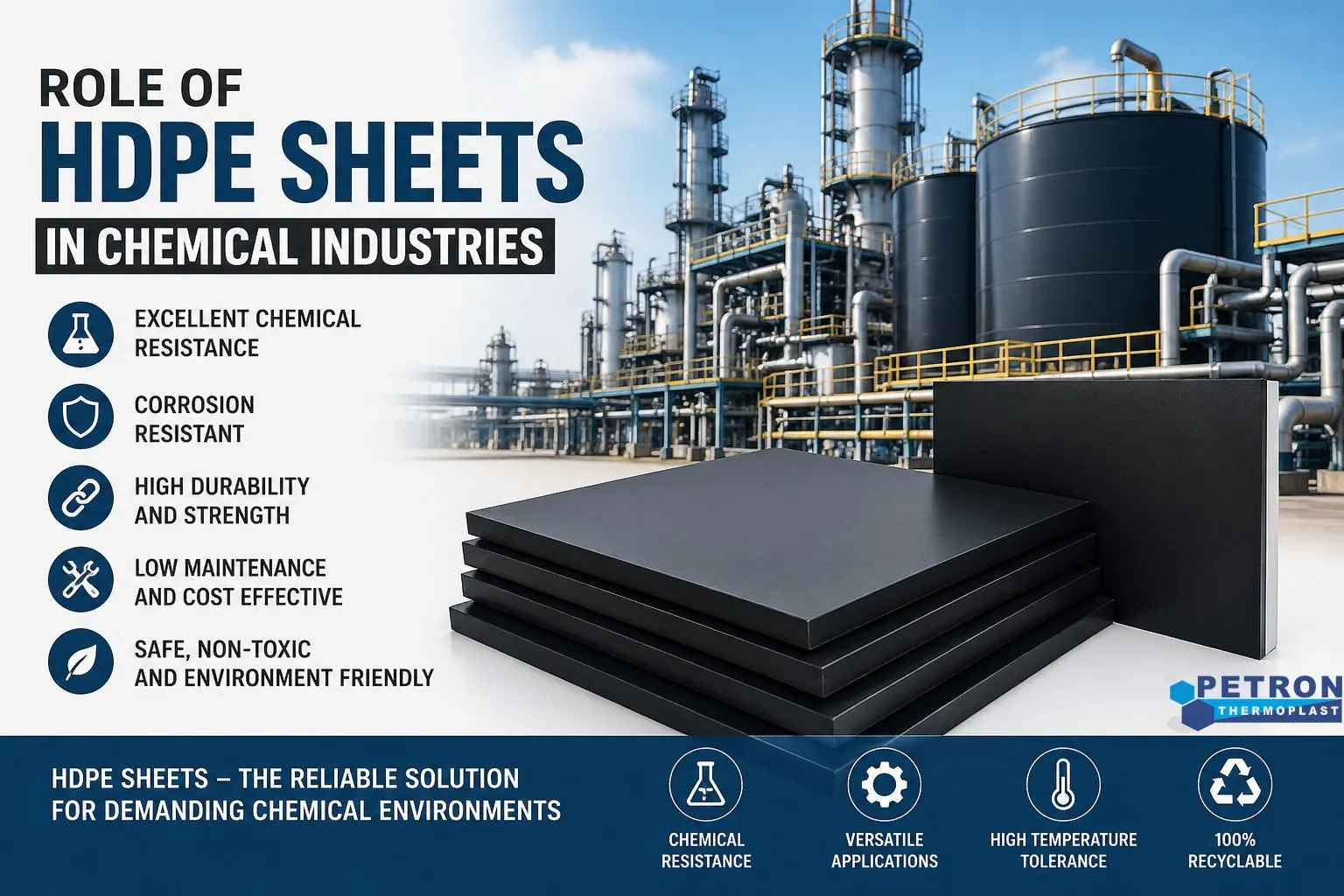
High-Density Polyethylene (HDPE) sheets play a crucial role in modern chemical industries due to their chemical resistance, durability, and hygienic properties. These sheets are widely used in environments where materials must withstand corrosive chemicals, strict cleanliness standards, and long-term operational stress. These properties make them ideal for safely managing gases like methane and carbon dioxide, which are commonly found in industrial applications. HDPE sheets are used in gas collection and containment systems, particularly in landfills, biogas facilities, and waste treatment plants. They help control harmful gas emissions and ensure the safe and efficient operation of gas extraction systems.
What is an HDPE Sheet?
An HDPE (High-Density Polyethylene) sheet is a type of thermoplastic sheet made from petroleum-based polymer known for its high strength-to-density ratio, durability, and excellent chemical resistance. It is widely used in industrial, commercial, and engineering applications due to its versatility and long service life. HDPE sheets are made from polyethylene polymers produced through the polymerization of ethylene, resulting in a dense and rigid structure.
Uses of HDPE Sheets in Chemical Industries
HDPE (High-Density Polyethylene) sheets are widely used in the chemical industry due to their excellent chemical resistance, durability, and non-reactive nature. They help ensure safe handling, storage, and processing of corrosive substances.
1. Chemical Storage Tank Linings
- Used as inner linings for tanks storing acids, alkalis, and solvents
- Prevents corrosion and leakage
2. Fabrication of Chemical Tanks
- HDPE sheets are used to manufacture storage tanks and containers
- Suitable for both above-ground and underground storage
3. Acid and Alkali Handling Systems
- Ideal for pipelines, trays, and protective barriers
- Resists damage from highly corrosive chemicals
4. Effluent Treatment Plants (ETP)
- Used in tanks, chambers, and lining systems in ETP setups
- Ensures safe handling of industrial wastewater
5. Chemical Processing Equipment
- Used in fume hoods, ducts, and machine components
- Offers resistance to chemical fumes and vapors
6. Spill Containment Systems
- Used to create secondary containment pallets and trays
- Prevents environmental contamination from chemical spills
7. Laboratory Work Surfaces
- Used for lab tables and worktops
- Provides a non-reactive and easy-to-clean surface
8. Protective Wall Cladding and Flooring
- Installed as chemical-resistant wall panels and flooring
- Protects infrastructure from corrosion and damage
9. Packaging and Storage Solutions
- Used for chemical drums, containers, and packaging materials
- Ensures safe transportation and storage
10. Custom Fabricated Industrial Components
- Used to create custom parts like covers, guards, and trays
- Adaptable to various industrial needs
Importance of HDPE Sheet Material Selection in Chemical Industries
The process of HDPE sheet material selection in chemical industries refers to a systematic evaluation and decision-making approach used to choose the most suitable HDPE sheet grade and specifications for handling, storing, or processing chemicals safely and efficiently.
Step-by-Step Selection Process
1. Identify the Type of Chemical
- Analyze whether the chemical is acidic, alkaline, or solvent-based
- Check compatibility with HDPE to avoid degradation or reaction
2. Evaluate Chemical Compatibility
- Refer to chemical resistance charts for HDPE
- Ensure the material can withstand long-term exposure
3. Determine Temperature Conditions
- Assess operating and storage temperatures
- Ensure HDPE can perform within its safe temperature range (approx. -50°C to +80°C)
4. Consider Pressure and Load Requirements
- Evaluate internal pressure, mechanical stress, and load-bearing needs
- Select appropriate thickness and grade of HDPE sheet
5. Assess Environmental Factors
- Exposure to UV rays, moisture, and outdoor conditions
- Choose UV-stabilized or specially treated HDPE if required
6. Define Application Type
- Tank lining, storage container, flooring, or protective barrier
- Select HDPE grade based on specific industrial application
7. Check Regulatory and Safety Standards
- Ensure compliance with industry standards and safety guidelines
- Important for chemical and pharmaceutical industries
8. Evaluate Fabrication and Installation Needs
- Consider ease of welding, cutting, and shaping
- Ensure compatibility with existing systems
9. Analyze Cost and Lifecycle Value
- Compare initial cost vs long-term durability
- Focus on low maintenance and extended service life
10. Perform Testing and Quality Verification
- Conduct material testing and inspection
- Ensure quality meets industrial requirements
Properties and Composition
HDPE sheets are characterized by their high density, strength, and durability, making them ideal for various applications in the chemical industries. Their tightly packed molecular structure contributes to their strength and rigidity, which are essential for handling tough jobs like construction. HDPE’s high chemical resistance makes it a safe choice for industrial settings, while its low moisture absorption allows for precise injection into molds, creating intricate shapes with high precision. These properties make HDPE sheets a preferred material for containers, pipes, geomembranes, and injection-molded products in these industries.
Key Properties of HDPE Sheets
- Mechanical Strength: HDPE has a high strength-to-density ratio, which means it is strong yet lightweight. It exhibits excellent tensile strength and impact resistance, making it suitable for demanding applications.
- Chemical Resistance: HDPE is highly resistant to a variety of chemicals, including acids, bases, and solvents. This property makes it ideal for use in chemical storage tanks and containers.
- Temperature Resistance: HDPE can withstand a wide range of temperatures, typically from -40°F to 120°F (-40°C to 49°C) for continuous use. It has good heat and cold resistance, which allows it to maintain its properties in various environmental conditions.
- Fabrication and Welding: HDPE sheets can be easily fabricated and welded using thermoplastic welding techniques. They can be cut, drilled, and shaped with standard tools, making them versatile for various manufacturing processes.
- UV Resistance: Certain grades of HDPE are UV stabilized, making them suitable for outdoor applications where exposure to sunlight is a concern. This property helps prevent degradation and maintains the material’s integrity over time.
- Low Moisture Absorption: HDPE does not absorb moisture, which helps prevent the growth of bacteria and mold, making it a popular choice for food-related applications, such as cutting boards.
- Electrical Insulation: HDPE is an excellent electrical insulator, which makes it suitable for various electrical applications.
Applications in Chemical Industry
- Manufacturing and Industrial Production:
- Industrial chemicals are used in various manufacturing processes, including the production of plastics, textiles, and construction materials. Chemicals enhance product quality, durability, and efficiency in manufacturing operations. For example, petrochemicals serve as the foundation for producing synthetic materials like plastics and fibers.
2. Energy Production:
- The chemical industry is involved in producing fuels and energy sources, including biofuels and renewable energy technologies. Chemicals are also used in processes like refining crude oil and producing natural gas.
3. Water Treatment:
- Chemicals play a critical role in water purification and treatment processes. They are used to remove contaminants, disinfect water, and ensure safe drinking water supplies.
4. Food and Beverage:
- In the food industry, chemicals are used as preservatives, flavorings, and colorings to enhance food quality and safety. Food additives help extend shelf life and improve the nutritional value of products.
Challenges and Limitations
- Environmental Stress Cracking: HDPE is susceptible to environmental stress cracking (ESC), which can lead to premature failure in harsh chemical environments. This is influenced by factors such as molecular weight, crystallinity, and processing conditions.
- Temperature Resistance: While HDPE performs well at room temperature, its mechanical properties deteriorate at elevated temperatures, typically above 80°C. This restricts its use in high-temperature applications.
- Recyclability: HDPE is generally considered recyclable, but the reality of recycling HDPE products is often more complex than it appears. Contamination from food residues, mixed plastic types, and various additives can complicate the recycling process.
- Energy Intensive Production: The manufacturing of HDPE boards and sheets requires substantial energy inputs, primarily derived from fossil fuels. This energy-intensive production process contributes to greenhouse gas emissions and exacerbates climate change concerns.
- Temperature Sensitivity: HDPE exhibits notable temperature sensitivity, which can pose significant challenges in various applications. At elevated temperatures, HDPE can soften or warp, compromising its structural integrity.
Conclusion
HDPE sheets have proven to be a reliable and efficient material for the chemical industry, offering a strong combination of chemical resistance, durability, and cost-effectiveness. Their ability to withstand aggressive substances such as acids, alkalis, and solvents makes them an ideal choice for storage, processing, and protective applications.
In addition to performance, HDPE sheets contribute to operational safety and low maintenance, as they do not corrode, rust, or degrade easily under harsh conditions. Their ease of fabrication and customization further enhances their value, allowing industries to design tailored solutions for specific requirements.
Moreover, with increasing focus on sustainability and environmental responsibility, HDPE stands out as a recyclable and long-lasting material, supporting greener industrial practices. Overall, HDPE sheets continue to play a vital role in improving efficiency, safety, and longevity in chemical industry operations, making them a preferred alternative to traditional materials like metal and other plastics.