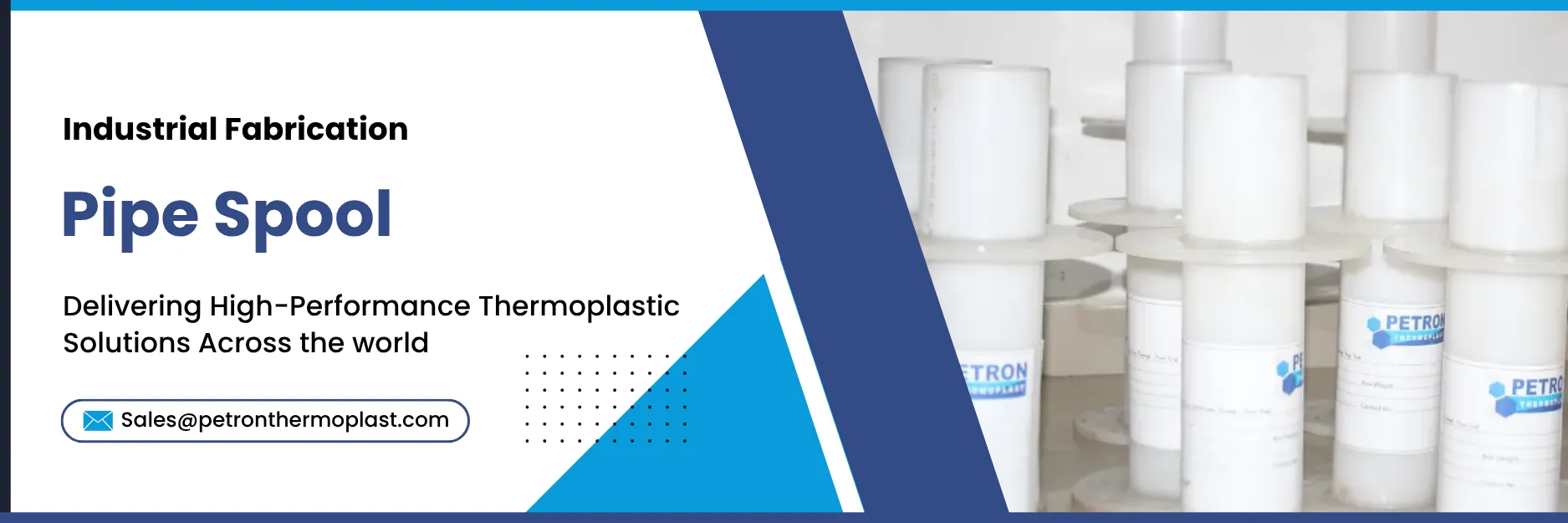

Pipe Spool Manufacturer for Industrial Piping Systems
A pipe spool is a prefabricated unit of piping combining pipes, flanges, fittings (elbows, tees) manufactured in a workshop, sped up on-site installation, often known as pre-fab piping and spool pieces. They are used in industrial sectors like oil & gas, chemical, and to reduce on-site welding construction and ensure higher quality standards.
A Pipe Spool is a pre-fabricated section, a piping system that is manufactured in a workshop or fabrication installation facility before being transported to the site. It typically consists of pipes, fittings, flanges, valves, and other components assembled together as a single unit. Pipe spools are designed according to engineering drawings, and specifications are provided to simplify on-site installation and improve the efficiency of construction.

Pipe Spool Details
Pipe Spool Range
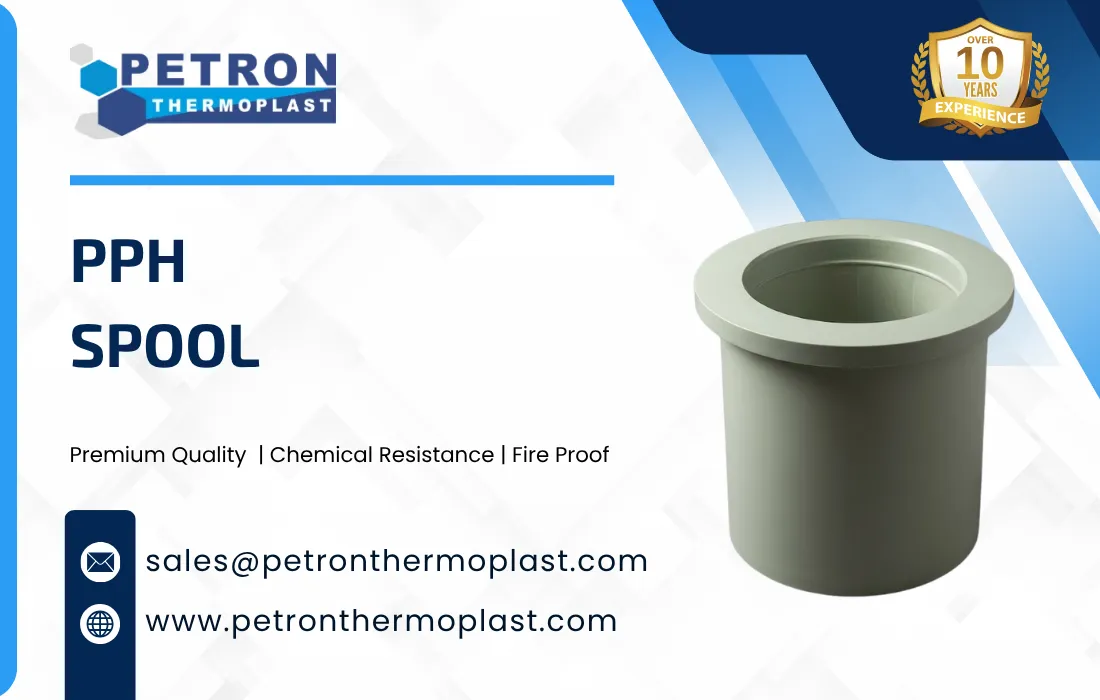
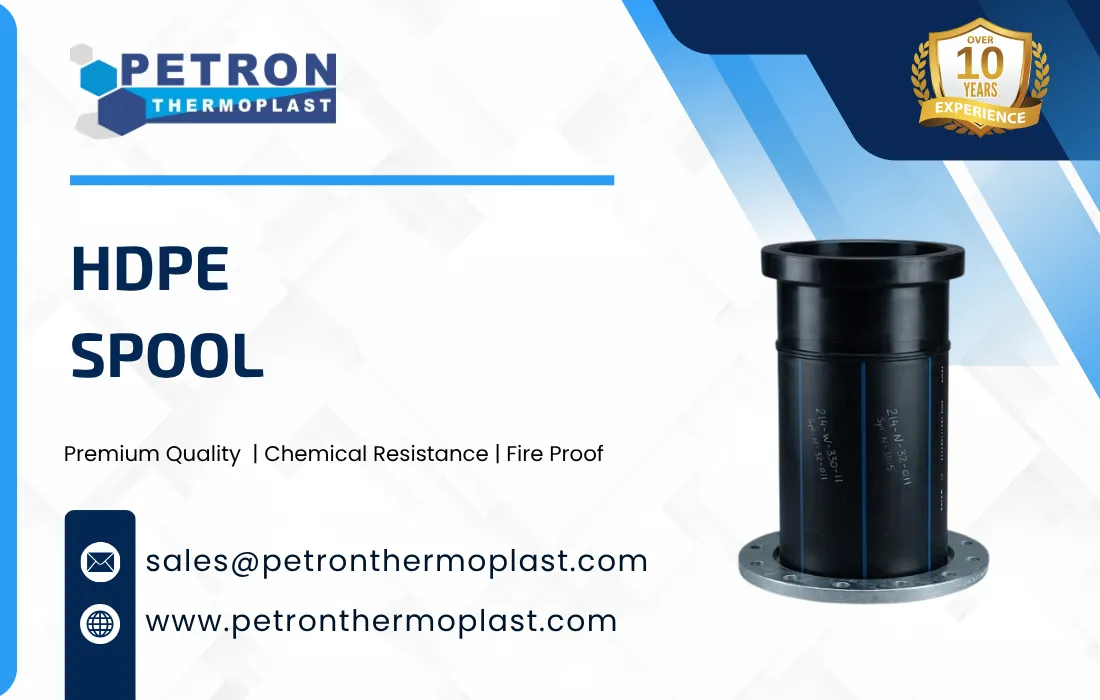
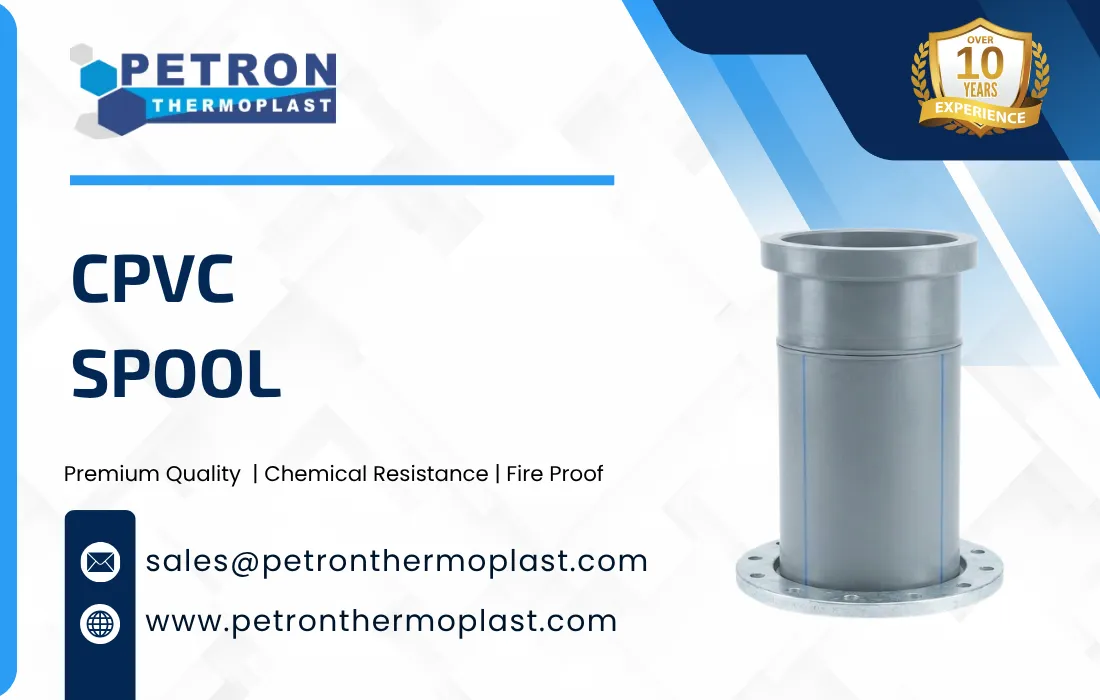
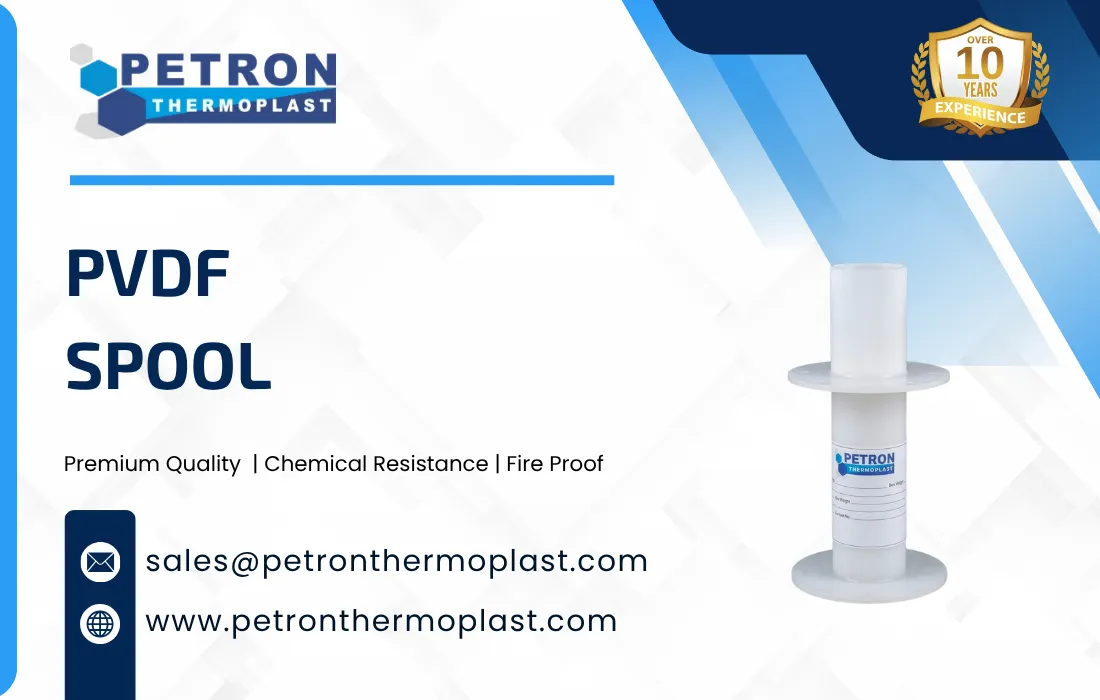
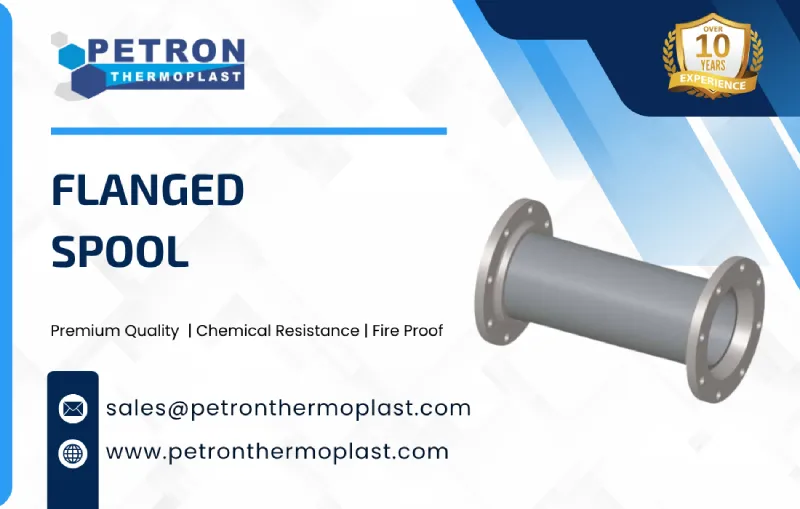
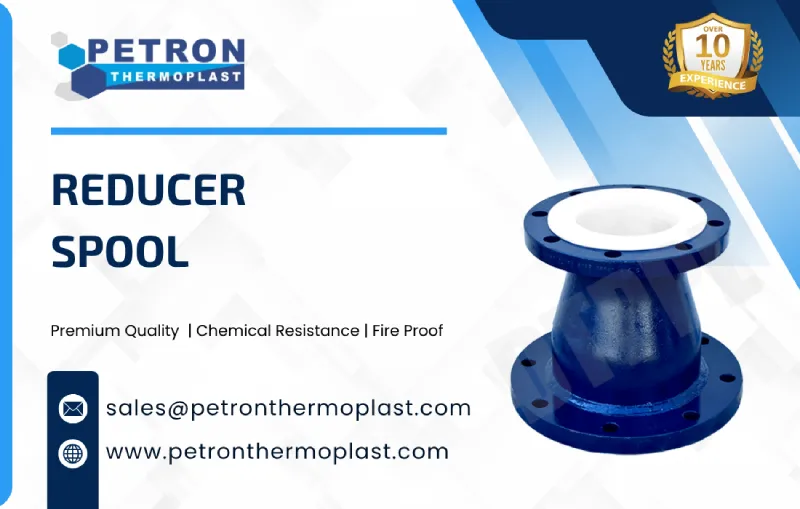
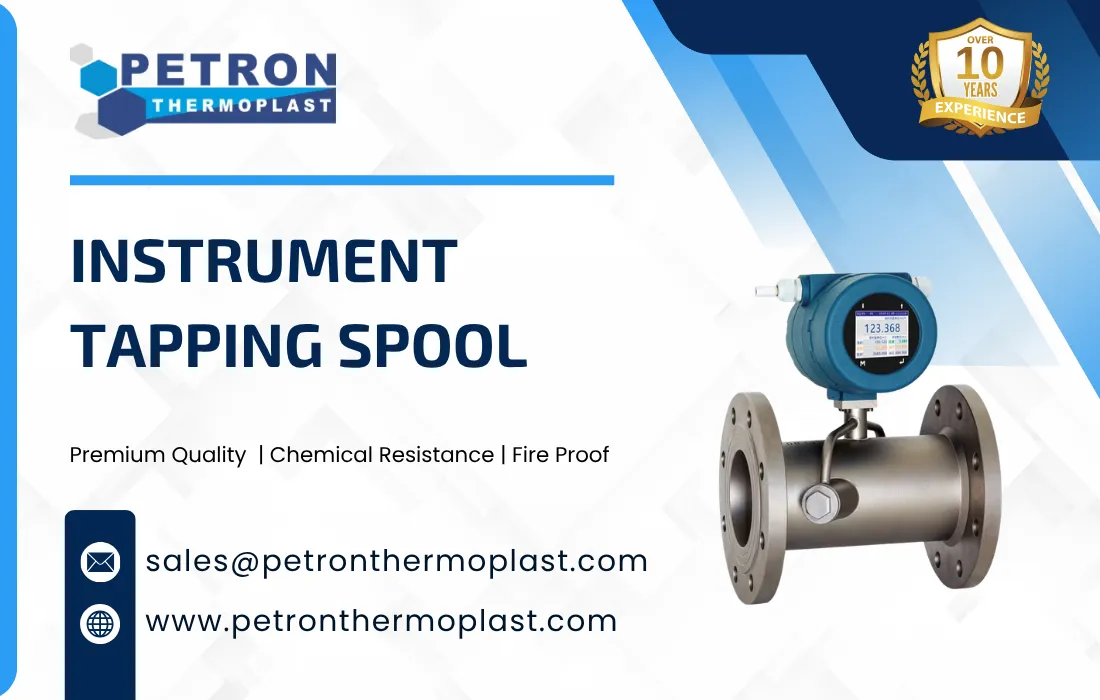
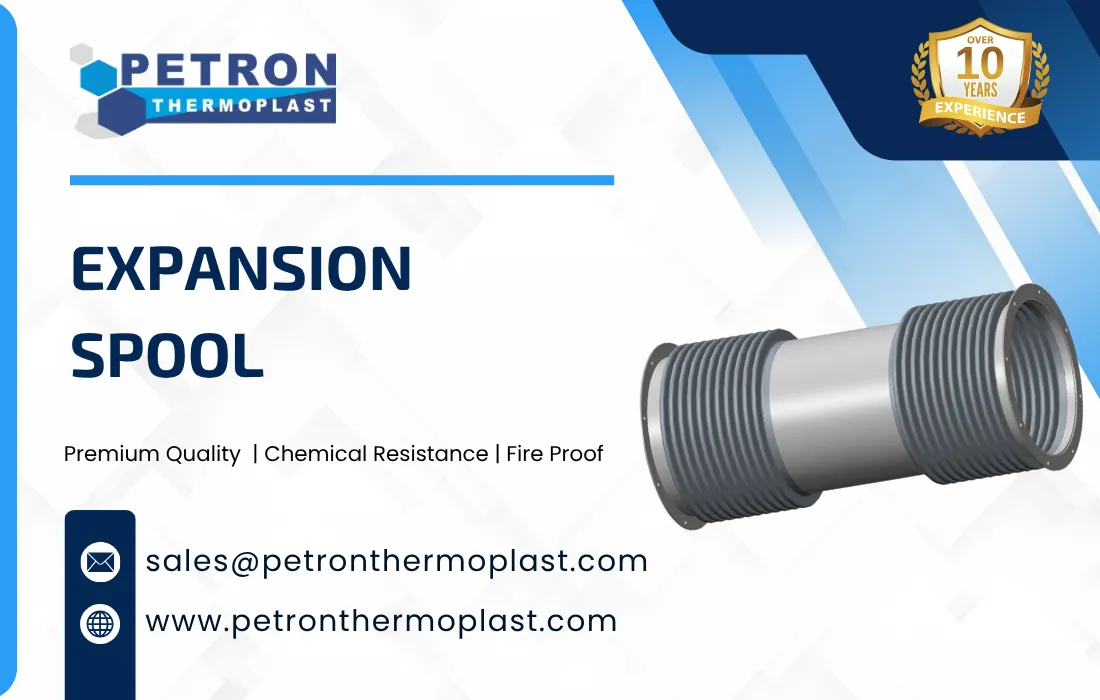
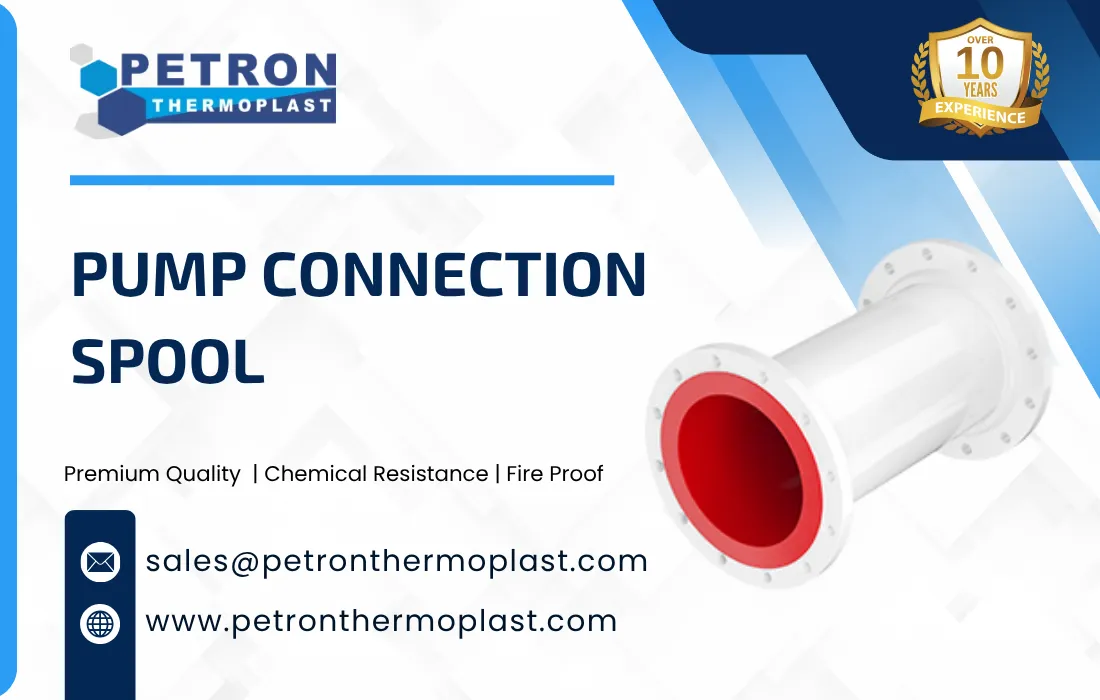
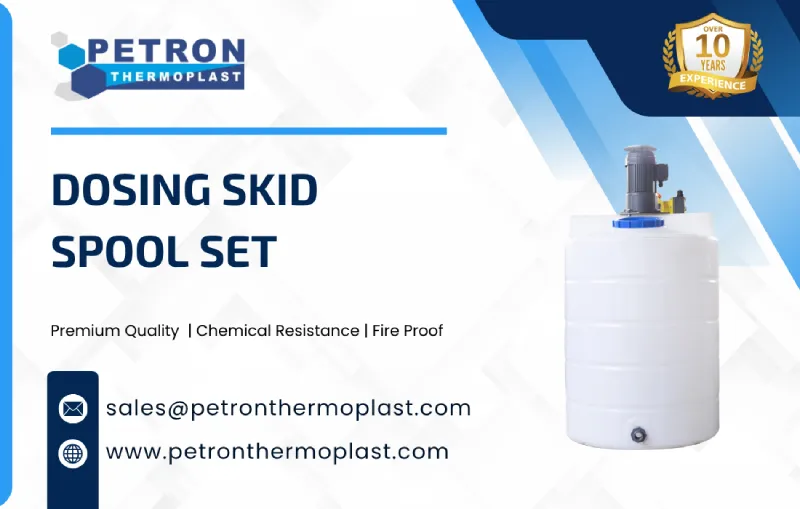

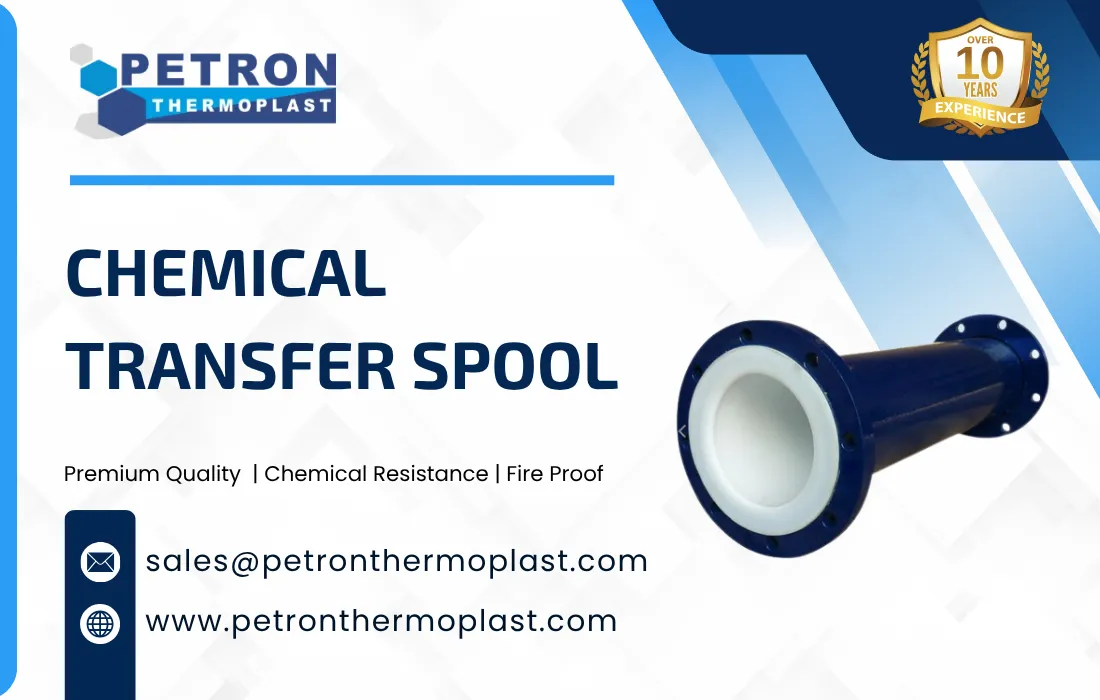
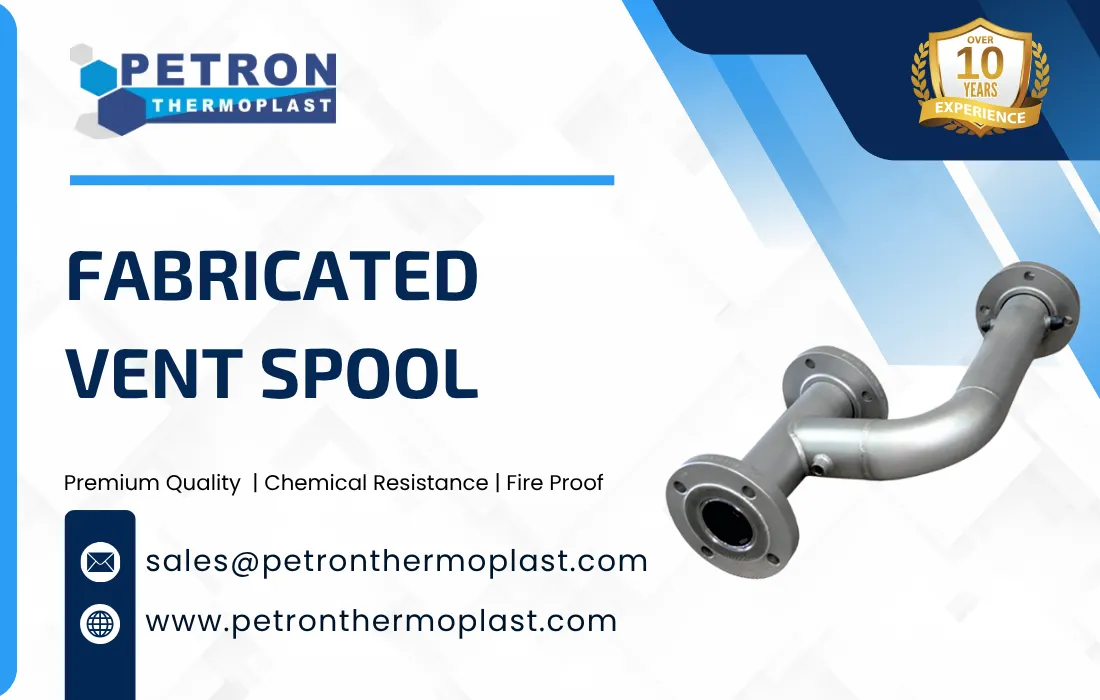
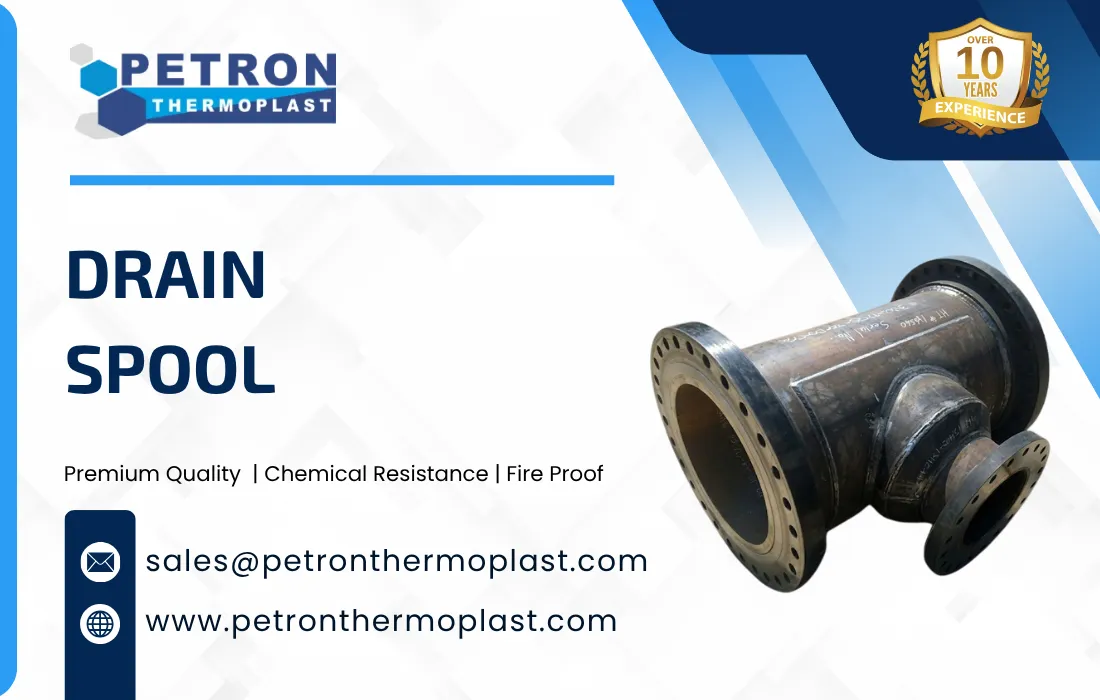

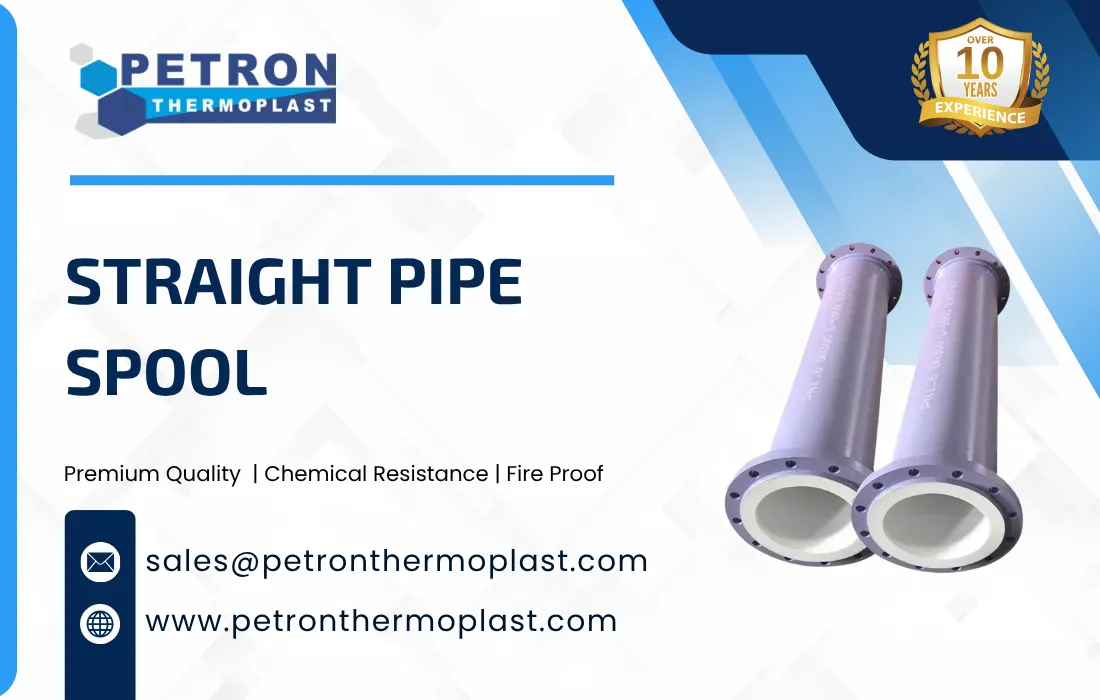
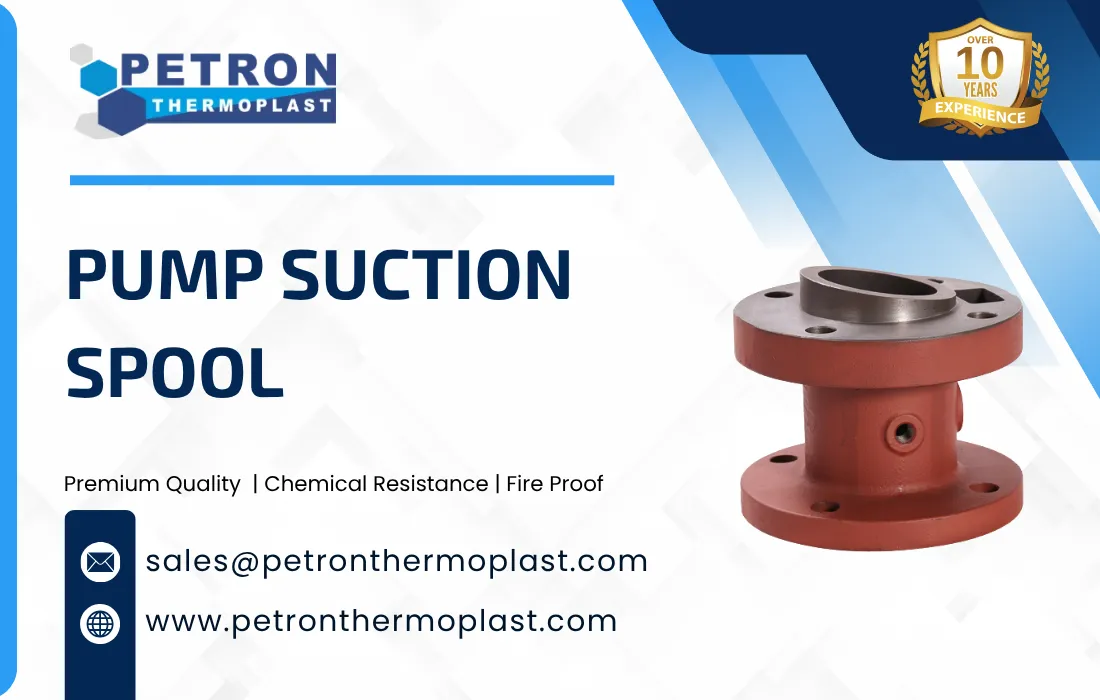
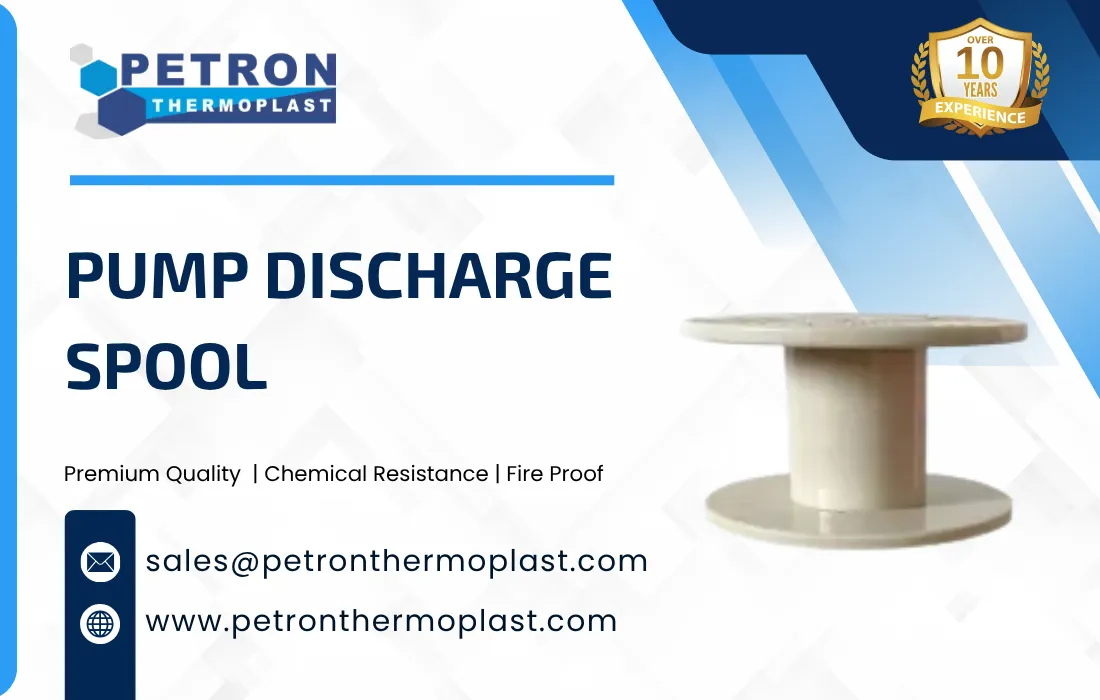
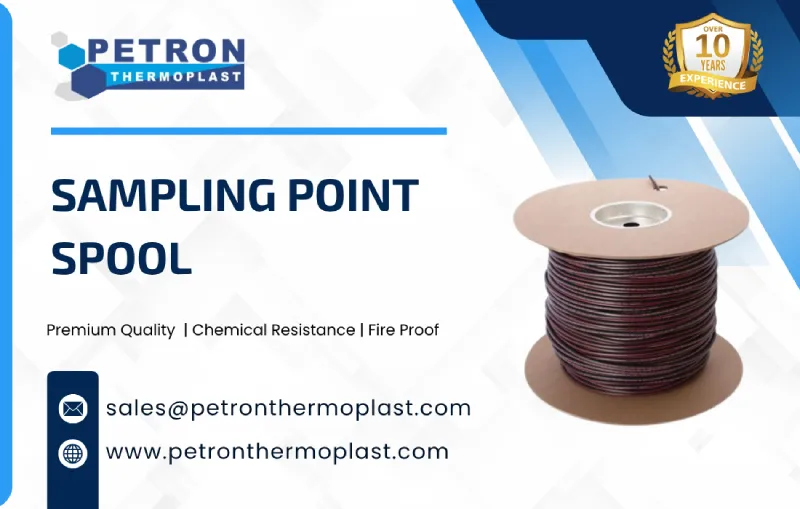
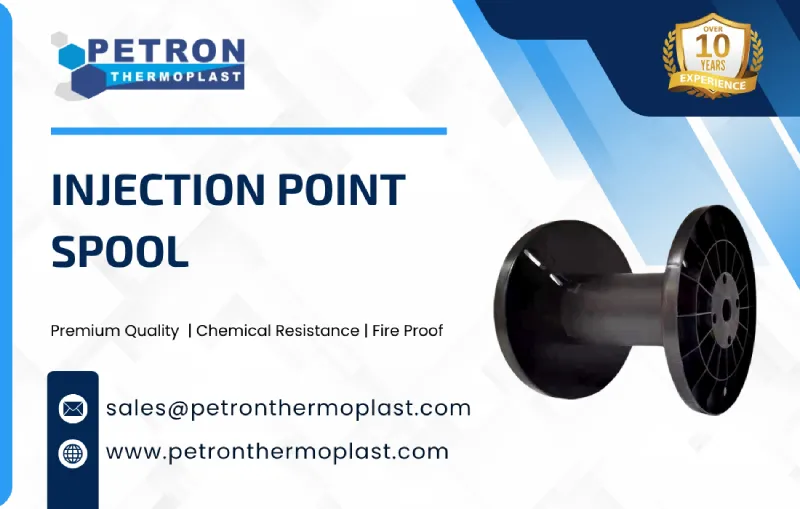
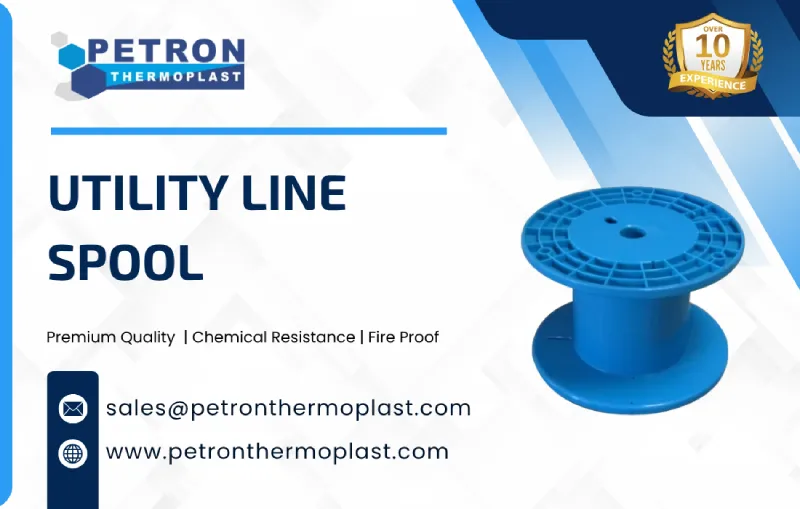
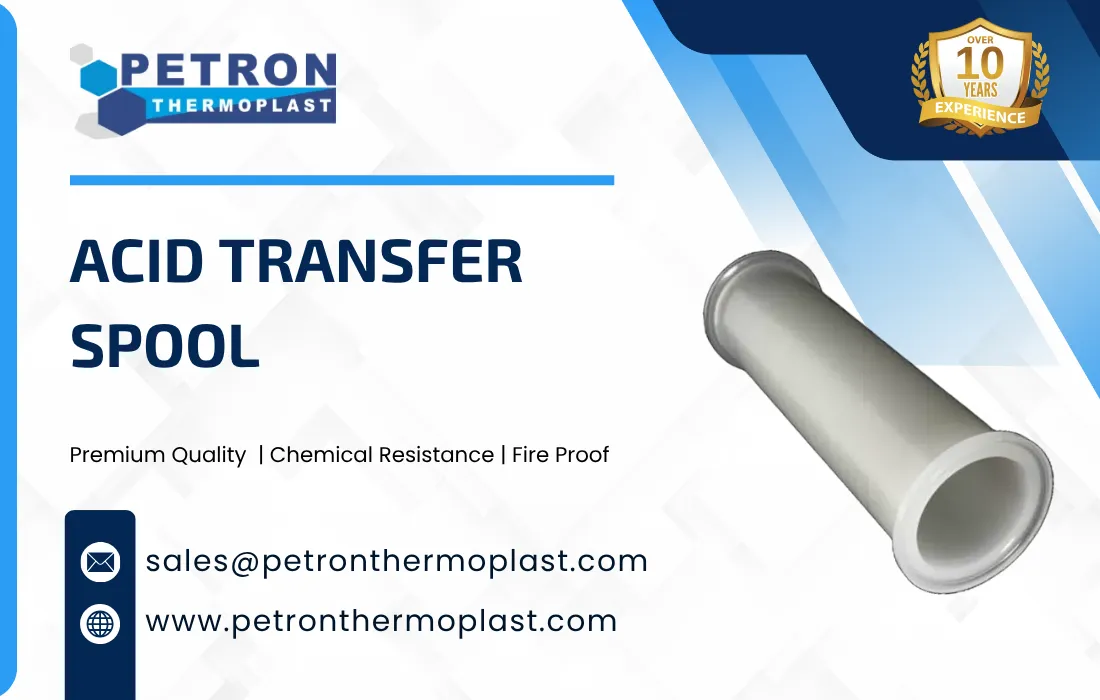
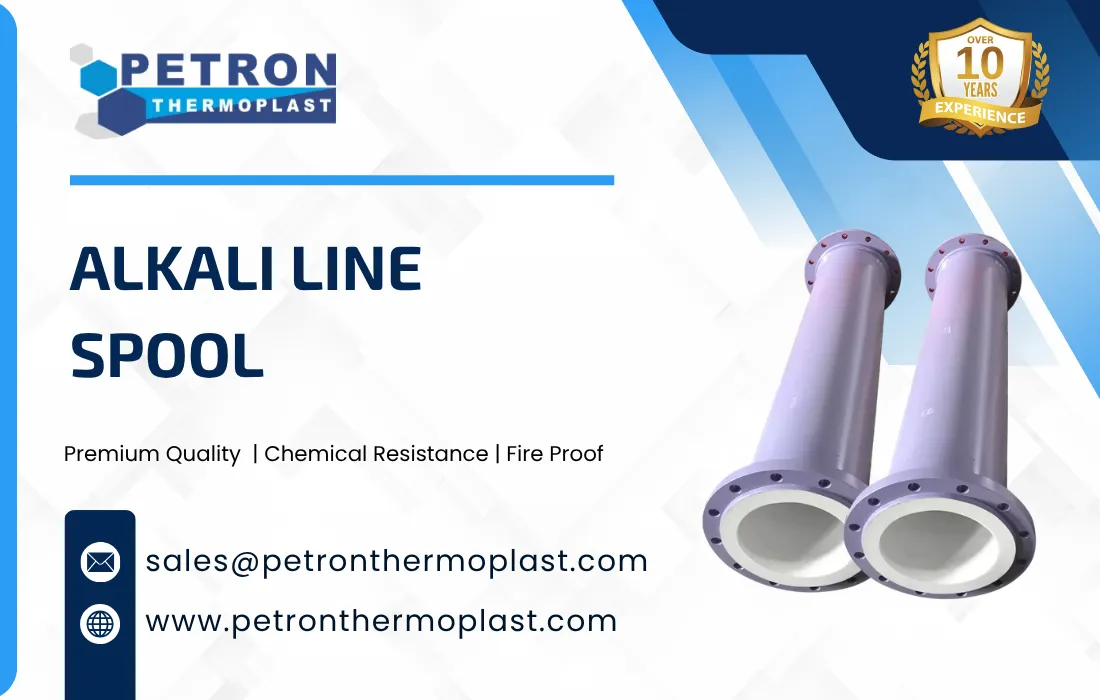
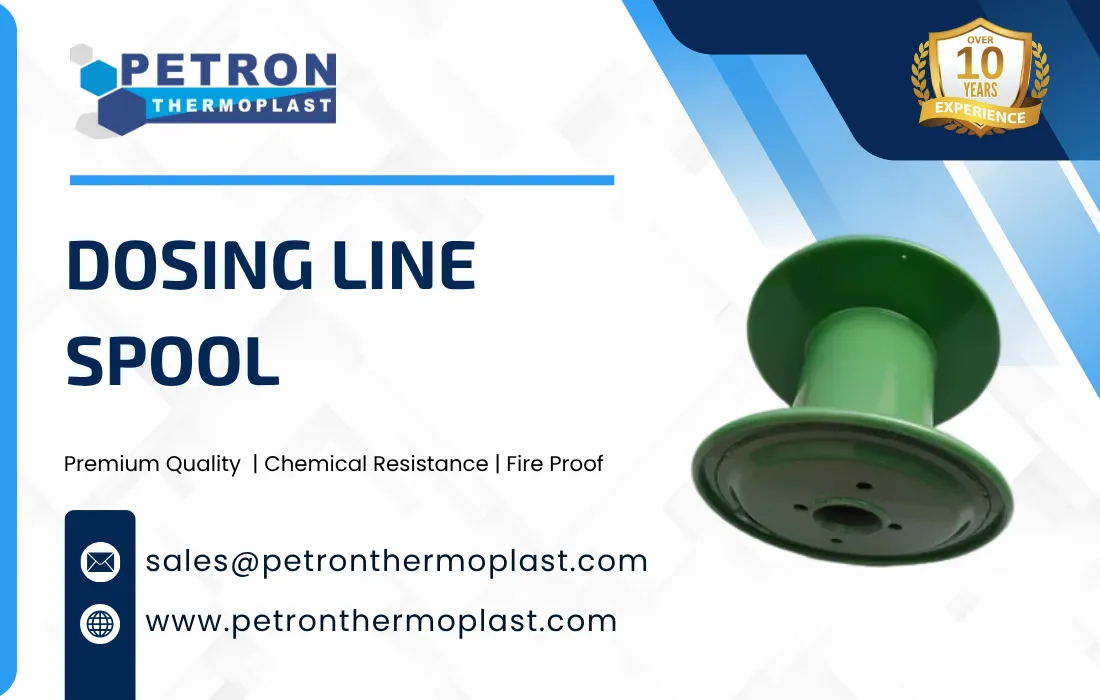

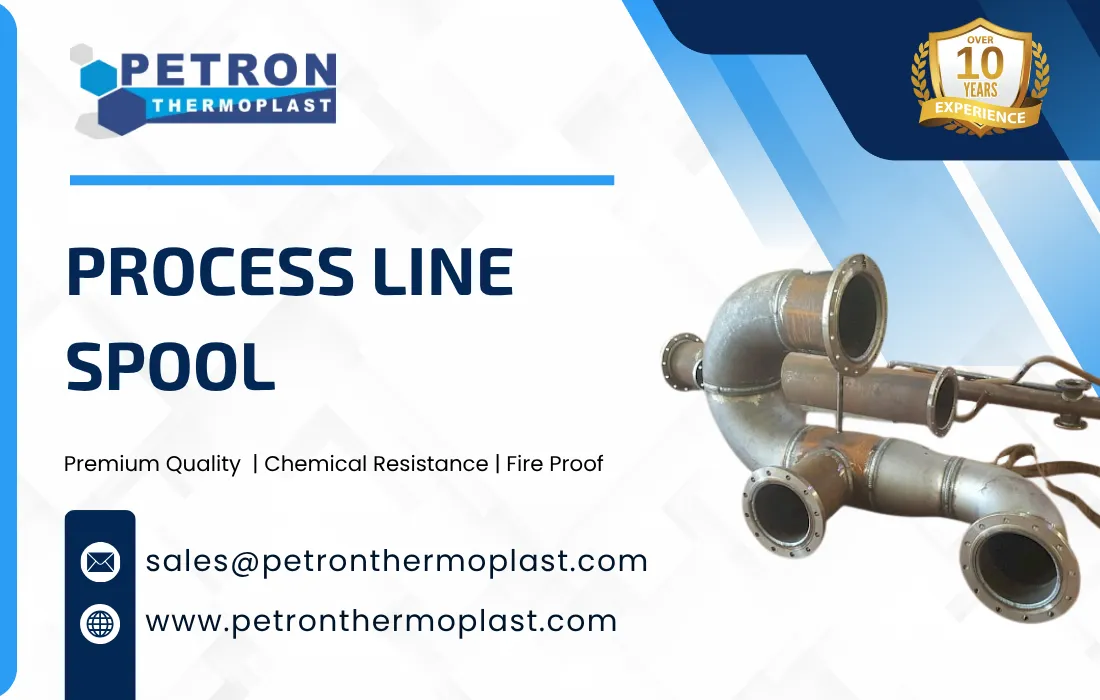
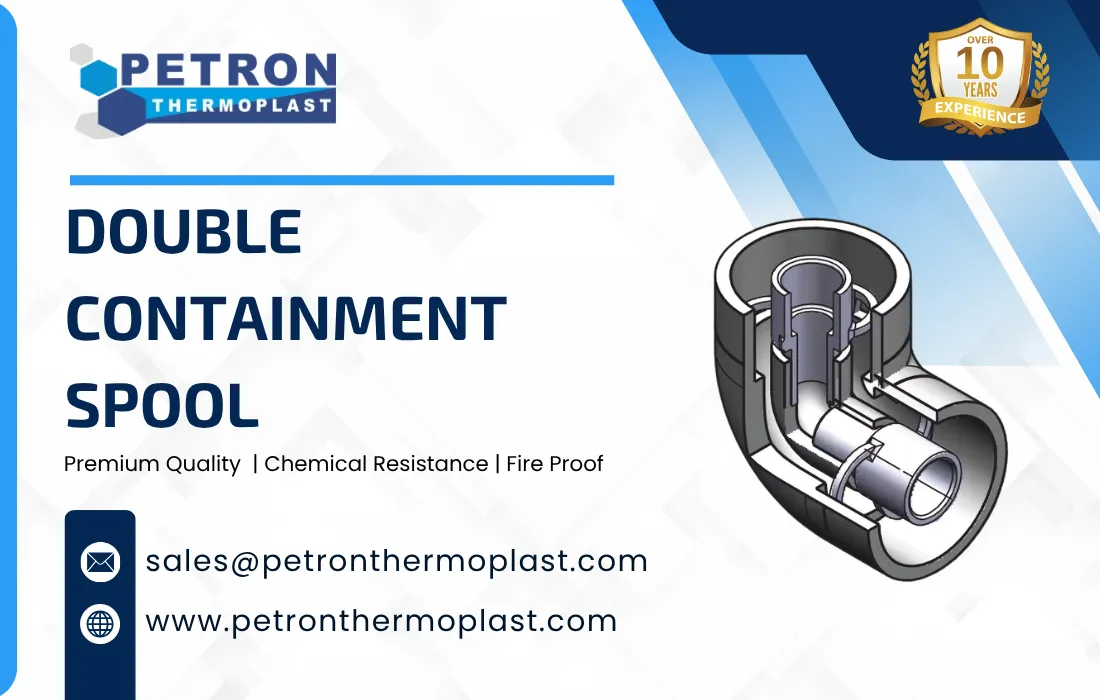
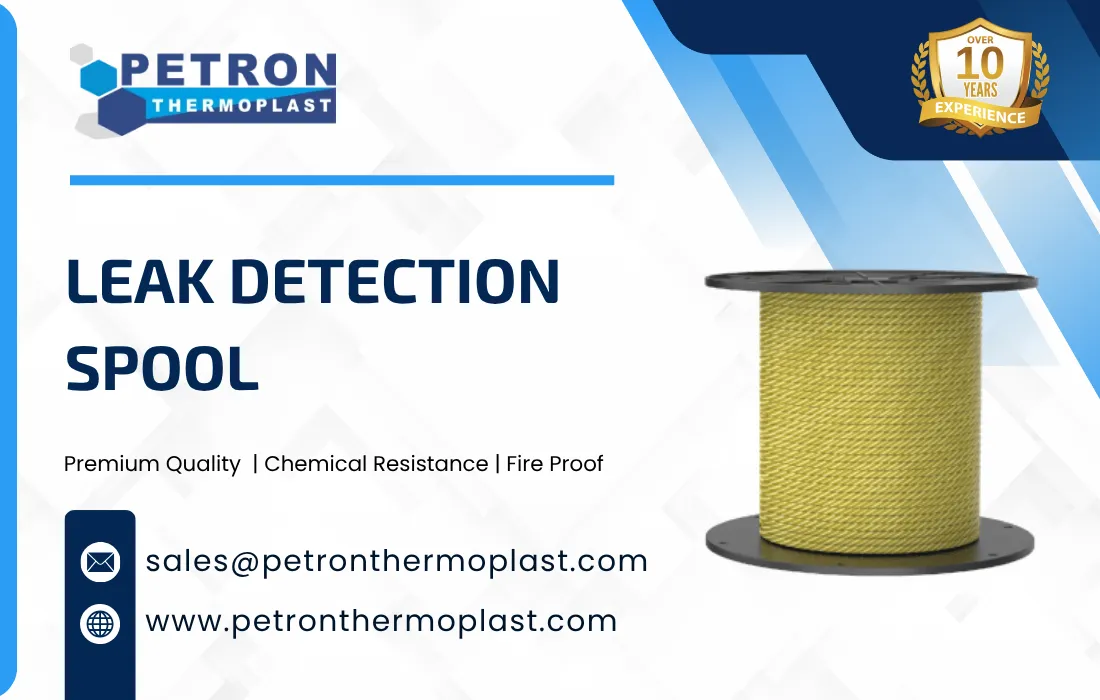
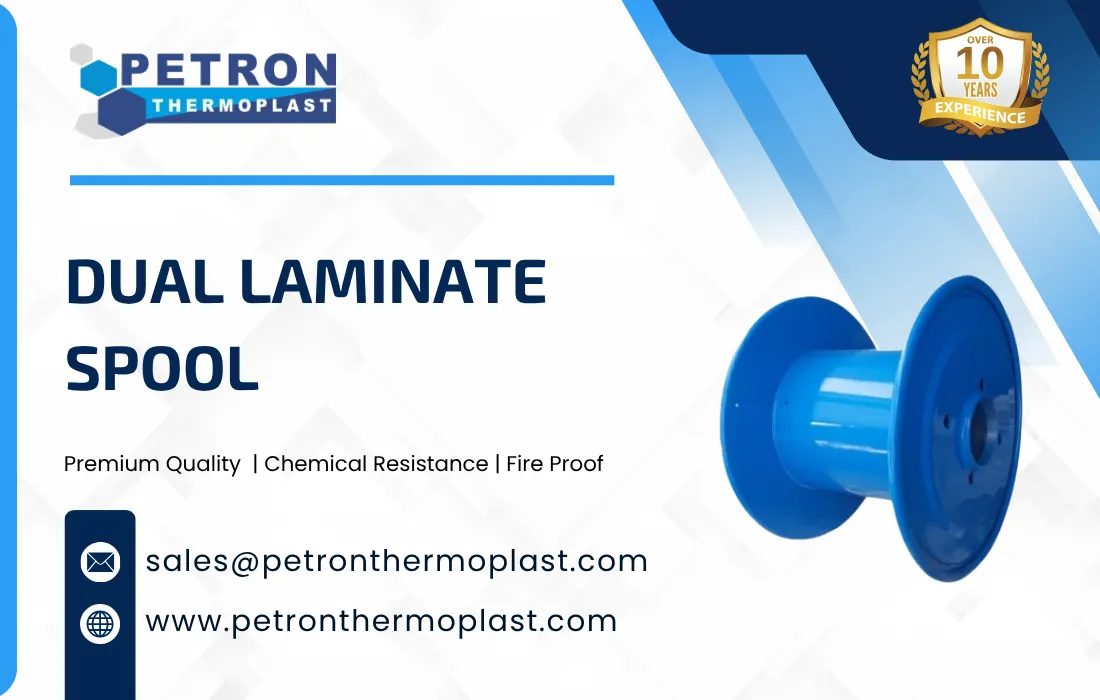
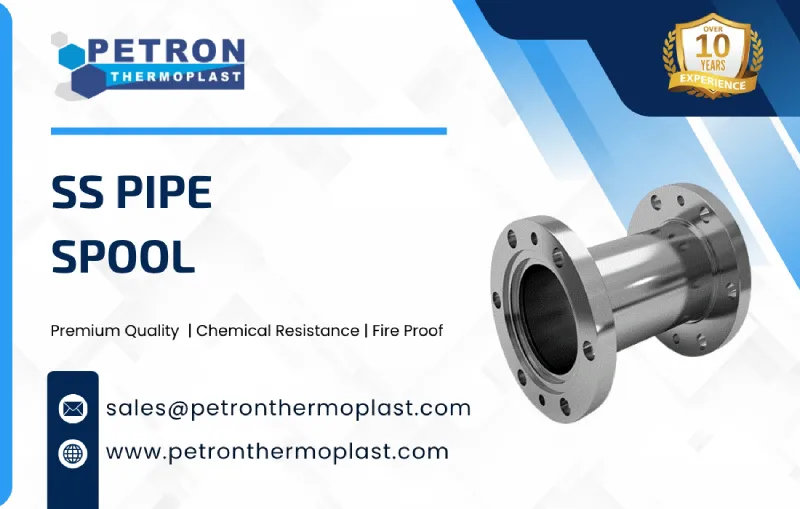

Custom Product Manufacturing Available
If you are searching for customized product designs that meet your requirements, don’t worry. Petron Thermoplast also offers custom product manufacturing services to meet the unique needs of various industries. Work with our expert engineers to create custom designs suited for your application.
| Parameter | Details / Specification |
| Product Name | Pipe Spool |
| Material Options | HDPE, Carbon Steel, Stainless Steel, PVC, FRP, CPVC |
| Fabrication Method | Welding / Flanged / Threaded Assembly |
| Pipe Diameter Range | 20 mm to 2000 mm or customized |
| Length Range | As per project requirement |
| Wall Thickness | Based on pipe schedule or SDR |
| Pressure Rating | PN6 to PN25 (depending on material and design) |
| Temperature Range | -40°C to +120°C (varies by material) |
| Density (HDPE Spool) | 0.94 – 0.96 g/cm³ |
| Joint Type | Butt Fusion, Electrofusion, Flanged, Socket Weld, Threaded |
| Surface Finish | Smooth / Coated / Polished |
| Corrosion Resistance | Excellent (depends on material type) |
| Chemical Resistance | Suitable for acids, alkalis, and industrial chemicals |
| Tensile Strength | Depends on material specification |
| Flexibility | Moderate to High (especially in HDPE spools) |
| Leak-Proof Performance | High with proper welding and sealing |
| Standard Compliance | ISO, ASTM, ASME, DIN, ANSI |
| Inspection & Testing | Hydro Test, Visual Inspection, NDT, Dimensional Check |
| Installation Method | Bolt Connection / Welding / Flange Assembly |
| UV Resistance | Available with UV stabilized materials |
| Service Life | 20–50 years depending on application and material |
| Applications | Chemical Plants, Water Treatment, Oil & Gas, Industrial Piping |
1. Prefabricated Construction
- Manufactured and assembled in a controlled workshop environment
- Reduces on-site fabrication and installation time
- Improves accuracy and quality control
2. Easy Installation
- Delivered ready for assembly at the project site
- Minimizes welding and labor work on-site
- Simplifies piping alignment and connection
3. High Strength & Durability
- Designed to withstand pressure, temperature, and mechanical stress
- Suitable for heavy-duty industrial applications
4. Leak-Proof Performance
- Precision welding and sealing ensure secure joints
- Reduces risk of fluid leakage and operational failure
5. Customizable Design
- Available in different:
- Sizes
- Materials
- Thicknesses
- Pressure ratings
- Designed according to project specifications
6. Corrosion & Chemical Resistance
- Materials like HDPE, FRP, and stainless steel provide excellent resistance to:
- Corrosion
- Chemicals
- Moisture
7. Wide Material Options
Pipe spools can be fabricated using:
- HDPE
- Stainless Steel
- Carbon Steel
- PVC / CPVC
- FRP
8. Compact & Organized Assembly
- Combines multiple piping components into one unit
- Reduces clutter and improves system organization
| Nominal Pipe Size (NPS) | Outer Diameter (OD) | Typical Wall Thickness | Pressure Class / SDR |
| 20 mm (¾”) | 20 mm | 2.0 – 3.0 mm | SDR 11 / PN16 |
| 25 mm (1”) | 25 mm | 2.3 – 3.5 mm | SDR 11 / PN16 |
| 32 mm (1¼”) | 32 mm | 2.4 – 4.0 mm | SDR 11 / PN16 |
| 40 mm (1½”) | 40 mm | 2.5 – 4.5 mm | SDR 11 / PN16 |
| 50 mm (2”) | 50 mm | 3.0 – 5.0 mm | SDR 11 / PN16 |
| 63 mm | 63 mm | 3.8 – 5.8 mm | SDR 11 / PN16 |
| 75 mm | 75 mm | 4.5 – 6.8 mm | SDR 11 / PN16 |
| 90 mm | 90 mm | 5.4 – 8.2 mm | SDR 11 / PN16 |
| 110 mm | 110 mm | 6.6 – 10.0 mm | SDR 11 / PN16 |
| 160 mm | 160 mm | 9.5 – 14.6 mm | SDR 11 / PN16 |
| 200 mm | 200 mm | 11.9 – 18.2 mm | SDR 11 / PN16 |
| 250 mm | 250 mm | 14.8 – 22.7 mm | SDR 11 / PN16 |
| 315 mm | 315 mm | 18.7 – 28.6 mm | SDR 11 / PN16 |
| 400 mm | 400 mm | 23.7 – 36.3 mm | SDR 11 / PN16 |
| 500 mm | 500 mm | 29.7 – 45.4 mm | SDR 11 / PN16 |
| Pressure Class | Pressure Rating | Typical Application |
| PN6 | 6 bar | Low-pressure fluid systems |
| PN8 | 8 bar | Water transfer systems |
| PN10 | 10 bar | Industrial pipelines |
| PN12.5 | 12.5 bar | Chemical processing |
| PN16 | 16 bar | High-pressure water and chemical lines |
| PN20 | 20 bar | Heavy-duty industrial systems |
| PN25 | 25 bar | Critical process piping |
| Material Type | Operating Temperature Range | Density |
| HDPE Pipe Spool | -40°C to +60°C | 0.94 – 0.96 g/cm³ |
| PVC Pipe Spool | 0°C to +60°C | 1.30 – 1.45 g/cm³ |
| CPVC Pipe Spool | 0°C to +90°C | 1.50 – 1.60 g/cm³ |
| FRP Pipe Spool | -20°C to +120°C | 1.50 – 2.00 g/cm³ |
| Stainless Steel Spool | -200°C to +800°C | 7.75 – 8.10 g/cm³ |
| Carbon Steel Spool | -29°C to +425°C | 7.80 – 7.90 g/cm³ |
User Manual for Pipe Spool
1. Chemical Processing Plants
Pipe spools are used for transporting:
- Acids
- Alkalis
- Chemicals
- Process fluids
2. Water Treatment Plants
Used in:
- Water supply lines
- Filtration systems
- Wastewater treatment
- Effluent handling systems
3. Oil & Gas Industry
Pipe spools are essential in:
- Refineries
- Offshore platforms
- Fuel transfer systems
- Gas distribution pipelines
4. Power Plants
Applied in:
- Steam pipelines
- Cooling water systems
- Boiler connections
- Condensate systems
5. Pharmaceutical Industry
Used for hygienic and contamination-free fluid transfer in:
- Clean process systems
- Purified water lines
- Chemical dosing systems
6. Mining & Slurry Transport
Suitable for transporting:
- Slurry
- Abrasive materials
- Industrial waste fluids
7. HVAC & Utility Systems
Used in:
- Chilled water pipelines
- Cooling systems
- Air handling systems
- Utility piping networks
8. Marine & Offshore Applications
Pipe spools are utilized in:
- Shipbuilding
- Offshore piping systems
- Seawater handling systems
9. Industrial Manufacturing Units
Used for:
- Process piping
- Utility connections
- Fluid distribution systems
- Compressed air pipelines
Spool Pipe Fabrication
- Begins with detailed fabrication drawings that outline component dimensions, material specifications, and assembly plans of fabrication services.
- Raw pipes are cut to precise lengths to align with fittings and flanges.
- Welding Techniques:
- Roll Fitting and Welding: The pipe remains stationary on a rolling machine while welders perform the joining process.
- Permanent Position Welding: Used for complex assemblies with multiple branches or joints beyond clearance limits.
Prefabrication of Spool Pipes
Pre-fabrication simplifies the assembly process and minimizes time and labor requirements onsite. The two primary processes involved are:
- Roll Correction and Welding: The main pipe is adjusted using a rolling machine, allowing the welder to remain stationary for accurate welding.
- Position Fitting and Welding: This step is applied when multiple branches exceed clearance limits, requiring detailed and precise fitting.
By pre-fabricating Spool Pipes, manufacturers save time, as the welder does not need to move along the entire pipe to perform fittings or welds.
Spool Assembly and Installation
- Assembled spools are transported to the site for integration into the larger piping network.
- Alignment tools, hoists, and gauges ensure precise positioning within the structure.
- Proper alignment is critical before embedding the system in concrete, as the installed spools must withstand structural weight and dynamic forces.
a) Material Selection
Different materials are used according to application requirements:
- HDPE
- Stainless Steel
- Carbon Steel
- PVC / CPVC
- FRP
b) Size & Dimension Customization
- Customized pipe diameter
- Variable spool lengths
- Wall thickness as per pressure rating
- Standard or non-standard dimensions
c) End Connection Options
Pipe spools can be manufactured with:
- Flanged ends
- Butt weld ends
- Threaded connections
- Socket weld connections
- Electrofusion joints (for HDPE)
d) Pressure & Temperature Requirements
Customized according to:
- Operating pressure
- Fluid type
- Temperature conditions
- Industrial standards
e) Surface Finish & Coating
- Polished finish
- Anti-corrosion coating
- Epoxy lining
- UV-resistant coating
f) Component Integration
Additional components can be integrated:
- Valves
- Reducers
- Elbows
- Tees
- Supports and brackets
Processing of Pipe Spool
a) Design & Engineering
- Prepared using engineering drawings and CAD software
- Designed according to project specifications and standards
b) Cutting Process
- Pipes are cut using CNC machines, saw cutting, or plasma cutting
- Ensures accurate dimensions and edge preparation
c) Welding & Fabrication
Common joining methods include:
- Butt welding
- TIG/MIG welding
- Electrofusion welding
- Socket welding
d) Fit-Up & Assembly
- Pipes, fittings, and flanges are aligned and assembled
- Ensures proper dimensional accuracy and alignment
e) Surface Treatment
- Grinding and polishing
- Coating or painting
- Cleaning and finishing
f) Inspection & Testing
Pipe spools undergo strict quality checks:
- Hydrostatic pressure testing
- Visual inspection
- Non-destructive testing (NDT)
- Dimensional verification
g) Packaging & Dispatch
- Proper labeling and marking
- Protective packaging for transport safety
a) Site Preparation
- Ensure the installation area is clean and properly aligned
- Verify foundation, supports, and pipe routing according to drawings
- Check spool dimensions and specifications before installation
b) Inspection Before Installation
- Inspect for transportation damage
- Check flanges, welds, and fittings
- Verify pressure rating and material compatibility
c) Alignment & Positioning
- Position the pipe spool accurately using lifting equipment
- Ensure proper alignment with connecting pipelines and equipment
- Avoid excessive stress or bending during fit-up
d) Joint Connection Methods
Pipe spools can be connected using:
- Flanged connections
- Butt welding
- Threaded joints
- Electrofusion welding (for HDPE spools)
e) Bolt Tightening & Welding
- Tighten flange bolts evenly using proper torque values
- Ensure welding is carried out by qualified personnel
- Follow applicable welding standards and procedures
f) Support & Anchoring
- Install proper pipe supports and clamps
- Prevent vibration, sagging, or movement during operation
g) Testing After Installation
- Conduct hydrostatic or pneumatic pressure testing
- Check for leakage and joint integrity
- Perform final inspection before commissioning
2. Maintenance of Pipe Spool
a) Regular Inspection
Periodically inspect for:
- Leakage
- Corrosion
- Cracks or deformation
- Loose bolts or supports
b) Cleaning
- Remove dirt, debris, and chemical deposits
- Use suitable cleaning methods based on pipe material
c) Corrosion Protection
- Reapply coatings or protective layers if required
- Monitor external environmental conditions
d) Weld & Joint Inspection
- Inspect welded joints and flange connections regularly
- Replace damaged gaskets or faulty components immediately
e) Pressure Monitoring
- Ensure operating pressure remains within design limits
- Avoid sudden pressure surges or water hammer effects
f) Temperature Monitoring
- Maintain operating temperatures within specified limits
- Prevent overheating or thermal stress
g) Replacement of Damaged Components
- Replace worn-out fittings, seals, or spool sections promptly
- Use compatible replacement materials and components
1. High-Density Polyethylene (HDPE):
- Lightweight and flexible
- Excellent chemical and corrosion resistance
- Leak-proof fusion joints
- Suitable for water and chemical applications:
- Water treatment plants
- Chemical industries
- Effluent systems
2. Carbon Steel (CS):
- High mechanical strength
- Suitable for high-pressure and high-temperature systems
- Cost-effective for industrial applications:
- Oil & gas industries
- Steam pipelines
- Power plants
3. Polyvinyl Chloride (PVC):
- Lightweight and economical
- Corrosion resistant
- Easy to install:
- Water supply systems
- Drainage pipelines
- Low-pressure chemical systems
4. Chlorinated Polyvinyl Chloride (CPVC):
- Higher temperature resistance than PVC
- Good chemical resistance
- Smooth internal surface:
- Hot water systems
- Industrial chemical piping
5. Fiber Reinforced Plastic (FRP):
- Excellent corrosion resistance
- High strength-to-weight ratio
- Suitable for aggressive chemical environments
- Chemical plants
- Marine applications
- Wastewater systems
6. Alloy Steel:
- Enhanced strength and temperature resistance
- Suitable for critical industrial operations:
- Refineries
- High-pressure process lines
- Thermal plants
7. Copper & Copper Alloys:
- Excellent thermal conductivity
- Corrosion resistant
- Easy fabrication
- HVAC systems
- Cooling lines
- Utility piping
8. Galvanized Iron (GI):
- Zinc-coated for corrosion protection
- Durable and economical:
- Water distribution systems
- Utility pipelines
1. Raw Material Inspection
Before fabrication begins, all raw materials are inspected for:
- Material grade verification
- Surface defects
- Dimensional accuracy
- Compliance with project specifications and standards
2. Dimensional Inspection
Pipe spools are measured to verify:
- Pipe diameter
- Wall thickness
- Length and alignment
- Flange face dimensions
- Weld positioning
3. Visual Inspection
Visual checks are conducted to identify:
- Surface cracks
- Welding defects
- Corrosion or dents
- Misalignment
- Incomplete finishing
4. Welding Quality Testing
Weld joints are inspected to ensure strength and integrity using:
a) Non-Destructive Testing (NDT)
- Ultrasonic Testing (UT)
- Radiographic Testing (RT)
- Magnetic Particle Testing (MPT)
- Dye Penetrant Testing (DPT)
b) Destructive Testing (if required)
- Tensile testing
- Bend testing
- Impact testing
5. Hydrostatic Pressure Testing
- Pipe spools are filled with water and pressurized above operating pressure
- Checks for leakage, deformation, and joint integrity
- Ensures the spool can safely withstand design pressure
6. Pneumatic Testing
- Conducted using compressed air or gas where hydro testing is not suitable
- Used for leak detection in specific industrial systems
7. Alignment & Fit-Up Inspection
- Ensures correct alignment of flanges, fittings, and supports
- Prevents stress during installation and operation
8. Surface Finish & Coating Inspection
Checks include:
- Paint thickness measurement
- Coating adhesion testing
- Surface smoothness verification
- Corrosion protection quality
9. Material Identification & Traceability
- Each spool is marked with identification numbers
- Maintains traceability of material batches, welders, and inspection records
10. Compliance with Standards
Pipe spools are manufactured and tested according to:
- ASME Standards
- ASTM Standards
- ISO Standards
- ANSI / DIN Specifications
11. Final Quality Documentation
Quality records generally include:
- Inspection reports
- Hydro test certificates
- Welding qualification records
- Material certificates
- NDT reports
Custom Product Manufacturing Available
If you are searching for customized product designs that meet your requirements, don’t worry. Petron Thermoplast also offers custom product manufacturing services to meet the unique needs of various industries. Work with our expert engineers to create custom designs suited for your application.
Types of Pipe Spool
1. Straight Pipe Spool
- Simplest type of pipe spool
- Consists of straight pipe sections with fittings or flanges
- Used for direct fluid flow applications
2. Flanged Pipe Spool
- Equipped with flanges at one or both ends
- Allows easy assembly and disassembly
- Commonly used in maintenance-intensive systems
3. Welded Pipe Spool
- Components are permanently joined by welding
- Provides high strength and leak-proof performance
- Suitable for high-pressure applications
4. Threaded Pipe Spool
- Uses threaded pipe connections
- Easy to install and remove
- Typically used in low-pressure systems
5. HDPE Pipe Spool
- Manufactured from High-Density Polyethylene
- Lightweight, corrosion-resistant, and flexible
- Widely used in chemical and water treatment plants
6. Stainless Steel Pipe Spool
- Offers excellent corrosion and temperature resistance
- Ideal for food processing, pharmaceutical, and chemical industries
7. Carbon Steel Pipe Spool
- High mechanical strength
- Suitable for oil & gas, steam, and heavy industrial applications
8. FRP Pipe Spool
- Made from Fiber Reinforced Plastic
- Resistant to chemicals and corrosion
- Used in aggressive chemical environments
9. Modular Pipe Spool
- Pre-engineered and modularized sections
- Designed for quick installation in large projects
- Reduces construction time and labor costs
10. Custom Fabricated Pipe Spool
- Designed according to specific project requirements
- Available in customized dimensions, materials, and configurations
11. Valve Integrated Pipe Spool
- Includes valves, reducers, and fittings within the spool assembly
- Simplifies installation and operational control
Projects We have Done
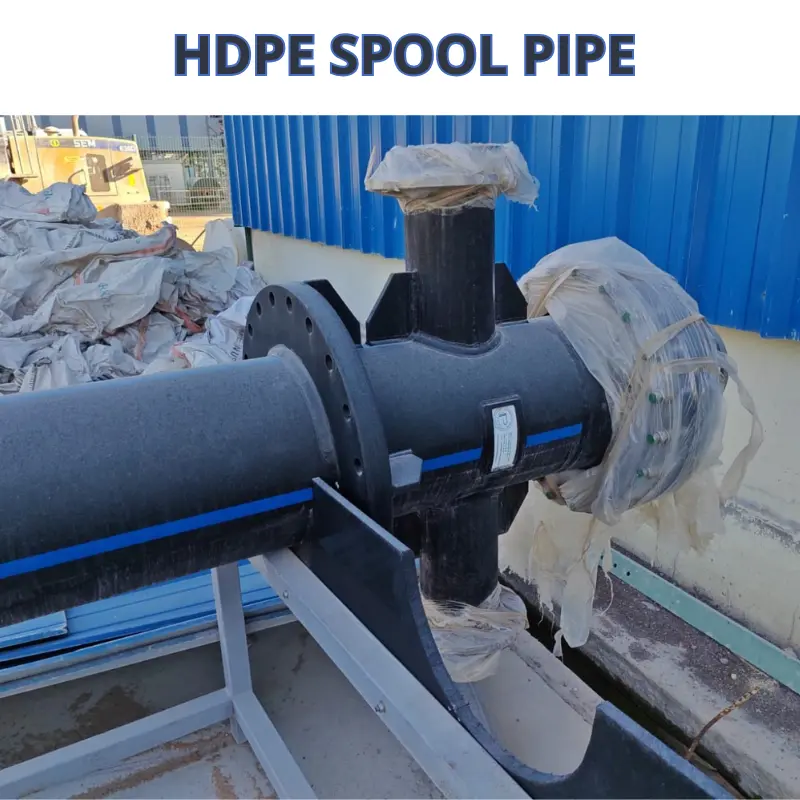
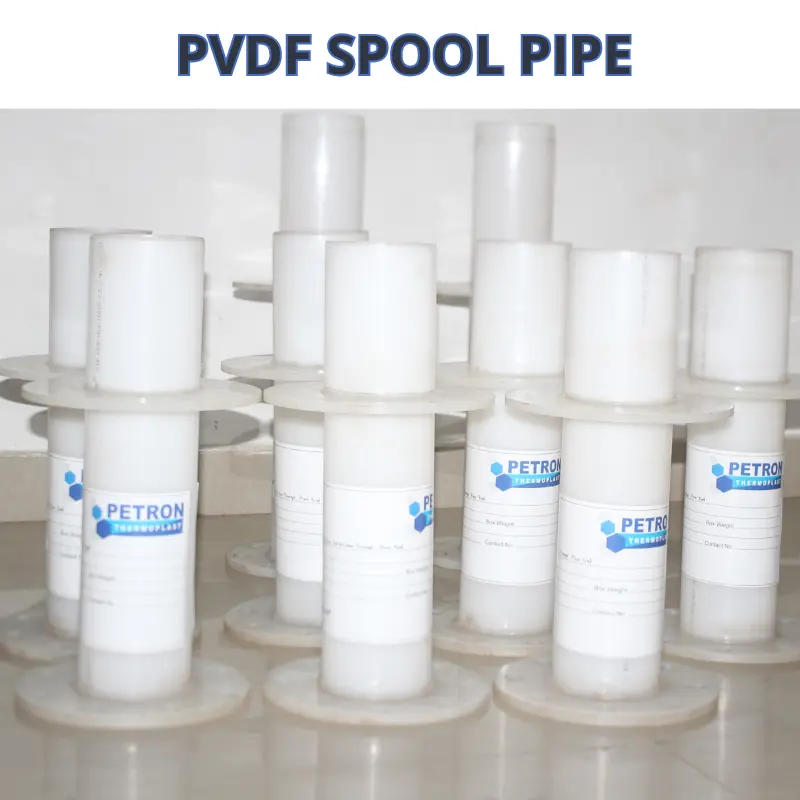
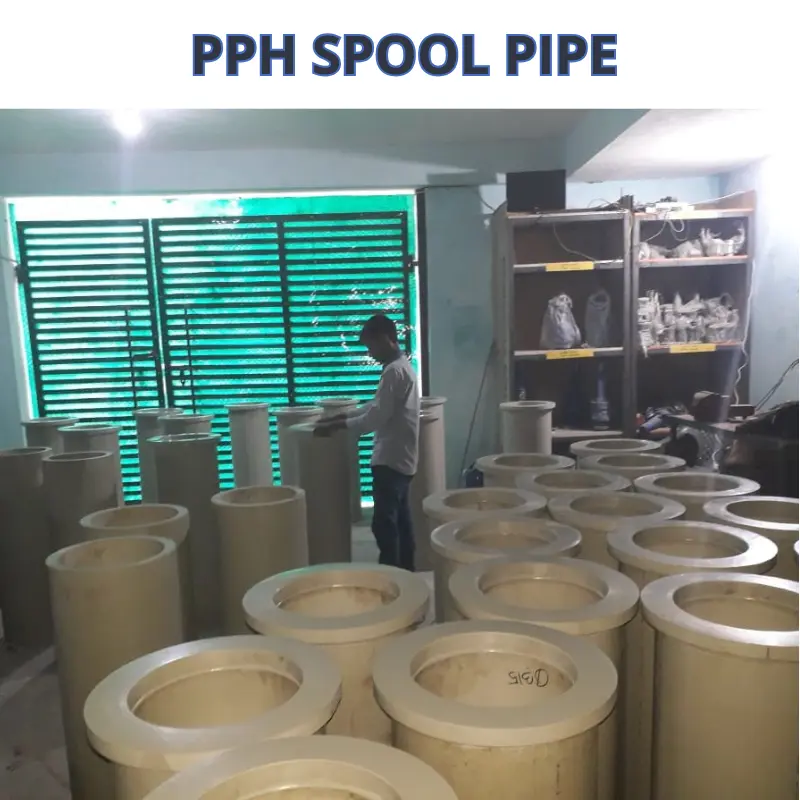
Why Choose Petron Thermoplast?
Petron Thermoplast has high-quality Pipe spools that depend on precise manufacturing, quality materials, and adherence to standards. Working with a trusted manufacturer like Petron Thermoplast ensures Pipe spools that deliver consistent performance in demanding environments. With experience in producing standard and custom designs, Petron Thermoplast provides solutions tailored to the needs of diverse industries worldwide.
Conclusion
Pipe spools are an essential component of modern industrial piping systems, offering efficient fabrication, easy installation, and reliable performance. Being prefabricated assemblies, they help reduce on-site labor, minimize installation time, and improve overall project efficiency.
Manufactured from materials such as HDPE, stainless steel, carbon steel, PVC, and FRP, pipe spools are suitable for a wide range of applications including chemical processing, water treatment, oil & gas, pharmaceuticals, and power plants. Their strong construction, leak-proof joints, and customizable design make them highly dependable for handling various fluids under different pressure and temperature conditions.
With proper material selection, precise fabrication, and rigorous quality testing, pipe spools provide long service life, reduced maintenance, and enhanced operational safety. Their versatility and cost-effectiveness make them a preferred solution for industrial piping infrastructure.
Frequently Asked Questions
A pipe spool is a pre-fabricated section of piping that includes pipes, fittings, flanges, valves, and other components assembled together before installation at the project site.
Pipe spools are commonly manufactured using:
- HDPE
- Stainless Steel
- Carbon Steel
- PVC / CPVC
- FRP
- Faster installation
- Reduced on-site labor
- Improved quality control
- Leak-proof performance
- Easy maintenance and replacement
Pipe spools are widely used in:
- Chemical plants
- Water treatment facilities
- Oil & gas industries
- Power plants
- Pharmaceutical industries
Common types include:
- Straight pipe spool
- Flanged pipe spool
- Welded pipe spool
- Threaded pipe spool
- HDPE pipe spool
- Stainless steel pipe spool
Pressure ratings typically range from:
- PN6
- PN10
- PN16
PN25
depending on material type, wall thickness, and application.
Pipe spools can be connected using:
- Flanged joints
- Butt welding
- Threaded connections
- Electrofusion welding (for HDPE)
Common quality tests include:
- Hydrostatic pressure testing
- Visual inspection
- Non-destructive testing (NDT)
- Dimensional inspection
- Weld quality testing
Yes, pipe spools can be customized based on:
- Size and dimensions
- Material type
- Pressure rating
- End connections
- Project specifications
With proper installation and maintenance, pipe spools can last 20–50 years or more, depending on material and operating conditions.
Yes, pipe spools made from HDPE, FRP, SS, or CPVC provide excellent chemical resistance and are widely used in chemical industries.