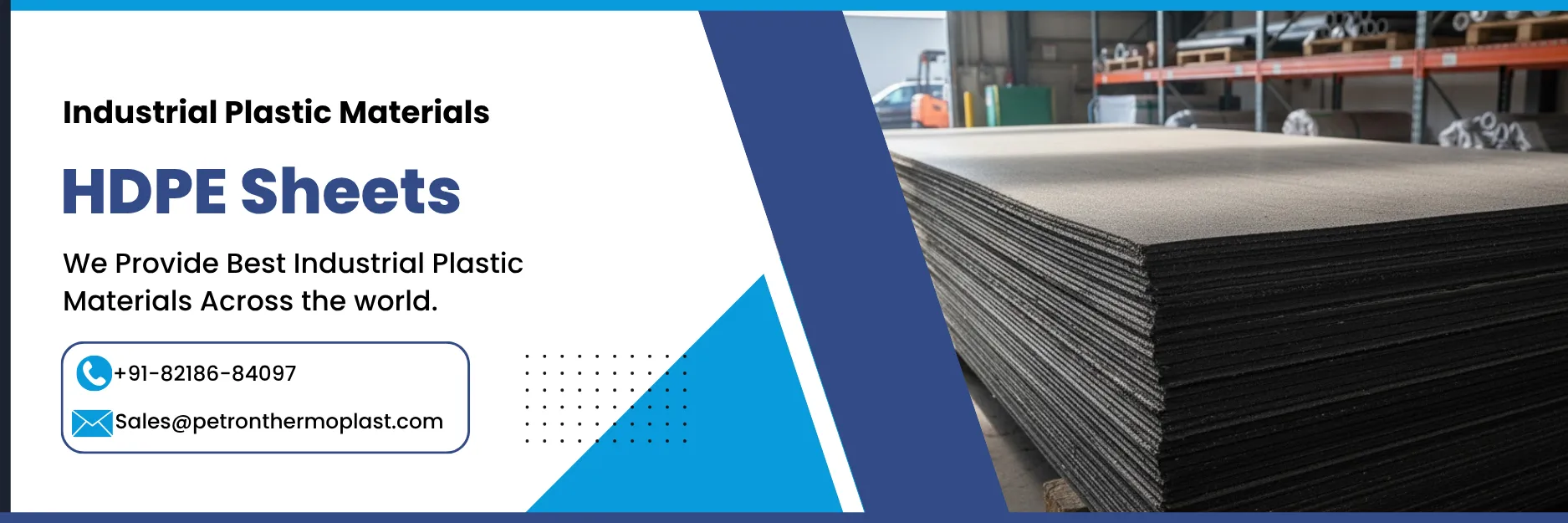
HDPE Sheets
HDPE Sheet is a rigid, dense, and versatile thermoplastic made from petroleum. Renowned for its high strength-to-density ratio, HDPE is one of the most widely used plastics today. It offers excellent resistance to moisture, corrosion, UV exposure, and many chemicals, making it ideal for both indoor and outdoor applications. Available in various sizes, thicknesses, and colors, HDPE sheets are easy to fabricate, weld, and machine.
An HDPE (High-Density Polyethylene) sheet is a flat, rigid plastic material manufactured from High-Density Polyethylene, a thermoplastic polymer known for its high strength-to-density ratio. These sheets are produced through processes like extrusion and are widely used in industrial, commercial, and engineering applications.An HDPE sheet is a strong, versatile plastic sheet used for making tanks, liners, cutting boards, industrial components, and more due to its durability and resistance properties.

HDPE Sheet Details
| Property | Typical Value |
| Material Type | High-Density Polyethylene |
| Manufacturing Process | Extrusion / Compression Molding |
| Density | 0.93 – 0.97 g/cm³ |
| Tensile Strength | 20 – 37 MPa |
| Yield Strength | 26 – 33 MPa |
| Elongation at Break | 100% – 1000% |
| Flexural Modulus | 700 – 1400 MPa |
| Hardness (Shore D) | 60 – 70 |
| Melting Point | 120°C – 135°C |
| Vicat Softening Point | ~120°C |
| Thermal Conductivity | 0.4 – 0.5 W/m·K |
| Electrical Resistivity | High (Excellent insulator) |
| Appearance | Smooth or textured surface |
| Color | Natural (milky white), black, blue, green, custom colors |
| Weight | Lightweight compared to metals |
| Water Absorption | < 0.01% (very low) |
| Chemical Resistance | Excellent against acids, alkalis, and solvents |
| UV Resistance | Moderate (improved with UV stabilizers) |
| Impact Resistance | Very high (even at low temperatures) |
| Surface Finish | Matte / Glossy depending on grade |
| Odor & Taste | Non-toxic, food-grade safe variants available |
| Category | Thickness (mm) | Thickness (inch) | Application |
| Very Thin Sheets | 0.5 – 2 mm | 0.02″ – 0.08″ | Packaging, liners |
| Thin Sheets | 3 – 6 mm | 1/8″ – 1/4″ | Signboards, covers |
| Medium Sheets | 8 – 20 mm | 3/8″ – 3/4″ | Industrial parts, cutting boards |
| Thick Sheets | 25 – 50 mm | 1″ – 2″ | Heavy-duty structures |
| Extra Thick | 50 – 100 mm | 2″ – 4″ | Engineering & load-bearing use |
| SDR | PN Rating (Bar) | Pressure (MPa) |
| SDR 41 | PN 4 | 0.4 MPa |
| SDR 33 | PN 5 | 0.5 MPa |
| SDR 26 | PN 6.3 / PN 5 | 0.63 MPa / N/A |
| SDR 21 | PN 8 / PN 6 | 0.8 MPa / N/A |
| SDR 17 | PN 10 / PN 8 | 1.0 MPa / N/A |
| SDR 13.6 | PN 12.5 / PN 10 | 1.25 MPa / N/A |
| SDR 11 | PN 16 / PN 12.5 | 1.6 MPa / N/A |
| SDR 9 | PN 20 / PN 16 | 2.0 MPa / N/A |
- Base Raw Material
a. High-Density Polyethylene (HDPE) Resin
- Main material used in sheet production
- Derived from petroleum-based hydrocarbons (ethylene monomer)
- Provides:
- High strength-to-weight ratio
- Chemical resistance
- Impact resistance
- Low moisture absorption
2. Additives Used in HDPE Sheet
Additives are mixed with HDPE resin to improve specific properties:
a. UV Stabilizers
- Protect sheets from sunlight degradation
- Essential for outdoor applications
b. Antioxidants
- Prevent material degradation during processing
- Improve long-term thermal stability
c. Color Masterbatch
- Adds color (black, blue, green, etc.)
- Ensures uniform appearance
d. Carbon Black
- Used mainly in black HDPE sheets
- Enhances UV resistance and durability
e. Processing Aids
- Improve flow during extrusion
- Help achieve smooth surface finish
f. Flame Retardants (Optional)
- Reduce flammability
- Used in electrical or safety applications
g. Anti-static Agents (Optional)
- Reduce static electricity buildup
- Used in electronics environments
3. Recycled Material
- Reprocessed HDPE can be used
- Reduces cost and environmental impact
- Usually used in non-critical applications
4. Manufacturing Process Materials
During production (mainly extrusion), the following are involved:
- HDPE granules/pellets
- Additive masterbatches
- Heat and pressure (no chemical reaction, only melting and shaping)
User Manual for HDPE Sheet
| Property | Value |
| Working Temperature Range | -50°C to +80°C |
| Maximum Short-Term Temperature | Up to 120°C |
| Melting Point | 120°C – 135°C |
| Softening (Vicat) Temperature | ~120°C |
2. Density of HDPE Sheet
HDPE sheets are made from High-Density Polyethylene, which is known for its high strength-to-weight ratio.
- Typical Density Range: 0.93 – 0.97 g/cm³ (930 – 970 kg/m³)
- This relatively low density makes HDPE sheets lightweight yet strong, ideal for industrial and structural applications.
a. Surface Preparation
- Ensure the base surface is clean, dry, and level
- Remove dust, oil, and sharp objects
- For lining work, the surface should be smooth to avoid punctures
b. Cutting & Shaping
- Cut using circular saw, jigsaw, or CNC machine
- Use sharp tools to avoid rough edges
- Allow margin for thermal expansion
c. Joining Methods
1. Welding (Most Common)
- Hot air welding
- Butt welding
- Extrusion welding
- Mechanical Fastening
- Screws, bolts, or rivets
- Use oversized holes to allow expansion
- Add washers to distribute load
3. Adhesive Bonding (Limited Use)
- Not very effective due to low surface energy
- Special adhesives required
d. Fixing & Support
- Provide proper support frame or backing
- Avoid large unsupported spans
- Use clamps or anchors where required
e. Thermal Expansion Consideration
- HDPE expands with temperature
- Always leave expansion gaps (3–5 mm per meter)
f. Safety During Installation
- Use protective gloves and goggles
- Maintain proper welding temperature
- Ensure ventilation during welding
2. Maintenance of HDPE Sheet
a. Regular Cleaning
- Clean with water and mild detergent
- Avoid harsh chemicals (if not compatible)
- Smooth surface makes cleaning easy
b. Inspection
- Check for:
- Cracks or deformation
- Joint/weld integrity
- Surface wear
c. Repair Methods
- Minor damage: plastic welding repair
- Deep cracks: patch welding or replacement
- Loose fasteners: tighten or replace
d. UV Protection
- Use UV-stabilized sheets for outdoor use
- Apply covers or coatings if required
e. Load Management
- Avoid excessive load or pressure
- Ensure even load distribution
f. Temperature Care
- Avoid continuous exposure above 80°C
- Prevent direct contact with high heat sources
a. Size & Thickness Customization
- Sheets can be cut into custom sizes and shapes
- Thickness ranges from 0.5 mm to 100 mm+
- Large panels can be fabricated by welding multiple sheets
b. Color Customization
- Available in natural, black, blue, green, red, yellow, etc.
- UV-stabilized black sheets for outdoor use
- Color coding for industrial identification
c. Surface Finish Customization
- Smooth finish for easy cleaning
- Textured / embossed for anti-slip surfaces
- Dual-color sheets for engraving and signage
d. Performance Customization
- UV resistant sheets for sunlight exposure
- Food-grade sheets for hygiene applications
- Anti-static sheets for electronic environments
- Flame-retardant sheets for safety requirements
e. Fabrication-Based Customization
- Pre-fabricated into:
- Tanks
- Chemical storage containers
- Liners
- Machine parts
- Cutting boards
Processing Methods of HDPE Sheet
a. Cutting
- Circular saw, band saw, laser cutting, or CNC routing
- Clean edges with minimal chipping
b. Machining
- Drilling, milling, turning
- Suitable for making precision components
- Low friction allows smooth machining
c. Welding
- Hot air welding
- Butt fusion welding
- Extrusion welding
d. Thermoforming
- Heating and shaping into curves or molds
- Used for trays, containers, and covers
e. Bending
- Line bending with controlled heat
- Maintains structural integrity
f. Routing & Engraving
- CNC routing for detailed shapes
- Engraving for signboards and labeling
g. Surface Treatment (Limited)
- Flame or corona treatment to improve bonding/printing
- Required due to naturally low surface energy
- Quality Standards for HDPE Sheet
HDPE sheets are generally manufactured and tested as per international standards such as:
- ISO (International Organization for Standardization)
- ASTM (American Society for Testing and Materials)
- DIN Standards (Germany)
These standards ensure consistent material properties and performance.
2. Mechanical Testing
a. Tensile Strength Test
- Measures the sheet’s ability to withstand pulling force
- Determines yield strength and elongation
b. Impact Resistance Test
- Evaluates resistance to sudden shocks or loads
- HDPE shows excellent impact strength even at low temperatures
c. Flexural Strength Test
- Measures bending strength and stiffness
d. Hardness Test
- Usually tested on Shore D scale (60–70)
3. Physical Testing
a. Density Test
- Confirms material consistency
- Typical range: 0.93 – 0.97 g/cm³
b. Water Absorption Test
- HDPE absorbs very little moisture (<0.01%)
c. Dimensional Stability Test
- Checks for expansion, shrinkage, or warping
4. Thermal Testing
a. Melting Point Test
- Ensures correct processing temperature
- Range: 120°C – 135°C
b. Vicat Softening Test
- Determines softening temperature under load
c. Heat Resistance Test
- Evaluates performance at elevated temperatures
5. Chemical Testing
a. Chemical Resistance Test
- Tested against acids, alkalis, and solvents
- HDPE shows excellent resistance
b. Environmental Stress Cracking Resistance (ESCR)
- Measures resistance to cracking under stress and chemicals
- Packaging: HDPE sheets are used in the production of packaging materials for food, beverages, and pharmaceuticals.
- Construction: They are employed in the construction of buildings and infrastructure due to their durability and lightweight nature.
- Automotive: They are used in the manufacturing of vehicle parts and components due to their impact resistance.
- Consumer Durables: HDPE sheets are used in the production of consumer products like containers, bottles, and other household items.

Custom Product Manufacturing Available
If you are searching for customized product designs that meet your requirements, don’t worry. Petron Thermoplast also offers custom product manufacturing services to meet the unique needs of various industries. Work with our expert engineers to create custom designs suited for your application.
Benefits of HDPE Materials
Chemical Resistance
HDPE sheets are highly resistant to a wide range of chemicals, including acids, alkalis, and solvents. This makes them ideal for use in environments where exposure to harsh substances is common, such as in chemical storage tanks and industrial applications.
Durability and Impact Resistance
HDPE sheets are known for their exceptional impact strength, making them suitable for applications that require toughness and durability. They can withstand heavy loads and resist deformation under stress, which is crucial in construction and manufacturing settings.
Lightweight and Easy to Handle
Compared to other materials, HDPE sheets are lightweight, which simplifies transportation and installation. Their ease of handling makes them a preferred choice in various industries.
Moisture Resistance
HDPE sheets exhibit low water absorption rates, making them resistant to moisture and preventing issues like mold and mildew. This property is particularly beneficial in applications such as cutting boards and food processing surfaces.
Versatility
HDPE sheets can be easily cut, shaped, and molded, allowing for customization in various applications. They are used in everything from packaging and containers to construction materials and marine applications.
Environmental Benefits
HDPE sheets are recyclable, contributing to sustainability efforts. Their production requires less energy compared to other plastic materials, and they do not leach harmful substances into the environment.
UV Resistance
UV-stabilized HDPE sheets can withstand prolonged exposure to sunlight without degrading, making them suitable for outdoor applications.
Types of HDPE Materials
1. Based on Surface Finish
a. Smooth HDPE Sheet
- Plain, flat surface
- Easy to clean and fabricate
- Used in tanks, liners, and industrial panels
b. Textured HDPE Sheet
- Rough or patterned surface
- Provides better grip and anti-slip properties
- Used in flooring, walkways, and playground equipment
2. Based on Color
a. Natural (Milky White) HDPE Sheet
- Pure form without additives
- Food-grade applications
b. Black HDPE Sheet
- UV stabilized
- Best for outdoor applications
c. Colored HDPE Sheet
- Available in blue, green, red, yellow, etc.
- Used for coding, design, and specific industrial needs
3. Based on Grade / Quality
a. Standard HDPE Sheet
- General-purpose industrial use
- Good strength and chemical resistance
b. Food Grade HDPE Sheet
- Non-toxic and safe for food contact
- Used in cutting boards and food processing
c. UV Stabilized HDPE Sheet
- Resistant to sunlight and weather
- Used outdoors (tanks, pipelines covers)
d. Flame Retardant HDPE Sheet
- Slows down burning
- Used in electrical and safety applications
4. Based on Performance Type
a. HDPE 300 (PE300) Sheet
- Standard grade
- Good impact resistance
- Economical option
b. HDPE 500 (PE500) Sheet
- Higher strength and wear resistance
- Used in industrial machinery parts
c. HDPE 1000 (UHMW-PE) Sheet
- Ultra-high molecular weight
- Extremely low friction and high abrasion resistance
- Used in conveyors, wear strips
5. Based on Application
a. Industrial HDPE Sheet
- Used in chemical tanks, liners, and fabrication
b. Marine HDPE Sheet
- Resistant to water and salt
- Used in boats and docks
c. Cutting Board HDPE Sheet
- Food-grade and hygienic
d. Anti-Skid HDPE Sheet
- Used in safety flooring
Why Choose Petron Thermoplast?
Petron Thermoplast had high-quality HDPE Sheets that depend on precise manufacturing, quality materials, and adherence to standards. Working with a trusted manufacturer like Petron Thermoplast ensures HDPE Sheet that deliver consistent performance in demanding environments. With experience in producing standard and custom designs, Petron Thermoplast provides solutions tailored to the needs of diverse industries worldwide.
Choosing Petron Thermoplast for HDPE (High-Density Polyethylene) sheets is a smart decision due to their performance, versatility, and cost-effectiveness in industrial applications.
Conclusion
HDPE sheets made from High-Density Polyethylene stand out as a highly reliable and versatile material for modern industrial and commercial applications. Their combination of high strength, lightweight structure, excellent chemical resistance, and low moisture absorption makes them suitable for demanding environments.
They are easy to fabricate, weld, and customize, allowing use in a wide range of applications such as tanks, liners, cutting boards, and industrial components. In addition, HDPE sheets require minimal maintenance, offer a long service life, and are cost-effective compared to many traditional materials.
With added benefits like UV resistance, recyclability, and food-grade safety, HDPE sheets continue to be a preferred choice across industries including chemical processing, water treatment, construction, and food handling.
Frequently Asked Questions
An HDPE sheet is a strong, lightweight plastic sheet known for its high impact strength, chemical resistance, and durability, widely used in industrial and commercial applications.
HDPE sheets are used in:
- Chemical storage tanks
- Water treatment plants
- Cutting boards (food industry)
- Liners and flooring
- Industrial fabrication
Typically available from 0.5 mm to 100 mm, depending on application and manufacturer.
- Working range: -50°C to +80°C
- Short-term maximum: up to 120°C
Yes, they offer excellent resistance to acids, alkalis, and many chemicals, making them ideal for industrial use.
Yes, HDPE sheets can be easily joined using:
- Hot air welding
- Butt fusion
- Extrusion welding
Yes, especially UV-stabilized HDPE sheets, which resist sunlight and weather conditions.
Yes, food-grade HDPE sheets are non-toxic and safe for food processing applications.
With proper installation and maintenance, HDPE sheets can last 10–20 years or more.
No, they have very low water absorption (<0.01%), making them ideal for wet environments.
They can handle low to moderate pressure, but pressure capacity depends on thickness, support, and design.
Yes, HDPE is 100% recyclable, making it an environmentally friendly material.