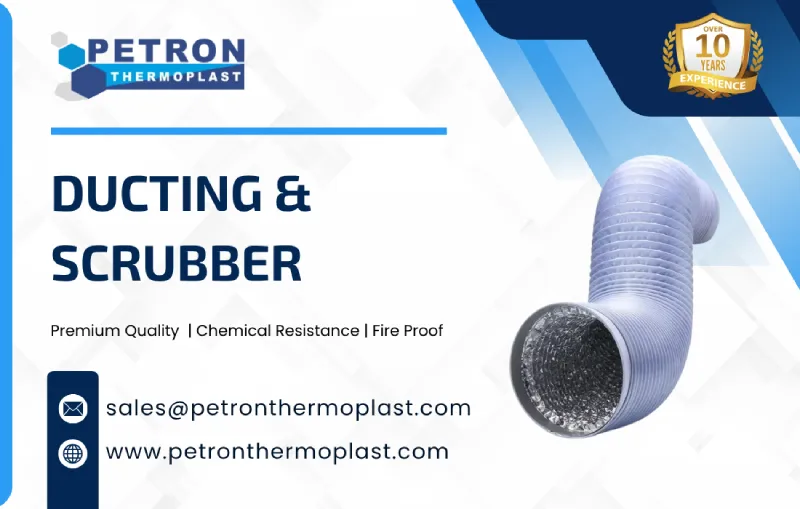
Ducting and Scrubber Manufacturer for Industrial Air Pollution Control
Ducting & Scrubber systems are to industrial air handling and pollution control systems. They may be used to safely collect, transport, treat, and remove harmful gases, fumes, dust, smoke, and chemical vapors. To generated during industrial processing to ducting refers in a network of pipes and channels designed to carry contaminated air and gases from one location to another. Scrubber is an air pollution control device that removes pollutants, chemicals, dust particles. The toxic gases from the air before it is released into the environment. These systems are widely used in industries to maintain clean air, protect equipment, improve workplace safety, with regulations environmental.
Ducting consists of rigid and flexible tubes, commonly made of sheet metal, fiberglass and plastic. A scrubber is an air pollution to control device that uses a liquid, dry reagent, and slurry to wash and neutralize unwanted pollutants from industrial exhaust gases.

Ducting & Scrubber Details
| Parameter | Details / Specification |
| Product Name | Ducting & Scrubber System |
| System Type | Air Pollution Control & Ventilation System |
| Duct Shape | Round, Square, Rectangular |
| Scrubber Type | Wet Scrubber, Dry Scrubber, Packed Bed, Venturi Scrubber |
| Material Options | HDPE, PP, PVC, CPVC, FRP, Stainless Steel |
| Manufacturing Process | Fabrication, Welding, Molding |
| Duct Diameter Range | 50 mm to 3000 mm or customized |
| Wall Thickness | 3 mm to 25 mm depending on application |
| Pressure Rating | Low to medium pressure systems |
| Operating Temperature | -40°C to +120°C (depends on material) |
| Density (HDPE Material) | 0.94 – 0.96 g/cm³ |
| Air Flow Capacity | Customized as per plant requirement |
| Chemical Resistance | Excellent resistance to acids, alkalis, and fumes |
| Corrosion Resistance | High corrosion resistance |
| Surface Finish | Smooth, UV stabilized, coated |
| Connection Types | Flanged, Welded, Bolted |
| Leakage Performance | Leak-proof with proper fabrication |
| Fan & Blower Compatibility | Suitable for industrial exhaust systems |
| Filtration Media | PP Pall Rings, Ceramic Media, Mist Eliminators |
| Installation Type | Indoor / Outdoor |
| Reinforcement Options | FRP Reinforcement / MS Support Structure |
| Standard Compliance | ISO, ASTM, ASME, DIN |
| Testing Methods | Leak Test, Air Flow Test, Dimensional Inspection |
| Customization | Available as per project requirements |
| Service Life | 10–25 years depending on material and operating conditions |
| Applications | Chemical Plants, Pharma Industries, Electroplating Units, Wastewater Treatment |
1. Excellent Corrosion Resistance
- Resistant to acids, alkalis, and chemical fumes
- Suitable for corrosive industrial environments
- Ideal for chemical processing applications
2. Efficient Air Pollution Control
- Removes harmful gases, vapors, smoke, and dust particles
- Helps maintain clean and safe working conditions
- Supports environmental compliance
3. High Durability
- Manufactured using high-quality materials
- Resistant to wear, moisture, and harsh environmental conditions
- Provides long service life
4. Lightweight Construction
Materials such as HDPE, PP, and FRP offer:
- Easy handling
- Simple transportation
- Faster installation
5. Leak-Proof Performance
- Precision fabrication ensures airtight and leak-free operation
- Improves system efficiency and safety
6. Wide Material Options
Available in:
- HDPE
- PP
- PVC / CPVC
- FRP
- Stainless Steel
7. High Temperature Resistance
- Suitable for varying temperature conditions depending on material selection
- Can handle industrial exhaust gases and hot air systems
8. Smooth Internal Surface
- Reduces airflow resistance and pressure loss
- Improves ventilation efficiency
- Prevents dust and particle accumulation
9. Customizable Design
Systems can be customized for:
- Airflow capacity
- Duct size and shape
- Pressure requirements
- Industrial applications
10. Easy Installation & Maintenance
- Modular construction simplifies installation
- Easy inspection and cleaning procedures
- Low maintenance requirements
11. UV & Weather Resistance
- UV stabilized options available for outdoor installations
- Resistant to sunlight and environmental exposure
12. Strong Structural Support
- Reinforcement options available for large ducting systems
- Maintains stability during operation
| Pressure Class | Pressure Range | Typical Application |
| Low Pressure | Up to 500 Pa | Ventilation systems |
| Medium Pressure | 500 Pa to 3000 Pa | Industrial exhaust systems |
| High Pressure | Above 3000 Pa | Heavy-duty air handling systems |
| Scrubber Type | Typical Operating Pressure |
| Wet Scrubber | Low to medium pressure |
| Packed Bed Scrubber | Medium pressure systems |
| Venturi Scrubber | Medium to high pressure |
| Dry Scrubber | Low-pressure applications |
| Chemical Scrubber | Customized according to process requirements |
| Material Type | Operating Temperature Range | Density |
| HDPE Ducting & Scrubbers | -40°C to +60°C | 0.94 – 0.96 g/cm³ |
| PP Ducting Systems | 0°C to +100°C | 0.90 – 0.92 g/cm³ |
| PVC Ducting | 0°C to +60°C | 1.30 – 1.45 g/cm³ |
| CPVC Ducting | 0°C to +90°C | 1.50 – 1.60 g/cm³ |
| FRP Ducting & Scrubbers | -20°C to +120°C | 1.50 – 2.00 g/cm³ |
| Stainless Steel Systems | -200°C to +800°C | 7.75 – 8.10 g/cm³ |
User Manual for Ducting & Scrubber
1. Chemical Industries
Used for:
- Chemical fume extraction
- Acid vapor removal
- Toxic gas handling
- Corrosion-resistant ventilation systems
- Chemical processing plants
- Acid storage areas
- Mixing and reaction units
2. Pharmaceutical Industry
Applications include:
- Clean air management
- Solvent vapor extraction
- Process ventilation systems
- Odor control systems
3. Electroplating Industry
Ducting & scrubber systems are used for:
- Acid mist removal
- Chrome and metal vapor extraction
- Corrosive gas treatment
4. Wastewater Treatment Plants
Used for:
- Odor control systems
- Toxic gas removal
- Ventilation of treatment tanks
5. Power Plants
Used for:
- Flue gas handling
- Industrial ventilation
- Dust and smoke extraction systems
6. Metal Processing Industry
Applications include:
- Welding fume extraction
- Dust collection systems
- Hot gas ventilation systems
9. Semiconductor & Electronics Industry
Used for:
- Cleanroom ventilation
- Chemical exhaust systems
- High-purity air handling systems
10. Marine & Offshore Applications
Used for:
- Corrosion-resistant ventilation systems
- Exhaust air handling
- Chemical storage ventilation
11. Industrial Manufacturing Units
Applications include:
- General industrial ventilation
- Process exhaust systems
- Air pollution control systems
- Alkalis
- Chemicals
- Process fluids
a) Material Customization
Ducting and scrubber systems can be manufactured using:
- HDPE
- PP (Polypropylene)
- PVC / CPVC
- FRP (Fiber Reinforced Plastic)
- Stainless Steel
Material selection depends on:
- Chemical compatibility
- Temperature conditions
- Corrosion resistance requirements
- Airflow and pressure conditions
b) Size & Dimension Customization
Systems can be customized according to:
- Duct diameter and length
- Scrubber capacity
- Wall thickness
- Airflow requirements
- Plant layout and installation space
c) Shape & Design Customization
Available duct shapes:
- Round ducting
- Rectangular ducting
- Square ducting
- Flexible ducting
Scrubbers are designed based on:
- Pollutant type
- Gas flow rate
- Chemical treatment requirements
d) Airflow & Pressure Design
Customization is available for:
- Low-pressure ventilation systems
- Medium-pressure industrial exhaust systems
- High airflow handling applications
e) Surface Finish & Coating
Surface treatment options include:
- UV stabilization
- Anti-corrosion coating
- Smooth internal finishing
- FRP reinforcement coating
f) Integration of Components
Systems can include:
- Blowers and fans
- Dampers and valves
- Mist eliminators
- Chemical circulation systems
- Support structures
Processing of Ducting & Scrubber Systems
a) Design & Engineering
- Systems are designed using CAD software and airflow calculations
- Ensures efficient ventilation and pollutant removal performance
b) Material Cutting
Processing methods include:
- CNC cutting
- Laser cutting
- Saw cutting
- Plasma cutting
c) Fabrication & Forming
Manufacturing processes include:
- Welding
- Extrusion fabrication
- Rolling and bending
- Thermoforming
d) Assembly & Fit-Up
- Components are aligned and assembled accurately
- Ensures leak-proof and efficient airflow performance
e) Welding & Jointing
Joining methods include:
- Butt welding
- Extrusion welding
- TIG / MIG welding
- Mechanical fastening
f) Surface Finishing
Processing includes:
- Grinding and polishing
- Deburring and cleaning
- Coating and painting
g) Testing & Quality Inspection
Ducting and scrubber systems undergo:
- Air leakage testing
- Pressure testing
- Dimensional inspection
- Airflow testing
- Visual inspection
h) Packaging & Dispatch
- Proper labeling and identification
- Protective packaging to avoid transportation damage
a) Site Preparation
- Ensure the installation area is clean and properly aligned
- Verify foundation, supports, and pipe routing according to drawings
- Check spool dimensions and specifications before installation
b) Inspection Before Installation
- Inspect for transportation damage
- Check flanges, welds, and fittings
- Verify pressure rating and material compatibility
c) Alignment & Positioning
- Position the pipe spool accurately using lifting equipment
- Ensure proper alignment with connecting pipelines and equipment
- Avoid excessive stress or bending during fit-up
d) Joint Connection Methods
Pipe spools can be connected using:
- Flanged connections
- Butt welding
- Threaded joints
- Electrofusion welding (for HDPE spools)
e) Bolt Tightening & Welding
- Tighten flange bolts evenly using proper torque values
- Ensure welding is carried out by qualified personnel
- Follow applicable welding standards and procedures
f) Support & Anchoring
- Install proper pipe supports and clamps
- Prevent vibration, sagging, or movement during operation
g) Testing After Installation
- Conduct hydrostatic or pneumatic pressure testing
- Check for leakage and joint integrity
- Perform final inspection before commissioning
2. Maintenance of Pipe Spool
a) Regular Inspection
Periodically inspect for:
- Leakage
- Corrosion
- Cracks or deformation
- Loose bolts or supports
b) Cleaning
- Remove dirt, debris, and chemical deposits
- Use suitable cleaning methods based on pipe material
c) Corrosion Protection
- Reapply coatings or protective layers if required
- Monitor external environmental conditions
d) Weld & Joint Inspection
- Inspect welded joints and flange connections regularly
- Replace damaged gaskets or faulty components immediately
e) Pressure Monitoring
- Ensure operating pressure remains within design limits
- Avoid sudden pressure surges or water hammer effects
f) Temperature Monitoring
- Maintain operating temperatures within specified limits
- Prevent overheating or thermal stress
g) Replacement of Damaged Components
- Replace worn-out fittings, seals, or spool sections promptly
- Use compatible replacement materials and components
1. Raw Material Inspection
Before fabrication, raw materials are inspected for:
- Material grade verification
- Surface quality
- Thickness accuracy
- Compliance with industrial specifications
2. Dimensional Inspection
Ducting and scrubber components are checked for:
- Accurate dimensions
- Wall thickness
- Proper alignment
- Flange and joint accuracy
- Tolerance compliance
3. Visual Inspection
Visual inspection helps identify:
- Surface cracks
- Dents and scratches
- Welding defects
- Improper finishing
- Misalignment of fabricated parts
4. Air Leakage Testing
Leakage testing is performed to:
- Detect air leakage in duct systems
- Ensure airtight joints and connections
- Improve airflow efficiency and safety
5. Pressure Testing
Pressure testing verifies:
- Structural integrity of ducting and scrubbers
- Safe operation under working pressure conditions
Common Tests:
- Pneumatic testing
- Hydrostatic testing
6. Weld Quality Inspection
Welded joints are tested to ensure strength and leak-proof performance.
Common Weld Inspection Methods:
- Visual Weld Inspection
- Ultrasonic Testing (UT)
- Dye Penetrant Testing (DPT)
- Radiographic Testing (RT)
7. Airflow Performance Testing
Airflow testing checks:
- Air velocity
- Pressure drop
- Flow balancing
- Ventilation efficiency
8. Scrubber Efficiency Testing
Scrubber systems are tested for:
- Pollutant removal efficiency
- Gas absorption performance
- Chemical neutralization efficiency
9. Non-Destructive Testing (NDT)
NDT methods help detect hidden defects without damaging the system.
Common NDT Methods:
- Ultrasonic Testing
- Radiography
- Magnetic Particle Testing
- Dye Penetrant Testing
10. Surface Finish & Coating Inspection
Inspection includes:
- Surface smoothness
- Coating thickness
- Adhesion testing
- Corrosion protection quality checks
11. Functional Testing
Functional checks verify:
- Fan and blower operation
- Damper movement
- Mist eliminator performance
- Chemical circulation system operation
12. Compliance with Standards
Ducting and scrubber systems are manufactured and tested according to:
- ISO Standards
- ASTM Standards
- ASME Standards
- ANSI Specifications
- SMACNA Guidelines
13. Final Quality Documentation
Quality documentation generally includes:
- Inspection reports
- Pressure test certificates
- Material certificates
- Welding qualification records
- NDT reports

Custom Product Manufacturing Available
If you are searching for customized product designs that meet your requirements, don’t worry. Petron Thermoplast also offers custom product manufacturing services to meet the unique needs of various industries. Work with our expert engineers to create custom designs suited for your application.
Types of Ducting & Scrubber
1. Wet Scrubber
- Uses liquid to remove pollutants from air or gas streams
- Effective for dust, fumes, and chemical vapors:
- High pollutant removal efficiency
- Suitable for corrosive gases
2. Dry Scrubber
- Uses dry chemicals or absorbents to remove pollutants
- No liquid waste generation:
- Gas treatment systems
- Industrial emission control
3. Packed Bed Scrubber
- Contains packing media for increased gas-liquid contact
- Efficient chemical absorption system:
- Acid vapor treatment
- Chemical processing industries
4. Venturi Scrubber
- High-velocity gas passes through a narrow section
- Effective for fine dust and particle removal:
- Dust collection systems
- Heavy industrial exhaust systems
5. Chemical Scrubber
- Specifically designed for chemical fume treatment
- Neutralizes harmful gases and vapors:
- Chemical plants
- Electroplating industries
6. Spray Tower Scrubber
- Uses spray nozzles to distribute scrubbing liquid
- Removes gases and airborne particles
7. Cyclone Scrubber
- Combines centrifugal force and liquid scrubbing
- Suitable for large particle removal
8. Multi-Stage Scrubber
- Uses multiple filtration and scrubbing stages
- Provides high-efficiency air purification
Why Choose Petron Thermoplast?
At Petron Thermoplast, a ducting system is a network of pipes or channels designed. To transport air, fumes, dust, smoke, and chemical vapors from one location to another within an industrial facility. It is mainly used for the ventilation, exhaust, and air pollution control applications.
A scrubber is a device used to control air pollution and remove harmful gases. The chemical fumes, dust particles, and pollutants from industrial exhaust air. Before it is released into the atmosphere. The Scrubbers work by using the water, chemicals, and filtration media to absorb and neutralize the contaminants. They are widely used in chemical plants, electroplating units, pharmaceutical industries, and wastewater treatment facilities.
Conclusion
Ducting and scrubber systems are essential components of industrial ventilation to air pollution control systems. They play a crucial role in safely collecting, transporting, and treating harmful gases, fumes, dust, smoke, and chemical vapors generated during industrial processes.
Manufactured using corrosion-resistant materials such as HDPE, PP, PVC, CPVC, FRP, and stainless steel. These systems provide excellent durability, chemical resistance, and long service life. Their efficient airflow management and pollutant removal capabilities help to improve workplace safety, protect equipment, and maintain environmental compliance.
With proper customization, precise fabrication, quality testing, and regular maintenance, ducting and scrubber systems deliver reliable performance and energy-efficient operation across various industries, including chemical processing, pharmaceuticals, electroplating, wastewater treatment, and industrial manufacturing. Their strong construction, customizable design, and effective pollution control make ducting and scrubber systems an ideal solution for modern industrial air handling and environmental protection applications.
Frequently Asked Questions
A ducting and scrubber system is an industrial air handling and pollution control system used to collect, transport, and remove harmful gases, fumes, dust, and chemical vapors from industrial processes.
Ducting is used to:
- Transfer contaminated air and fumes
- Maintain proper ventilation
- Support exhaust and air circulation systems
A scrubber removes pollutants, toxic gases, chemical vapors, smoke, and dust particles from air or gas streams before releasing them into the environment.
Common types include:
- Wet Scrubbers
- Dry Scrubbers
- Packed Bed Scrubbers
- Venturi Scrubbers
- Chemical Scrubbers
Common materials include:
- HDPE
- PP
- PVC / CPVC
- FRP
- Stainless Steel
These systems are widely used in:
- Chemical industries
- Pharmaceutical plants
- Electroplating units
- Wastewater treatment plants
- Food processing industries
- Textile industries
Yes, systems made from HDPE, PP, FRP, PVC, and CPVC offer excellent resistance to chemicals, acids, alkalis, and corrosive fumes.
Ducting systems generally operate under:
- Low pressure
- Medium pressure
- High airflow conditions
depending on system design and application.
Yes, they can be customized according to:
- Airflow requirements
- Duct size and shape
- Pressure conditions
- Chemical handling requirements
- Plant layout specifications
Testing methods include:
- Air leakage testing
- Pressure testing
- Airflow testing
- Weld inspection
- Non-destructive testing (NDT)
- Efficient air pollution control
- Improved workplace safety
- Corrosion resistance
- Energy-efficient airflow management
- Long service life