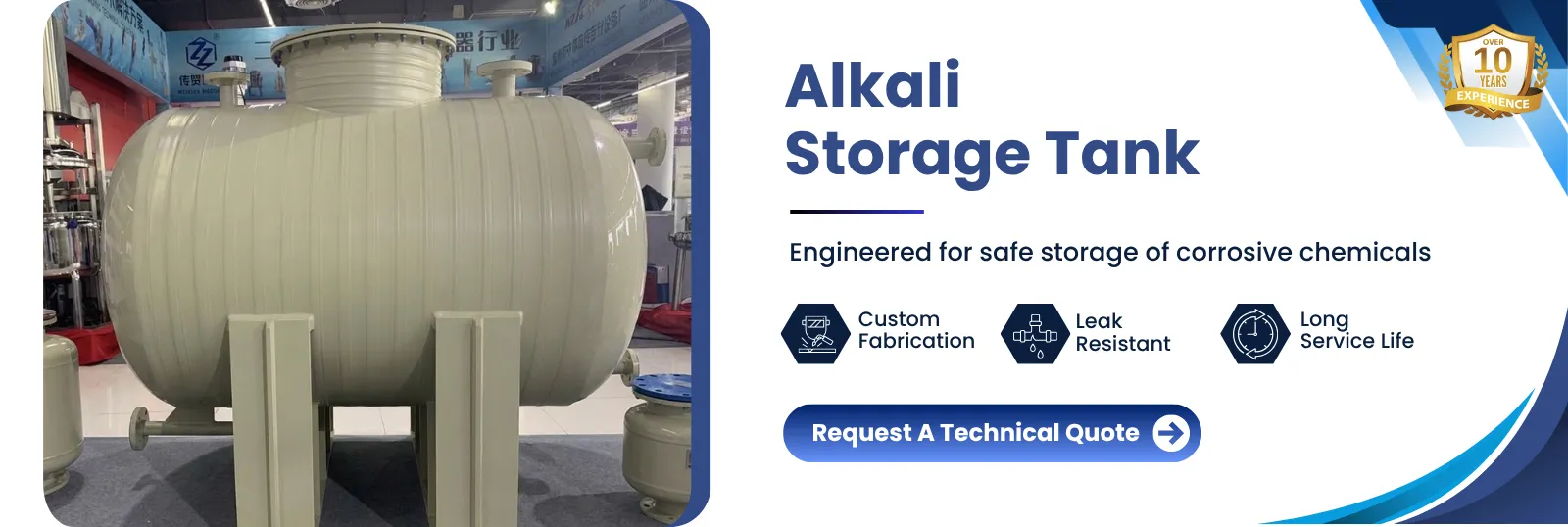






Alakali Storage Tank
An Alkali Storage Tank is specially designed for chemical industries. Alkali Tanks are used for safe storage and handling of alkaline chemicals. As the caustic soda, sodium hydroxide, potassium hydroxide, lime solutions, and the other of corrosive alkali substances, these tanks are engineered to resist of chemical corrosion, leakage, and the material degradation caused by highly reactive of alkaline liquids.
Alkali Storage Tanks are commonly manufactured by using the corrosion-resistant material. They depend on chemical concentration and other operating conditions. They are designed to features such as reinforced structures, leak-proof joints, level indicators, vent systems, manholes, and safety accessories for secure and the efficient operation. These tanks are widely used in chemical processing plants, water treatment facilities, and the various industrial applications, where are alkaline chemicals need to be stored safely and reliably. Petron Thermoplast offered a practical and reliable solution for managing the flow control requirements.
Excellent Chemical Resistance
Resistant to Acids, Alkalis, Corrosive, Industrial solvents
Temperature Resistance
Safely handle moderate operating temperatures.
Corrosion-Free Construction
No rusting when exposed to chemicals & moisture.
Long Service Life
Excellent durability and can operate for many years
ISO / ASTM / DVS Certified
Manufactured to international quality standards
-10°C to 120°C
Operating Temperature
100 L – 100K L
Capacity (Customizable)
ASTM, ASME, ISO, DIN
Certified quality standards
5 mm to 50 mm
Wall Thickness

Excellent Chemical Resistance
Alkali storage tanks are manufactured using chemically resistant materials such as HDPE, FRP, PP, PVDF, and stainless steel to safely handle corrosive alkaline chemicals and caustic solutions.

Temperature Resistance
Designed to operate efficiently across a wide temperature range, depending on the material and chemical compatibility.

Long Service Life
The durable and anti-corrosive construction ensures extended operational life with minimal wear and damage

Leak-Proof Welded Joints
High-quality welding and secure joints provide leak-proof performance for safe storage and transfer of chemicals.

Technical Details
| Parameter | Technical Details |
| Product Name | Alkali Storage Tank |
| Material Options | HDPE, PP, FRP, PVDF, PVC, Stainless Steel, Rubber-Lined Steel |
| Tank Type | Vertical, Horizontal, Cylindrical, Rectangular |
| Storage Capacity | 100 Liters to 100,000+ Liters |
| Wall Thickness | 5 mm to 50 mm (depending on tank size & application) |
| Shape | Cylindrical / Rectangular |
| Design Standard | ASTM, ASME, ISO, DIN Standards |
| Operating Temperature | -10°C to 120°C (depends on material and chemical type) |
| Pressure Rating | Atmospheric to customized pressure rating |
| Chemical Compatibility | Suitable for alkalis, caustic solutions, and corrosive chemicals |
| Corrosion Resistance | Excellent resistance to alkaline chemicals |
| UV Resistance | UV-stabilized material available for outdoor use |
| Color Options | Natural, Black, White, Blue, Customized |
| Mounting Type | Ground Mounted / Skid Mounted |
| Outlet Connection | Flanged, Threaded, Socket Weld |
| Inlet Type | Top inlet / Side inlet |
| Lining Options | PTFE, Rubber, FRP, HDPE, PVDF |
| Reinforcement | FRP reinforcement / Steel support structure |
| Fabrication Method | Extrusion welding, Butt welding, Rotational molding, Fabrication |
| Surface Finish | Smooth internal finish / Anti-corrosive finish |
| Leak Protection | Leak-proof welded construction |
| Ventilation System | Optional vent and pressure release arrangement |
| Level Indicator | Optional level gauge installation |
| Agitator Provision | Available on request |
| Manhole Provision | Customized manhole options available |
| Drainage System | Bottom drain outlet available |
| Safety Features | Chemical resistance, anti-corrosion, UV protection |
| Maintenance Requirement | Low maintenance |
| Service Life | Long operational life |
| Applications | Chemical industries, Water treatment, Textile industries, Soap & detergent plants, Pharmaceuticals |
| Installation Type | Indoor & Outdoor installation |
| Customization | Available as per customer requirements |
Chemical compatibility of an alkali storage tank refers to the ability of the tank material to safely and store the alkaline chemicals without corrosion, leakage, deformation, or material degradation. Proper compatibility is an essential for safe storage, long service life, and reliable industrial operation.
Alkali chemicals are highly reactive and corrosive, so selecting the correct tank material is very important.
Common Alkali Chemicals Stored
| Alkali Chemical | Typical Industrial Use |
| Sodium Hydroxide (NaOH) | Water treatment, chemical processing |
| Potassium Hydroxide (KOH) | Chemical manufacturing |
| Ammonia Solution | Fertilizer and refrigeration systems |
| Lime Slurry | Water treatment plants |
| Caustic Potash | Industrial processing |
| Alkaline Cleaning Chemicals | Cleaning and maintenance systems |
Common Tank Materials for Alkali Storage
| Tank Material | Compatibility Characteristics |
| HDPE | Excellent resistance to most alkalis |
| Polypropylene (PP) | Very good alkali resistance |
| FRP | Good structural strength and corrosion resistance |
| PVDF | Excellent for high-temperature aggressive alkalis |
| Stainless Steel | Suitable for selected alkali applications |
Compatibility of Common Alkalis
| Chemical | HDPE | PP | FRP | PVDF | SS |
| Sodium Hydroxide (NaOH) | Excellent | Excellent | Good | Excellent | Moderate* |
| Potassium Hydroxide (KOH) | Excellent | Excellent | Good | Excellent | Moderate* |
| Ammonia Solution | Good | Good | Good | Excellent | Good |
| Lime Slurry | Good | Good | Excellent | Excellent | Good |
| Alkaline Detergents | Excellent | Excellent | Good | Excellent | Good |
Testing and quality assurance of an alkali storage tank are essential to ensure the safe chemical storage, leak-proof performance, corrosion resistance, and long operational life. Since alkali chemicals are highly corrosive, strict quality to control and proper testing procedures are required during the manufacturing and installation.
1. Raw Material Quality Inspection
The manufacturing process begins with inspection of raw materials such as:
- HDPE sheets
- PP sheets
- FRP materials
- PVDF lining
- Stainless steel plates
- Material grade
- Thickness
- Surface quality
- Chemical resistance properties
2. Dimensional Inspection
The tank dimensions are verified according to design specifications.
Parameters checked include:
- Tank diameter
- Height
- Wall thickness
- Nozzle positions
- Alignment accuracy
This ensures proper fabrication quality.
3. Welding Quality Inspection
Weld quality is one of the most critical factors in alkali storage tanks.
Thermoplastic Tank Welding
Inspection includes:
- Butt fusion weld quality
- Extrusion weld inspection
- Hot gas weld verification
Metal Tank Welding
Inspection includes:
- TIG/MIG weld inspection
- Weld penetration check
- Surface finish evaluation
Proper welding ensures:
- Leak-proof joints
- Structural strength
- Chemical resistance
4. Hydrostatic Leak Testing
Hydrostatic testing is performed by filling the tank with water to verify:
- Leak-proof performance
- Structural stability
- Joint integrity
The tank is monitored for:
- Leakage
- Deformation
- Pressure resistance
5. Spark Testing (Holiday Testing)
Spark testing is commonly used for:
- PVDF-lined tanks
- FRP-lined tanks
- Thermoplastic-lined systems
This test detects:
- Pinholes
- Lining defects
- Welding discontinuities
- Surface damage
6. Vacuum Testing
Vacuum testing checks:
- Joint sealing quality
- Weld leak resistance
- Structural integrity
This is important for critical chemical storage applications.
7. Thickness Measurement
Thickness verification is performed on:
- Tank wall
- Lining material
- FRP reinforcement
- Weld areas
Proper thickness ensures:
- Mechanical strength
- Chemical resistance
- Long service life
8. Visual Inspection
Visual inspection checks:
- Surface finish
- Weld appearance
- Crack formation
- Material defects
- Alignment accuracy
This ensures overall fabrication quality.
9. Structural Strength Testing
Structural evaluation verifies:
- Load-bearing capacity
- Mechanical stability
- Reinforcement effectiveness
- Support strength
especially for large-capacity tanks.
10. Chemical Resistance Verification
Material compatibility checks confirm:
- Alkali resistance
- Corrosion resistance
- Temperature suitability
- Long-term durability
This ensures safe chemical handling.
11. Pressure & Vent Testing
The tank venting system is inspected for:
- Proper airflow
- Pressure balancing
- Overflow protection
- Safe operation
12. Agitator & Accessory Testing
If provided, the following are checked:
- Agitator alignment
- Mixer support strength
- Nozzle tightness
- Valve functionality
13. Surface Finish & Coating Inspection
Protective coatings and surface finishing are checked for:
- Uniformity
- Adhesion quality
- Corrosion protection
- UV resistance
14. Final Quality Documentation
Quality reports may include:
- Material test certificates
- Welding inspection reports
- Hydro test reports
- Thickness records
- Dimensional inspection reports
Features of Alakali Storage Tank

Excellent Chemical Resistance
Alkali storage tanks are manufactured using chemically resistant materials such as HDPE, FRP, PP, PVDF, and stainless steel to safely handle corrosive alkaline chemicals and caustic solutions.

Corrosion-Resistant Construction
The tank structure is specially designed to resist corrosion caused by strong alkalis, ensuring long-term durability and safe operation.

Leak-Proof Design
High-quality welding and secure joints provide leak-proof performance for safe storage and transfer of chemicals.

High Mechanical Strength
These tanks are built with strong structural integrity to withstand industrial operating conditions, chemical loads, and external stress.

Long Service Life
The durable and anti-corrosive construction ensures extended operational life with minimal wear and damage.

UV & Weather Resistance
UV-stabilized materials protect the tank from sunlight and harsh outdoor environmental conditions.

High Temperature Resistance
Designed to operate efficiently across a wide temperature range, depending on the material and chemical compatibility.

Lightweight Structure
Plastic and hybrid alkali storage tanks are lightweight, making transportation, handling, and installation easier.

Low Maintenance Requirement
The smooth internal surface and corrosion-resistant materials reduce maintenance and cleaning requirements.

Smooth Internal Finish
The inner surface minimizes chemical deposits, scaling, and contamination for improved storage efficiency.

Customizable Design
Available in customized: Sizes Capacities Thicknesses Shapes Connection types Lining options
Industries We Serve

Excellent Chemical Resistance
HDPE chemical storage tanks provide an outstanding resistance against
Acids, Alkalis,
Corrosive chemicals,
Industrial solvents

Temperature Resistance
HDPE tanks can safely handle moderate operating temperatures commonly found in chemical storage applications.

High Impact Strength
The tanks are designed to withstand:
Mechanical stress,
External impact,
Minor operational shocks without cracking or damage.

Customizable Design
HDPE tanks can be manufactured in customized:
Capacities,
Shapes,
Thicknesses,
Nozzle arrangements,
Connection types
to meet specific industrial requirements.

Corrosion-Free Construction
Unlike metal tanks, HDPE tanks do not rust or corrode when exposed to harsh chemicals and moisture, to ensure the longer operational life.

Long Service Life
HDPE tanks offer excellent durability and can operate for many years with minimal maintenance under proper working conditions.

Lightweight Design
Easier transportation,
Simple installation,
Reduced structural load,
Lower handling costs

UV Stabilized Material
UV-stabilized HDPE tanks are suitable for outdoor applications and can resist sunlight to exposure and weather conditions effectively.

Leak-Proof Welded Joints
Advanced thermoplastic welding techniques create a strong and leak-resistant joints that improve operational safety and reliability.

Low Maintenance Requirement
The non-corrosive surface minimizes maintenance needs and reduces repair costs over time.

Smooth Internal Surface
The smooth inner wall helps:
Prevent chemical deposits
Improve cleaning efficiency
Maintain proper liquid flow
Reduce contamination risks
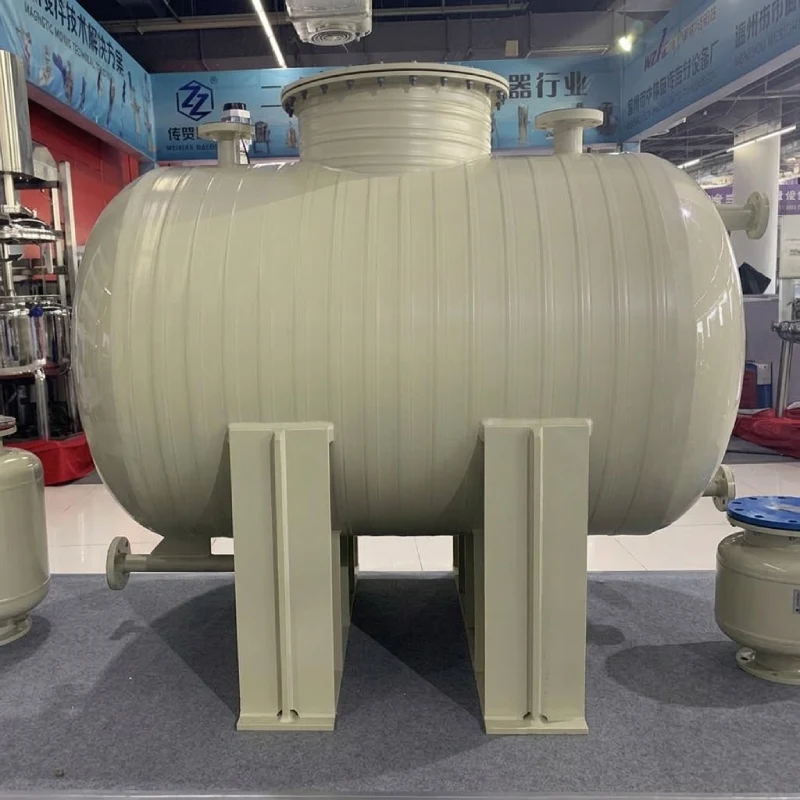
Manufacturing Process of Alakali Storage Tank
The manufacturing process of an alkali storage tank are involve to precision engineering, proper material selection, fabrication, welding, reinforcement, and quality testing to ensure the safe storage of corrosive alkaline chemicals. These tanks are specially designed to withstand chemical attack, temperature variations, and industrial operating conditions.
The manufacturing process begins with detailed engineering calculations based on:
- Chemical compatibility
- Alkali concentration
- Storage capacity
- Operating temperature
- Pressure conditions
- Installation environment
- Tank dimensions
- Wall thickness
- Reinforcement requirements
- Nozzle arrangement
- Structural support
The tank material is selected according to the type of alkali chemical and operating conditions.
Common Materials Used
- HDPE sheets
- PP sheets
- FRP raw materials
- PVDF lining sheets
- Stainless steel plates
- Corrosion resistance
- Temperature resistance
- Mechanical strength
- Chemical durability
Raw material sheets are cut into required dimensions using:
- CNC cutting machines
- Circular saws
- Laser cutting systems
- Thermoplastic cutting tools
- Tank shell
- Bottom plate
- Top cover
- Reinforcement sections
The cut sheets are rolled into the required tank shape using rolling machines.
Common tank configurations:
- Vertical cylindrical tanks
- Horizontal tanks
- Cone-bottom tanks
- Rectangular tanks
- Accurate dimensions
- Uniform wall shape
- Structural stability
Tank sections are joined using specialized welding techniques.
Thermoplastic Tanks
Common welding methods:
- Butt fusion welding
- Extrusion welding
- Hot gas welding
Metal Tanks
Common welding methods:
- TIG welding
- MIG welding
- Arc welding
- Strong welded joints
- Leak-proof seams
- Durable chemical-resistant connections
The bottom and roof sections are attached to the tank shell.
Top Designs
- Flat top
- Dome top
- Open top
Bottom Designs
- Flat bottom
- Cone bottom
- Sloped bottom
Depending on the process and drainage requirements.
Various fittings are installed, including:
- Inlet nozzles
- Outlet nozzles
- Drain connections
- Vent nozzles
- Overflow lines
- Manholes
- Level indicators
All fittings are carefully welded and aligned.
For highly corrosive alkali applications:
- PVDF lining may be installed
- FRP lamination may be applied
This improves:
- Chemical resistance
- Structural durability
- Corrosion protection
Additional support systems may include:
- Reinforcement rings
- External stiffeners
- Support legs
- Saddle supports
- Structural frames
- Mechanical strength
- Load-bearing capacity
- Tank stability
Finishing operations may include:
- Surface cleaning
- Edge trimming
- Weld polishing
- Protective coating
- UV-resistant coating
This improves durability and appearance.
The completed tank undergoes hydro testing by filling it with water to verify:
- Leak-proof performance
- Weld integrity
- Structural stability
Spark testing is performed on:
- PVDF lining
- FRP lining
- Thermoplastic lining
- Pinholes
- Lining defects
- Weld discontinuities
Final inspection checks:
- Tank dimensions
- Wall thickness
- Weld quality
- Nozzle alignment
- Structural accuracy
Quality records may include:
- Material test certificates
- Weld inspection reports
- Hydro test reports
- Thickness measurements
- Quality approval documents
How to Select the Right Alakali Storage Tank
The first step is to determine:
- Chemical name
- Chemical concentration
- Purity level
- Corrosive nature
- Operating conditions
- Sodium Hydroxide (NaOH)
- Potassium Hydroxide (KOH)
- Ammonia solutions
- Lime slurry
- Alkaline cleaning chemicals
The tank material must be compatible with the alkali solution.
Common tank materials include:
- HDPE
- PP (Polypropylene)
- FRP
- PVDF
- Stainless Steel (for selected applications)
- Corrosion
- Leakage
- Material degradation
- Structural failure
Alkali concentration directly affects material selection.
Higher concentrations may require:
- Thicker tank walls
- Advanced lining systems
- Stronger structural reinforcement
Concentration should always be confirmed before design selection.
Temperature significantly affects alkali compatibility.
Check:
- Chemical storage temperature
- Filling temperature
- Ambient temperature
Higher temperatures may require:
- PVDF lining
- Additional reinforcement
- Heat-resistant material grades
Tank capacity should be selected according to:
- Daily chemical consumption
- Process demand
- Backup storage requirement
- Plant operation cycle
Available capacities may range from:
- Small dosing tanks
- Medium process tanks
- Large bulk storage tanks
Tank Material | Suitable Applications |
HDPE | Mild to medium alkali solutions |
PP | Corrosive alkali chemicals |
FRP | Large-capacity outdoor storage |
PVDF | High-temperature aggressive alkalis |
Stainless Steel | Special hygienic applications |
Common tank configurations include:
- Vertical tanks
- Horizontal tanks
- Cylindrical tanks
- Cone-bottom tanks
- Rectangular tanks
- Available space
- Process requirements
- Drainage requirements
The tank should be designed to handle:
- Chemical load
- Liquid pressure
- Environmental stress
- Agitator load (if applicable)
- Reinforcement rings
- Support structures
- External stiffeners
Indoor Installation
- Reduced UV exposure
- Lower environmental stress
Outdoor Installation
- UV-resistant material
- Weatherproof design
- External protection coating
Select suitable accessories such as:
- Inlet nozzles
- Outlet nozzles
- Drain valves
- Vent systems
- Manholes
- Level indicators
- Overflow connections
Proper nozzle arrangement improves operational safety.
Alkali storage tanks should include:
- Vent pipes
- Overflow systems
- Pressure relief arrangement
- Emergency drainage systems
These features improve operational safety.
If chemical mixing is required, verify:
- Agitator mounting provision
- Structural support
- Motor compatibility
- Mixing requirements

Custom Product Manufacturing Available
If you are searching for customized product designs that meet your requirements, don’t worry. Petron Thermoplast also offers custom product manufacturing services to meet the unique needs of various industries. Work with our expert engineers to create custom designs suited for your application.
Why Choose Petron Thermoplast?
Petron Thermoplast deals in highly efficient Alkali Storage Tank solution in modern chemical industries. Alkali Storage Tanks are the versatile option for to ensuring the precise control over chemical flow. By investing in the Alkali Storage Tank, businesses can be improve the efficiency, reducing the maintenance costs, and enhanced the overall system performance. Whether they are used in the oil and gas industry, chemical processing plants, or water treatment facilities.
Alkali Storage Tank by Petron Thermoplast offered a practical and reliable solution for managing the flow control requirements. The efficiency of Alkali Storage Tank is made them an essential component for any organisation looking to optimize the flow control of processes and achieve the greater operational success.
Frequently Asked Questions
An alkali storage tank is a specially designed tank used for storing alkaline chemicals such as sodium hydroxide (NaOH), potassium hydroxide (KOH), ammonia solutions, and other corrosive alkali liquids safely.
Common materials include:
- HDPE
- Polypropylene (PP)
- FRP
- PVDF-lined systems
- Stainless Steel
The material selection depends on chemical concentration, temperature, and application requirements.
These tanks are commonly used for storing:
- Caustic soda (NaOH)
- Potassium hydroxide
- Ammonia solution
- Alkaline cleaning chemicals
- Lime slurry
- Industrial alkali solutions
Chemical compatibility ensures:
- Safe chemical storage
- Corrosion resistance
- Leak prevention
- Long service life
- Reliable tank performance
Incorrect material selection can cause tank failure or leakage.
HDPE, PP, FRP, and PVDF-lined tanks are commonly used for caustic soda storage depending on:
- Concentration
- Temperature
- Storage capacity
- Process conditions
Yes, many alkali storage tanks are designed for outdoor installation and may include:
- UV-resistant protection
- Weatherproof construction
- External reinforcement
Tank capacities can range from:
- Small dosing tanks
- Medium process tanks
- Large industrial bulk storage tanks
depending on operational requirements.
Yes, properly selected alkali storage tanks provide excellent resistance against:
- Chemical corrosion
- Rust formation
- Surface degradation
- Alkali attack
Common welding methods include:
- Butt fusion welding
- Extrusion welding
- Hot gas welding
Common quality tests include:
- Hydrostatic leak testing
- Spark testing
- Weld inspection
- Thickness measurement
- Dimensional inspection
- Vacuum testing