Process Tank
Process Tanks are specially designed industrial containers. It is used for storing, mixing, blending, heating, cooling, processing liquids, chemicals, and other materials. During the manufacturing and industrial operations, these tanks play a vital role in the various industries by supporting the control of the processing and safe handling of fluids and process media.
Process tanks are manufactured using different materials such as stainless steel, HDPE, PP, FRP, PVDF, and duplex steel. Depending on the chemical compatibility, temperature, pressure, and application requirements, they can be equipped with accessories like agitators, heating systems, cooling jackets, level indicators, nozzles, and manholes for efficient operation. Petron thermoplast provides safe, efficient, and reliable handling of liquids, chemicals, and process materials..


Tank Function
Storage, Mixing, Blending, Heating, Cooling, Processing

Temperature Resistance
Up to 300°C (Depending on Material)

Corrosion-Free Construction
No rusting when exposed to chemicals & moisture.

Long Service Life
Excellent durability and can operate for many years

ASME, ASTM, DIN, IS Certified
Manufactured to international quality standards
Up to 300°C
Operating Temperature
50 L – 500K L
Capacity (Customizable)
ASME, ASTM, DIN, IS
Certified quality standards
3 mm – 50 mm
Wall Thickness

Excellent of corrosion and chemical resistance

Heating and cooling arrangements are available

Low maintenance and the long operational life

Leak-proof and robust the construction
Technical Details
| Parameter | Specification / Details |
| Material | HDPE (High-Density Polyethylene), UV stabilized, FDA/ASTM compliant for potable water if needed |
| Capacity | 500 L – 1,00,000 L (customizable) |
| Shape | Vertical cylindrical, horizontal cylindrical, rectangular (depending on space & application) |
| Wall Thickness | 5 mm – 25 mm (depending on capacity and chemical) |
| Color | Natural black, blue, white, or custom (UV-stabilized for outdoor use) |
| Temperature Range | Operating: -40°C to +60°C; Short-term: up to 80°C |
| Pressure Rating | Usually atmospheric; HDPE tanks are typically non-pressurized, but can handle low internal pressure (≤1 bar) |
| Fittings / Nozzles | Inlet/Outlet: 1″ – 6″ (or custom); Material: HDPE / PP / PVC; Compatible with chemical being stored Custom, according to customer need |
| Lid / Cover | HDPE dome or flat lid with gasket; Optional vented or lockable |
| Reinforcement | Ribbed or double-walled for structural strength (especially for larger tanks) |
| UV Resistance | UV stabilized, suitable for outdoor exposure |
| Chemical Compatibility | Compatible with acids (HCl, H2SO4 diluted), bases (NaOH, KOH), salts, alcohols, and most industrial chemicals (check chemical chart) |
| Installation | Free-standing, on concrete pad, skid-mounted, or with supporting frame for horizontal tanks |
| Certifications / Standards | ASTM D1998, ISO 9001, FDA compliant (if for potable water), UN/DOT approval for transport (optional) |
| Accessories | Level indicators, mixers, valves, overflow, secondary containment options |
| Life Expectancy | 10–25 years depending on chemical type, UV exposure, and maintenance |
- High structural strength and durability
- Suitable for the storage, mixing, blending, and processing applications
- Excellent of corrosion and chemical resistance
- Available in multiple materials such as SS, HDPE, PP, FRP, PVDF, and Duplex SS.
- Leak-proof and robust the construction
- Customizable sizes, shapes, and their capacities
- Designed for high-temperature and pressure applications
- Smooth internal surface for the easy cleaning and hygienic processing
- Compatible with agitators, mixers, and process the equipment
- Heating and cooling arrangements are available
- Low maintenance and the long operational life
- Resistant to rust, abrasion, and harsh the industrial environments
Chemical compatibility is one of the most important factors when selecting a Process Tank. The tank material must be able to withstand the chemical being to stored, mixed, or processed without degradation, corrosion, swelling, cracking, or contamination. Proper compatibility to ensure the safety, product quality, long service life, and reduced maintenance costs.
The suitability of a process tank depends on:
- Chemical type
- Chemical concentration
- Operating temperature
- Pressure conditions
- Exposure time
- Process environment
Why Chemical Compatibility Matters
Selecting an incompatible tank material can result in:
- Corrosion and material failure
- Product contamination
- Chemical leakage
- Reduced tank lifespan
- Increased maintenance costs
- Safety hazards
- Production downtime
Therefore, compatibility should always be verified before tank fabrication or installation.
Common Process Tank Materials and Their Compatibility
1. Stainless Steel 304
Suitable for:
- Water
- Mild chemicals
- Cleaning solutions
- Low-corrosive process fluids
- High chloride environments
- Strong acids
- Concentrated corrosive chemicals
2. Stainless Steel 316
Offers improved to corrosion resistance compared to SS304.
Suitable for:
- Pharmaceutical products
- Mild acids
- Saline solutions
- Chemical processing applications
- Pharmaceutical tanks Process vessels
- Mixing tanks
3. Duplex Stainless Steel
Provides excellent resistance to chloride attack and stress corrosion cracking.
Suitable for:
- Brine solutions
- Seawater
- Chloride-rich chemicals
- Industrial process fluids
- Marine systems
- Chemical plants
- Water treatment facilities
4. Polypropylene (PP)
- Sulfuric Acid
- Hydrochloric Acid
- Sodium Hydroxide
- Water treatment chemicals
- Excellent chemical resistance
- Cost-effective
- Lightweight
5. Polypropylene Homopolymer (PPH)
- Strong acids
- Alkalis
- Pickling solutions
- Chemical process liquids
- Higher temperature resistance than PP
- Improved structural performance
6. High-Density Polyethylene (HDPE)
- Hydrochloric Acid
- Caustic Soda
- Water treatment chemicals
- Fertilizer solutions
- Good impact resistance
- Excellent corrosion resistance
7. Polyvinylidene Fluoride (PVDF)
- Concentrated acids
- Oxidizing chemicals
- High-purity chemicals
- Semiconductor-grade chemicals
- Outstanding chemical resistance
- High-temperature capability
- Excellent purity
8. FRP (Fiber Reinforced Plastic)
- Corrosive chemicals
- Acids
- Alkalis
- Water treatment chemicals
- High strength-to-weight ratio
- Corrosion resistance
- Outdoor durability
9. FRP Backed Thermoplastic Tanks
- Aggressive acids
- Alkalis
- Oxidizing chemicals
- Specialty chemicals
- Dual protection system
- Excellent structural strength
- Enhanced corrosion resistance
Industries We Serve

Chemical Processing
Used for the mixing, blending, and storing the aggressive or corrosive chemicals. As well as they initiating to exothermic/endothermic reactions.

Pharmaceuticals & Biotech
Essential for the sterile, aseptic processing to ensure the precise formulation of vaccines and medicines.

Surface Treatment
Pickling, etching, and the plating tanks to remove rust or apply the metal layers in the metal finishing.

Water & Wastewater Treatment
Treats, filters, and neutralizes hazardous waste, as well as they providing the chemical storage for the purification.

Oil & Gas/Petrochemical
Stores, separates, and the conditions fuels, lubricants, and gases, often reducing contamination.

Power Plants & Utility Systems
Supports cooling water systems, chemical treatment, and industrial utility processes.
Industrial Manufacturing Plant
Suitable for liquid storage, mixing, heating, cooling, and process control operations across various industries.
Manufacturing Process of Process Tank
Process Tanks are specialized vessels used for storing, mixing, heating, cooling, reacting, or processing liquids and chemicals in various industries. Depending on the application, process tanks can be manufactured from materials such as stainless steel, Duplex stainless steel, PP, PPH, HDPE, PVDF, FRP, or FRP-backed thermoplastics. The manufacturing process involves careful engineering, precision fabrication, quality control, and testing to ensure safe and reliable operation.
The manufacturing process begins with detailed design and engineering based on customer requirements and process conditions.
Design Considerations:
- Tank capacity and dimensions(50 Liters to 500 KL or Customized)
- Chemical compatibility
- Operating temperature
- Pressure or vacuum requirements
- Agitator and mixer loads
- Nozzle and accessory locations
- Structural support requirements
- Industry standards and regulations
The appropriate material is selected according to the process fluid and operating environment.
Common Materials:
- Stainless Steel 304
- Stainless Steel 316
- Duplex Stainless Steel
- Polypropylene (PP)
- Polypropylene Homopolymer (PPH)
- HDPE
- PVDF
- FRP
- FRP Backed Thermoplastic
All incoming materials undergo quality inspection before fabrication.
Inspection Includes:
- Material grade verification
- Thickness measurement
- Surface condition inspection
- Material Test Certificate (MTC) review
- Dimensional verification
Only approved materials are released for manufacturing.
Raw materials are cut according to fabrication drawings.
Cutting Methods:
- CNC Plasma Cutting
- Laser Cutting
- Water Jet Cutting
- Mechanical Cutting
- Thermoplastic Sheet Cutting
After cutting, the edges are cleaned and prepared for joining.
The tank components are formed into the required shape.
Common Operations:
- Shell rolling
- Cone fabrication
- Dish-end forming
- Bottom plate shaping
- Thermoplastic sheet bending
Precision forming ensures proper fit-up and dimensional accuracy.
Individual components are assembled before final joining.
Activities:
- Alignment checking
- Tack welding or temporary fixing
- Dimensional verification
- Joint preparation
Proper assembly is essential for maintaining tank integrity.
The joining method depends on the tank material.
For Metal Tanks:
- GTAW (TIG Welding)
- GMAW (MIG Welding)
- SMAW (Arc Welding)
- SAW (Submerged Arc Welding)
For Thermoplastic Tanks:
- Hot Gas Welding
- Extrusion Welding
- Butt Fusion Welding
The objective is to create strong, leak-proof joints.
After the tank body is completed, process connections and accessories are installed.
Common Accessories:
- Inlet nozzles
- Outlet nozzles
- Drain connections
- Vent nozzles
- Manholes
- Level indicators
- Sampling ports
- Agitator mountings
- Temperature sensors
Each component is installed according to approved drawings.
Depending on the tank size and operating conditions, reinforcements may be added.
Reinforcement Options:
- Stiffening rings
- External supports
- FRP strengthening layers
- Structural steel frameworks
These improve strength and prevent deformation.
How to Select the Right Process Tank
A Process Tank is a vessel used for storing, mixing, heating, cooling, reacting, or processing liquids, chemicals, slurries, and other materials in industrial operations. Selecting the right process tank is crucial for ensuring operational efficiency, product quality, safety, and long-term reliability.
The ideal process tank should be chosen based on process requirements, material compatibility, operating conditions, and industry standards.
The first step is understanding the tank’s intended function.
Common Process Applications:
- Chemical mixing
- Batch processing
- Reaction processes
- Heating and cooling operations
- Liquid storage
- Dosing and blending
- Water treatment
- Pharmaceutical processing
The application determines the tank design, material, and accessories required.
The characteristics of the stored or processed medium are critical.
Information Required:
- Chemical name
- Concentration
- pH value
- Specific gravity
- Viscosity
- Corrosiveness
- Abrasiveness
This information helps determine the most suitable tank material.
Material selection is one of the most important factors.
Common Tank Materials
Material | Suitable Applications |
Stainless Steel 304 | Food, water, mild chemicals |
Stainless Steel 316 | Corrosive chemicals, pharmaceuticals |
Duplex Stainless Steel | Chloride-rich and aggressive environments |
PP/PPH | Acids, alkalis, chemical processing |
HDPE | Chemical storage and water treatment |
PVDF | High-purity and highly corrosive chemicals |
FRP | Corrosive chemical storage |
FRP Backed Thermoplastic | Highly aggressive chemical applications |
The selected material must be compatible with the process fluid and operating conditions.
Tank size should be based on process requirements.
Consider:
- Batch size
- Daily production volume
- Future expansion
- Safety reserve capacity
Oversizing or undersizing can affect operational efficiency and costs.
Temperature directly affects material performance and tank design.
Considerations:
- Maximum operating temperature
- Minimum operating temperature
- Heating requirements
- Cooling requirements
High-temperature applications may require stainless steel, PVDF, or specialized materials.
Determine the operating conditions:
Types of Service:
- Atmospheric tanks
- Pressure vessels
- Vacuum tanks
- Cyclic pressure applications
Pressure-rated tanks require additional engineering and compliance with applicable standards.
If the process involves blending or reactions, agitation may be necessary.
Factors to Consider:
- Product viscosity
- Mixing intensity
- Batch volume
- Agitator type
- Motor power
Proper mixing improves product consistency and process efficiency.
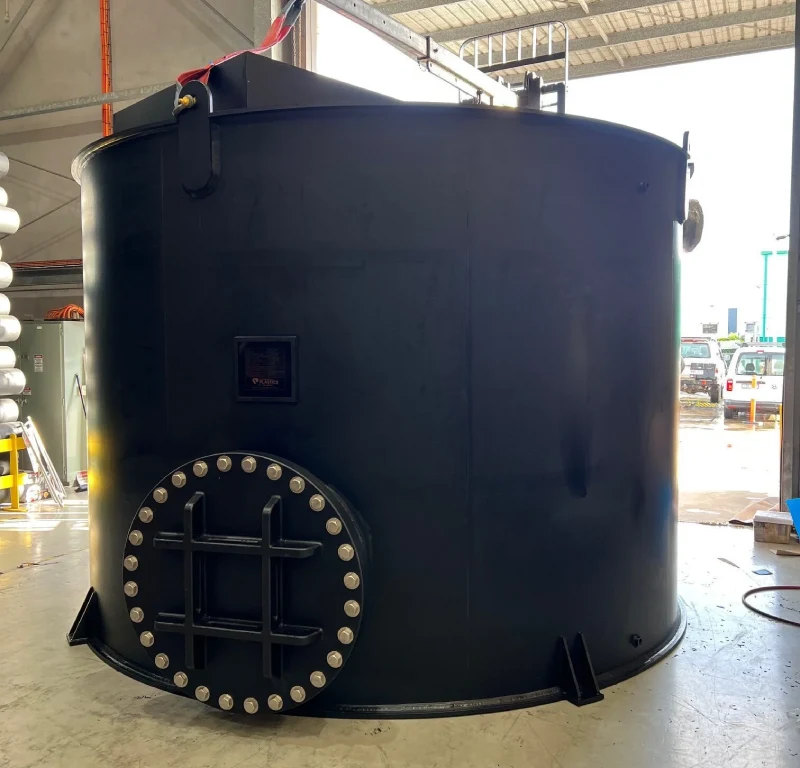

Custom Product Manufacturing Available
If you are searching for customized product designs that meet your requirements, don’t worry. Petron Thermoplast also offers custom product manufacturing services to meet the unique needs of various industries. Work with our expert engineers to create custom designs suited for your application.
Why Choose Petron Thermoplast?
Petron Thermoplast provides the Process Tanks, which are an essential part of the chemical industrial to manufacturing and processing systems. Petron thermoplast provides safe, efficient, and reliable handling of liquids, chemicals, and process materials. These tanks are specially designed to support various operations such as storage, mixing, blending, heating, cooling, and chemical processing under controlled conditions.
One of the major reasons to choose the Petron Thermoplast for Process Tanks is their reliability and versatility. They can be easily manufactured in different materials like stainless steel, HDPE, PP, FRP, PVDF, and duplex steel to suit specific chemical compatibility, temperature, and pressure requirements. This ensures long-lasting performance even in the harsh industrial environments.
Frequently Asked Questions
A Process Tank is an industrial vessel used for storing, mixing, heating, cooling, reacting, or processing liquids, chemicals, slurries, and other materials during manufacturing operations.
Process Tanks are used for:
- Chemical processing
- Mixing and blending
- Batch manufacturing
- Heating and cooling operations
- Water treatment
- Pharmaceutical production
- Chemical storage and dosing
Common materials include:
- Stainless Steel 304
- Stainless Steel 316
- Duplex Stainless Steel
- Polypropylene (PP)
- Polypropylene Homopolymer (PPH)
- HDPE
- PVDF
- FRP (Fiber Reinforced Plastic)
- FRP Backed Thermoplastic
Material selection depends on chemical compatibility and operating conditions.
Key factors include:
- Type of chemical or product
- Chemical concentration
- Operating temperature
- Tank capacity
- Pressure or vacuum requirements
- Agitation requirements
- Installation location
- Industry standards
Process Tanks can be manufactured in a wide range of sizes, from small laboratory vessels to large industrial tanks with capacities of several thousand liters or cubic meters.
Yes. Process Tanks can be customized with:
- Agitators and mixers
- Heating or cooling jackets
- Manholes
- Nozzles and flanges
- Level indicators
- Sampling ports
- Instrumentation
- Ladders and platforms
Common tank configurations include:
- Vertical cylindrical tanks
- Horizontal tanks
- Cone-bottom tanks
- Flat-bottom tanks
- Open-top tanks
- Closed-top tanks
- Reactor vessels
Yes, provided the correct material is selected. Materials such as PP, PPH, HDPE, PVDF, FRP, and Duplex Stainless Steel are commonly used for corrosive chemical applications.
Yes. Process Tanks can be designed for:
- Atmospheric service
- Internal pressure
- Full vacuum
- Combined pressure and vacuum conditions
The design must account for the intended operating conditions.
An agitator is used to:
- Mix liquids
- Dissolve solids
- Maintain product uniformity
- Improve chemical reactions
- Prevent settling
The agitator type depends on the process requirements.