UPVC pipe fittings are widely used in industrial piping systems for fluid transfer, water treatment, chemical handling, and equipment connections. Before installing these fittings, proper inspection is important to check their condition, dimensions, connection quality, and suitability for the intended application.
Even a small defect in a pipe fitting can create problems during installation or affect the performance of the pipeline. Cracks, damaged threads, incorrect dimensions, or poor storage conditions may lead to leakage, joint failure, or unnecessary replacement work. For industrial projects, inspecting UPVC pipe fittings before installation helps engineers, maintenance teams, and procurement professionals identify potential issues at an early stage.
This guide explains how to inspect UPVC pipe fittings before installation and what buyers and installation teams should check during the process.
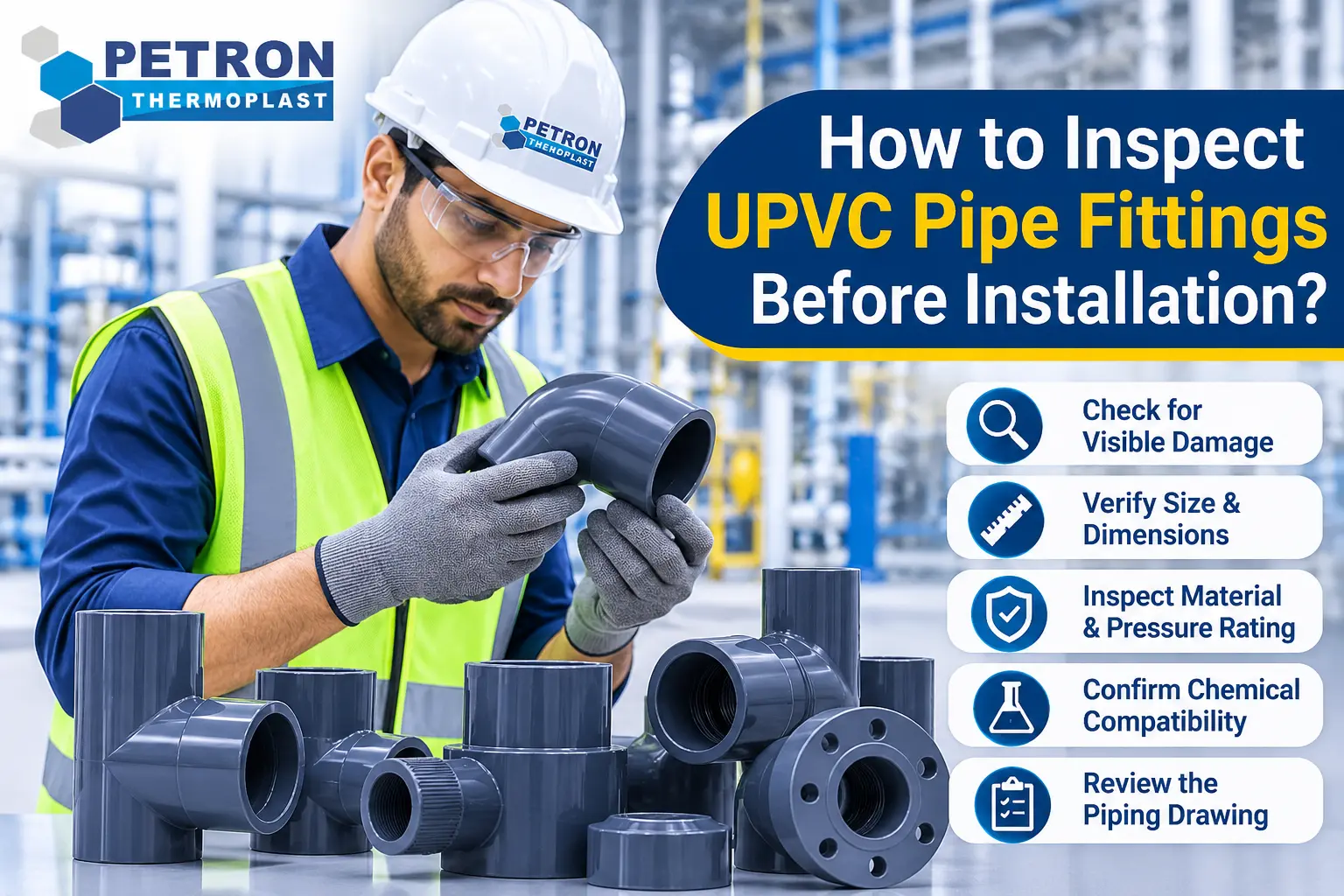
1. Check the Fittings for Visible Damage
The first step is to inspect the overall physical condition of the UPVC pipe fittings.
Carefully examine each fitting for visible defects such as:
- Cracks or fractures
- Deep scratches
- Chipped edges
- Broken sections
- Deformation or irregular shape
- Signs of impact damage
- Damaged socket or threaded areas
Pay special attention to the ends and connection points. These areas are directly involved in joining the fitting with the pipe or another component.
If a fitting has a visible crack or damaged connection surface, it should not be installed without proper technical evaluation. Using a damaged fitting may create leakage or joint failure after the pipeline becomes operational.
2. Verify the Fitting Size and Dimensions
Incorrect dimensions can create installation difficulties and affect the alignment of the piping system.
Before installation, confirm that the fitting size matches the project requirements and the connected pipe.
Check the following details:
| Inspection Point | What to Verify |
| Nominal size | Matches the approved piping specification |
| Socket dimensions | Suitable for the connecting pipe |
| Outside dimensions | As per the product drawing or standard |
| Thread size | Matches the required threaded connection |
| Fitting length | Suitable for the installation layout |
| Connection type | Socket, threaded, flange or other specified type |
Do not select fittings based only on their appearance. Two fittings may look similar but have different dimensions or connection requirements. For large industrial projects, use the approved drawings, purchase specifications, or product datasheets to confirm the correct dimensions.
3. Inspect the Socket and Joining Surface
For socket-type UPVC pipe fittings, the socket area requires careful inspection before jointing.
Check whether the socket is clean, smooth, and free from damage. The joining surface should not have cracks, excessive roughness, or visible contamination.
Inspect for:
- Dirt or dust inside the socket
- Damaged socket edges
- Uneven or irregular surfaces
- Foreign particles
- Signs of deformation
- Incorrect socket depth, where specified
A damaged or contaminated joining surface can affect the quality of the joint.
Before installation, ensure that the pipe and fitting connection method is suitable for the system. Follow the manufacturer’s instructions for the specified joining procedure and use compatible joining materials.
4. Check Threaded Connections
Some UPVC pipe fittings are supplied with threaded connections for equipment, valves, or other pipeline components.
Before installation, inspect the threads carefully.
Look for:
- Broken or flattened threads
- Cross-threading
- Damaged thread edges
- Dirt or foreign material
- Irregular thread shape
- Signs of excessive wear
The fitting should connect properly with the matching component without forcing the threads. Avoid applying excessive tightening force. Over-tightening can place unnecessary stress on plastic threaded connections and may cause damage. Use the correct thread type and sealing method as specified in the project requirements or manufacturer’s instructions.
5. Confirm the Material and Product Identification
Before installing UPVC pipe fittings, verify that the supplied material matches the purchase order and approved technical specification.
Check the product identification wherever marking or documentation is available.
Important details may include:
- Material identification
- Nominal size
- Product type
- Pressure class or rating, where specified
- Manufacturer or brand identification
- Batch or traceability information, where provided
This step is particularly important when a project includes multiple thermoplastic materials, such as UPVC, CPVC, HDPE, PPH, or PVDF. Do not mix fittings simply because their dimensions appear similar. Material selection must be based on the approved piping design and operating conditions.
6. Verify Pressure and Temperature Requirements
UPVC pipe fittings must be selected according to the operating conditions of the piping system.
Before installation, compare the fitting’s specified pressure and temperature limits with the project requirements.
Review:
- Operating pressure
- Maximum expected pressure
- Operating temperature
- Possible pressure fluctuations
- Fluid characteristics
- Relevant design conditions
Pressure ratings may vary according to fitting size, design, product standard, and operating temperature. Do not assume that every UPVC fitting has the same pressure rating. Always refer to the applicable product datasheet and approved engineering documentation. If the operating conditions are outside the specified limits, consult the project engineer or manufacturer before proceeding.
7. Check Chemical Compatibility
UPVC pipe fittings are used in many industrial applications, but chemical compatibility depends on the fluid, concentration, temperature, exposure conditions, and system design. Before installation, confirm that the selected fitting is suitable for the chemical or liquid being handled.
Check the following:
- Chemical name
- Concentration
- Operating temperature
- Expected exposure time
- Pressure conditions
- Compatibility of the pipe, fitting, gasket, and joining materials
Do not rely only on the general description of a material as corrosion-resistant.
For chemical processing applications, obtain compatibility confirmation from a reliable technical source or the manufacturer. This helps reduce the risk of material degradation and premature failure.
8. Inspect Flange and Gasket Connections
UPVC flange fittings are often used for connections with pumps, tanks, valves, and other industrial equipment.
Before installation, inspect the flange surface and connection arrangement.
Check:
- Flange face condition
- Bolt-hole alignment
- Correct flange dimensions
- Gasket size and material
- Bolt and nut condition
- Proper mating flange compatibility
The flange faces should be clean and free from visible damage.
Use a suitable gasket according to the fluid and operating conditions. Tighten the bolts gradually and evenly, following the recommended installation procedure. Avoid uneven tightening, as it may create stress on the flange connection.
9. Review the Fittings Against the Piping Drawing
Before installation begins, compare the supplied UPVC pipe fittings with the approved piping layout or isometric drawing.
Confirm that the correct fitting types and quantities have been supplied.
For example:
- Elbows for direction changes
- Tees for branch connections
- Reducers for size transitions
- Flanges for equipment connections
- Unions or couplings where specified
- End caps for designated pipe ends
Check the orientation and connection arrangement of each fitting. This inspection helps prevent incorrect installation, unnecessary cutting, and delays during project execution.
10. Check Storage and Handling Conditions
UPVC pipe fittings should be stored and handled properly before installation.
Poor storage can cause damage even when the fittings were supplied in good condition.
During inspection, look for signs of:
- Direct impact
- Excessive bending or loading
- Exposure to unsuitable heat sources
- Contamination
- Improper stacking
- Damage during transportation
Store fittings in a clean, dry, and suitable area. Protect them from heavy objects and avoid placing excessive loads on the fittings. Follow the manufacturer’s storage recommendations, particularly for large fittings and components with delicate connection surfaces.
11. Prepare an Inspection Checklist
A simple inspection checklist helps the installation team maintain consistency across the project.
| Inspection Item | Status |
| No visible cracks or damage | Pass / Fail |
| Correct fitting size | Pass / Fail |
| Socket or joining surface checked | Pass / Fail |
| Threaded connections inspected | Pass / Fail / N/A |
| Material identification verified | Pass / Fail |
| Pressure and temperature requirements checked | Pass / Fail |
| Chemical compatibility reviewed | Pass / Fail |
| Flange and gasket checked | Pass / Fail / N/A |
| Drawing and quantity verified | Pass / Fail |
| Storage and handling condition checked | Pass / Fail |
12. Common Inspection Mistakes to Avoid
Some inspection mistakes can create problems during industrial piping installation.
Avoid these common practices:
- Installing fittings without checking dimensions
- Ignoring small cracks or damaged edges
- Using fittings with dirty joining surfaces
- Forcing mismatched threaded connections
- Assuming all UPVC fittings have identical pressure ratings
- Selecting fittings without reviewing chemical compatibility
- Ignoring the approved piping drawing
- Using damaged fittings because replacement is inconvenient
Why Choose Petron Thermoplast for Industrial UPVC Pipe Fittings?
Petron Thermoplast manufactures industrial thermoplastic products for piping and fluid-handling applications. When selecting UPVC pipe fittings for an industrial project, buyers should consider the required fitting type, size, connection arrangement, operating conditions, and technical specifications. For project enquiries, share your required fitting details, sizes, quantities, application, and relevant drawings. This helps the team review your requirements and provide suitable product information. Explore our UPVC Pipe Fittings range for industrial piping applications.
Conclusion
Inspecting UPVC pipe fittings before installation is an important step in maintaining the quality and reliability of an industrial piping system. A careful inspection should cover visible damage, dimensions, socket surfaces, threaded connections, material identification, pressure and temperature requirements, chemical compatibility, and storage conditions.
By following a clear inspection checklist and referring to approved technical documents, engineers and installation teams can identify problems before they affect the project. For industrial piping applications, proper product selection and pre-installation inspection help support safer installation, better joint quality, and smoother project execution.
Need UPVC Pipe Fittings for an industrial project? Contact Petron Thermoplast with your specifications and quantity requirements.
Frequently Asked Questions
1. Why should UPVC pipe fittings be inspected before installation?
Inspection helps identify cracks, dimensional errors, damaged connections, and other defects before installation. It can reduce leakage risks, installation delays, and unnecessary replacement.
2. What are the most common defects in UPVC pipe fittings?
Common defects include cracks, chipped edges, damaged sockets, irregular dimensions, broken threads, and deformation caused by improper handling.
3. How can I check the size of UPVC pipe fittings?
Compare the nominal size, socket dimensions, thread details, and connection type with the approved project drawing or product datasheet.
4. Can damaged UPVC pipe fittings be installed?
Fittings with visible cracks or damaged connection surfaces should not be installed without technical evaluation. Replace or obtain approval for any questionable component.
5. Should chemical compatibility be checked before installation?
Yes. Confirm compatibility with the fluid, concentration, temperature, and operating conditions. Also check the suitability of gaskets and joining materials.
6. What documents should be checked before installing UPVC pipe fittings?
Review the approved piping drawing, purchase specification, product datasheet, applicable pressure and temperature requirements, and any inspection or traceability documents supplied with the order.