HDPE Installations
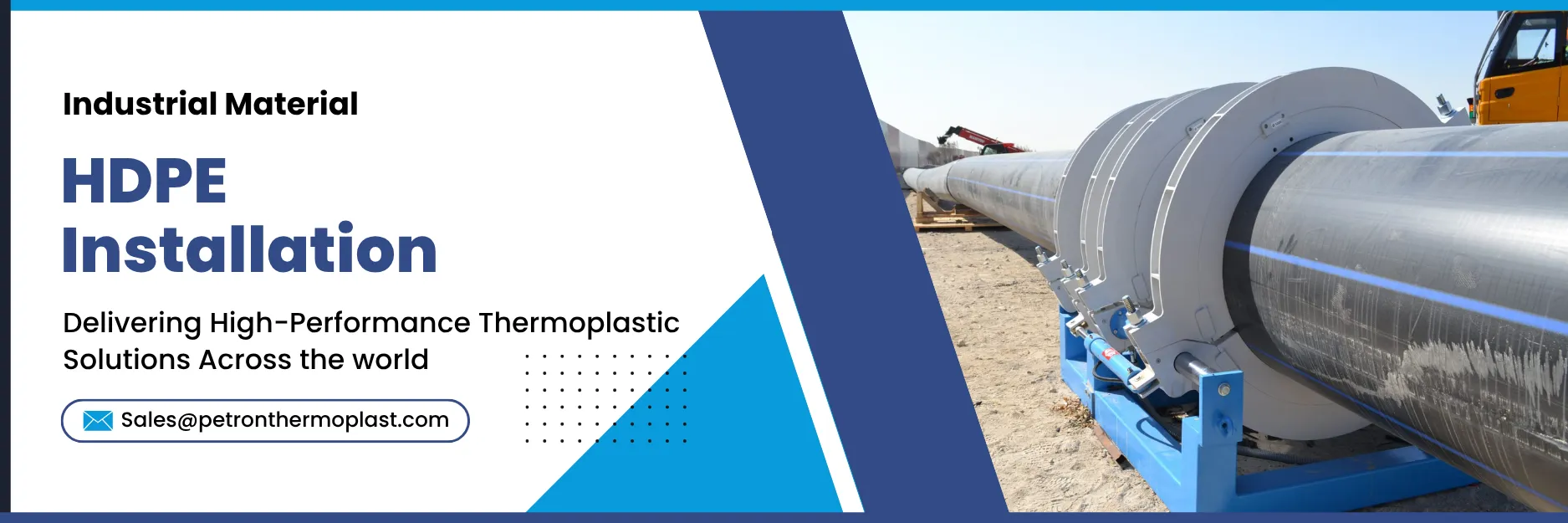
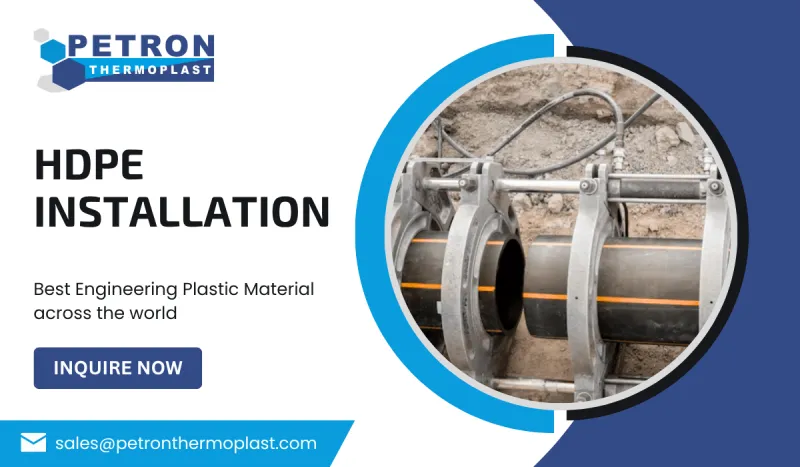
HDPE installation refers to the process of placing, joining, and securing products made from High-Density Polyethylene (HDPE)—such as sheets, pipes, or fittings—into their required position for safe and efficient use in industrial, commercial, or construction applications. HDPE installation refers to the process of laying and joining High-Density Polyethylene (HDPE) pipes and fittings to build fluid or gas transportation systems. HDPE is a strong, flexible, and corrosion-resistant thermoplastic commonly used in water supply, gas distribution, sewage systems, and industrial piping.
HDPE pipe installation requires careful planning, proper equipment, and skilled techniques to ensure a reliable and long-lasting piping system. With joining options like butt fusion, electrofusion, and mechanical fittings, HDPE pipelines can be customized for various applications, including water, gas, sewage, and industrial fluids. When installed correctly, HDPE systems offer exceptional durability, leak resistance, and minimal maintenance, making them a top choice for modern infrastructure.

HDPE Installations Details
| Parameter | Technical Details & Properties |
| Installation Methods | Butt fusion, electrofusion, hot air welding, extrusion welding |
| Welding Temperature | ~200°C – 300°C (localized heating) |
| Ambient Installation Temp | 5°C – 45°C recommended |
| Joining Strength | Equal to or stronger than base material (properly executed) |
| Equipment Used | Welding machines, cutters, clamps, alignment tools |
| Surface Preparation | Clean, dry, and smooth surface required |
| Alignment Requirement | Precise alignment needed before welding |
| Pressure Handling | Suitable for low to moderate pressure systems |
| Expansion Allowance | 3–5 mm per meter recommended |
| Testing Methods | Visual inspection, leak test, weld testing |
| Density | 0.93 – 0.97 g/cm³ |
| Flexibility | High |
| Impact Resistance | Very high |
| Water Absorption | < 0.01% |
| Thermal Expansion | High compared to metals |
| Surface Finish | Smooth / low friction |
| Chemical Resistance | Excellent |
| Melting Point | 120°C – 135°C |
1. High Durability
HDPE systems are highly durable and can last 50+ years under proper conditions. They resist wear, impact, and environmental stress.
2. Flexibility
HDPE is highly flexible, allowing it to:
- Bend without breaking
- Withstand ground movement and seismic activity
- Reduce the need for fittings
3. Lightweight Material
Compared to traditional materials, HDPE is lighter:
- Easy to transport and handle
- Faster installation
- Reduced labor costs
4. Smooth Internal Surface
The inner surface is smooth, resulting in:
- Low friction loss
- Better flow efficiency
- Reduced energy consumption
5. UV & Weather Resistance
HDPE can withstand sunlight and harsh weather conditions:
- Suitable for outdoor and above-ground use
- Long-term performance in extreme climates
| Application | Recommended Thickness (mm) | Thickness (inch) | Remarks |
| Liners (ponds, landfills) | 0.5 – 2 mm | 0.02″ – 0.08″ | Flexible, low load |
| Light-duty panels | 3 – 6 mm | 1/8″ – 1/4″ | Covers, partitions |
| Tank lining | 6 – 12 mm | 1/4″ – 1/2″ | Chemical/water resistance |
| Medium tanks & fabrication | 12 – 25 mm | 1/2″ – 1″ | General industrial use |
| Heavy-duty tanks | 25 – 50 mm | 1″ – 2″ | High strength requirement |
| Thickness (mm) | Approx. Pressure Capacity (bar)* | Typical Application |
| 3 – 6 mm | 0.1 – 0.3 bar | Light panels, covers |
| 8 – 12 mm | 0.3 – 0.6 bar | Tank lining, small tanks |
| 15 – 25 mm | 0.6 – 1.0 bar | Medium tanks, fabrication |
| 30 – 50 mm | 1.0 – 2.0 bar | Heavy-duty tanks |
| 50 – 100 mm | 2.0 – 3.0 bar | Structural / high-load use |
1. Water Supply Systems
- Drinking water distribution
- Municipal water pipelines
- Rural and urban water supply networks
They are leak-proof and resistant to corrosion, ensuring safe water delivery.
2. Sewage and Drainage Systems
- Underground drainage systems
- Sewer pipelines
- Stormwater management
They offer excellent chemical resistance and smooth inner surfaces for better flow.
3. Industrial Applications
- Chemical transport pipelines
- Effluent disposal systems
- Slurry and abrasive material handling
HDPE withstands harsh chemicals and high impact conditions.
4. Gas Distribution
- Natural gas distribution
- LPG pipelines
They provide high safety due to strong joints and leak resistance.
5. Mining and Dredging
- Slurry transport pipelines
- Mine tailings handling
- Sand and dredging operations
HDPE’s abrasion resistance makes it ideal for such harsh environments.
6. Cable Protection (Ducting)
- Electrical cable conduits
- Telecom and fiber optic ducting
It protects cables from moisture, corrosion, and physical damage.
7. Marine and Coastal Applications
- Floating pipelines
- Sea water intake and outfall systems
- Dock and port installations
HDPE resists saltwater corrosion and biofouling.
User Manual for HDPE Installations
1. Pre-Installation Preparation
Before starting installation:
- Site inspection – Check route, soil condition, and obstacles
- Material inspection – Ensure pipes/fittings are free from damage
- Tools & equipment – Fusion machine, cutters, alignment clamps
- Safety measures – PPE, proper handling equipment
2. Trenching (For Underground Installation)
- Excavate trench according to pipe diameter and depth
- Maintain proper width and slope
- Provide bedding material (sand or fine soil)
- Remove sharp stones to prevent pipe damage
3. Pipe Laying
- Place HDPE pipes carefully into the trench
- Align pipes properly to avoid stress
- Ensure proper spacing and support
4. Jointing Methods
HDPE pipes are joined using the following methods:
a) Butt Fusion Welding
- Most common method
- Pipe ends are heated and pressed together
- Creates a strong, leak-proof joint
b) Electrofusion
- Uses special fittings with embedded heating coils
- Electric current melts the pipe and fitting together
c) Mechanical Fittings
- Used for temporary or small connections
- Includes compression fittings and flanges
5. Backfilling
- First layer: soft soil or sand around pipe
- Compact gently to avoid damage
- Final backfill with excavated soil
6. Testing and Inspection
- Hydrostatic pressure testing
- Leak detection
- Visual inspection of joints
Maintenance After Installation
- Regular inspection for leaks
- Avoid excessive load on buried pipes
- Periodic cleaning (for drainage systems)
a) Size and Dimensions
- Pipes available in various diameters (20 mm to 1200+ mm)
- Custom lengths and wall thickness (SDR ratings)
- Sheets can be cut into required shapes and sizes
b) Pressure Rating Selection
- Customized based on application:
- PN6 / PN8 – Low pressure (drainage)
- PN10 / PN16 – Medium pressure (water supply)
- PN20+ – High-pressure industrial use
c) Material Grade Selection
- PE63, PE80, PE100
- PE100 preferred for:
- Higher strength
- Better crack resistance
- Longer life
d) Fittings Customization
- Custom fittings like:
- Elbows (45°, 90°)
- Tees (equal/reducing)
- Reducers
- Flanges
- Special fabricated fittings for complex pipeline layouts
e) Color Coding
- Black with blue stripe → Water supply
- Yellow stripe → Gas pipelines
- Custom colors for identification
f) Application-Based Customization
- UV-resistant HDPE for outdoor use
- Chemical-resistant grades for industrial plants
- Food-grade HDPE for potable water systems
2. Processing of HDPE for Installation
a) Cutting
- Pipe cutting using:
- Pipe cutters
- Band saws
- Ensures smooth and square pipe ends
b) Welding / Jointing Processes
1. Butt Fusion Welding
- Heating pipe ends and joining under pressure
- Produces a strong, permanent joint
2. Electrofusion Welding
- Uses fittings with heating coils
- Suitable for repair and tight spaces
3. Extrusion Welding (for sheets)
- Used in HDPE liners and tanks
c) Bending and Fabrication
- HDPE can be:
- Cold bent (within limits)
- Heat formed for custom shapes
- Fabrication of tanks, ducts, and structures
d) Machining
- Drilling holes
- Slot cutting
- Surface finishing
e) Surface Preparation
- Cleaning before welding
- Removing oxidation layer
- Ensuring proper alignment
a) Material Inspection
- Verify pipe grade (PE80 / PE100)
- Check for cracks, dents, or deformities
- Confirm dimensions, thickness, and SDR rating
b) Joint Quality Inspection
- Ensure proper alignment before welding
- Check uniform bead formation in butt fusion
- Verify electrofusion indicators for correct fusion
c) Equipment Calibration
- Fusion machines must be properly calibrated
- Temperature, pressure, and timing must meet standards
d) Environmental Checks
- Avoid welding in:
- Rain
- Dusty conditions
- Extreme temperatures
2. Testing Methods of HDPE Installation
a) Hydrostatic Pressure Test
- Most important test for pipelines
- Pipe is filled with water and pressurized
- Held for a specific time to check for leaks
- Verify strength and leak-proof performance
b) Pneumatic (Air) Testing
- Uses compressed air instead of water
- Applied in special conditions
c) Visual Inspection
- Check joints, alignment, and installation quality
- Identify visible defects like cracks or misalignment
d) Non-Destructive Testing (NDT)
- Ultrasonic testing (UT)
- Radiographic testing (RT)
- Detect internal defects without damaging the pipe
e) Spark Testing (For HDPE Liners/Sheets)
- Detects pinholes or damage in liners
- High-voltage spark reveals defects
f) Vacuum Box Testing
- Used for welded HDPE sheets
- Identifies leaks in seams
g) Leak Testing
- Ensures no leakage at joints or fittings
- Can be done using water or air
1. Base Material
High-Density Polyethylene (HDPE Resin)
- Primary raw material used in all HDPE installations
- Made from petroleum-based polymer (ethylene)
- Common grades:
- PE63 (older grade)
- PE80
- PE100 (most widely used due to higher strength and pressure resistance)
2. Additives Used in HDPE Manufacturing
a. Carbon Black
- Provides UV resistance
- Protects material from sunlight degradation
- Gives HDPE its black color
b. Antioxidants
- Prevent thermal degradation during processing and long-term use
- Increase lifespan of the installation
c. UV Stabilizers
- Used especially for outdoor installations
- Improve resistance against ultraviolet radiation
d. Heat Stabilizers
- Maintain material strength at elevated temperatures
e. Processing Aids
- Improve flow properties during extrusion and molding
- Ensure smooth surface finish
3. Reinforcement Materials
- Glass fiber (rare cases) for added strength
- Metal inserts (brass) in threaded fittings
4. Material for Joints and Connections
a. HDPE Couplers and Fittings
- Made from the same HDPE grade (PE80/PE100)
b. Electrofusion Wire
- Copper wire embedded in fittings for electrofusion welding
c. Rubber Gaskets (if required)
- Used in flange joints for sealing
- Typically made of EPDM or Nitrile rubber
5. Coating and Protection Materials
- Anti-corrosion coatings (for hybrid systems)
- Protective wrapping tapes (in underground installations)

Custom Product Manufacturing Available
If you are searching for customized product designs that meet your requirements, don’t worry. Petron Thermoplast also offers custom product manufacturing services to meet the unique needs of various industries. Work with our expert engineers to create custom designs suited for your application.
Benefits of HDPE Installations
1. High Durability & Long Life
- Resistant to corrosion, rust, and chemicals
- Service life of 10–20+ years
- Performs well in harsh environments
2. Excellent Chemical Resistance
- Withstands acids, alkalis, and aggressive chemicals
- Ideal for chemical plants, water treatment, and storage tanks
3. Leak-Proof & Strong Joints
- Fusion welding creates seamless, leak-proof joints
- Reduces chances of leakage compared to mechanical joints
4. Lightweight & Easy Installation
- Much lighter than metal materials
- Easy to transport, handle, and install
- Reduces labor and installation time
5. Flexibility & Impact Resistance
- High flexibility prevents cracking
- Absorbs shocks and vibrations
- Suitable for uneven surfaces and ground movement
Types of HDPE Installation
1. Open Trench Installation
This is the most common method where a trench is excavated and HDPE pipes are laid inside.
- Suitable for water supply, sewer, and drainage systems
- Easy to inspect and repair
- Requires proper bedding and backfilling
2. Horizontal Directional Drilling (HDD)
A trenchless method used to install HDPE pipes underground without digging large trenches.
- Ideal for crossing roads, rivers, and railways
- Minimal surface disruption
- Common in urban and environmentally sensitive areas
3. Pipe Bursting Installation
Used to replace old pipelines by breaking them while simultaneously installing new HDPE pipes.
- Suitable for pipeline rehabilitation
- No need for full excavation
- Saves time and cost in urban areas
4. Slip Lining Installation
A new HDPE pipe is inserted into an existing damaged pipeline.
- Used for pipeline repair and strengthening
- Reduces leakage and improves flow
- Quick and cost-effective method
5. Floating Installation
HDPE pipes are installed on water surfaces due to their buoyancy.
- Used in lakes, rivers, and marine projects
- Common in dredging and water transport
- Requires anchoring for stability
6. Submerged (Underwater) Installation
Pipes are installed below water level.
- Used in sea outfalls and intake systems
- Requires careful sinking and anchoring
- Resistant to corrosion and marine conditions
7. Above Ground Installation
HDPE pipes are installed on the surface rather than underground.
- Used in industrial plants and temporary systems
- Easy maintenance and inspection
- Requires UV protection and proper support
8. Trenchless Pipe Jacking / Microtunneling
Advanced installation method using hydraulic jacks to push pipes underground.
- Suitable for large diameter pipelines
- High precision installation
- Used in urban infrastructure projects
9. Coil Pipe Installation
HDPE pipes supplied in coils are directly unrolled and installed.
- Ideal for long-distance pipelines
- Reduces joints and leakage risks
- Fast installation process
Applications of HDPE Installations
Process Industry
High Purity Applications
Electronic Industry
Electrical Industry
Semi-conductors Industry
Pharmaceutical Industry
Solar power panels
Sugar Industry
Paper & Pulp Industry
Nuclear Power Industry
Automotive Industry
DI water plants
Why Choose Petron Thermoplast?
Petron Thermoplast supplies HDPE Installation services with customized parts of excellent quality, export-grade standards, and professional processing to meet diverse needs. The use of advanced technology ensures that the HDPE Installation surface is smooth and flawless, without pores, and has a delicate touch, perfectly presenting the unique charm of high-quality HDPE Installation and parts. HDPE Installation undergoes rigorous performance tests to ensure that strength, weather resistance, and other indicators meet standards, providing customers with reliable and durable parts.
With a wide variety of products and sufficient inventory, we can quickly respond to customer needs and meet purchasing needs in one stop.
Conclusion
HDPE installation is a modern and highly reliable solution for piping and industrial systems, widely used across water supply, drainage, gas distribution, and chemical handling applications. Its growing adoption is driven by a strong combination of performance, durability, and cost efficiency.
The key strength of HDPE installations lies in their excellent corrosion resistance, flexibility, and long service life. Unlike traditional materials such as metal or concrete, HDPE does not rust, scale, or degrade easily under harsh environmental and chemical conditions. This makes it particularly suitable for underground and outdoor applications.
Another major advantage is the leak-proof jointing system, especially through butt fusion and electrofusion techniques. These methods create strong, homogeneous joints that significantly reduce the risk of leakage and maintenance issues over time.
HDPE installations are also lightweight and easy to handle, which simplifies transportation and installation, reducing labor costs and project time. Additionally, their flexibility allows them to withstand ground movement, vibrations, and pressure fluctuations without cracking.
From an economic and environmental perspective, HDPE is a cost-effective and sustainable choice. It requires minimal maintenance, has a long lifespan (often exceeding 50 years), and is recyclable, contributing to eco-friendly infrastructure development.
Frequently Asked Questions
HDPE installation refers to the process of installing HDPE pipes, fittings, and systems used for water supply, drainage, gas distribution, and industrial applications.
- Corrosion and chemical resistance
- Long service life (50+ years)
- Leak-proof joints
- Lightweight and flexible
- Low maintenance
Common methods include:
- Butt fusion welding
- Electrofusion welding
- Socket fusion
- Flange connections
Yes, HDPE is ideal for underground use due to its flexibility, corrosion resistance, and ability to withstand soil movement and pressure.
HDPE systems typically last more than 50 years when properly installed and maintained.
Yes, HDPE pipes are available in different pressure ratings (PN ratings) such as PN6, PN10, PN16, etc., depending on the application.
Yes, HDPE has excellent resistance to a wide range of chemicals, making it suitable for industrial and chemical applications.
HDPE typically performs well between -40°C to 60°C, depending on the grade and application.
Leakage is minimized through fusion welding methods, which create strong, seamless joints.
Yes, HDPE is recyclable, non-toxic, and requires less energy for production and installation compared to many traditional materials.
HDPE installations require minimal maintenance due to their durability and resistance to corrosion and scaling.
Yes, HDPE is safe for potable water applications if it meets relevant standards (such as IS, ISO, or ASTM).