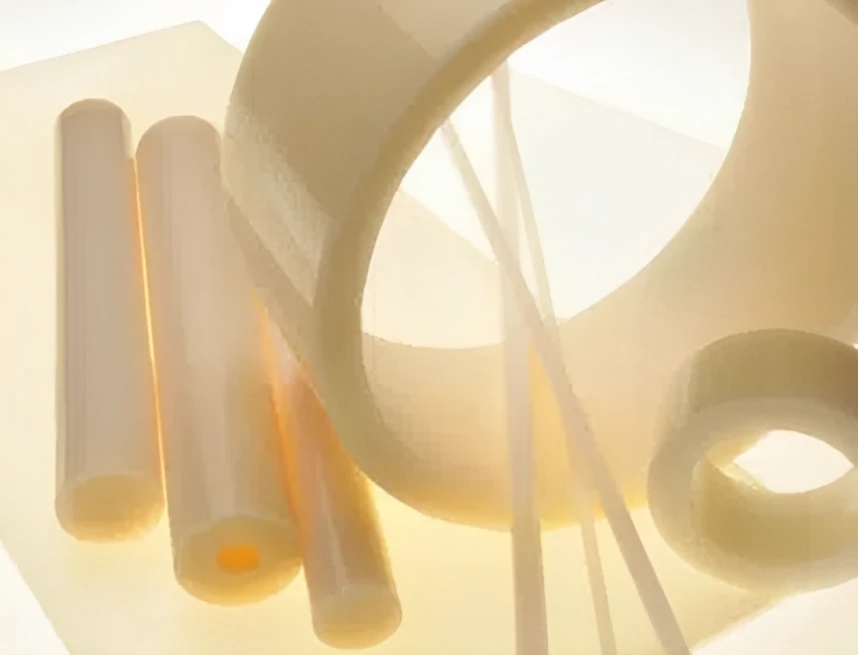
ETFE Materials
The fluorine-based plastic ethylene tetrafluoroethylene (ETFE) is a fluorine-based material. It was made to withstand corrosion and maintain strength over a wide temperature range. ETFE is a polymer with the source name poly (ethene-co-tetrafluoroethene). Tefzel is another brand name for this product. ETFE has a high melting temperature, as well as good chemical, electrical, and high-energy radiation resistance. ETFE Materials produces hydrofluoric acid when it is burnt.
ETFE is an ethylene-tetrafluoroethylene modified copolymer. It has a medium stiffness, making it ideal for chemical tank linings that require weldability and the ability to adapt to curved metal or FRP surfaces. ETFE is frequently used in applications requiring high mechanical toughness, moderate stiffness, and chemical resistance.
Common Applications of ETFE Material
ETFE IS WIDELY USED FOR:
- Pump housings and pipe linings
- Impellers for abrasive slurries
- Fluid handling and chemical processing equipment
- Wet bench equipment
- Oxygen respirator components
- Military / defense equipment
- Food processing equipment
- Radomes
PERFORMANCE CHARACTERISTICS:
- Chemically inert to a wide range of industrial chemicals and solvents
- Exceptional dielectric insulation properties
- Rugged, good abrasion resistance, and impact strength
- May be welded with hot air welding equipment
- High resistance to outdoor weathering
- Radiation and heat sterilization resistant
COMMON BRANDS:
- Tefzel®
STANDARD SIZES
| SHEET | Dimensions: 12 in x 12 in – 24 in x 24 in |
| Thickness: 0.125 in – 1.250 in |
| ROD | Outside Diameter: 0.125 in – 0.750 in |
OPTIONS AVAILABLE
| COLOR | Natural |
| GRADES | FDA Compliant |
Length, width, thickness, and diameter tolerances vary by size, by manufacturer, brand, and grade. Custom sizes available upon request.
Key Properties of ETFE Material
| UNITS | ASTM TEST | ETFE | |
|---|---|---|---|
| Specific gravity | D792 | 1.7 | |
| Water absorption | % | D570 | 0.007 |
| Tensile strength | psi | D638 | 6100 |
| Izod impact (notched) | ft-lbs/in | D256 | no break |
| Flexural modulus | psi | D790 | 145,000 |
| Coefficient of friction | % | D1894 | 0.3 – 0.4 |
| Dielectric strength (10 mil film) | volts/mil | D149 | 1800 |
Benefits of Using ETFE Material
Choosing ETFE over other plastics or traditional materials offers several advantages:

Long-Term Durability
ETFE structures and components are built to last for decades with minimal maintenance. It does not yellow, crack, or become brittle over time.

Lightweight
ETFE is considerably lighter than glass and many traditional building materials, which helps reduce structural load and transportation costs.

Eco-Friendly
ETFE is fully recyclable and requires less energy to produce and transport. Its ability to allow natural light can also reduce a building’s energy consumption.

Cost-Effective in the Long Run
While the upfront cost of ETFE may be higher than some alternatives, its long service life, low maintenance needs, and energy-saving benefits often result in lower total cost of ownership.

Final Thoughts
ETFE material is a powerful engineering plastic that bridges the gap between high performance and practical usability. Its combination of strength, transparency, chemical resistance, and environmental durability makes it an ideal solution for applications that demand more than standard plastics can offer.
Whether you are designing a modern architectural structure, laying out a chemical processing line, or sourcing materials for cable insulation, petronthermoplast offers a future-proof solution that performs reliably under pressure.
