Selecting the right UPVC Pipe Fittings for Industrial Projects is important for building a reliable, efficient, and long-lasting piping system. Industrial pipelines often handle water, chemicals, and other process fluids under different operating conditions. The wrong fitting can lead to leakage, pressure loss, frequent maintenance, and unexpected downtime.
UPVC (Unplasticized Polyvinyl Chloride) is widely used in industrial piping because of its corrosion resistance, lightweight construction, and ease of installation. However, choosing suitable fittings requires more than simply checking the material. Buyers and project engineers should consider fluid compatibility, pressure requirements, operating temperature, fitting dimensions, connection type, and installation conditions.
Petron Thermoplast manufactures UPVC Pipe Fittings for industrial piping requirements, with options based on project specifications and application needs.
1. Understand Your Industrial Application
Before selecting UPVC Pipe Fittings, identify where and how the piping system will be used. Different industries have different fluid-handling requirements.
For example, water treatment plants may require fittings for water distribution and filtration systems. Chemical processing facilities need fittings compatible with the chemicals being transported. Manufacturing plants may require customized configurations to connect equipment and pipeline sections.
Consider these questions before purchasing:
- What type of fluid will pass through the pipeline?
- Is the application related to water, chemicals, or process fluids?
- Will the pipeline operate continuously?
- Is the system installed indoors or outdoors?
- Does the project require standard or customized fittings?
2. Check Chemical Compatibility
Chemical compatibility is one of the most important factors in industrial piping design. Although UPVC offers resistance to many corrosive substances, it is not suitable for every chemical or operating condition.
Before selecting fittings, check the following:
- Chemical name and concentration
- Operating temperature
- Fluid composition
- Exposure duration
- Compatibility of seals and connection components
3. Select the Correct Type of UPVC Pipe Fitting
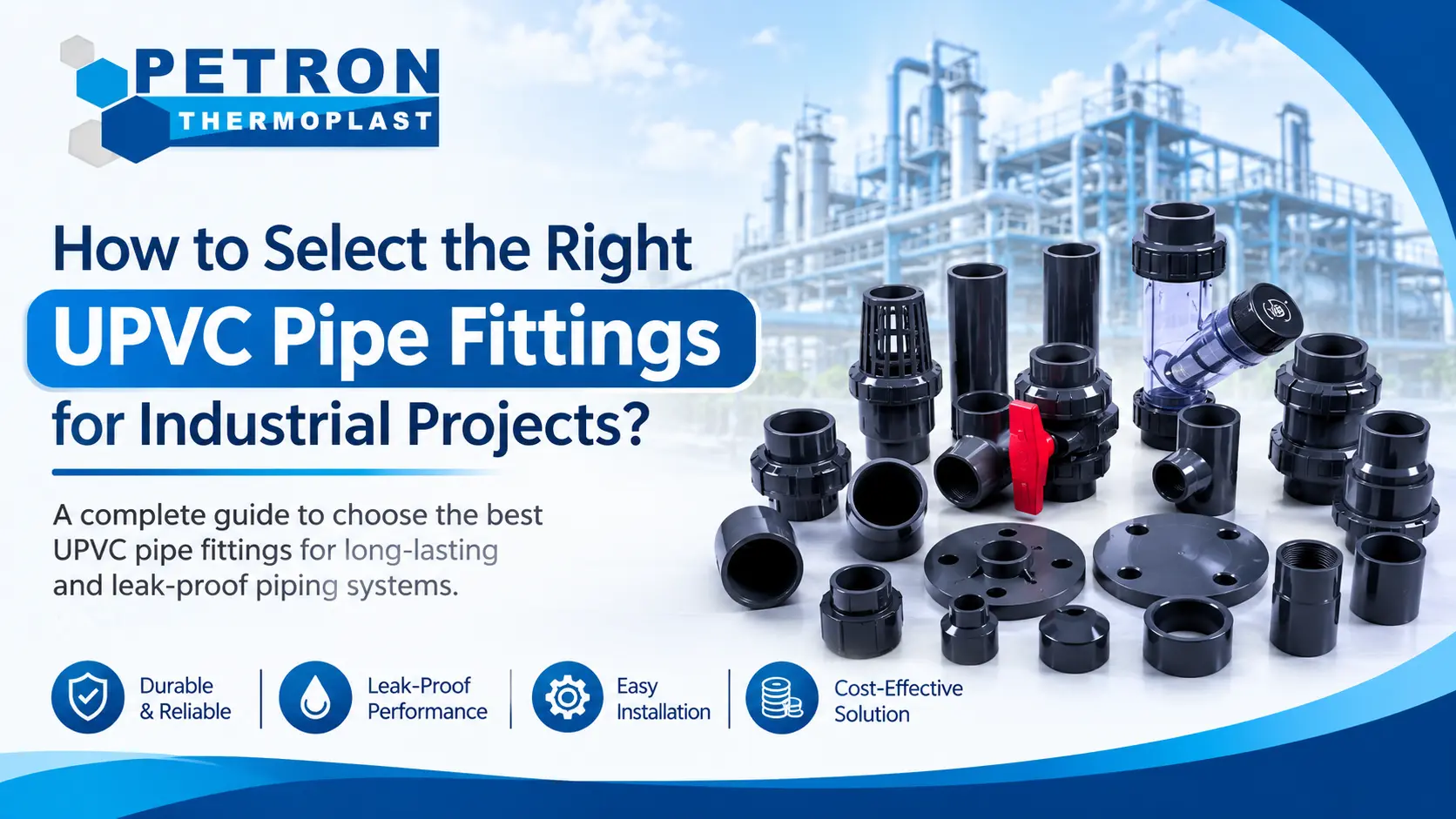
Different fittings perform different functions in a pipeline. Choosing the correct fitting helps maintain proper fluid direction, pipeline connectivity, and system performance.
Common types include:
UPVC Elbow
UPVC elbows change the direction of fluid flow, commonly at 45-degree or 90-degree angles. They are used where pipeline layouts require directional changes.
UPVC Tee
A UPVC tee connects three pipeline sections and allows fluid distribution or branching. It is commonly used in industrial distribution networks.
UPVC Reducer
Reducers connect pipes of different diameters. They help create transitions between larger and smaller pipeline sections.
UPVC Coupling
Couplings connect two pipe sections of compatible dimensions. They are useful for extending pipeline runs and joining pipe lengths.
UPVC Union
A union allows pipeline sections to be disconnected more easily for inspection, cleaning, or maintenance.
UPVC Flange
Flanges provide detachable connections between pipes, valves, pumps, and other equipment. They are useful in systems where periodic maintenance or equipment removal is required.
UPVC End Cap
End caps close the end of a pipeline. They are used in temporary or permanent line termination arrangements, depending on the system design.
Select each fitting according to its function, dimensions, pressure requirements, and connection arrangement.
4. Verify Pipe Size and Fitting Dimensions
Correct sizing is essential for a secure and leak-resistant pipeline connection. A fitting must match the pipe’s nominal size, outside diameter, and connection standard.
Before placing an order, verify:
- Nominal pipe size
- Outside diameter
- Socket or connection dimensions
- Wall thickness compatibility
- Fitting angle and configuration
- Applicable dimensional standard
| Fitting type | Common configurations | Selection consideration |
| UPVC Elbow | 45° and 90° | Direction of flow |
| UPVC Tee | Equal and reducing | Branch connection size |
| UPVC Reducer | Concentric or other specified designs | Pipe diameter transition |
| UPVC Coupling | Straight connection | Pipe size compatibility |
| UPVC Union | Detachable connection | Maintenance access |
| UPVC Flange | Different nominal sizes | Equipment connection |
| UPVC End Cap | Matching pipe size | Pipeline termination |
5. Consider Pressure Requirements
Industrial piping systems operate under different pressure conditions. Therefore, the pressure rating of a UPVC fitting must be suitable for the system’s design pressure.
Check these parameters:
- Maximum operating pressure
- Operating temperature
- Pressure variations during operation
- Pump starting and stopping conditions
- Possible pressure surges or water hammer
- Pressure rating of connected pipes and valves
6. Evaluate Operating Temperature
UPVC fittings are generally used in applications within their specified temperature range. Higher operating temperatures can reduce the material’s pressure-handling capability and affect long-term performance.
Before purchasing, identify the normal and maximum fluid temperature. Also consider temporary temperature increases during cleaning, flushing, or process changes. If the application involves elevated temperatures, evaluate whether CPVC or another suitable material would be more appropriate. Always refer to the manufacturer’s temperature-pressure data.
7. Choose the Right Connection Type
Connection design affects installation time, maintenance requirements, and leakage prevention.
Common connection arrangements include:
- Solvent cement socket connection: Used with compatible UPVC pipes and approved solvent cement.
- Flanged connection: Suitable for connecting pipelines with pumps, valves, tanks, and other equipment.
- Threaded connection: Used where the product is specifically designed and rated for threaded installation.
- Union connection: Useful where components may need to be removed for servicing.
8. Check Quality and Manufacturing Consistency
Product quality is another important consideration for industrial projects. Poor dimensional accuracy or inconsistent manufacturing can create installation difficulties and affect pipeline reliability.
Before finalizing a purchase, review:
- Material identification and grade
- Dimensional accuracy
- Surface finish
- Socket and connection quality
- Product markings and traceability, where available
- Inspection and testing documentation
- Compliance with the specified product standard
9. Consider Customization and Bulk Requirements
Large industrial projects may require more than standard fittings. Pipeline layouts can include special dimensions, non-standard configurations, or fittings designed around existing equipment.
Discuss customization requirements with the manufacturer, including:
- Required fitting type and dimensions
- Special connection arrangements
- Project drawings
- Material specifications
- Quantity requirements
- Packaging and delivery schedule
10. Common Mistakes to Avoid
Avoiding basic selection errors can improve pipeline performance and reduce maintenance problems.
Some common mistakes include:
- Selecting fittings without checking chemical compatibility.
- Ignoring temperature-related pressure limitations.
- Ordering fittings without verifying dimensions.
- Mixing incompatible connection standards.
- Using fittings beyond their specified pressure rating.
- Ignoring installation and solvent cement instructions.
- Choosing products without reviewing technical documentation.
- Failing to consider future inspection and maintenance access.
Why Choose Petron Thermoplast for UPVC Pipe Fittings?
Petron Thermoplast manufactures UPVC Pipe Fittings for industrial piping systems and customized project requirements. The product range supports different pipeline configurations, connection needs, and fluid-handling applications.
Industrial buyers can discuss their requirements for:
- Different UPVC fitting types and sizes
- Customized product configurations
- Industrial pipeline applications
- Bulk project requirements
- Technical specifications and product details
- Domestic and international enquiries
Whether you are planning a new industrial pipeline or upgrading an existing system, selecting fittings according to the actual operating conditions is essential. Petron Thermoplast can help discuss suitable UPVC fitting options based on your project specifications.
Conclusion
Selecting the right UPVC Pipe Fittings for industrial projects requires careful evaluation of application requirements, chemical compatibility, dimensions, pressure rating, temperature, and connection type. Each fitting should match the pipeline design and operating conditions to support safe and reliable fluid handling.
Before purchasing, review the technical datasheet and confirm that the selected fittings meet the project’s specifications. For customized and bulk industrial requirements, contact Petron Thermoplast to discuss suitable UPVC Pipe Fittings for your pipeline system.
Frequently Asked Questions
1. What factors should I consider when selecting UPVC Pipe Fittings?
Consider application type, chemical compatibility, pipe size, pressure rating, operating temperature, connection type, and applicable product standards.
2. Which UPVC Pipe Fittings are commonly used in industrial projects?
Common options include elbows, tees, reducers, couplings, unions, flanges, and end caps. The required type depends on the pipeline layout.
3. Are UPVC Pipe Fittings suitable for chemical applications?
UPVC can be suitable for many chemical-handling applications, but compatibility depends on the chemical, concentration, temperature, and exposure conditions. Confirm suitability before installation.
4. How do I select the correct size of a UPVC fitting?
Check the nominal pipe size, outside diameter, connection dimensions, and applicable dimensional standard. Match the fitting with the pipe manufacturer’s specifications.
5. Can UPVC fittings be used in high-pressure industrial pipelines?
They can be used only when their pressure ratings are suitable for the system’s operating conditions. Temperature, pressure surges, size, and connection design must also be considered.
6. Does Petron Thermoplast offer customized UPVC Pipe Fittings?
Petron Thermoplast manufactures UPVC Pipe Fittings for industrial requirements. Contact the company with your drawings, dimensions, and specifications to discuss customization options.