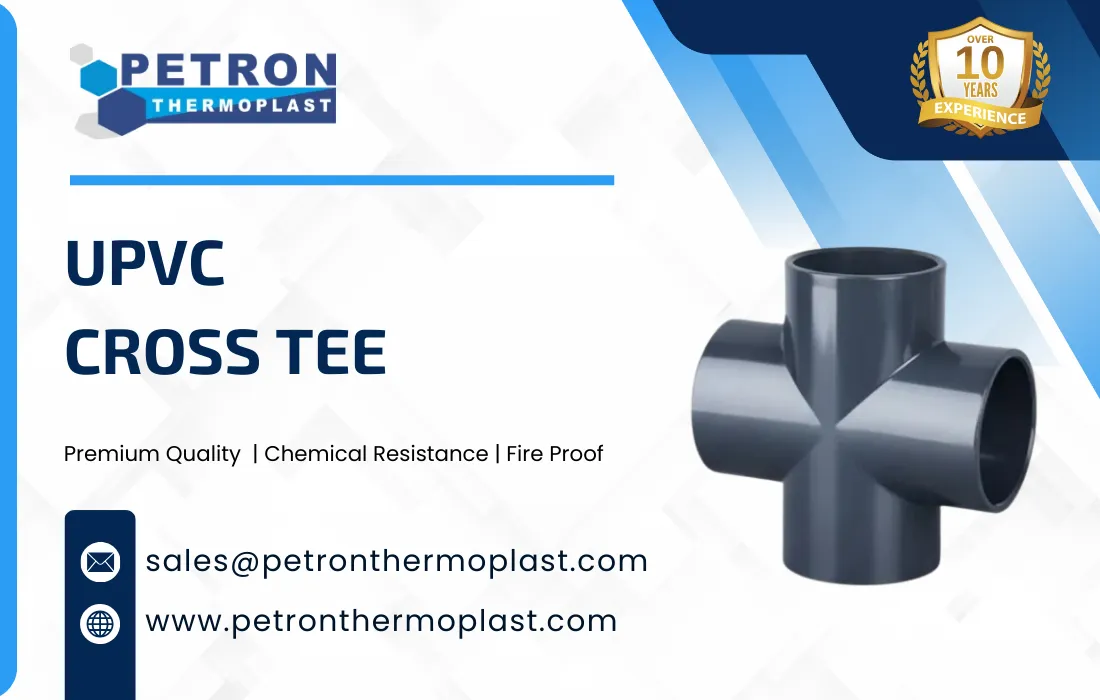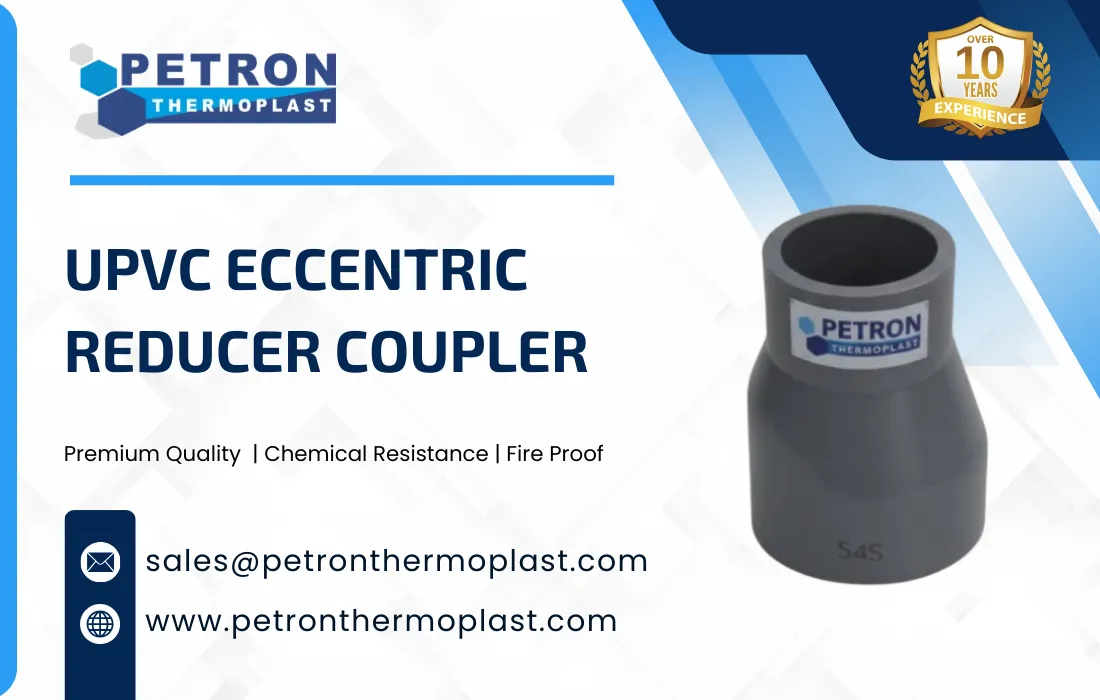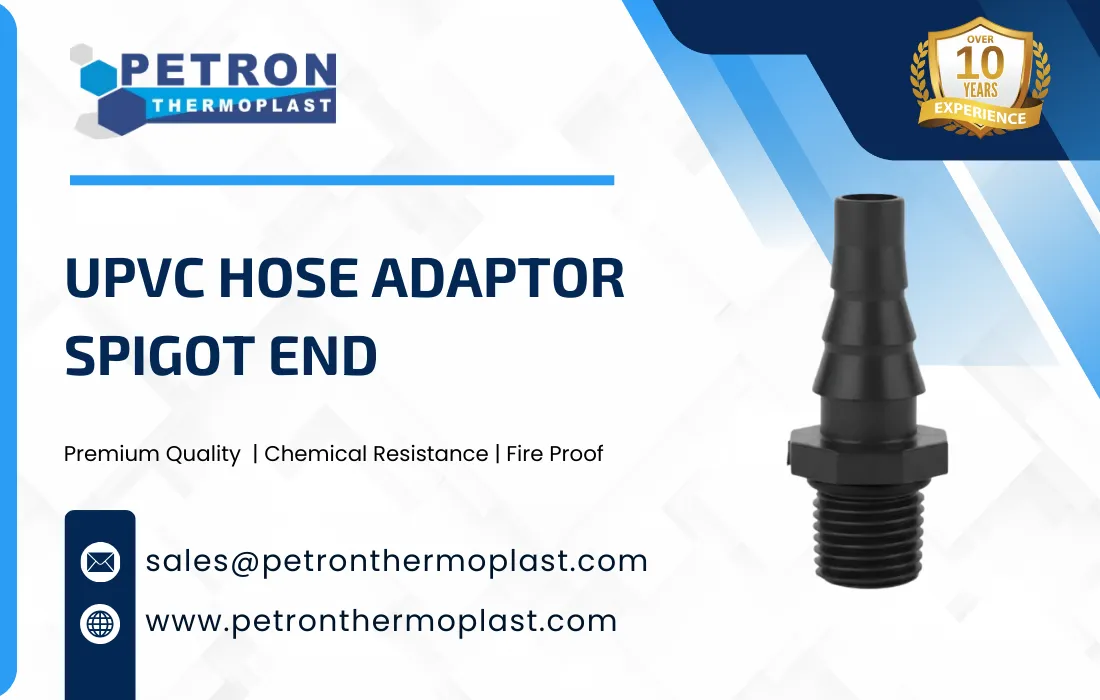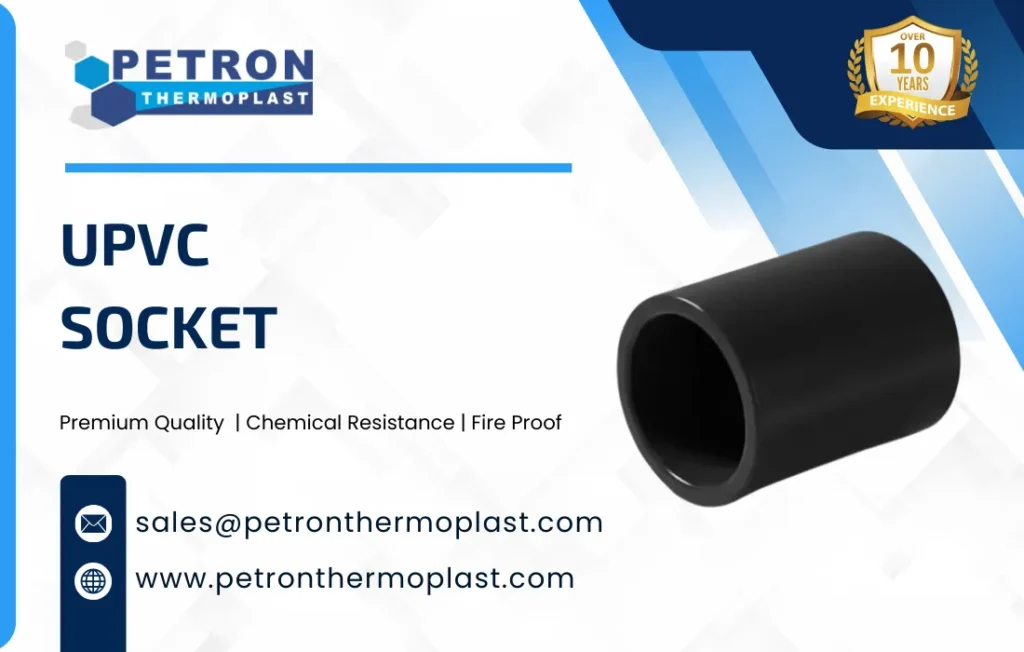
UPVC Socket
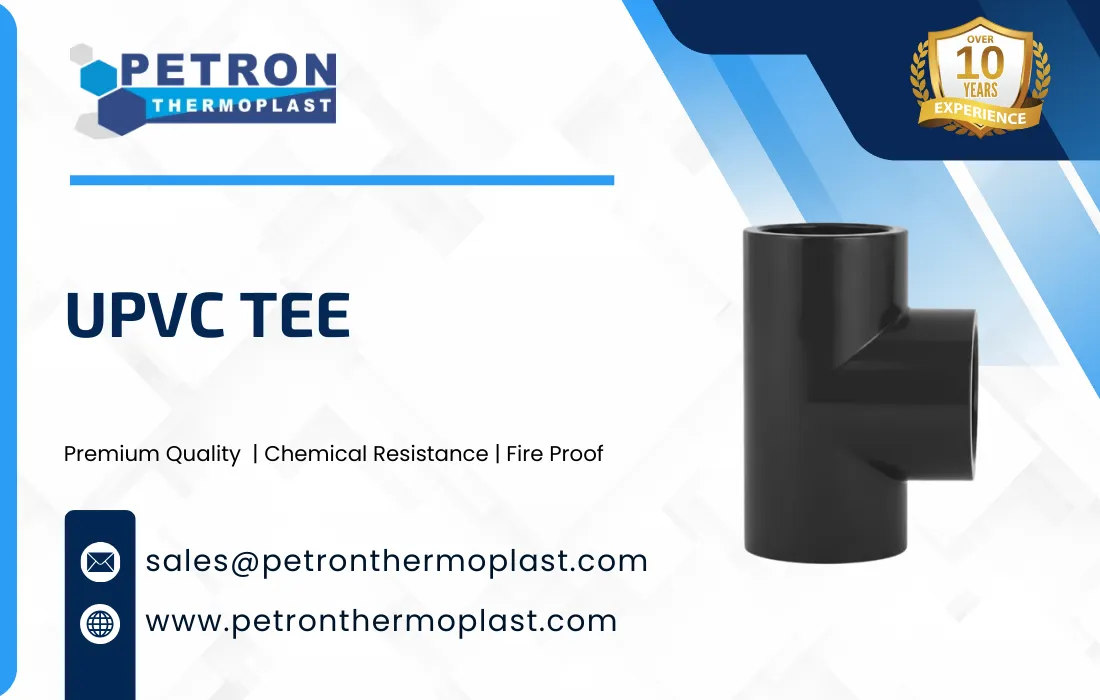
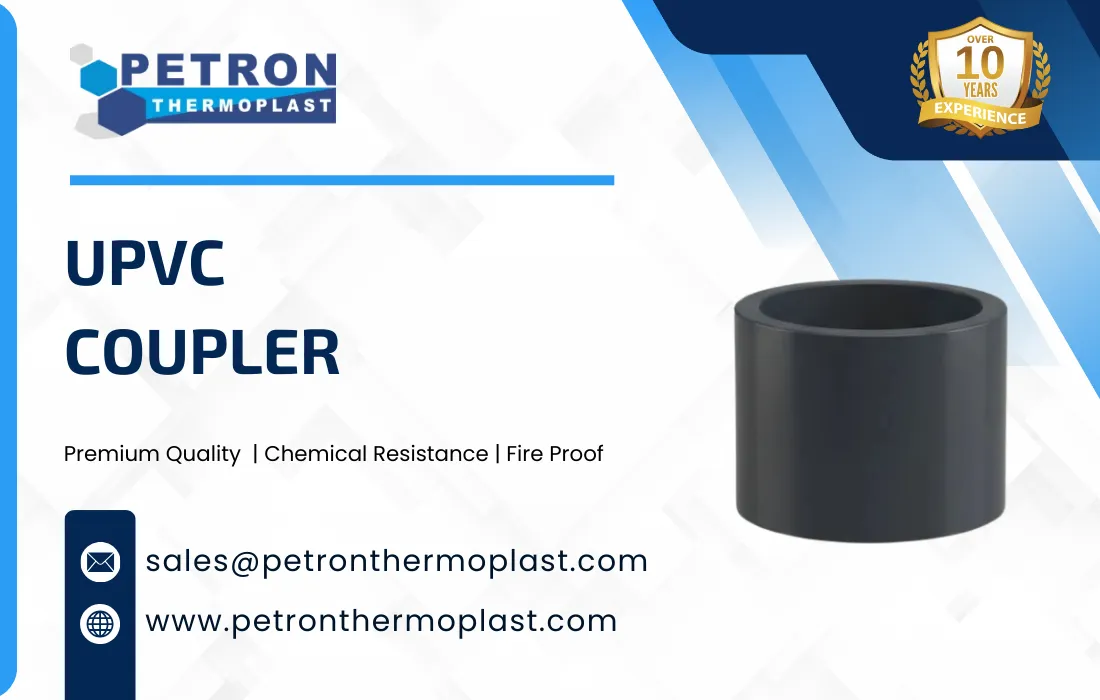
A UPVC Socket is a straight coupling pipe fitting used to connect two lengths of UPVC pipe in a secure and leak-proof manner. Designed for solvent cement jointing, the UPVC socket ensures a rigid and permanent connection within piping systems. It is widely used in irrigation, chemical distribution, and industrial fluid handling applications due to its durability and chemical resistance. A UPVC socket is a pipe fitting made from unplasticized polyvinyl chloride (UPVC) that is used to join two UPVC pipes of the same diameter. It means using solvent cement welding to create a strong, permanent, and leak-proof connection in a piping system.
A UPVC (Unplasticized Polyvinyl Chloride) socket is a straight and hollow cylindrical fitting designed to join two pipes of the same diameter. Because it is made of UPVC, it is rigid, and its durability is resistant to chemical corrosion, making it the standard choice for cold water fluid systems, drainage, leaking, and irrigation.UPVC Sockets are specially designed for chemical or ambient temperature water fluids. It should not be used for hot water lines, as the material can soften and deform under high heat.

- Chemical Resistance
- Low Maintenance Requirement
- Low Thermal Conductivity
- Long Service Life
- Easy Installation
- Corrosion Resistance
UPVC Socket Details
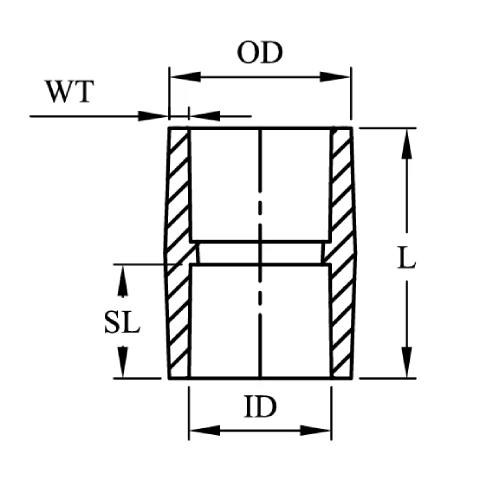
ID: Inner Diameter
OD: Outer Diameter
WT: Wall Thickness
SL: Socket Length (Depth of the insertion point)
L: Total Length of the fitting
| Size (Inch) | ID (mm) | OD (mm) | WT (mm) | SL (mm) | L (mm) |
| ½ | 21.64 | 29.10 | 3.73 | 22.23 | 47 |
| ¾ | 26.97 | 34.79 | 3.91 | 25.40 | 54 |
| 1 | 33.78 | 42.88 | 4.55 | 28.58 | 60 |
| 1¼ | 42.55 | 52.25 | 4.85 | 31.75 | 67 |
| 1½ | 48.72 | 58.88 | 5.08 | 34.93 | 73 |
| 2 | 60.78 | 71.86 | 5.54 | 38.10 | 80 |
| 2½ | 73.56 | 87.58 | 7.01 | 44.45 | 96 |
| 3 | 89.50 | 113.74 | 7.62 | 47.63 | 102 |
| 4 | 114.99 | 132.11 | 8.56 | 57.15 | 121 |
| 6 | 153.88 | 168.10 | 7.11 | 77.25 | 160 |
| Parameter | Details / Specification |
| Product Name | UPVC Socket (Coupler) |
| Material | Unplasticized Polyvinyl Chloride (UPVC) |
| Function | Connects two UPVC pipes in a straight line |
| Type | Straight Coupling / Socket |
| Connection Type | Socket (solvent weld) / rubber ring joint |
| Size Range | ½” to 12” (15 mm to 315 mm approx.) |
| Pressure Rating | Up to 10–16 bar (depending on standard & size) |
| Temperature Range | 0°C to 60°C (typical service range) |
| Standards | ASTM D2466 / D1785, ISO, DIN |
| Color | Grey / White |
| Manufacturing Process | Injection molded |
| Jointing Method | Solvent cement joint / push-fit (rubber ring) |
| Application | Plumbing, irrigation, water supply, industrial piping |
| Density | ~1.40–1.42 g/cm³ |
| Tensile Strength | ~45–55 MPa |
| Modulus of Elasticity | ~3000 MPa |
| Elongation at Break | 20–125% (varies by grade) |
| Impact Strength | Good impact resistance |
| Thermal Conductivity | ~0.15–0.16 W/m·K |
| Softening Temp (Vicat) | ~70–80°C |
| Working Temperature | 0°C to 60°C |
| Water Absorption | Very low (<0.1%) |
| Corrosion Resistance | Excellent resistance to acids, alkalis, and salts |
| Surface Finish | Smooth internal bore for low friction loss |
| Electrical Property | Non-conductive, high dielectric strength |
| Flammability | Self-extinguishing |
| UV Resistance | Good (UV stabilized grades available) |
| Durability | Long service life (up to ~50 years) |
| Weight | Lightweight and easy to install |
Strong and Durable: Offers a long service life with excellent mechanical strength.
Chemical and Corrosion Resistant: Ideal for transporting aggressive fluids.
Smooth Inner Surface: Reduces friction loss and supports efficient fluid flow.
Lightweight Design: Easy to handle and install.
Leak-Proof Connection: Ensures tight bonding when joined with solvent cement.
Non-Conductive and Non-Toxic: Suitable for electrical conduits and potable water applications.
| Pressure Class (PN) | Max Working Pressure (bar) | Max Working Pressure (psi) | Typical Application |
| PN 4 | 4 bar | ~58 psi | Low-pressure drainage |
| PN 6 | 6 bar | ~87 psi | Irrigation, vent lines |
| PN 10 | 10 bar | ~145 psi | Water supply |
| PN 12.5 | 12.5 bar | ~181 psi | Industrial water |
| PN 16 | 16 bar | ~232 psi | High-pressure water |
| PN 20 | 20 bar | ~290 psi | Special / industrial use |

Custom Product Manufacturing Available
If you are searching for customized product designs that meet your requirements, don’t worry. Petron Thermoplast also offers custom product manufacturing services to meet the unique needs of various industries. Work with our expert engineers to create custom designs suited for your application.
Benefits of Using UPVC Socket
Corrosion-Free Socket
No rust, scaling and chemical attack, Ideal for water fluid, wastewater, and many chemicals
High Pressure Handling Socket
Designed to match socket ratings, Strong solvent-weld joints with minimal risk
Lightweight Socket
Much lighter than others, Easier handling, transport, and installation
Easy & Fast Installation Socket
Simple solvent, No threading, welding, or special tools needed
Long Service Life Socket
Typical lifespan under normal conditions, Resistant to aging and environmental degradation
Low Maintenance Socket
Smooth inner surface prevents scaling, Minimal inspection and upkeep required
Cost-Effective Socket
Lower material and installation costs compared, Reduced labor and maintenance expenses
Good Chemical Resistance Socket
Suitable for acids, alkalis, salts, and industrial effluents, Widely used in chemical process
Thermal & Electrical Insulation Socket
Low thermal conductivity (reduces heat loss), Non-conductive—safe around electrical systems
Eco-Friendly
Recyclable material, Lower energy consumption in manufacturing
Types of UPVC Socket
1. Plain UPVC Socket
- Connects two plain-end UPVC socket
- Solvent-weld joint
- Most commonly used type
2. Threaded UPVC Socket
- One end solvent socket, other end male or female
- Used to connect UPVC socket
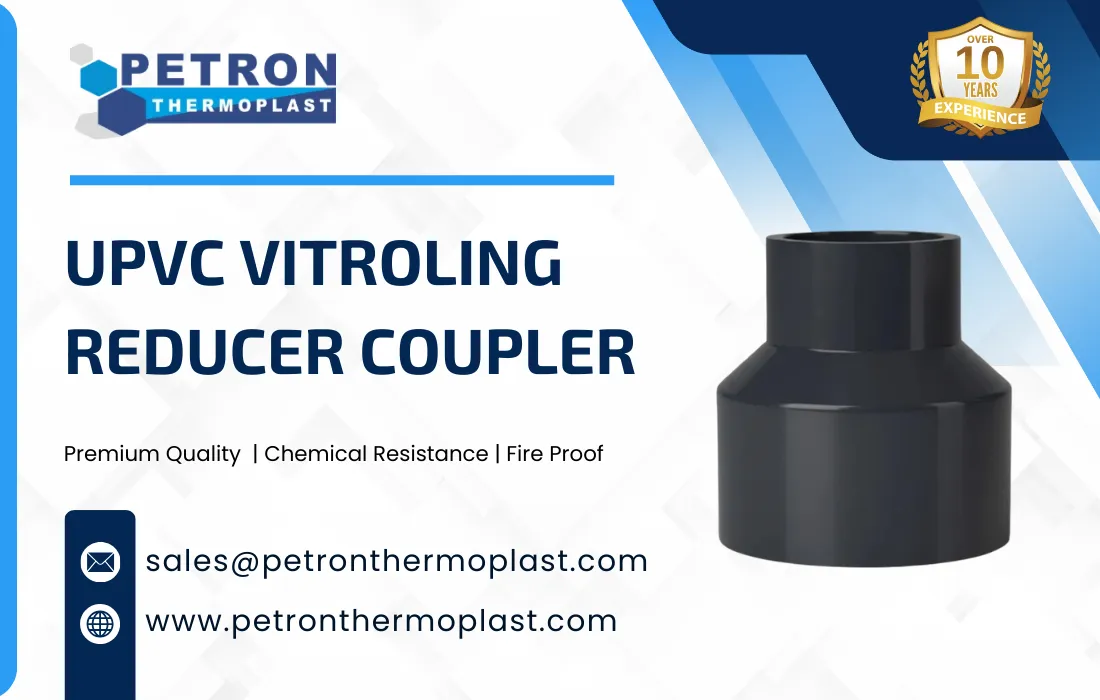
3. Reducing UPVC Socket
- Connects socket of different diameters
- Helps in smooth flow transition
- Available as concentric type
4. Slip UPVC Socket
- Plain internal surface
- Used for repair and adjustment work
5. End Cap / Stop UPVC Socket
- Used to close the end of a socket
- Permanent termination
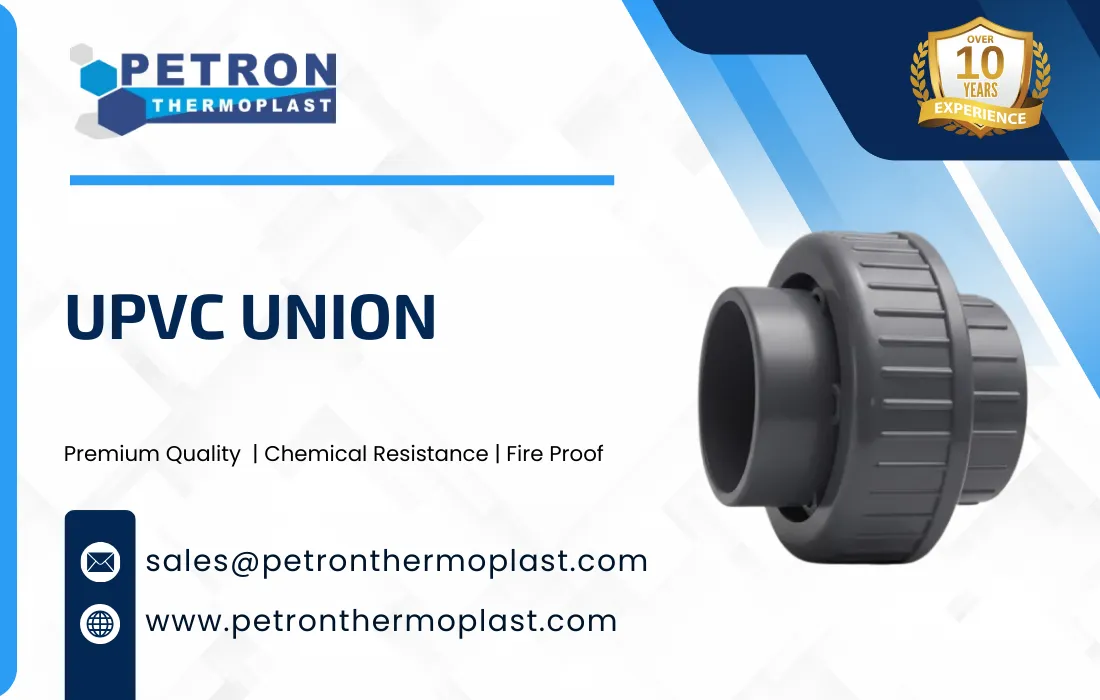
6. Union UPVC Socket
- Allows easy dismantling and re-assembly
- Used near socket equipment
7. Expansion UPVC Socket
- Accommodates thermal expansion
- Used in long socket runs
8. Rubber Ring (Push-Fit) UPVC Socket
- Uses elastomeric rubber ring
- Allows slight movement and flexibility
- Common in underground socket
9. Transition UPVC Socket
- Used to connect UPVC to other materials
(GI, CI, HDPE, etc.)
Why Choose Petron Thermoplast?
Petron Thermoplast specialises in manufacturing world-class chemical, sewerage & drainage piping systems for residential and commercial applications, and UPVC systems for industrial applications, including infrastructure projects. As a leading UPVC manufacturer and maker of UPVC in India, Petron Thermoplast also serves the agriculture sector through products in borewell and agriculture categories. as we exclusively bring Petron Thermoplast UPVC chemical systems to the market – the first choice globally for potable chemical applications. Petron Thermoplast’s robust distribution network, combined with best-in-class technology, is set to create a strong & sustainable presence in the chemical Industry.
UPVC Pipe Fittings
We offer UPVC Pipe Fittings products in all standard sizes and provide complete customization options to meet your specific project requirements across our entire product range.