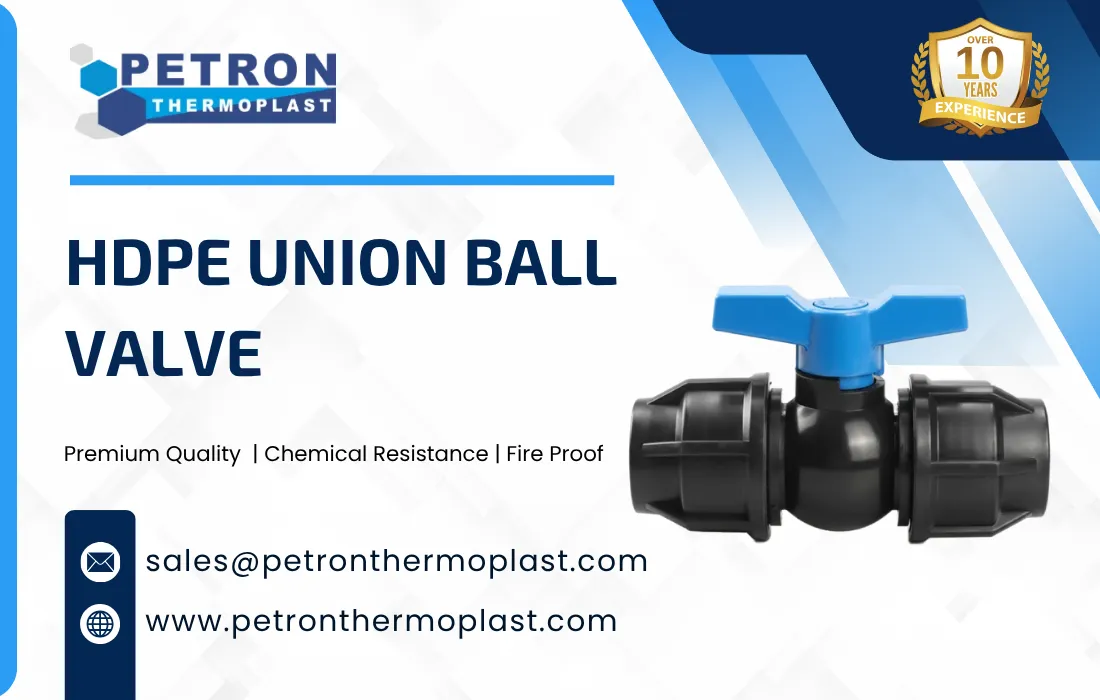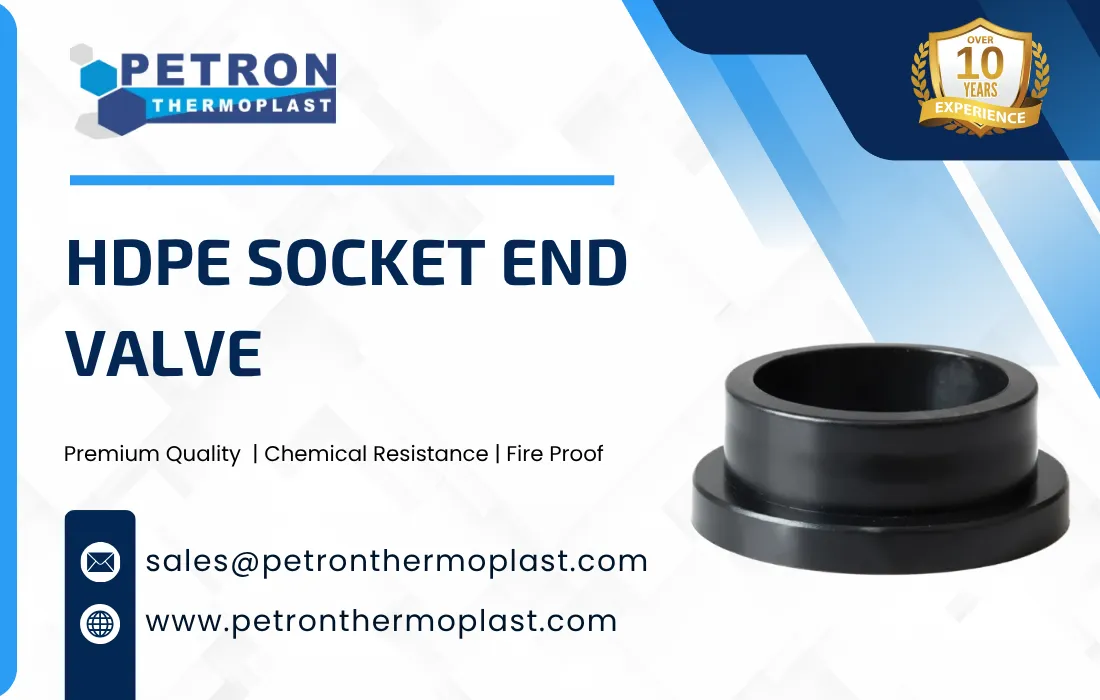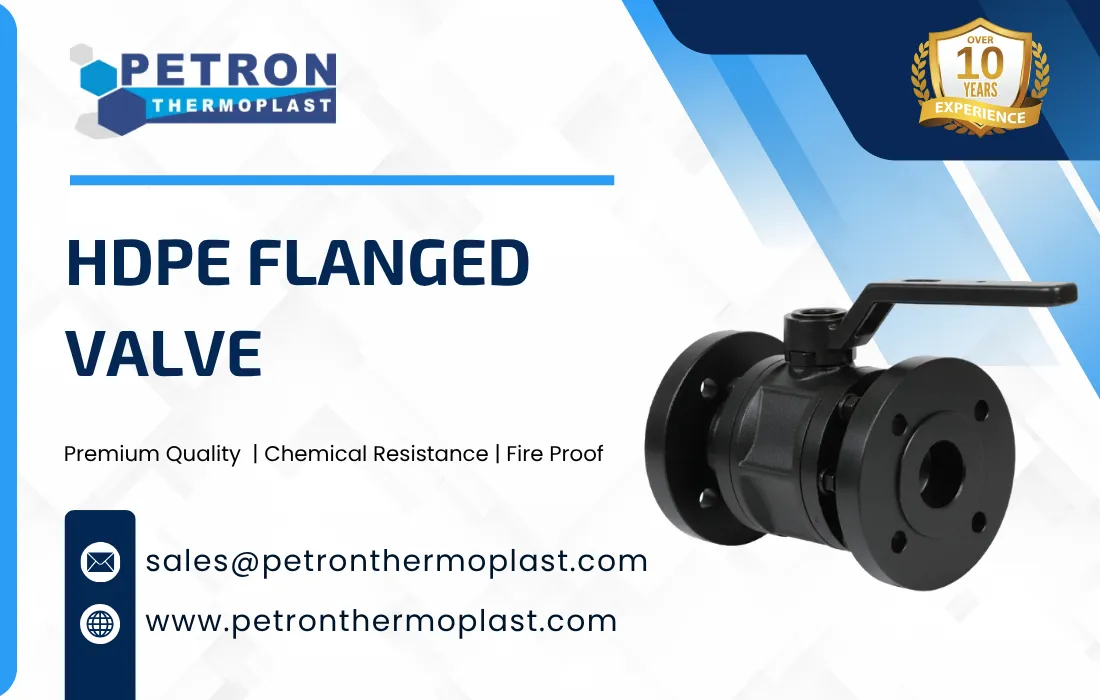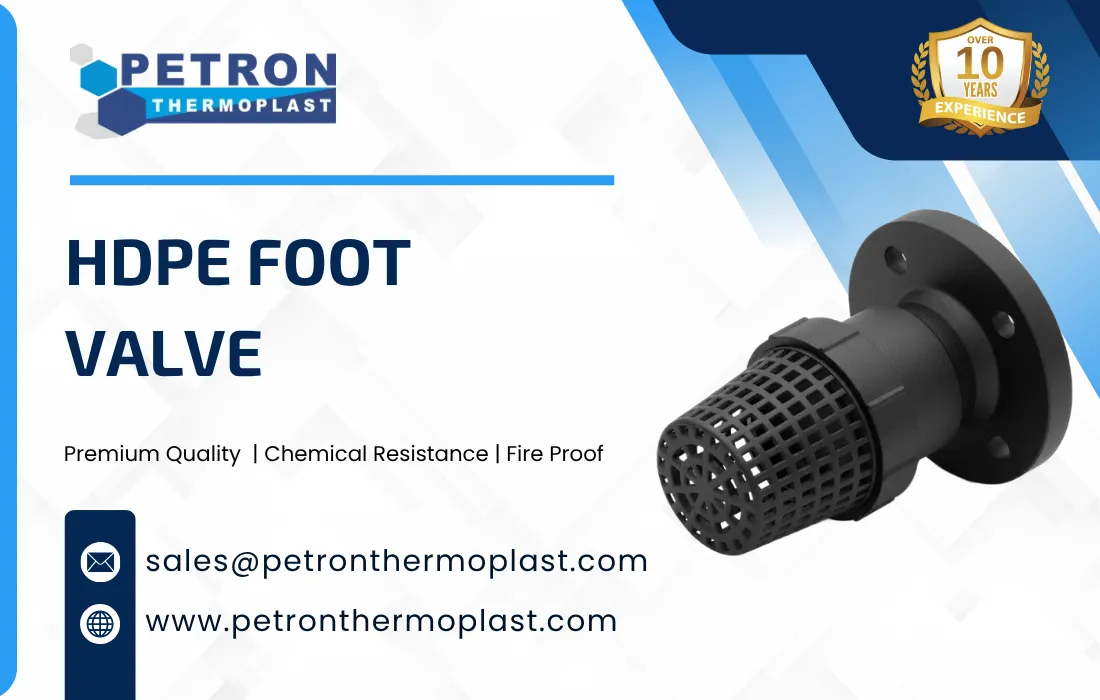
HDPE 3 Way Ball Valve
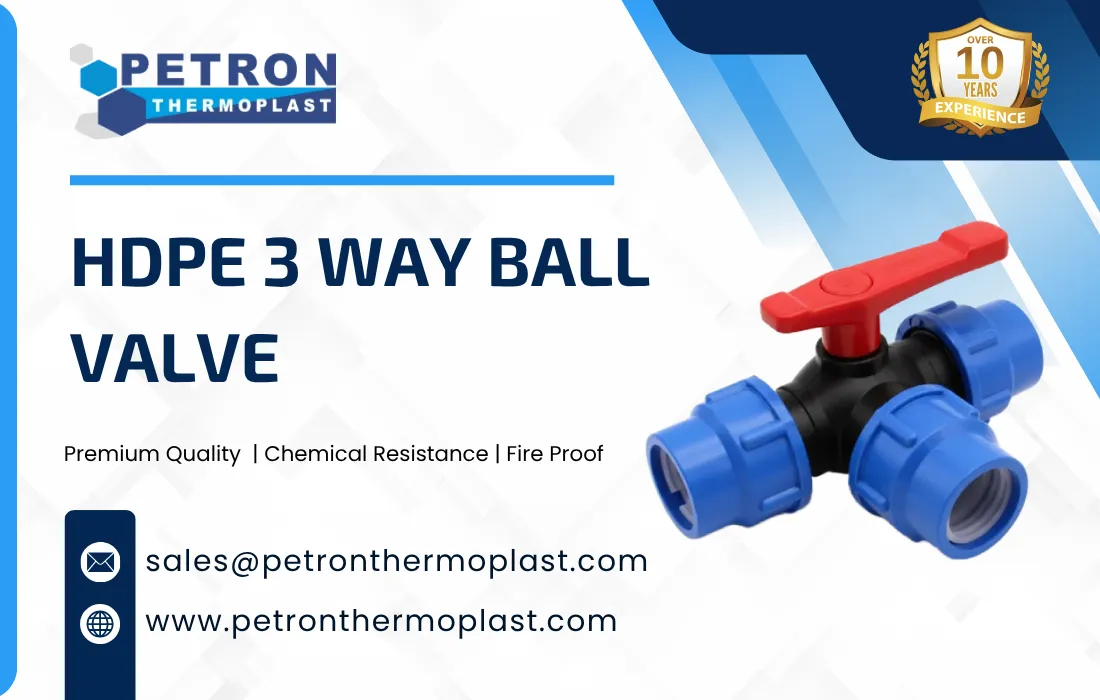
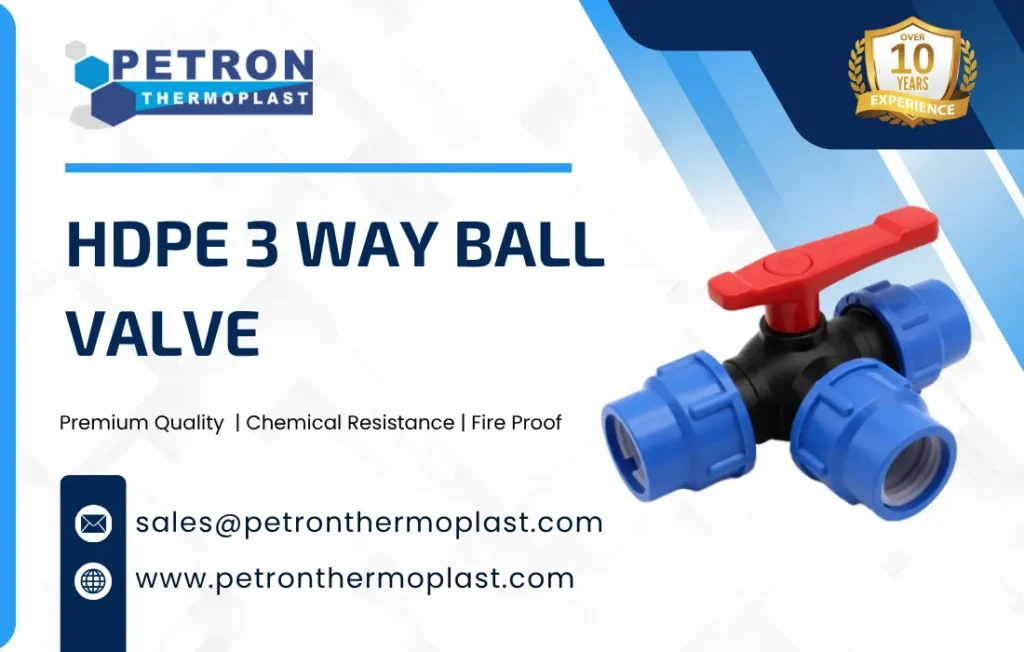
The HDPE 3 Way Ball Valve is a versatile flow control component made from high-density polyethylene (HDPE). It features three ports and a rotating ball mechanism, allowing for efficient diverting, mixing, or shut-off of fluid flow in various industrial and chemical processes. An HDPE 3 Way Ball Valve is a type of valve made from High-Density Polyethylene (HDPE) that uses a spherical ball with three ports to control the flow of fluid in multiple directions within a piping system.
An HDPE 3 Way Ball Valve is a versatile flow control device used to divert or mix fluids efficiently, especially in systems where corrosion resistance and long service life are required.The valve has three openings (ports) instead of to diverted from one line to another, or Mixed from two lines into one and The internal rotating ball controls the direction of flow. Made of HDPE, offering excellent chemical and corrosion resistance,Lightweight and durable, Leak-proof operation and suitable for industrial, water treatment, and chemical applications.

- Chemical Resistance
- Low Maintenance Requirement
- Low Thermal Conductivity
- Long Service Life
- Easy Installation
- Corrosion Resistance
HDPE 3 Way Ball Valve Details
*Technical Drawing
*Technical Data
| Parameter | Details |
| Valve Type | 3 Way Ball Valve (L-Port / T-Port) |
| Material | High-Density Polyethylene (HDPE) |
| Port Configuration | Three-port (diverting / mixing) |
| Size Range | 25 mm to 160 mm |
| Pressure Rating | PN 10 / PN 16 |
| Temperature Range | -10°C to +60°C |
| End Connections | Butt Weld / Socket Weld / Flanged / Threaded |
| Operation Type | Manual lever / Pneumatic / Electric (optional) |
| Design Standards | ISO 4427 / DIN 8074 |
| Flow Type | Full bore (low pressure drop) |
| Leakage | Leak-proof / Zero leakage design |
| Handle Type | Lever operated |
| Applications | Water treatment, chemical, slurry, industrial systems |
| Property | Value / Description |
| Density | 0.94 – 0.97 g/cm³ |
| Tensile Strength | 20 – 37 MPa |
| Melting Point | ~130°C |
| Impact Resistance | Excellent |
| Corrosion Resistance | Excellent (acids, alkalis, salts) |
| Water Absorption | Very low |
| Thermal Conductivity | Low |
| Flexibility | High |
| UV Resistance | Good (with additives) |
| Service Life | 50+ years |
Three-Port Configuration: Enables diverting, mixing, or shut-off functions in a single valve.
High Chemical Resistance: Inert to a wide range of acids, alkalis, and solvents.
Leak-Proof Design: Full bore with precision sealing for zero leakage.
Low Operating Torque: Smooth handle operation for effortless flow control.
Lightweight and Durable: Made from corrosion-free HDPE for long-term outdoor and chemical use.
Compact and Space-Saving: Replaces multiple valves with one compact unit.
Multiple End Connection Options: Plain, threaded, flanged, or fusion ends available.
Suitable for Manual or Actuated Operation: Can be customized for pneumatic or electric actuation.
| Pressure Class | Pressure (Bar) | Pressure (kg/cm²) | Typical Use |
| PN 6 | 6 bar | 6 kg/cm² | Low-pressure systems |
| PN 10 | 10 bar | 10 kg/cm² | Medium-pressure applications |
| PN 16 | 16 bar | 16 kg/cm² | High-pressure industrial use |

Custom Product Manufacturing Available
If you are searching for customized product designs that meet your requirements, don’t worry. Petron Thermoplast also offers custom product manufacturing services to meet the unique needs of various industries. Work with our expert engineers to create custom designs suited for your application.
Benefits of Using HDPE 3 Way Ball Valve
Versatile Configuration
It can divert, mix, or shut off flow in a single valve unit, providing flexibility and reliable performance.
High Chemical Resistance
The valve is inert to a wide range of acids, alkalis, and solvents, ensuring compatibility with various chemical environments.
Leak-Proof Design
Full bore with precision sealing for zero leakage, which is crucial for maintaining the integrity of the system.
Low Operating Torque
The smooth handle operation allows for effortless flow control, reducing the need for excessive force.
Lightweight and Durable
Made from corrosion-free HDPE, it is suitable for long-term outdoor and chemical use.
Compact and Space-Saving
Replaces multiple valves with one compact unit, saving space and reducing the number of components in a system.
Multiple End Connection Options
Available in plain, threaded, flanged, or fusion ends, allowing for flexibility in installation.
Suitable for Manual or Actuated Operation
Can be customized for pneumatic or electric actuation, catering to different operational needs.
Types of HDPE 3 Way Ball Valve
1. L-Port HDPE 3 Way Ball Valve (Diverter Type)
- Has an L-shaped bore (hole) inside the ball
- Connects one inlet to one outlet at a time
- Diverts flow between two directions
- Only one path is open, the other is closed
- Ideal for flow switching / diversion
- Can completely shut off flow
- Simple and reliable operation
- Water distribution systems
- Switching between tanks or pipelines
2. T-Port HDPE 3 Way Ball Valve (Mixing Type)
- Has a T-shaped bore inside the ball
- Can connect all three ports simultaneously or selectively
- Allows:
- Mixing of two flows into one
- Splitting one flow into two
- Multi-directional flow control
- Suitable for complex flow control
- Can connect multiple pipelines at once
- More versatile than L-port
- Chemical processing
- Mixing systems
- Industrial fluid handling
Applications of HDPE 3 Way Ball Valve
Process Industry
High Purity Applications
Electronic Industry
Electrical Industry
Semi-conductors Industry
Pharmaceutical Industry
Solar power panels
Sugar Industry
Paper & Pulp Industry
Nuclear Power Industry
Automotive Industry
DI water plants
Why Choose Petron Thermoplast?
In modern piping engineering, double-joint HDPE 3 Way Ball Valves have become a standard feature in oil, gas treatment, chemical, and industrial fluid systems. Petron Thermoplast is a trusted manufacturer and supplier of HDPE 3 Way Ball Valve designed for reliable flow control, corrosion resistance, and long-term performance in industrial and utility piping systems. Our HDPE 3 Way Ball Valve combines quality materials, precision engineering, and practical design to meet diverse application needs.