HDPE Ball Valve
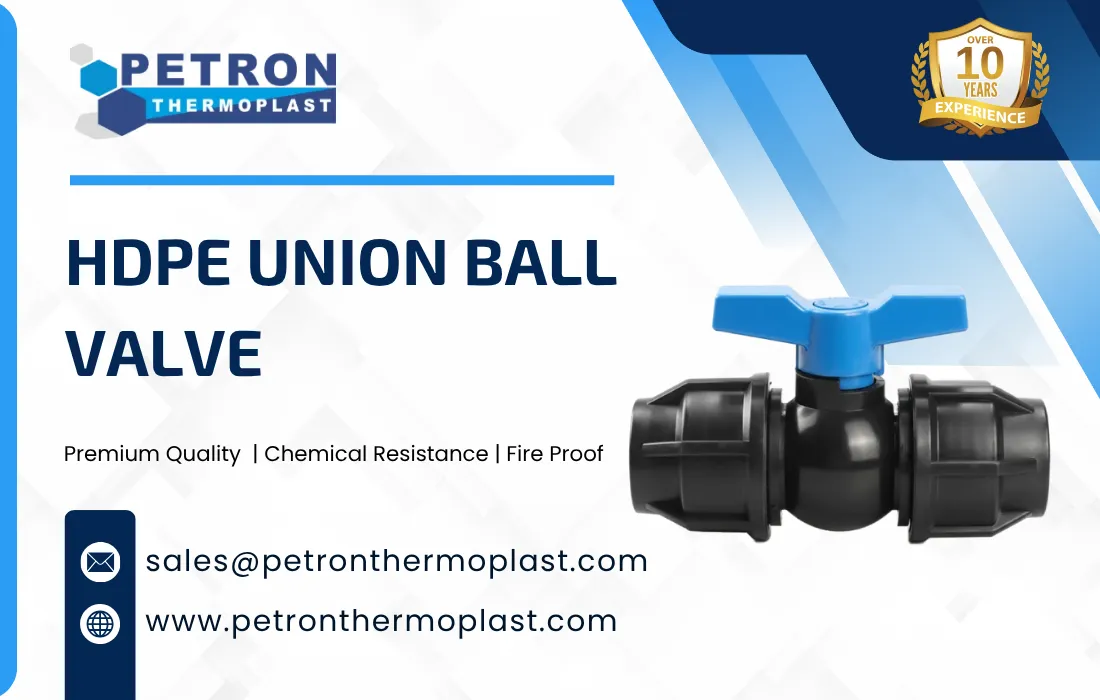
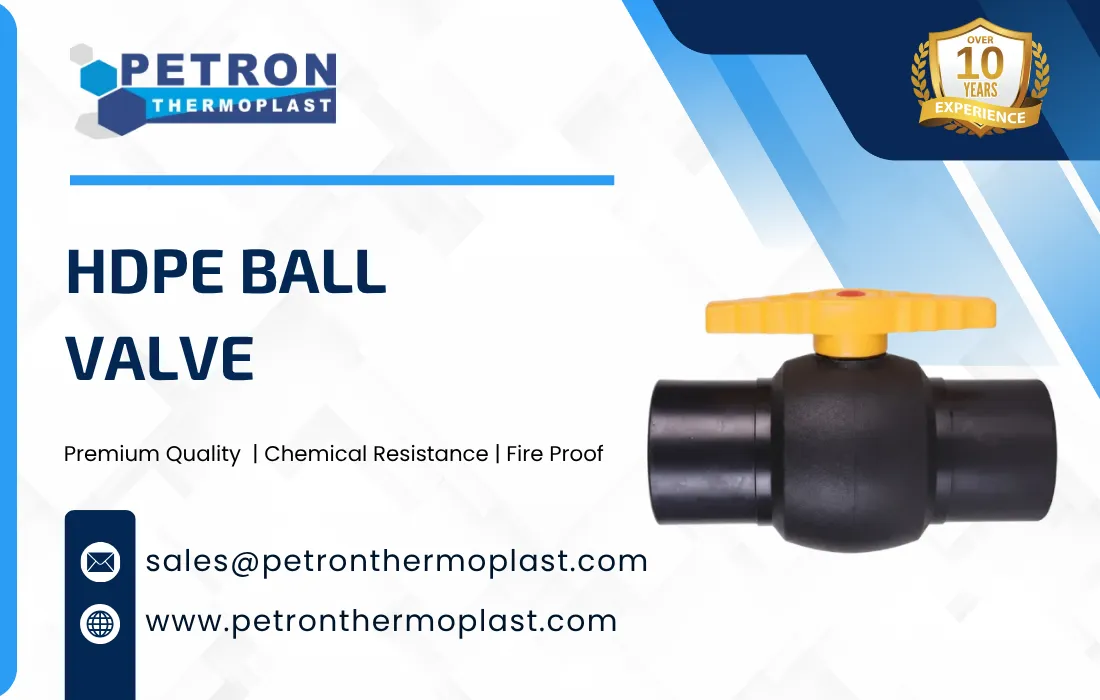
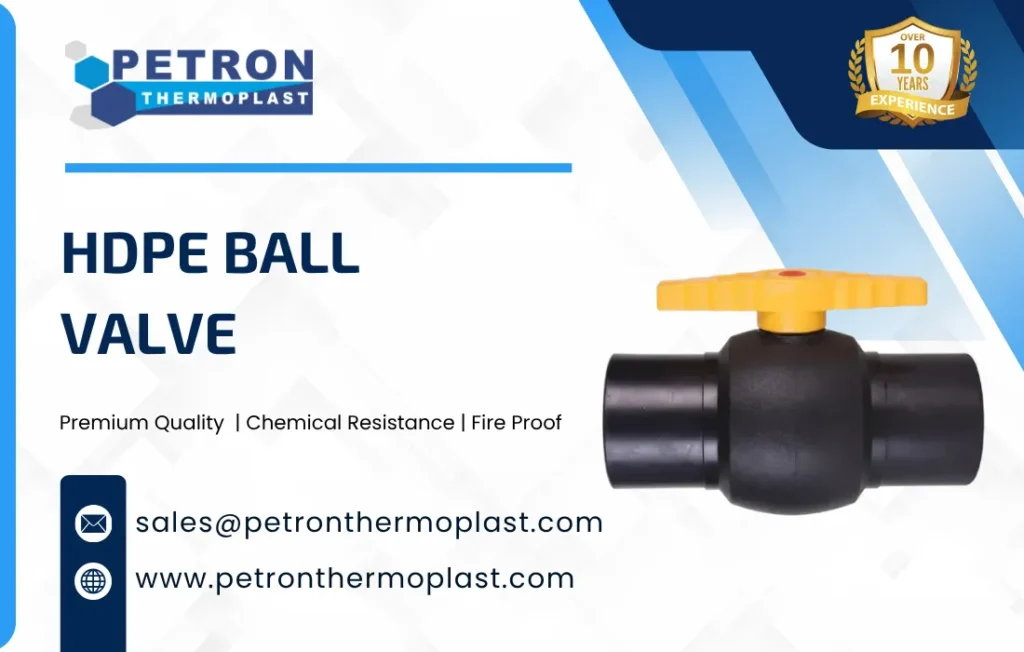
An HDPE Ball Valve is a type of valve made from High-Density Polyethylene (HDPE) that uses a rotating spherical ball with a central hole (bore) to control the flow of fluid in a pipeline.The valve operates by rotating the ball 90° (quarter turn) using a handle or actuator.When the hole in the ball aligns with the pipe, flow is allowed. When turned perpendicular, flow is completely stopped.An HDPE Ball Valve is a reliable and durable flow control device widely used in piping systems for its easy operation, leak-proof performance, and resistance to corrosion and chemicals.
The HDPE Ball Valve is a highly durable flow control component made from high-density polyethylene (HDPE), engineered for use in industrial, and water management applications. Designed for leak-proof shutoff and long-term operation in demanding environments, HDPE ball valves offer excellent chemical resistance, lightweight construction, and corrosion-proof performance.An HDPE Ball Valve is Quarter-turn operation for quick opening and closing and provides tight shut-off (leak-proof sealing) to make of HDPE, offering corrosion and chemical resistance, Lightweight and easy to install.

- Chemical Resistance
- Low Maintenance Requirement
- Low Thermal Conductivity
- Long Service Life
- Easy Installation
- Corrosion Resistance
HDPE Ball Valve Details
*Technical Diagram
*Technical Data
| Category | Parameter | Technical Details / Values |
| Valve Design | Valve Type | Ball Valve (Full Bore / Quarter Turn) |
| Design Type | 2-piece / 3-piece construction | |
| Ball Type | Solid spherical ball (PP / HDPE) | |
| Dimensions & Rating | Size Range | 20 mm to 315 mm (½” to 12”) |
| Pressure Rating | PN10 / PN16 | |
| Flow Type | Full bore (low pressure drop) | |
| Materials | Body Material | High-Density Polyethylene (HDPE – PE100 Grade) |
| Seat Material | PTFE (Teflon) | |
| Seal Material | EPDM / NBR | |
| Mechanical Properties | Density | 0.94 – 0.96 g/cm³ |
| Tensile Strength | 20 – 37 MPa | |
| Elongation at Break | ~400 – 500% | |
| Impact Resistance | Very high | |
| Thermal Properties | Temperature Range | –20°C to +60°C |
| Melting Point | 120 – 130°C | |
| Temp. Resistance | Up to ~60°C (continuous use) | |
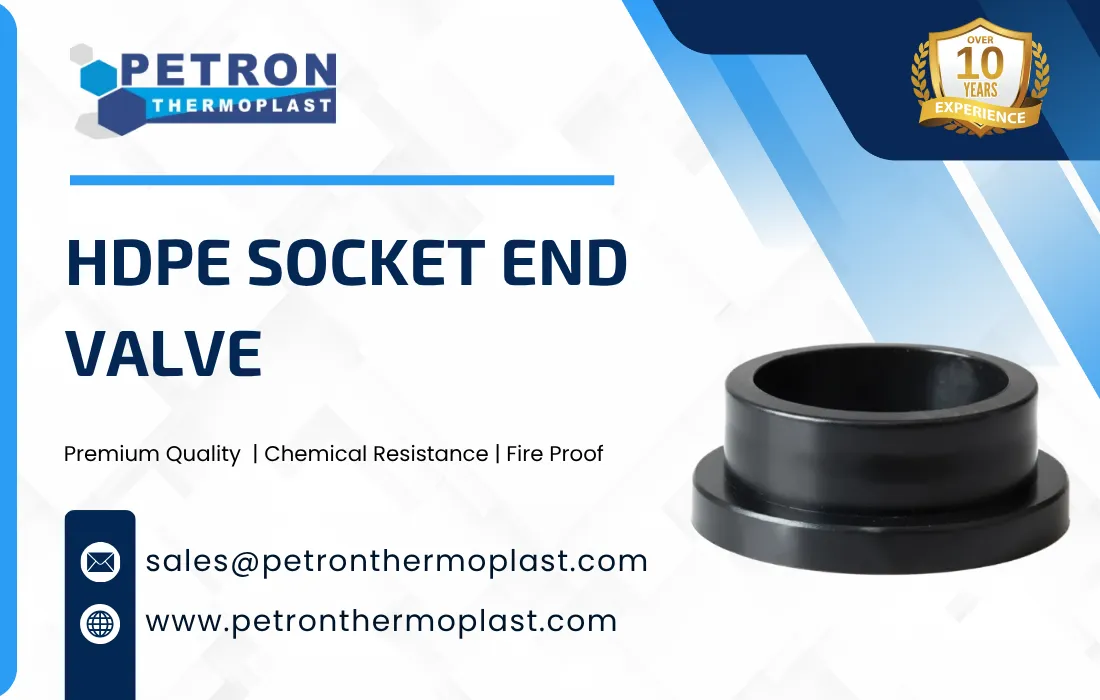
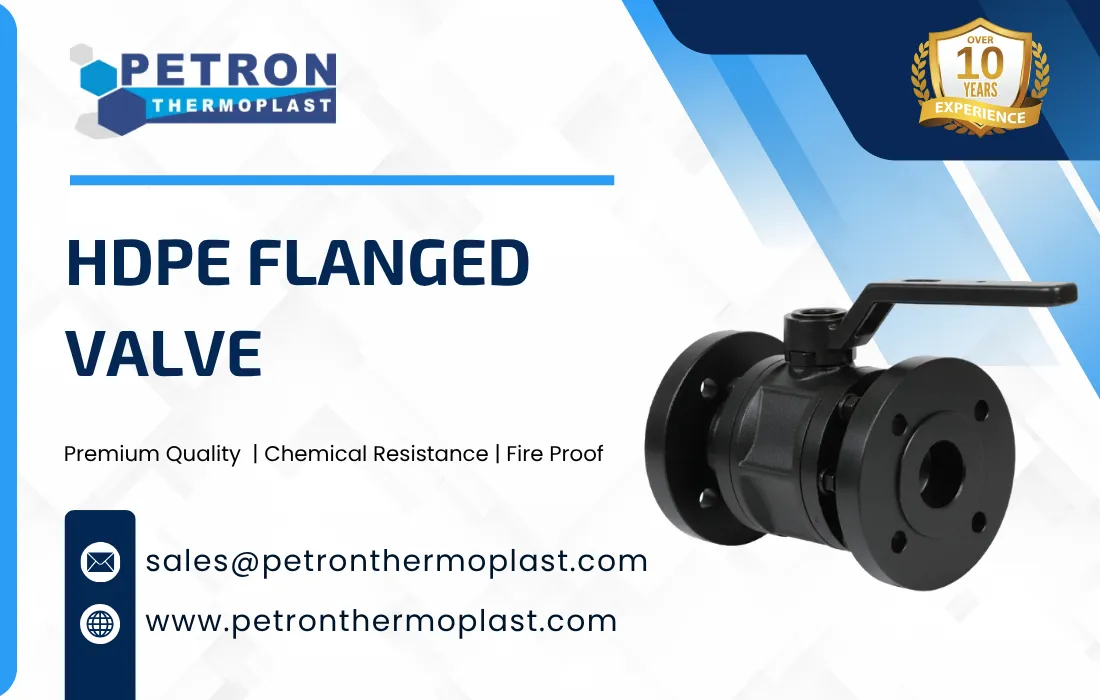
| Installation | End Connections | Butt Fusion / Socket Weld / Flanged / Threaded |
| Operation Type | Manual lever (optional pneumatic/electric) | |
| Durability | Chemical Resistance | Excellent (acids, alkalis, salts) |
| Corrosion Resistance | Excellent (no rusting) | |
| Water Absorption | Very low | |
| Service Life | 50+ years | |
| Compliance | Standards | ISO 4427 / DIN 8074 / ASTM |
| Usage | Applications | Water supply, irrigation, chemical, wastewater |
Corrosion Resistant: Immune to most acids, alkalis, and corrosive chemicals.
Leak-Proof Design: Precision ball and seat ensure tight sealing and no leakage.
Lightweight & Easy to Handle: Easier to install and transport than metal valves.
Low Operating Torque: Smooth handle operation with minimal force.
UV & Weather Resistant: Suitable for outdoor installations and harsh conditions.
Non-Toxic Material: Safe for potable water and food-grade applications.
Available in Multiple End Connections: Options include plain, threaded, flanged, or fusion ends.
Maintenance-Free: No rusting or scaling; minimal service required.
| Pressure Class | Pressure (Bar) | Pressure (kg/cm²) | Typical Application |
| PN 6 | 6 bar | 6 kg/cm² | Low-pressure systems (irrigation, drainage) |
| PN 10 | 10 bar | 10 kg/cm² | Water supply & general use |
| PN 16 | 16 bar | 16 kg/cm² | Industrial & high-pressure systems |

Custom Product Manufacturing Available
If you are searching for customized product designs that meet your requirements, don’t worry. Petron Thermoplast also offers custom product manufacturing services to meet the unique needs of various industries. Work with our expert engineers to create custom designs suited for your application.
Benefits of Using HDPE Ball Valve
1. Excellent Corrosion Resistance
- HDPE material does not rust or corrode
- Suitable for acidic, alkaline, and chemical environments
2. Leak-Proof Performance
- Provides tight sealing with minimal leakage
- Ensures safe and efficient fluid control
3. Lightweight & Easy Installation
- Much lighter than metal valves
- Easy to handle, transport, and install
4. High Durability & Long Life
- Resistant to wear, stress, and environmental conditions
- Service life of 50 years or more
5. Low Maintenance
- Does not require frequent servicing
- Saves maintenance cost and time
6. Smooth Flow with Low Pressure Loss
- Full bore design ensures minimal friction
- Improves flow efficiency and reduces energy loss
7. Chemical Resistance
- Performs well in harsh industrial environments
- Ideal for chemical processing systems
8. Easy Operation
- Quarter-turn (90°) operation for quick opening and closing
- Low torque required for operation
9. Cost-Effective
- Lower installation and maintenance costs
- Long lifespan reduces replacement expenses
10. Environmentally Friendly
- HDPE is recyclable and non-toxic
- Safe for potable water applications
Types of HDPE Ball Valve
1. Based on Bore (Flow Type)
Full Bore (Full Port) Ball Valve
- Bore size equals pipe diameter
- Provides maximum flow with minimal pressure loss
- Used in water supply and industrial systems
Reduced Bore (Standard Port) Ball Valve
- Smaller internal diameter
- Slight flow restriction but more economical
- Suitable for low to medium flow applications
2. Based on Number of Ports
2-Way Ball Valve
- Two ports (inlet & outlet)
- Used for on/off flow control
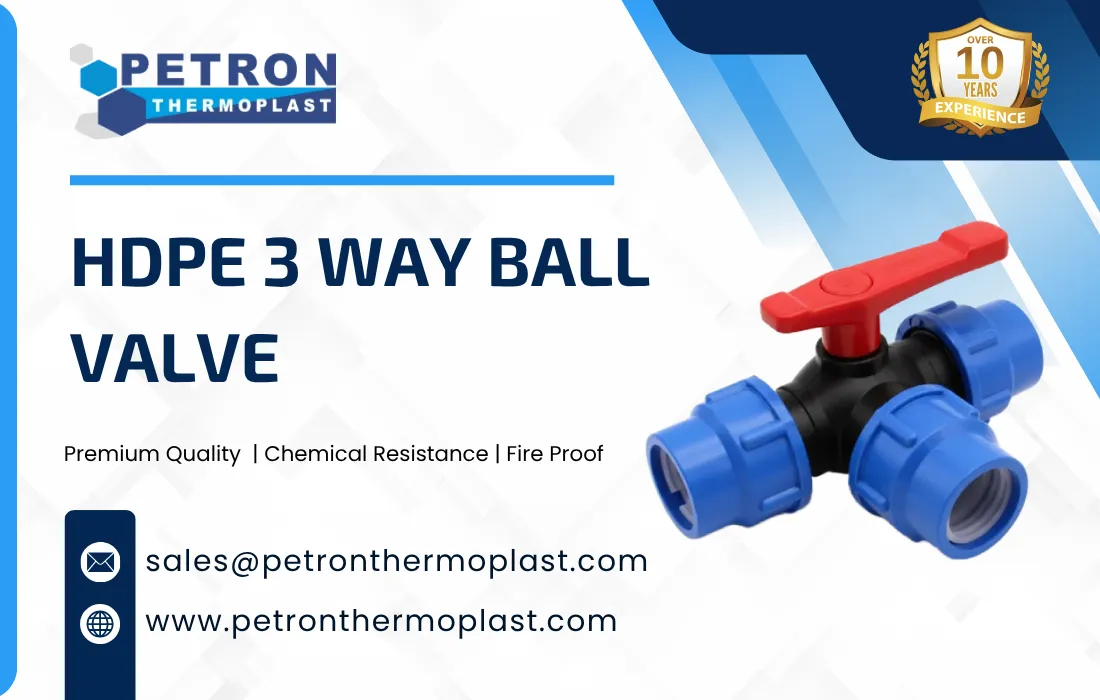
3-Way Ball Valve
- Three ports (L-port / T-port)
- Used for diverting or mixing flow
3. Based on Construction (Body Design)
One-Piece Ball Valve
- Single body construction
- Compact and cost-effective
- Used in low-pressure systems
Two-Piece Ball Valve
- Two-part body
- Better strength and durability
Three-Piece Ball Valve
- Three-part body
- Easy to disassemble and maintain
4. Based on Ball Design
Floating Ball Valve
- Ball is not fixed and moves slightly
- Most commonly used type
Trunnion Mounted Ball Valve
- Ball is supported by shafts (trunnions)
- Suitable for high-pressure applications
5. Based on Operation
Manual Ball Valve
- Operated using a lever or handle
Actuated Ball Valve
- Operated automatically using:
- Pneumatic actuator
- Electric actuator
Applications of HDPE Ball Valve
Process Industry
High Purity Applications
Electronic Industry
Electrical Industry
Semi-conductors Industry
Pharmaceutical Industry
Solar power panels
Sugar Industry
Paper & Pulp Industry
Nuclear Power Industry
Automotive Industry
DI water plants
Why Choose Petron Thermoplast?
Petron Thermoplast is a trusted manufacturer and supplier of HDPE Ball Valve engineered for smooth operation, reliable shut-off, and long-term performance in demanding industrial environments.
1. Premium-Grade HDPE Construction
Our HDPE Ball Valves are manufactured using high-quality, corrosion-resistant HDPE, ensuring excellent performance in chemical, water, and industrial process applications.
2. Robust Gear Mechanism
Each valve is equipped with a heavy-duty worm gear box that provides smooth, precise control with reduced operating torque—ideal for medium to large diameter pipelines.
3. Leak-Proof & Reliable Shut-Off
Precision-engineered discs and high-performance elastomer seats (EPDM / FKM) ensure tight sealing and dependable isolation, even under continuous operation.
4. Low Maintenance & Long Service Life
HDPE construction eliminates rust, scaling, and corrosion, while the gear operation minimizes mechanical wear—resulting in minimal maintenance and extended valve life.
5. Wide Size & Connection Options
Available in multiple sizes with wafer, lug, and flanged end connections, compatible with DIN, ANSI, and other international standards.
6. Smooth Flow Control & Throttling
Our HDPE Ball Valve allows accurate flow regulation, making them suitable for both on/off and throttling applications.