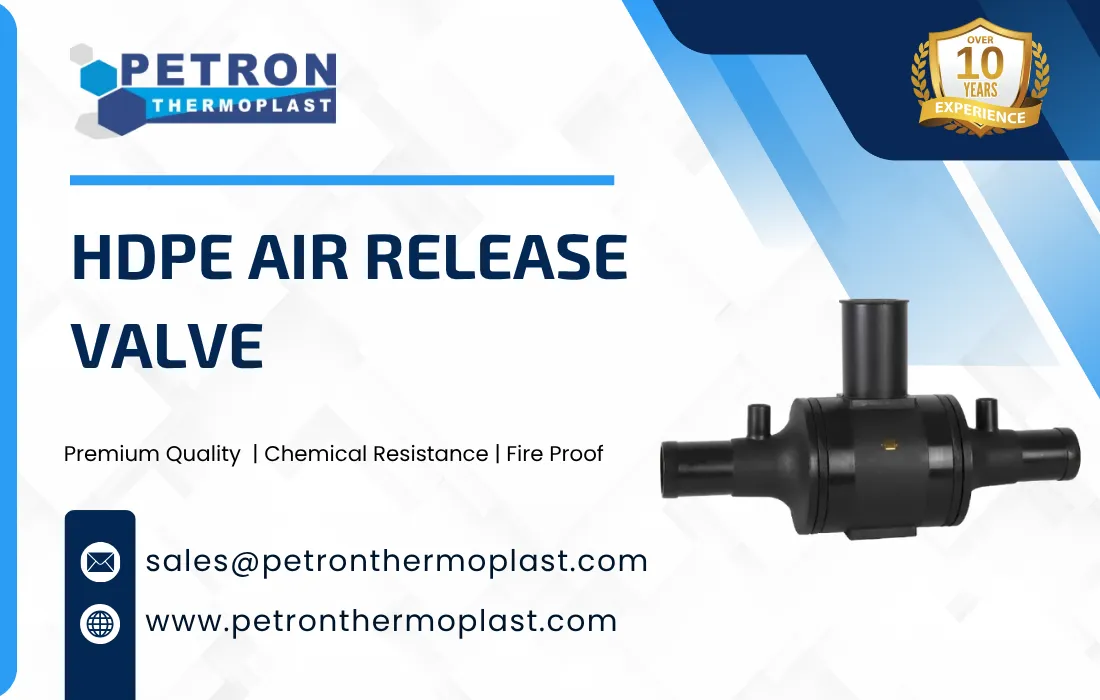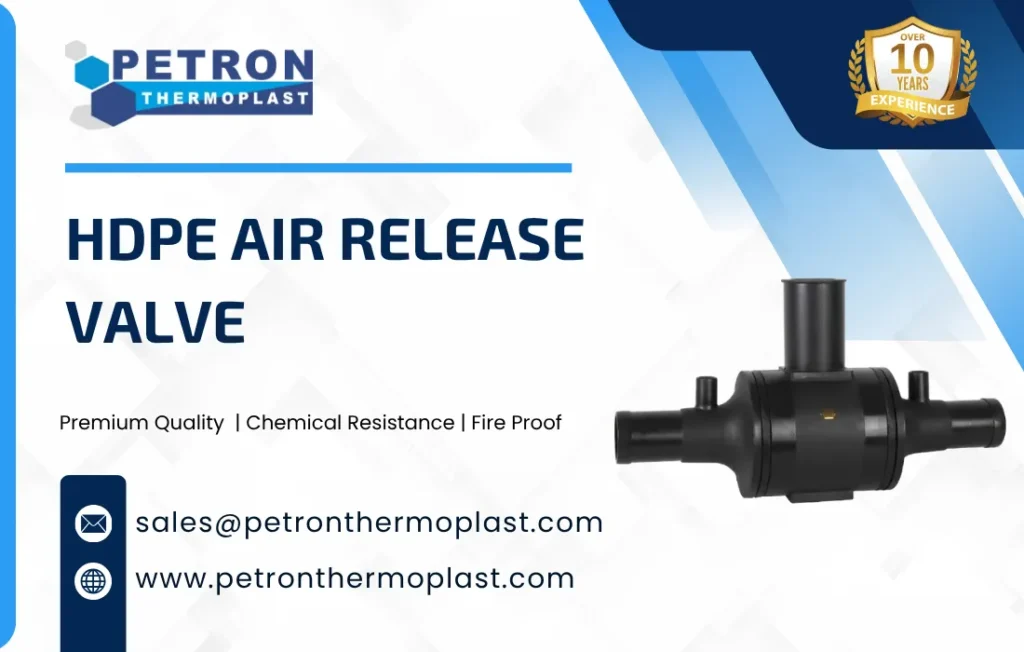
HDPE Air Release Valve
A PPH Air Release Valve is a type of valve made from Polypropylene Homopolymer (PPH) that is designed to automatically release trapped air from pipelines and fluid systems. The PPH Air Release Valve helps maintain smooth fluid flow by preventing air pockets that can cause pressure loss, flow disruption, or damage to the piping system. The valve works through an internal float mechanism that detects the presence of air inside the pipeline. When air accumulates, the float drops and the valve opens to release the trapped air. Once the air is expelled and the liquid level rises again, the float closes the valve to prevent leakage.
PPH Air Release Valves are widely used in water treatment plants, chemical processing industries, irrigation systems, and industrial pipelines, where removing trapped air is essential for efficient and safe system operation. In pressurized pipe systems, an automatic air release valve is essential. The purpose of a PPH air release valve, also known as an air relief valve, is to relieve trapped air that collects at each maximum height of a full pressurized tube. As the internal lever system increases the temp force to exceed the internal pressure, an air release valve may open against the internal pressure.

- Chemical Resistance
- Low Maintenance Requirement
- Low Thermal Conductivity
- Long Service Life
- Easy Installation
- Corrosion Resistance
HDPE Air Release Valve Details
*Technical Drawing
*Technical Data
| Parameter / Property | Details / Typical Value |
| Valve Type | Air Release Valve (Automatic / Float Operated) |
| Material | High-Density Polyethylene (HDPE – PE100 Grade) |
| Function | Air release & vacuum prevention |
| Size Range | DN15 – DN150 (½” – 6”) |
| Pressure Rating | PN6 / PN10 / PN16 |
| Temperature Range | –40°C to +60°C |
| Connection Type | Butt Fusion / Threaded / Flanged |
| Operation Type | Automatic (Float mechanism) |
| Seal Material | EPDM / NBR / Viton |
| Float Material | Polypropylene (PP) / HDPE |
| Installation | Vertical position |
| Standards | ISO 4427 / DIN 8062 / ASTM D3350 |
| Applications | Water supply, irrigation, sewage, chemical pipelines |
| Density | 0.94 – 0.97 g/cm³ |
| Tensile Strength | 20 – 33 MPa |
| Melting Point | 120 – 130°C |
| Temperature Resistance | Up to ~60°C (continuous use) |
| Chemical Resistance | Excellent (acids, alkalis, salts) |
| Impact Resistance | High |
| Water Absorption | Very low |
| Flexibility | Good |
| Corrosion Resistance | Excellent |
| Service Life | 50+ years |
- Automatic Air Release Mechanism
The valve is designed with an internal float system that automatically releases trapped air from the pipeline during operation. - High Chemical Resistance
Manufactured from Polypropylene Homopolymer (PPH), the valve offers excellent resistance to corrosive chemicals, acids, and alkalis. - Corrosion-Resistant Construction
The PPH body ensures the valve does not rust or corrode, making it suitable for harsh industrial and chemical environments. - Lightweight Design
Compared to metal valves, PPH air release valves are lightweight, making them easy to handle, transport, and install. - Leak-Proof Sealing
The valve is equipped with high-quality seals and seats that provide tight sealing and prevent leakage during operation. - Durable and Long Service Life
The strong thermoplastic construction ensures long-term durability and reliable performance in demanding applications. - Low Maintenance Requirement
Due to its simple internal mechanism and corrosion-resistant material, the valve requires minimal maintenance. - Pressure Control Support
By releasing trapped air, the valve helps maintain stable pressure and smooth fluid flow in the pipeline. - Multiple Connection Options
Available with threaded or flanged connections, allowing compatibility with different piping systems. - Wide Industrial Applications
Commonly used in water treatment plants, chemical processing systems, irrigation networks, and industrial pipelines for efficient air management.
| Pressure Class | Pressure (Bar) | Pressure (kg/cm²) | Typical Application |
| PN 6 | 6 bar | 6 kg/cm² | Low-pressure irrigation systems |
| PN 10 | 10 bar | 10 kg/cm² | Water supply & general pipelines |
| PN 16 | 16 bar | 16 kg/cm² | Industrial & high-pressure systems |

Custom Product Manufacturing Available
If you are searching for customized product designs that meet your requirements, don’t worry. Petron Thermoplast also offers custom product manufacturing services to meet the unique needs of various industries. Work with our expert engineers to create custom designs suited for your application.
Benefits of Using HDPE Air Release Valve
Prevents Air Locks
Automatically releases trapped air, ensuring smooth operation and preventing flow obstruction.
Reduces Pressure
Helps regulate pressure by releasing excess air, preventing pressure buildup and potential damage.
Increases Efficiency
Maintains optimal flow rates, leading to increased system efficiency and reduced energy costs.
Corrosion Resistance
Made from high-density polyethylene, it is resistant to rust, corrosion, and most chemicals, ensuring long-term reliability.
Low Maintenance
Simple mechanism with few moving parts reduces service frequency and maintenance needs.
Customizable
Offers custom product manufacturing services to meet unique industry requirements.
Types of HDPE Air Release Valve
1. Automatic Air Release Valve (Single Orifice)
- Releases small pockets of trapped air continuously during operation
- Works automatically using a float mechanism
- No manual operation required
- Ideal for pipelines where air accumulates gradually
- Water supply systems
- Irrigation pipelines
2. Air & Vacuum Valve (Large Orifice)
- Designed to handle large volumes of air
- Works during pipeline filling and emptying
- Acts as a vacuum breaker
- Prevents pipe collapse
- Long pipelines
- Pumping systems
3. Combination Air Release Valve (Double Function)
- Combines air release + vacuum relief in one valve
- Releases small air pockets during operation
- Expels large air during filling and allows air entry during draining
- Water distribution networks
- Industrial pipelines
4. Single Orifice Air Release Valve
- Has a single small opening for releasing air
- Suitable for low air volume systems
- Simple design
5. Double Orifice Air Release Valve
- Contains two openings (small + large orifice)
- Releases both small and large air volumes
- More efficient than single orifice
6. Manual Air Release Valve
- Operated manually to release air when required
- Simple and low cost
- Requires human operation
Applications of HDPE Air Release Valve
Process Industry
High Purity Applications
Electronic Industry
Electrical Industry
Semi-conductors Industry
Pharmaceutical Industry
Solar power panels
Sugar Industry
Paper & Pulp Industry
Nuclear Power Industry
Automotive Industry
DI water plants
Why Choose Petron Thermoplast?
At Petron Thermoplast, HDPE Air Release Valve offer a highly efficient solution for streamlining flow control needs in various industrial applications. From their space-saving design to their reliable performance. HDPE Air Release Valve are a versatile option for ensuring precise control over fluid flow. By investing in air release valves, businesses can improve efficiency, reduce maintenance costs, and enhance overall system performance. Whether used in the oil and gas industry, chemical processing plants, or water treatment facilities.
HDPE Air Release Valves offer a practical and reliable solution for managing flow control requirements. The efficiency of HDPE Air Release Valve makes them an essential component for any organisation looking to optimize their flow control processes and achieve greater operational success.