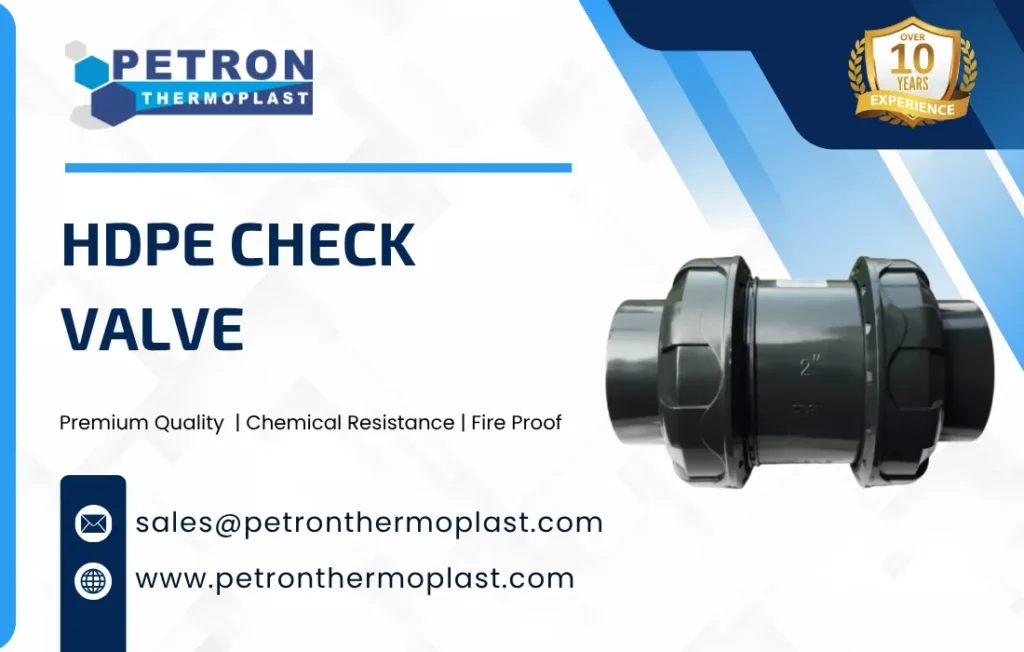
HDPE Check Valve
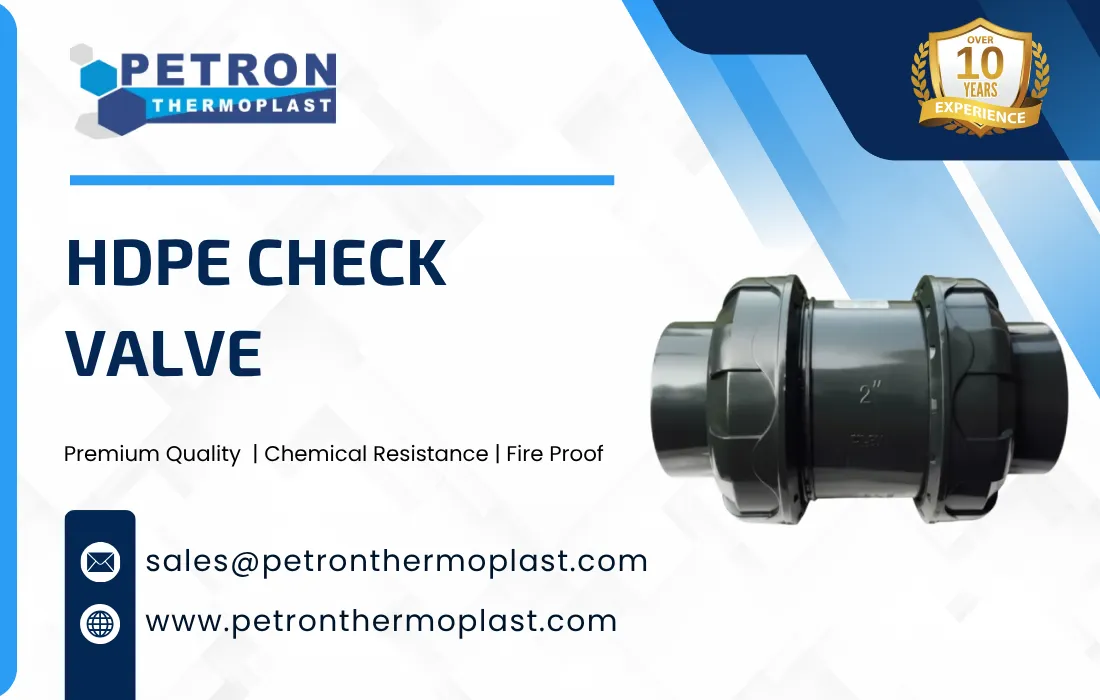
An HDPE Check Valve is a non-return valve designed to allow fluid flow in one direction while preventing backflow. It is manufactured from High-Density Polyethylene (HDPE), which offers excellent resistance to corrosion, making it suitable for handling aggressive chemicals and corrosive media, ensuring the protection and efficiency of pipelines and pumps, it is ideal for handling aggressive chemicals, corrosive media, and water-based systems in industrial and municipal applications.
An HDPE Check Valve is a type of non-return valve made from High-Density Polyethylene (HDPE) that allows fluid to flow in one direction only and automatically prevents backflow (reverse flow) in a pipeline system. An HDPE Check Valve operates based on flow pressure. When fluid flows in the forward direction, the valve opens automatically and also When the flow stops or reverses, the valve closes automatically to prevent backflow.

- Chemical Resistance
- Low Maintenance Requirement
- Low Thermal Conductivity
- Long Service Life
- Easy Installation
- Corrosion Resistance
HDPE Check Valve Details
*Technical Diagram
*Technical Data
| Category | Parameter | Details / Specification |
| Valve Design | Valve Type | Check Valve (Non-Return Valve) |
| Disc Type | Swing / Ball / Spring-loaded | |
| Function | Prevents reverse flow (backflow protection) | |
| Flow Direction | Unidirectional | |
| Size Range | DN25 to DN400 (1” to 16”) | |
| Pressure Rating | PN6 / PN10 / PN16 | |
| Materials | Body Material | High-Density Polyethylene (HDPE – PE80 / PE100) |
| Seal Material | EPDM / NBR / Viton (FPM) | |
| Body Design | One-piece molded HDPE | |
| Mechanical | Density | 0.94 – 0.96 g/cm³ |
| Tensile Strength | 20 – 30 MPa (approx.) | |
| Flexibility | High (resists cracking and impact) | |
| Surface Finish | Smooth (low friction, reduces pressure loss) | |
| Thermal & Env. | Temperature Range | -20°C to +60°C (up to -40°C in some designs) |
| UV Resistance | Good (with additives like carbon black) | |
| Chemical Resistance | Excellent (resistant to acids, alkalis, salts) | |
| Corrosion Resistance | Very high (non-metallic material) | |
| Thermal Behavior | Pressure capacity decreases with higher temperature | |
| Installation | End Connections | Butt Fusion / Electrofusion / Flanged / Socket |
| Operation | Automatic (pressure-operated) | |
| Installation | Horizontal or Vertical | |
| Compliance | Standards | ISO 4427 / DIN 8062 / ASTM D3350 |
| Testing Standards | ISO 9393 / EN 12266 | |
| Service Life | 50+ years under normal conditions | |
| Usage | Applications | Water supply, irrigation, wastewater, chemical pipelines |
Corrosion-Resistant Construction: Made from HDPE, offering excellent resistance to acids, alkalis, and other aggressive substances.
Non-Return Design: Prevents backflow to protect equipment such as pumps and compressors.
Low Cracking Pressure: Allows for easy opening under minimal pressure, ensuring smooth flow.
Compact & Lightweight: Easy to transport, install, and maintain.
No External Power Required: Operates automatically based on flow pressure.
Chemical Compatibility: Suitable for a wide range of fluids, including wastewater, chemicals, and saline water.
End Connection Options: Available in flanged, socket weld, or butt fusion types for installation flexibility.
| PN Rating | Pressure (Bar) | Pressure (PSI) | Application |
| PN6 | 6 bar | ~87 PSI | Low-pressure systems (irrigation, drainage) |
| PN10 | 10 bar | ~145 PSI | Water supply, general use |
| PN16 | 16 bar | ~232 PSI | Industrial and higher pressure systems |

Custom Product Manufacturing Available
If you are searching for customized product designs that meet your requirements, don’t worry. Petron Thermoplast also offers custom product manufacturing services to meet the unique needs of various industries. Work with our expert engineers to create custom designs suited for your application.
Benefits of Using HDPE Check Valve
1. Prevents Backflow
- Automatically allows flow in one direction only
- Protects pipelines, pumps, and equipment from damage caused by reverse flow
2. Excellent Corrosion Resistance
- HDPE material resists chemicals, acids, and alkalis
- Does not rust or corrode like metal valves
- Ideal for chemical and wastewater systems
3. Lightweight & Easy Installation
- Much lighter than metal check valves
- Easy to handle, transport, and install
- Reduces installation time and labor cost
4. Low Maintenance
- Simple design with fewer moving parts
- No need for frequent maintenance or lubrication
- Long-lasting performance
5. High Durability & Long Service Life
- Resistant to wear, impact, and environmental conditions
- Can last 50 years or more under proper conditions
6. Leak-Proof Performance
- Tight sealing mechanism reduces leakage
- Ensures safe and efficient system operation
7. Smooth Flow with Low Pressure Loss
- Smooth internal surface reduces friction
- Maintains efficient flow with minimal pressure drop
8. Chemical Compatibility
- Suitable for handling a wide range of fluids
- Used in industries like:
- Water treatment
- Chemical processing
- Irrigation
- Effluent systems
9. Cost-Effective
- Lower initial cost compared to metal valves
- Reduced maintenance and replacement costs
10. Automatic Operation
- No manual or external power required
- Operates using fluid pressure, making it reliable and energy-efficient
11. High Durability & Long Service Life
- Resistant to wear, chemicals, and environmental factors
- Maintains performance over long periods
Types of HDPE Check Valve
1. Based on Internal Mechanism
Swing Type HDPE Check Valve
- Uses a hinged disc (flap) that swings open with flow
- Closes automatically when flow reverses
- Suitable for low-pressure and large pipelines
Ball Type HDPE Check Valve
- Uses a free-moving ball to block reverse flow
- Simple and reliable design
- Ideal for slurry and wastewater applications
Spring-Loaded (Lift) Check Valve
- Disc moves up/down with the help of a spring mechanism
- Quick closing reduces water hammer
- Suitable for high-pressure and fast-flow systems
Diaphragm Type Check Valve
- Uses a flexible diaphragm for sealing
- Leak-proof and suitable for clean or sensitive fluids
2. Based on Installation / Design
Inline (Axial) Check Valve
- Installed in a straight pipeline
- Compact and space-saving
- Common in modern piping systems
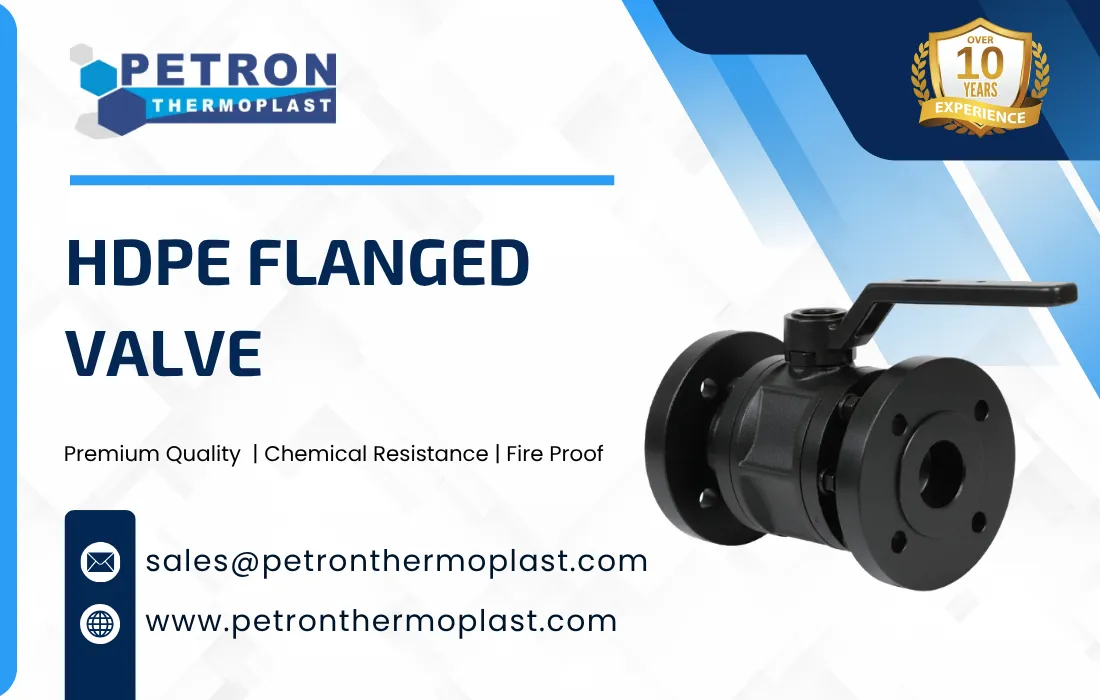
Flanged HDPE Check Valve
- Connected using flanged ends
- Strong and suitable for large-diameter pipelines
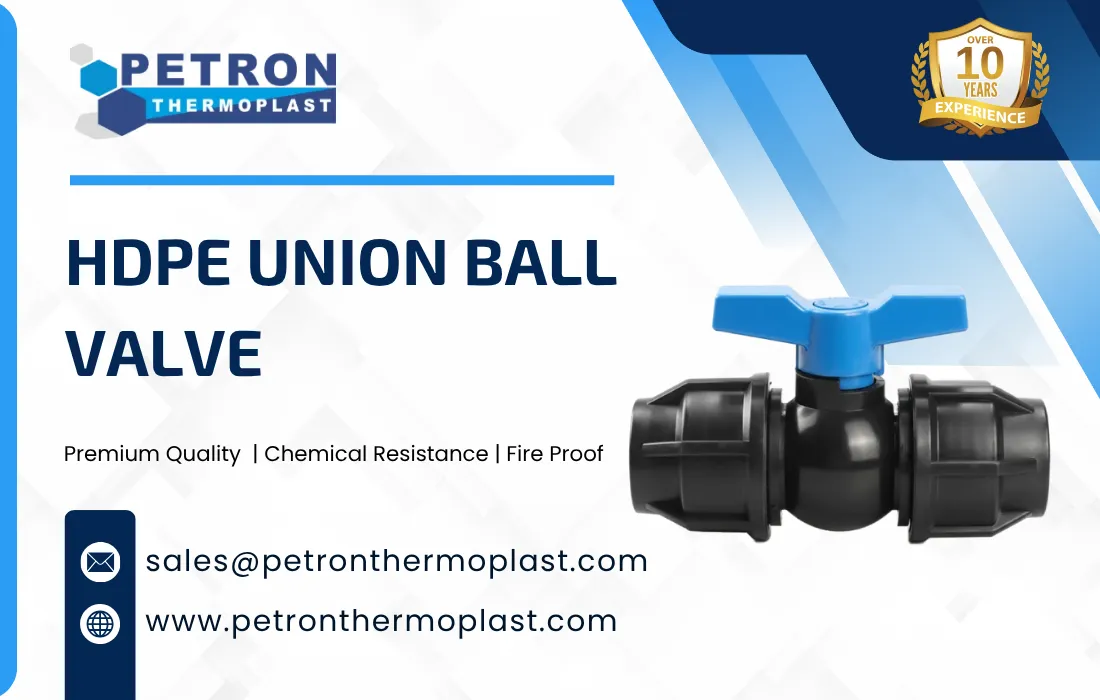
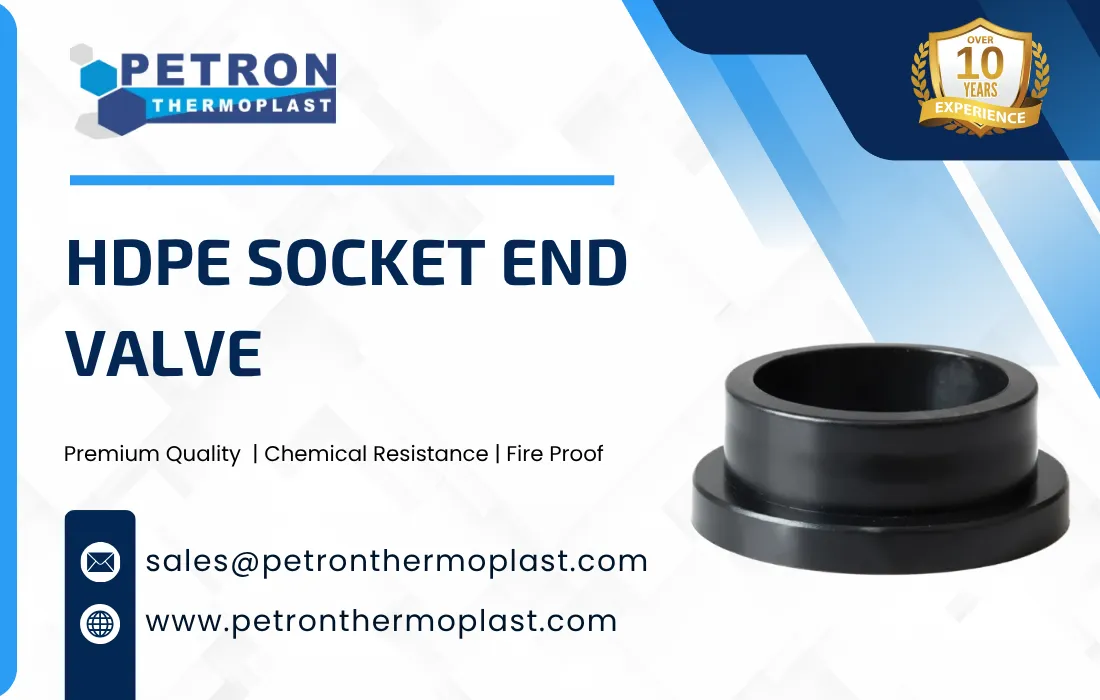
Socket / Fusion Type Check Valve
- Connected by butt fusion or electrofusion
- Provides leak-proof joints
- Used in HDPE pipeline systems
3. Based on Special Applications
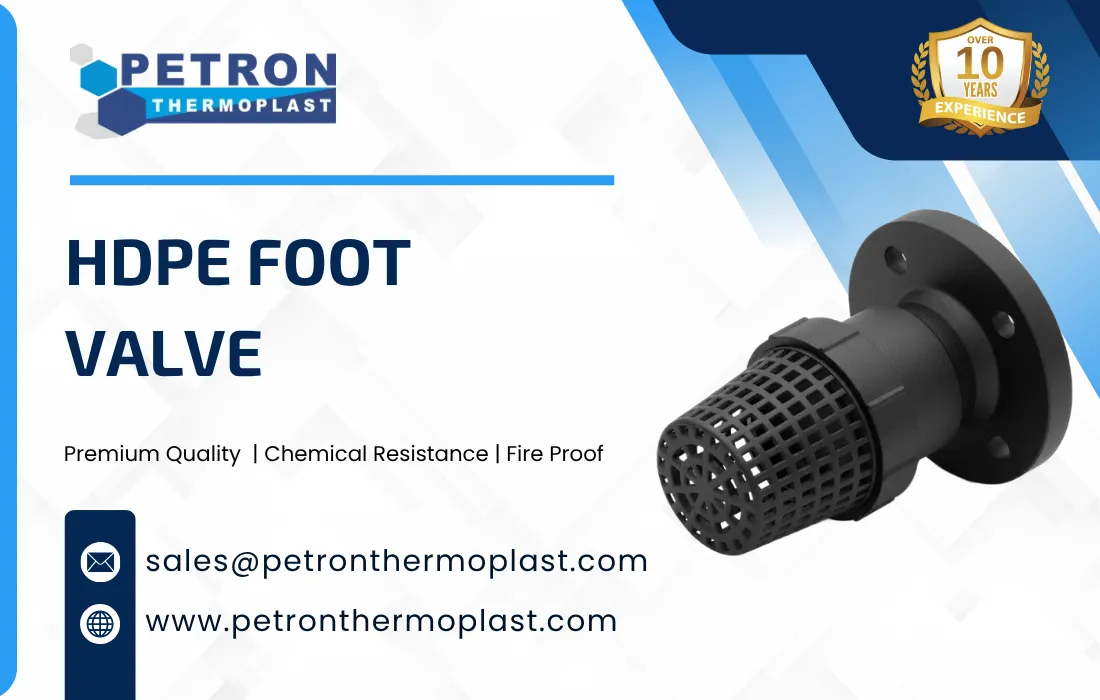
Foot Valve (Check Valve with Strainer)
- Installed at pump suction
- Prevents backflow and blocks debris
- Common in pumping systems
Dual Plate / Wafer Type Check Valve
- Compact design with two spring-loaded plates
- Faster closing, reduces water hammer
- Used in space-limited installations
Applications of HDPE Check Valve
Process Industry
High Purity Applications
Electronic Industry
Electrical Industry
Semi-conductors Industry
Pharmaceutical Industry
Solar power panels
Sugar Industry
Paper & Pulp Industry
Nuclear Power Industry
Automotive Industry
DI water plants
Why Choose Petron Thermoplast?
At Petron Thermoplast, provides the chemical plants, mining operations, and drainage of acidic or alkaline fluids in HDPE check valves Long service life with minimal maintenance, Resistance to scale, abrasion, and corrosion and Safer operation in hazardous fluid environments. They are also suitable for conveying chlorine solutions, acids, and alkalis.
Att Petron Thermoplast are a smart investment for any project requiring durable, leak-free flow control. From municipal water supplies to large-scale irrigation systems, their strength, chemical resistance, and compatibility with HDPE pipes make them a reliable solution. Whether you are selecting a new valve or sourcing from a trusted manufacturer, you can choose petron thermoplast, to understanding your system’s needs and choosing the right product is key to long-term success.