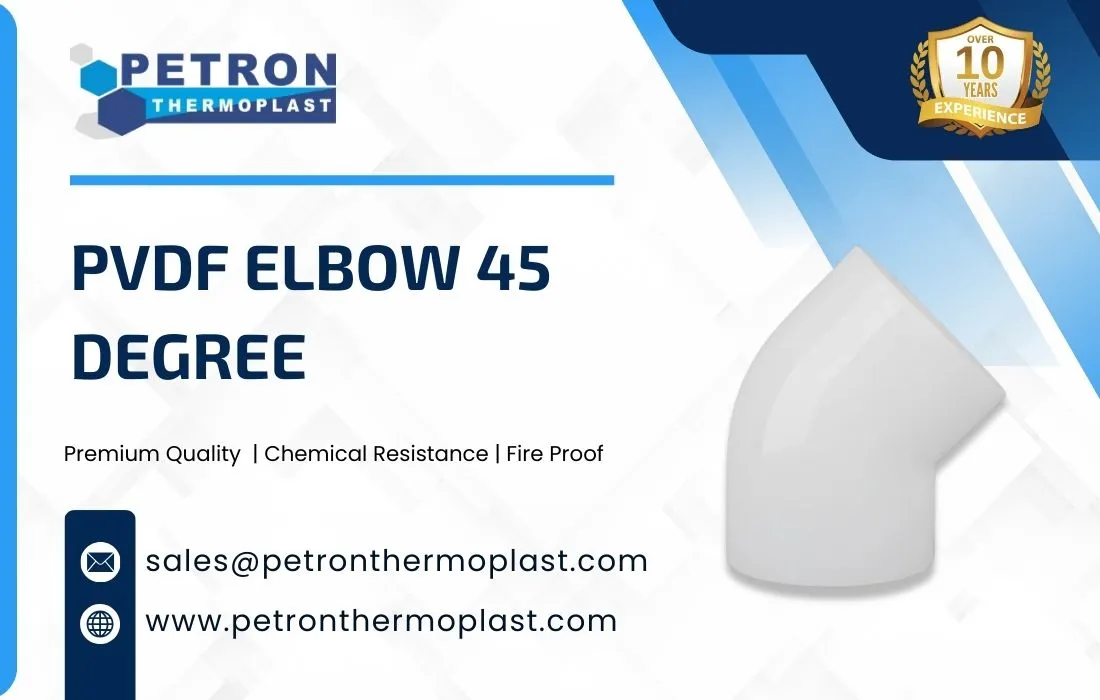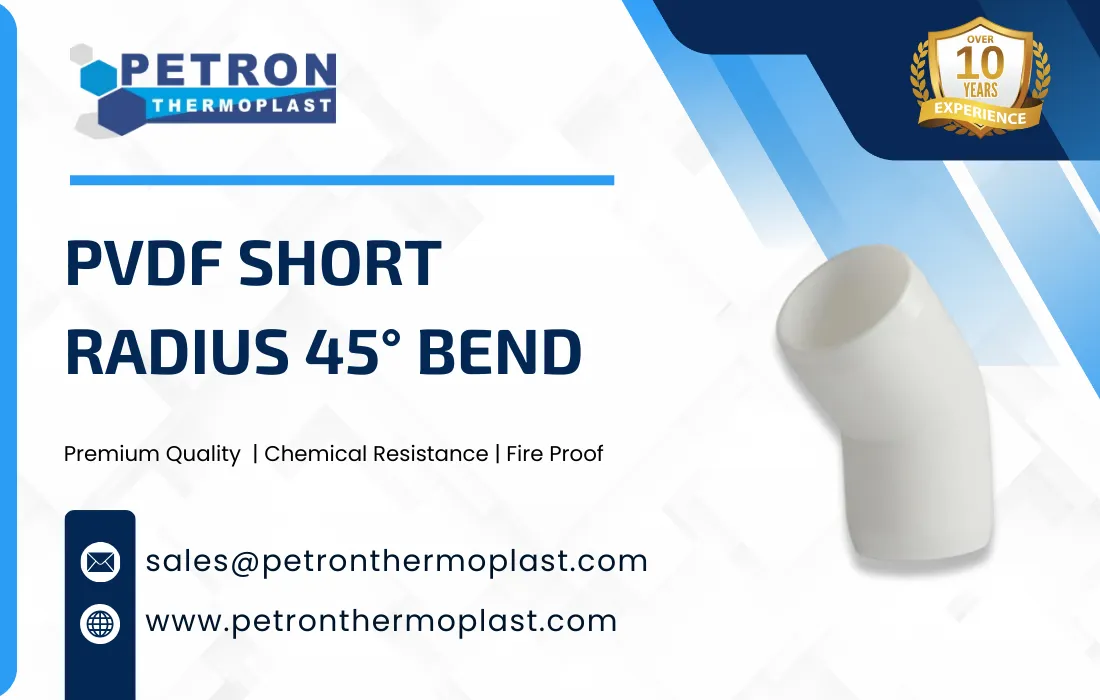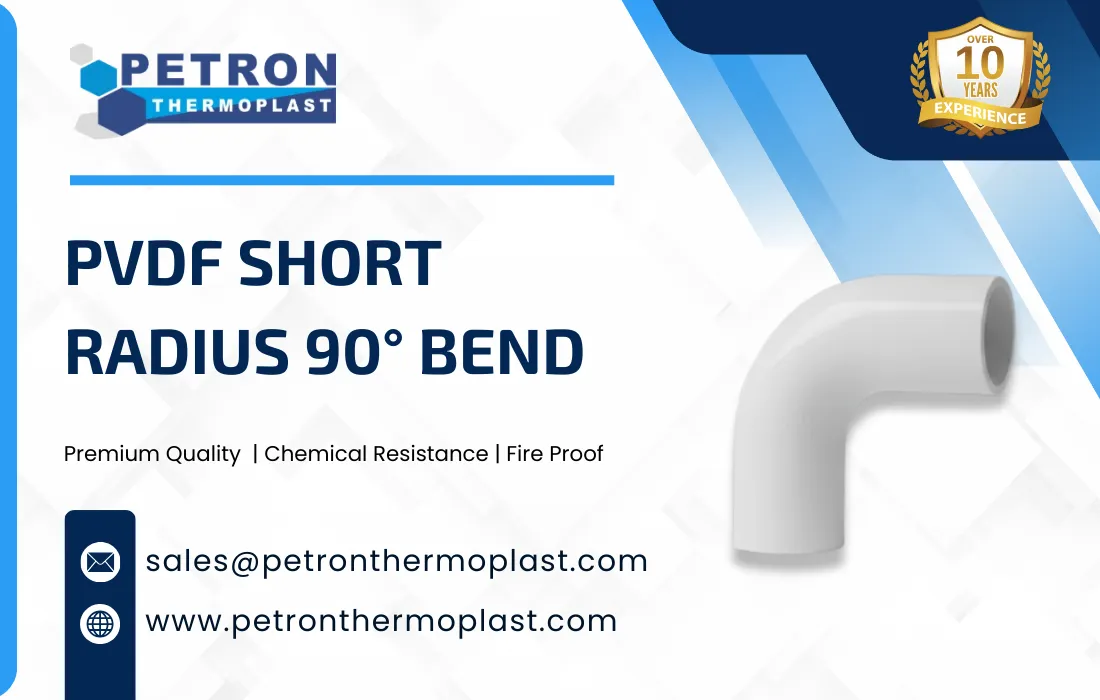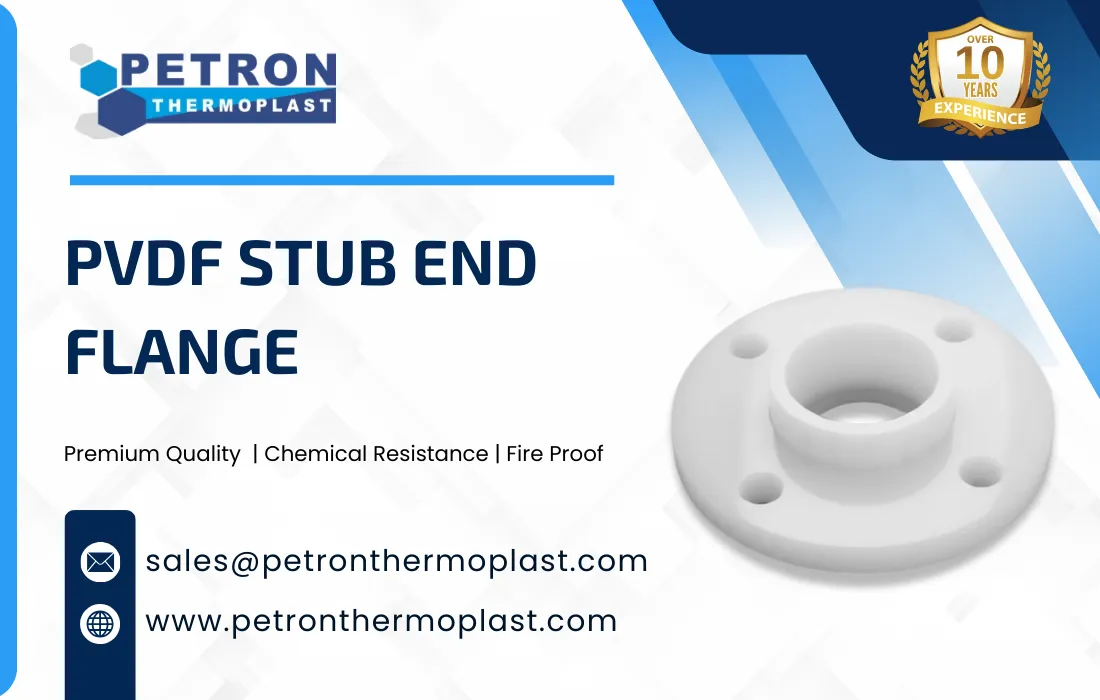
PVDF Short Radius 45° Bend
The PVDF Short Radius 45° Bend is a precision-engineered pipe fitting used to change the direction of flow in piping systems by 45° degrees. This bend is designed to handle the corrosive media and high-purity applications where both chemical resistance and mechanical strength are critical. Its PVDF Short Radius 45° degree bend design allows for compact installations, making it suitable for tight spaces or systems requiring reduced flow path deviation.
A PVDF Short Radius 45° Bend is made from Polyvinylidene Fluoride (PVDF) that changes the direction of flow in a piping system by 45° degrees, with a shorter centerline radius compared to a long radius bend. The centerline radius (R) is approximately equal to the pipe diameter (1D). It creates a sharper turn than a long-radius bend to be used where space is limited.

- Chemical Resistance
- Low Maintenance Requirement
- Low Thermal Conductivity
- Long Service Life
- Easy Installation
- Corrosion Resistance
PVDF Short Radius 45° Bend Details
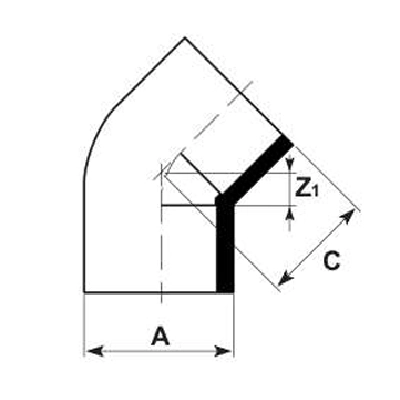
- d (Diameter)
- PN (Pressure Nominal)
- A (Length from end to centerline)
- C (Length from bottom to centerline)
- Z1 (Insertion depth or socket length)
| d (mm) | DN (mm) | B (mm) | P (mm) | L (mm) | c (mm) | No. of Holes |
| 20 | 15 | 12 | 65 | 14 | 28 | 4 |
| 25 | 20 | 12 | 75 | 14 | 34 | 4 |
| 32 | 25 | 16 | 85 | 14 | 42 | 4 |
| 40 | 32 | 16 | 100 | 18 | 51 | 4 |
| 50 | 40 | 16 | 110 | 18 | 62 | 4 |
| 63 | 50 | 16 | 125 | 18 | 78 | 4 |
| 75 | 65 | 18 | 145 | 18 | 110 | 4 |
| 90 | 80 | 18 | 160 | 18 | M16 | 8 |
| 110 | 100 | 20 | 180 | 18 | M16 | 8 |
| Parameter | Specification / Details |
| Product Name | PVDF Short Radius 45° Bend |
| Material | Polyvinylidene Fluoride (PVDF) |
| Type | Short Radius Bend |
| Angle | 45° |
| Bend Radius | Short radius (≈ 1 × pipe diameter) |
| Manufacturing Process | Injection molded / machined |
| Size Range | DN15 to DN300 (½” to 12”) |
| Outer Diameter Range | 20 mm to 160 mm (typical) |
| Connection Type | Butt weld / Socket weld / Fusion weld |
| Pressure Rating | PN10 – PN16 (up to ~10 bar depending on size) |
| Temperature Range | -40°C to +140°C |
| Density | ~1.78 g/cm³ |
| Tensile Strength | > 40 MPa |
| Elongation at Break | > 50% |
| Surface Finish | Smooth internal surface (low friction loss) |
| Color | Natural white / off-white / grey |
| Standards | ASTM D3222, ISO 10931, DIN standards |
| Chemical Resistance | Excellent resistance to acids, bases & solvents |
| UV Resistance | High UV and weather resistance |
| Purity Level | Suitable for high-purity applications |
| Applications | Chemical processing, pharma, water treatment, semiconductor industries |
Material: 100% virgin PVDF (Polyvinylidene Fluoride)
Angle: 45 degrees
Bend Radius: Short radius for compact system design
Corrosion Resistance: Excellent resistance to acids, bases, and most organic solvents
High Purity: Suitable for ultra-pure water and chemical applications
Thermal Resistance: Performs well in high-temperature environments
UV Stability: Resistant to UV radiation and weathering
Smooth Interior Surface: Minimizes pressure loss and prevents build-up of particulates
Weldable & Machinable: Compatible with butt welding and other joining methods
Non-toxic & Food Safe: Suitable for use in pharmaceutical and food-processing industries
| Temperature (°C) | PN16 System (SDR 21) | PN20 System (SDR 17) |
| 20°C | 16 bar | 20 bar |
| 30°C | 14 bar | 17 bar |
| 40°C | 12 bar | 15 bar |
| 50°C | 10 bar | 13 bar |
| 60°C | 8 bar | 11 bar |
| 80°C | 5 – 6 bar | 7 – 8 bar |
| 100°C | 3 – 4 bar | 5 bar |
| 120°C | 1 – 2 bar | 2 – 3 bar |

Custom Product Manufacturing Available
If you are searching for customized product designs that meet your requirements, don’t worry. Petron Thermoplast also offers custom product manufacturing services to meet the unique needs of various industries. Work with our expert engineers to create custom designs suited for your application.
Benefits of Using PVDF Short Radius 45° Bend
1. Space-Saving Design
- Short radius (R ≈ 1D) allows installation in compact areas
- Ideal for skid-mounted systems and tight layouts
2. Excellent Chemical Resistance
- Resistant to strong acids, alkalis, and solvents
- Suitable for highly corrosive environments
3. High Temperature Capability
- Can operate up to approximately 120–140°C (depending on grade)
- Maintains strength at elevated temperatures
4. Strong & Durable
- High mechanical strength
- Good impact resistance
- Long service life
5. Corrosion-Free
- Does not rust or corrode like metal fittings
- Reduces maintenance and replacement costs
6. Smooth Internal Surface
- Reduces friction loss
- Minimizes pressure drop
- Limits scaling and buildup
7. Lightweight
- Easier handling and installation compared to metal bends
- Reduces structural load
8. Leak-Proof Joint Compatibility
- Suitable for butt fusion, socket fusion, and welding
- Provides strong, reliable joints
9. Suitable for High-Purity Applications
- Used in pharmaceutical, semiconductor, and ultra-pure water systems
Types of PVDF Short Radius 45° Bend
1. Based on Connection Type
Butt Fusion 45° Bend
- Joined by heat fusion welding
- Strong, permanent, leak-proof joint
- Used in high-pressure chemical systems
Socket Fusion 45° Bend
- Pipe inserted into the socket and heat-welded
- Common for small-diameter piping
Threaded 45° Bend
- Female or male threaded ends
- Easy to install and remove
- Suitable for low-pressure systems
Flanged 45° Bend
- Flanged ends with bolt connection
- Used in large-diameter pipelines
- Suitable where dismantling is required
2. Based on Pressure Rating
- PN10
- PN16
- PN20
- SDR 21
- SDR 17
(Pressure rating depends on pipe system and temperature.)
3. Based on Radius Design
- Short Radius (R ≈ 1D) – Compact installation
- (For comparison) Long Radius (R ≈ 1.5D) – Lower pressure drop
4. Based on Application Grade
- Industrial Chemical Grade
- High Purity (HP) Grade
- UV-Stabilized Grade
Why Choose Petron Thermoplast?
At Petron Thermoplast, PVDF Short Radius 45° Bends are critical components in piping systems, ensuring smooth flow transitions and efficient use of space. Understanding the dimensions and applications of short radius bends is essential for designing reliable and efficient piping systems. By adhering to standards such as ASME B16.9, engineers can ensure compatibility and performance across various industries.