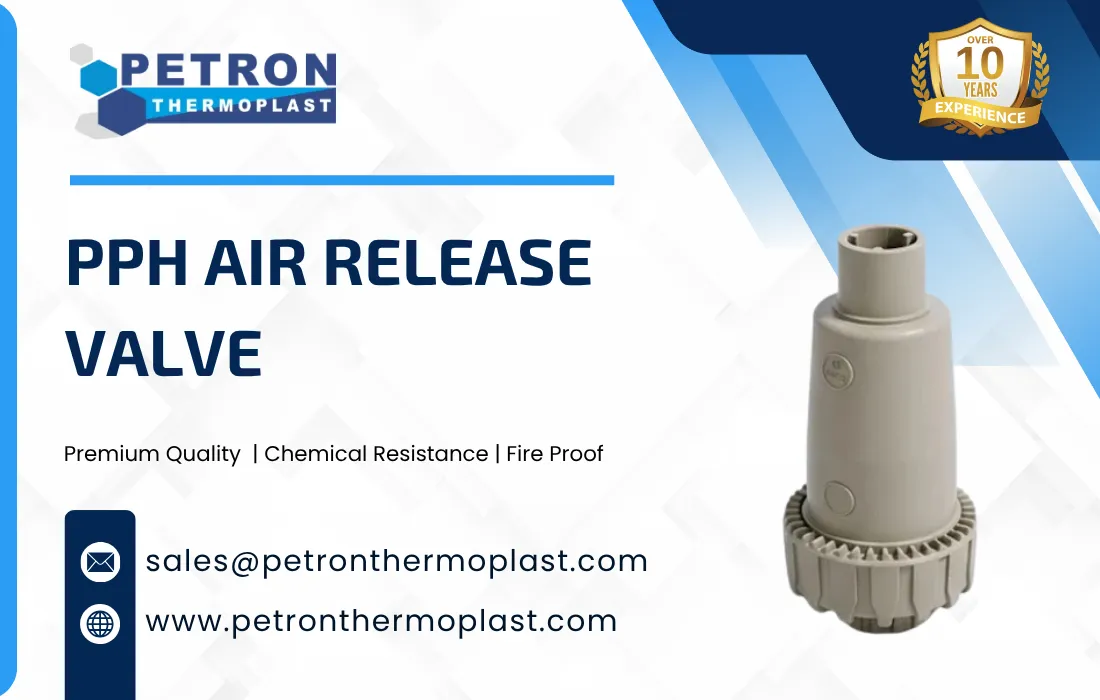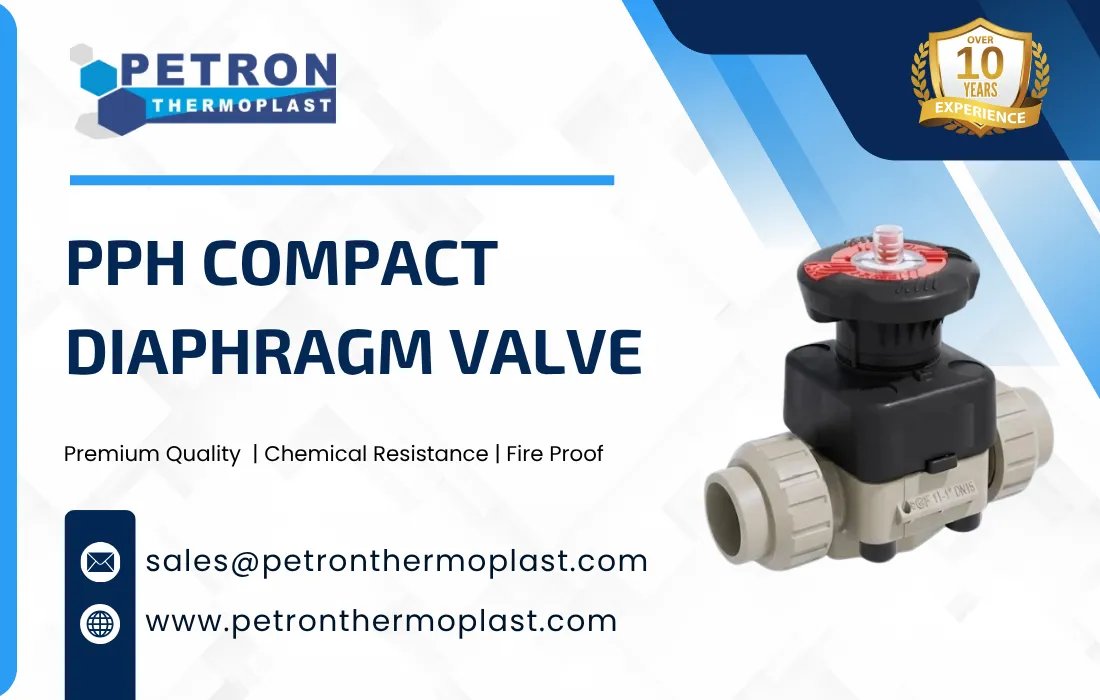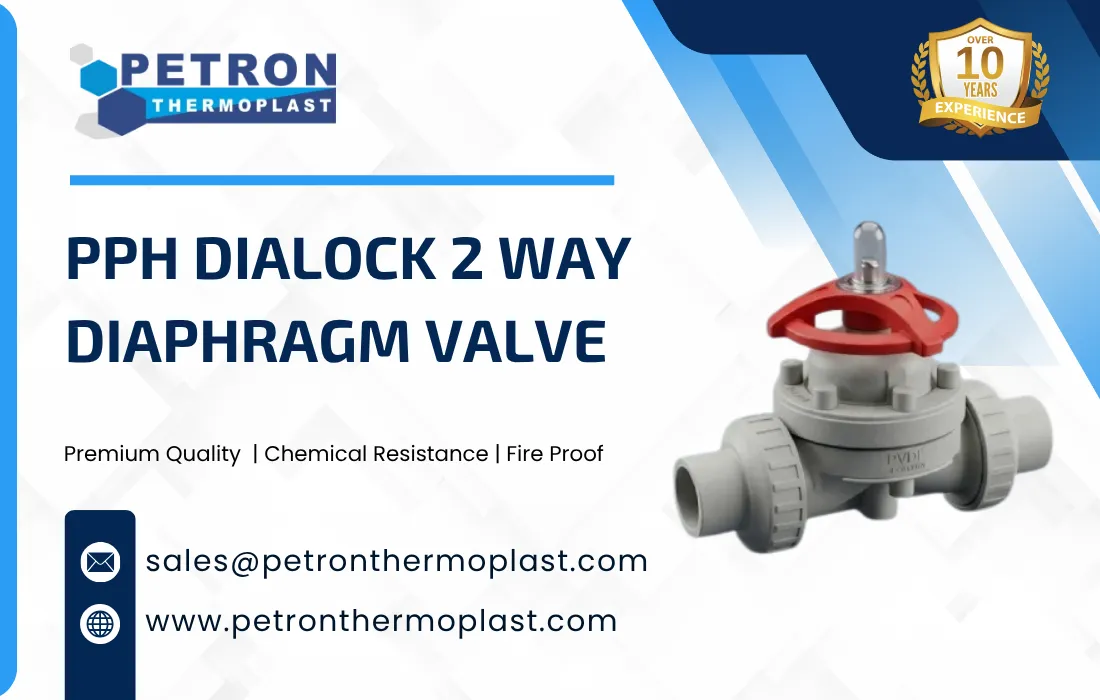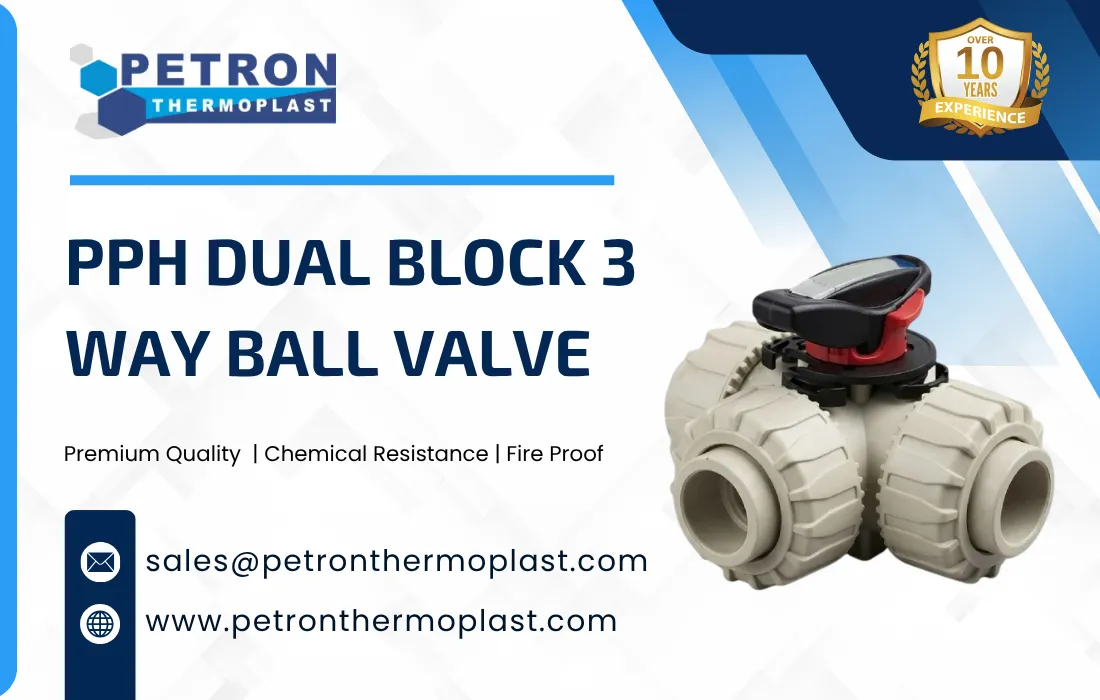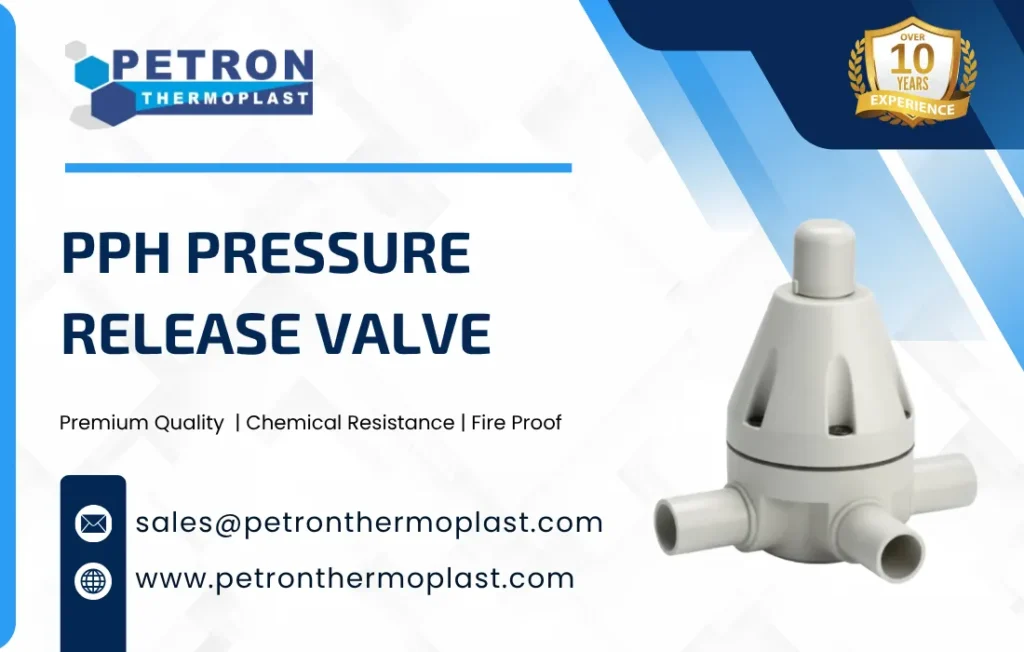
PPH Pressure Release Valve
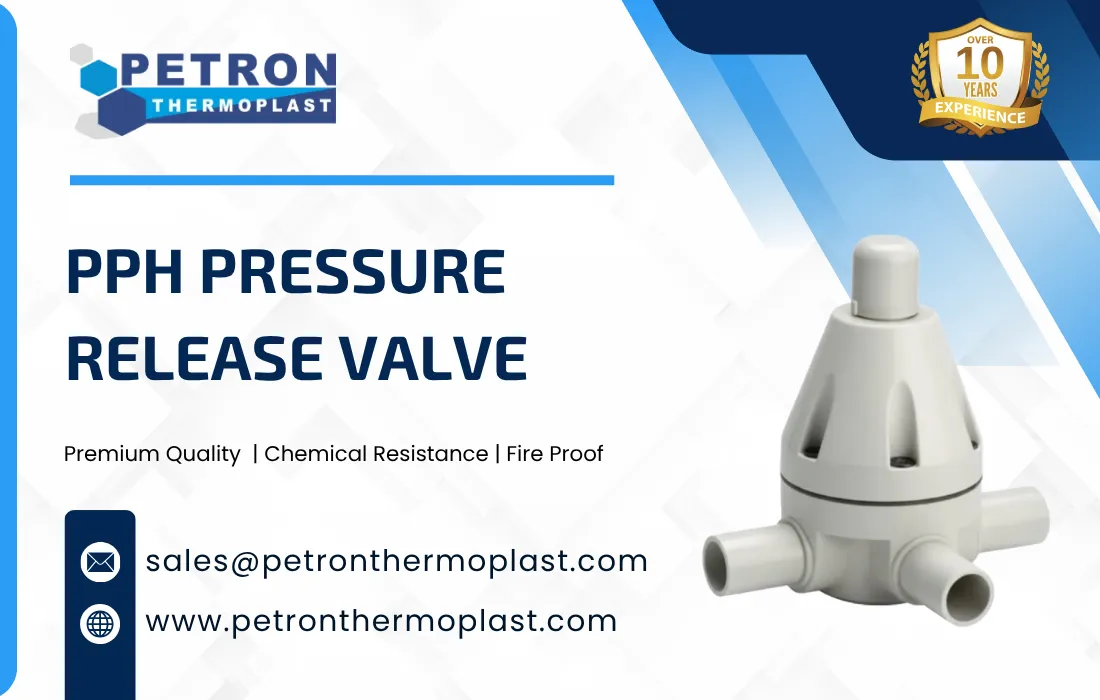
The PPH Pressure Release Valve (also known as a pressure relief valve) is a safety device designed to automatically relieve excess pressure from pipelines, tanks, or equipment to protect systems from overpressure conditions. Constructed using Polypropylene Homopolymer (PPH), this valve is highly resistant to chemical corrosion, making it ideal for aggressive and hazardous fluid systems.This valve is an essential component in chemical processing plants, dosing systems, and industrial fluid networks, offering reliable and accurate pressure control to maintain operational safety and system integrity.
A PPH Pressure Release Valve is a safety device made from Polypropylene Homopolymer (PPH) that is designed to automatically release excess pressure from a piping system or tank when the internal pressure exceeds a preset limit. This helps to protect equipment, pipelines, and personnel from damage or failure due to overpressure conditions.A PPH Pressure Release Valve is a protective valve that prevents overpressure by safely releasing excess fluid or gas from the system.

- Chemical Resistance
- Low Maintenance Requirement
- Low Thermal Conductivity
- Long Service Life
- Easy Installation
- Corrosion Resistance
PPH Pressure Release Valve Details
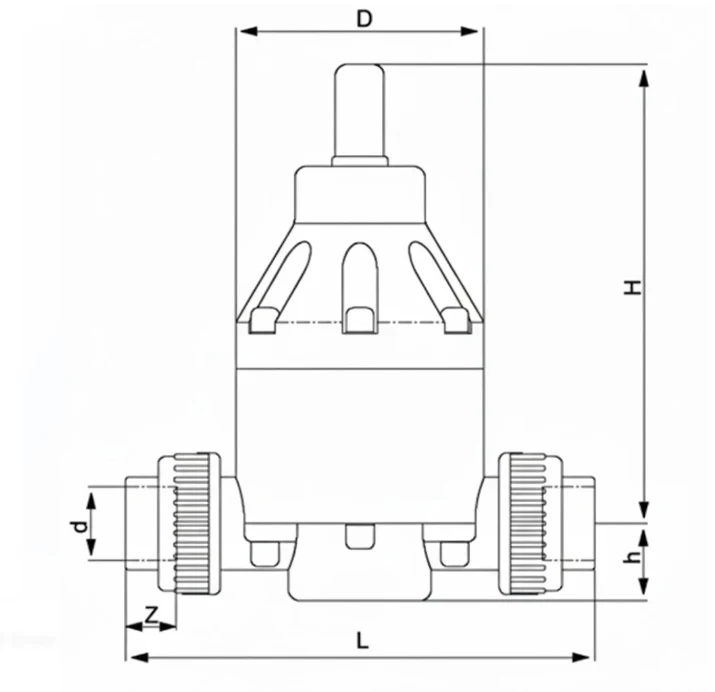
DN: Nominal Diameter (Internal size).
L: Total Face-to-Face Length.
H: Total Height from the bottom of the body to the top of the bonnet/handle.
D: Outer Diameter of the valve body or flange.
d / z / h: Typically refer to socket depth, port diameter, or specific bolt-hole center dimensions.
| DN | L | H | D | d | z | h |
| 15 | 170 | 172 | 82 | 20 | 21 | 27 |
| 20 | 170 | 172 | 82 | 25 | 21 | 27 |
| 25 | 212 | 202 | 107 | 32 | 26 | 35 |
| 32 | 226 | 202 | 107 | 40 | 28.5 | 35 |
| 40 | 292 | 259 | 148 | 50 | 37 | 58 |
| 50 | 305 | 259 | 148 | 63 | 37 | 58 |
| Parameter | Specification |
| Valve Type | Pressure Release (Relief) Valve |
| Operation | Automatic, spring-loaded |
| Material (Body) | Polypropylene Homopolymer (PPH) |
| Seat Material | EPDM / FKM (Viton) / PTFE |
| Spring Material | Stainless Steel (SS316) / Encapsulated |
| Connection Type | Socket Weld / Threaded / Flanged / Butt Weld |
| Size Range | DN15 to DN100 (½” to 4”) |
| Pressure Range (Set Pressure) | 0.5 bar to 10 bar (adjustable) |
| Pressure Rating | PN10 |
| Temperature Range | 0°C to +95°C (approx.) |
| Flow Direction | Uni-directional |
| Mounting Position | Vertical (preferred) / Horizontal |
| Leakage Class | Bubble-tight (Class VI) |
| Actuation Method | Spring-loaded self-actuated |
| Adjustment | Manual set pressure adjustment (optional locking cap) |
| Standards | ISO 4126 / DIN 3440 / ISO 15494 |
| Applications | Chemical plants, water treatment, dosing systems, storage tanks |
| Feature | Description |
| Density | Low (lightweight material) |
| Chemical Resistance | Excellent resistance to acids, alkalis, and corrosive fluids |
| Temperature Resistance | Suitable up to ~95–100°C |
| Mechanical Strength | High stiffness and impact resistance |
| Corrosion Resistance | Non-corrosive (no rust or scaling) |
| UV Resistance | Good (suitable for outdoor use) |
| Thermal Stability | Maintains performance under temperature variation |
| Surface Finish | Smooth, reduces friction and scaling |
| Hygienic Properties | Non-toxic, suitable for clean fluid handling |
- Automatic Pressure Relief – Releases fluid when system pressure exceeds preset limits.
- Chemically Resistant Material – Ideal for aggressive media like acids, alkalis, and corrosive chemicals.
- Non-Corrosive and Durable – PPH body ensures long service life in harsh environments.
- Adjustable Set Pressure – Offers flexibility to match different system requirements.
- Leak-Tight Performance – Precision sealing to avoid unwanted fluid loss.
- Compact Design – Easy to install in limited space.
- Maintenance-Friendly – Simple construction allows easy inspection and servicing.
| Temperature (°C) | Maximum Pressure Rating (Bar) | Pressure Class |
| 20°C | 10 Bar | PN10 |
| 30°C | 9 Bar | PN10 |
| 40°C | 8 Bar | PN10 |
| 50°C | 7 Bar | PN10 |
| 60°C | 6 Bar | PN10 |
| 70°C | 5 Bar | PN10 |
| 80°C | 4 Bar | PN10 |
| 90°C | 3 Bar | PN10 |

Custom Product Manufacturing Available
If you are searching for customized product designs that meet your requirements, don’t worry. Petron Thermoplast also offers custom product manufacturing services to meet the unique needs of various industries. Work with our expert engineers to create custom designs suited for your application.
Benefits of Using PPH Pressure Release Valve
Flow Diversion Capability
The L-port design allows fluid to be directed between two different pipelines from a single inlet, making it ideal for switching or diverting flow.
Corrosion Resistance
Made from PPH material, the valve resists chemicals, acids, and alkalis, making it suitable for aggressive industrial environments.
Compact Piping System
One 3-way valve can replace multiple 2-way valves, reducing piping complexity and saving installation space.
Leak-Proof Sealing
Ball valves provide tight shut-off with high-quality seats and seals, ensuring minimal leakage and reliable operation.
Low Maintenance
Simple internal design with fewer moving parts results in long service life and minimal maintenance requirements.
Easy Operation
Quarter-turn (90°) operation allows quick opening or closing, making flow control fast and efficient.
Lightweight & Durable
PPH material makes the valve lightweight yet strong, allowing easy installation and long-term durability.
Suitable for Automation
Can be fitted with pneumatic or electric actuators for automated industrial systems.
Prevents Cross-Contamination
The L-port directs flow to only one outlet at a time, preventing mixing between lines.
Types of PPH Pressure Release Valve
Socket End Type
This type has socket connections that allow it to be welded or glued to PPH pipes, making it common in chemical and water treatment systems.
Threaded End Type
Equipped with threaded connections (BSP or NPT), this type is easy to install or remove and is often used in smaller pipelines where maintenance accessibility is important.
Flanged End Type
Flanged connections are used for large-diameter or high-pressure pipelines, providing strong and secure installation in industrial plants.
True Union Type
Features union nuts that allow the valve to be removed from the pipeline without cutting the pipes, which makes maintenance and cleaning very convenient.
Manual Operated Type
Operated with a hand lever or handle, offering quick 90° rotation for flow switching between two outlets.
Actuated Type (Pneumatic or Electric)
Designed for automation, these valves are fitted with pneumatic or electric actuators to control flow remotely or automatically in industrial processes.
Horizontal L-Port Design
Ports are arranged horizontally for standard pipeline layouts.
Vertical L-Port Design
One port is positioned vertically, which is useful for compact piping systems or tight installations.
Applications of PPH Pressure Release Valve
Process Industry
High Purity Applications
Electronic Industry
Electrical Industry
Semi-conductors Industry
Pharmaceutical Industry
Solar power panels
Sugar Industry
Paper & Pulp Industry
Nuclear Power Industry
Automotive Industry
DI water plants
Why Choose Petron Thermoplast?
Petron Thermoplast has selected the right provider of PPH 3 Way Ball Valve L Port Type to require balancing material quality, actuation needs, and system compatibility. For high-performance applications involving steam, chemicals, or automated control. Petron Thermoplast is a certified valves dealer to deliver the optimal reliability. While the entry level of options exists for non-critical uses, investing in a well-engineered valve reduces downtime and maintenance costs over time.
Long Service Life
Resistant to corrosion, UV degradation, and microbial growth, ensuring decades of reliable performance.
Cost-Effective
Lower maintenance, reduced downtime, and fewer replacements lead to significant lifecycle savings.
Environmentally Friendly
Non-toxic, recyclable, and does not leach harmful substances into the environment.
Hygienic Design
Smooth, non-porous surface prevents contamination—ideal for cleanroom and sanitary applications.
Design Flexibility
Available in various angles (90°, 45°), sizes, and connection types (socket, threaded, flanged).