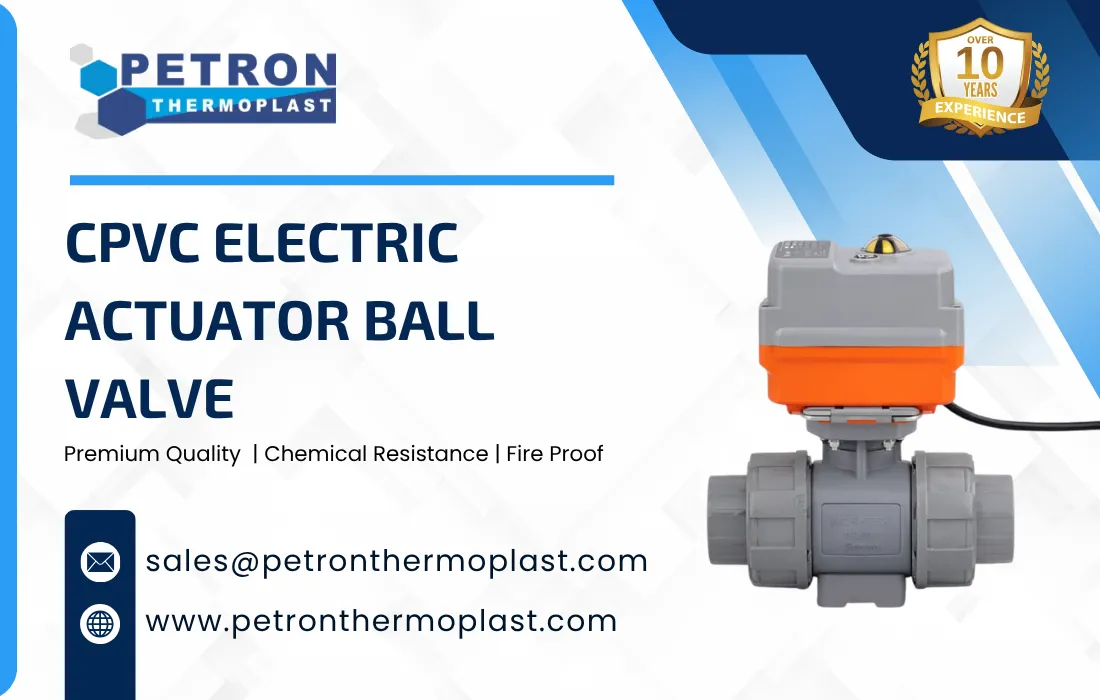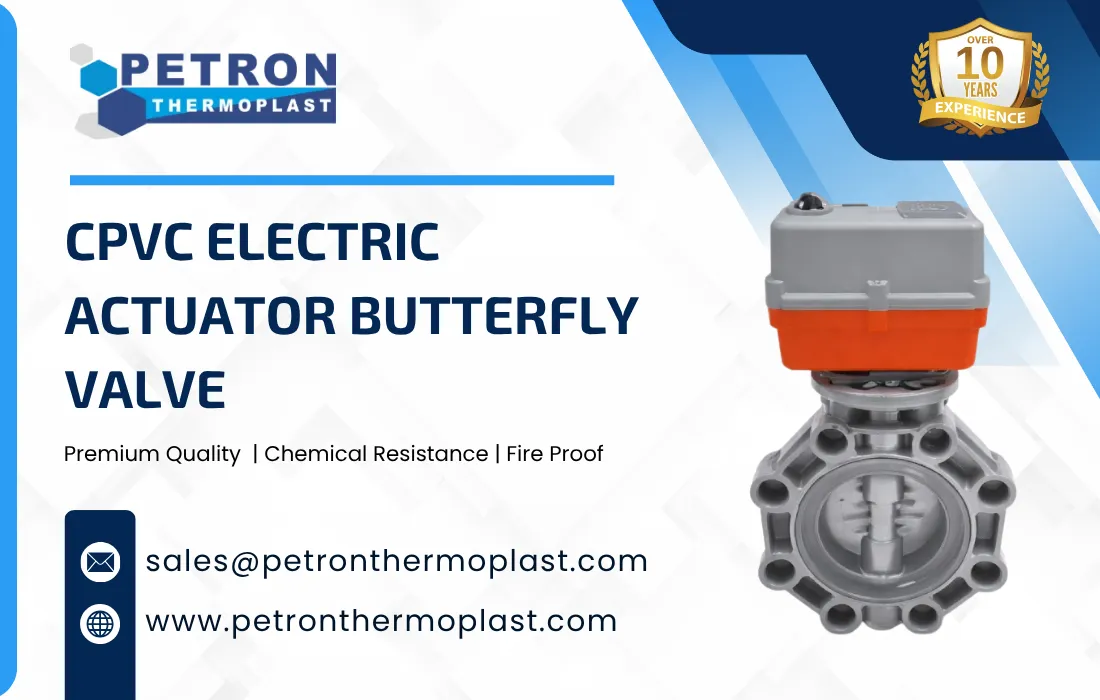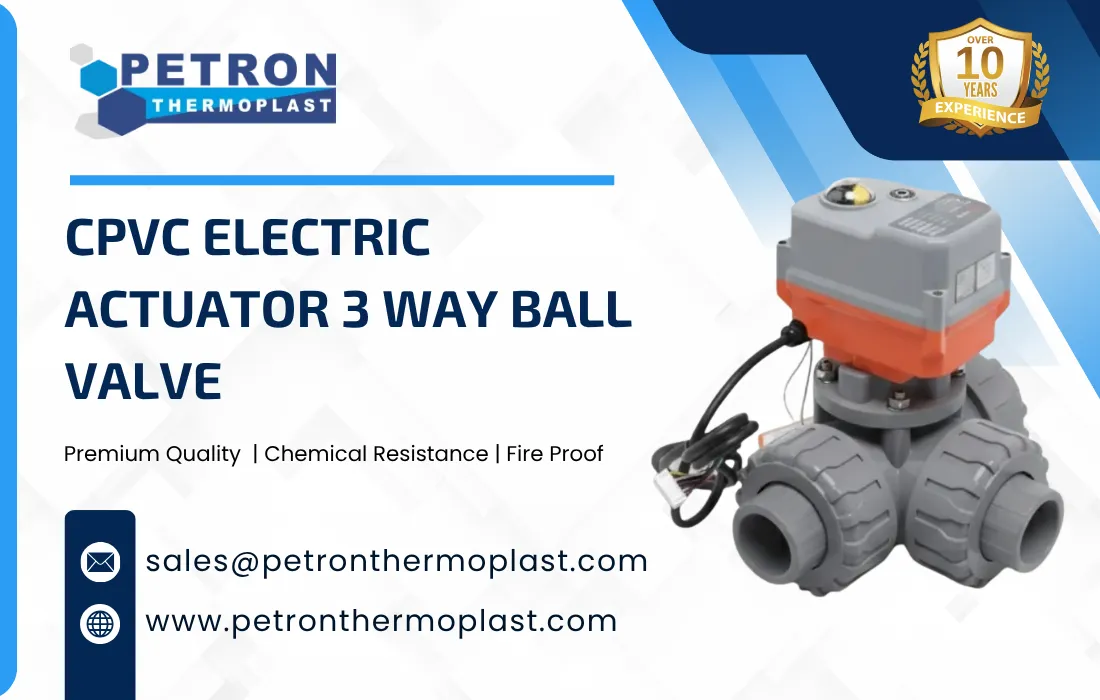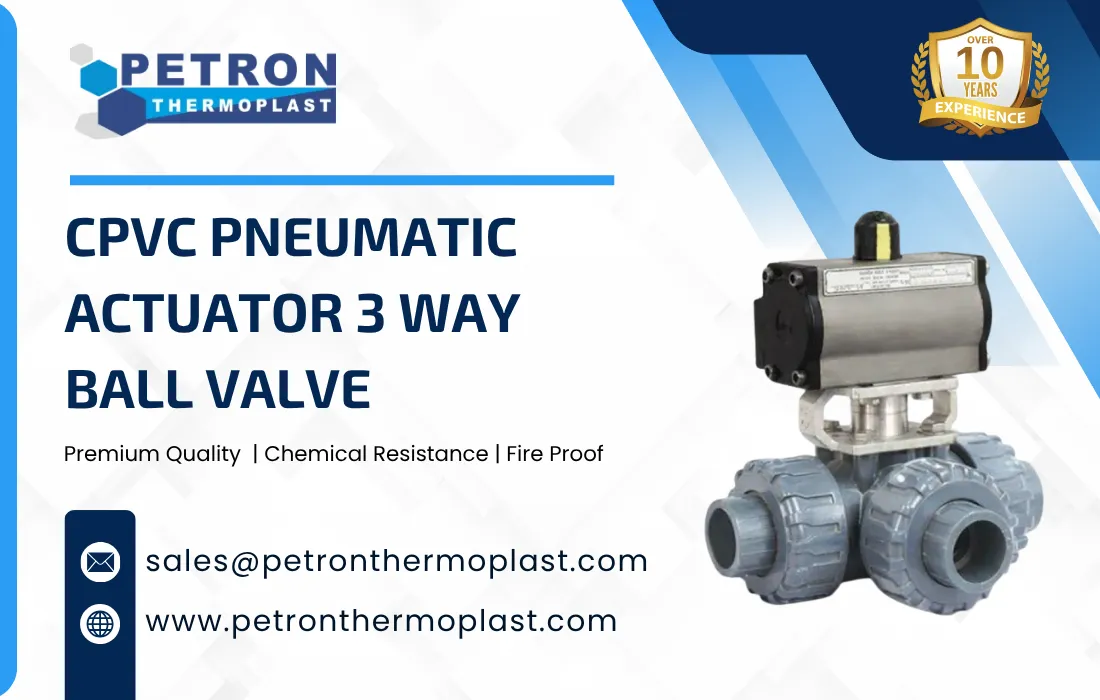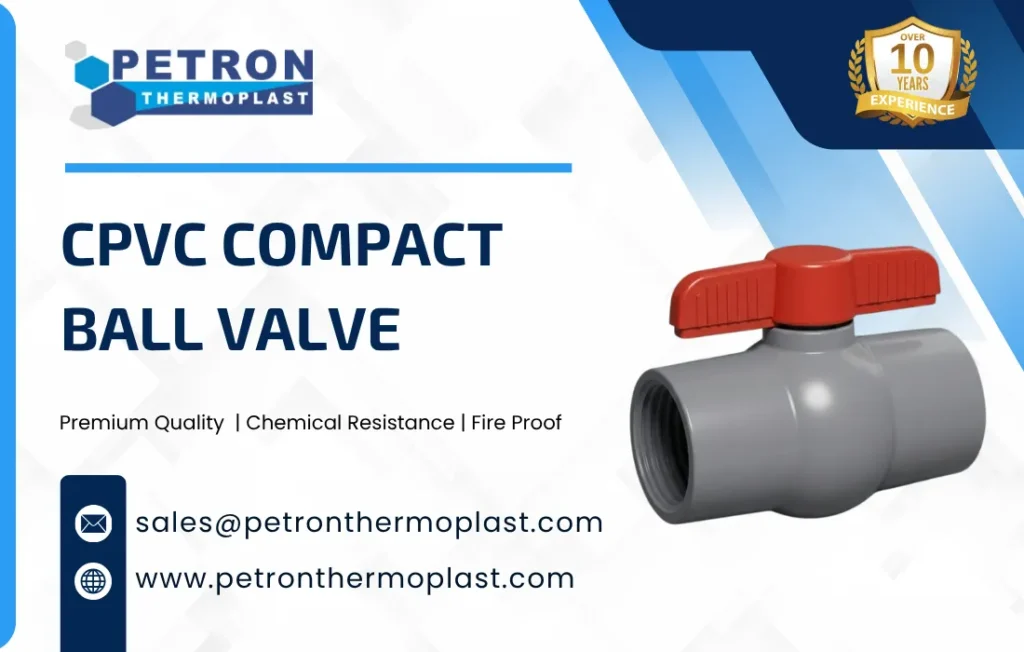
CPVC Compact Ball Valve
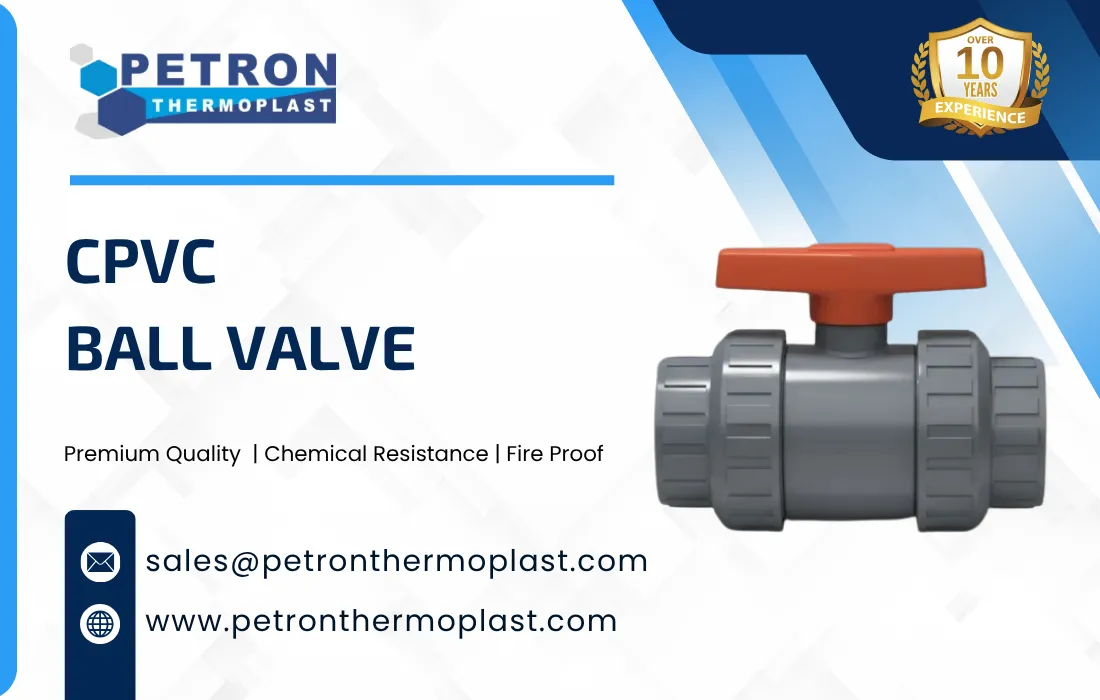
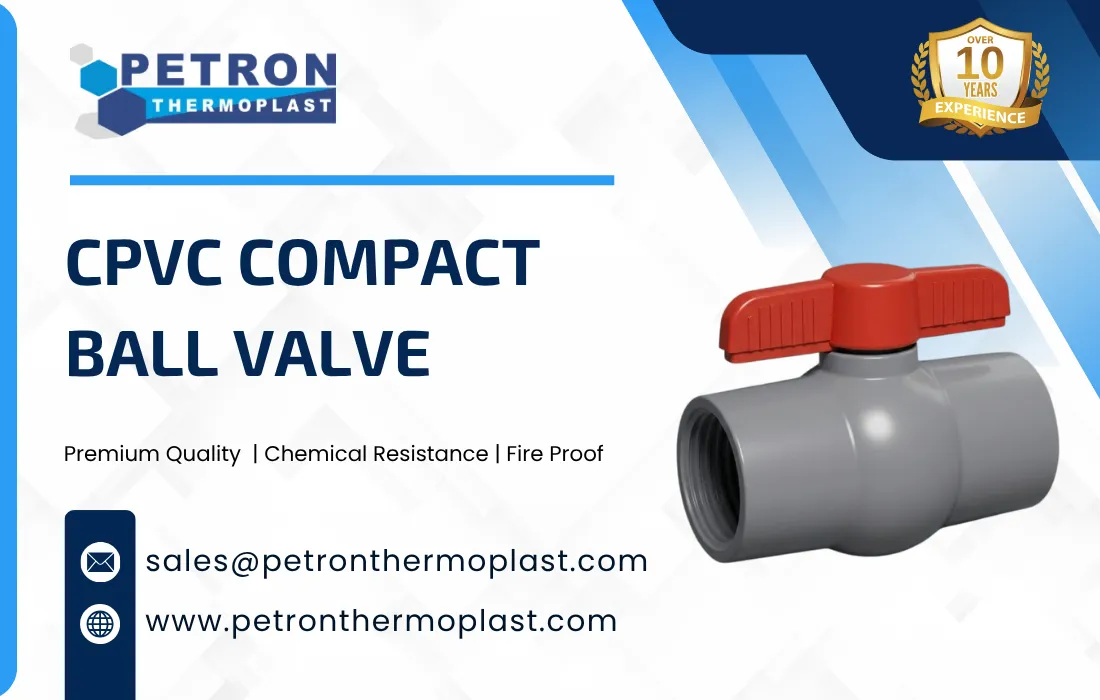
A CPVC Compact Ball Valve is a quarter-turn shut-off valve made from Chlorinated Polyvinyl Chloride (CPVC) material, designed with a compact body structure to control or stop the flow of liquids in piping systems. It uses a rotating ball with a bore (hole) inside. When the handle is turned 90 degrees, the valve either allows fluid to pass or completely stops the flow.
The CPVC Compact Ball Valve is a lightweight and space-saving flow control valve designed for on/off service in piping systems handling corrosive or high-temperature fluids. This CPVC Compact Ball Valve offers excellent chemical resistance and thermal stability. It features a full-port design for minimal flow restriction and is ideal for compact installations where space is limited. The simple quarter-turn operation ensures quick and reliable shutoff in industrial, chemical, and water treatment applications.

- Chemical Resistance
- Low Maintenance Requirement
- Low Thermal Conductivity
- Long Service Life
- Easy Installation
- Corrosion Resistance
CPVC Compact Ball Valve Details
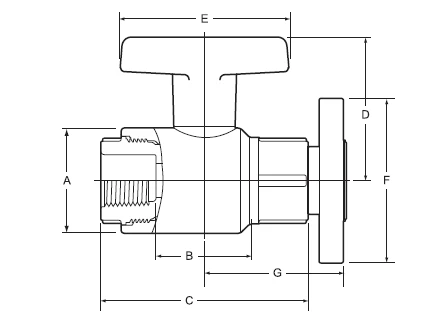
A: Body Diameter (The outer width of the valve body).
B: Internal Length (The distance between internal socket stops).
C: Body Length (End-to-end dimension of the main valve body).
D: Center-to-Top Height (From the center of the bore to the handle top).
E: Handle Length (The total width/length of the operating lever).
F: Flange/Face Diameter (The diameter of the end connection face).
G: Center-to-Face Distance (From the center of the valve to the end of the connection).
| Nominal Size | A | B1 (Socket) | B1 (Threaded) | B | C | E | F | G |
| 1/2″ | 1-11/16 | 1-5/8 | 1-7/8 | 3-3/8 | 2-5/16 | 2-3/4 | 3-1/2 | 2-17/32 |
| 3/4″ | 2-1/8 | 1-15/16 | 2-7/16 | 4-1/16 | 2-11/16 | 3-1/4 | 3-7/8 | 2-27/32 |
| 1″ | 2-7/16 | 2-1/16 | 2-3/8 | 4-7/16 | 2-7/8 | 3-3/4 | 4-1/4 | 3-1/16 |
| 1-1/4″ | 2-13/16 | 2-3/8 | 3 | 4-15/16 | 3-5/16 | 4-1/8 | 4-5/8 | 3-13/32 |
| 1-1/2″ | 3-1/4 | 2-13/16 | 3-1/2 | 5-5/8 | 3-11/16 | 4-1/2 | 5 | 4 |
| 2″ | 4-1/16 | 3-3/8 | 4-7/16 | 6-1/2 | 4-3/8 | 5-1/4 | 5-7/8 | 4-13/32 |
| 3″ | 5-5/16 | 4-9/16 | 5-1/2 | 8-5/16 | 5-1/2 | 7-21/32 | 7-1/2 | 5-7/16 |
| 4″ | 7-3/8 | 6-3/16 | 7-3/16 | 10-5/32 | 6-5/8 | 10-27/32 | 9-1/16 | 6-7/8 |
| 6″ | 10-3/16 | 8 | 10-3/4 | 14-1/8 | 8-11/16 | 14-11/16 | 8-21/32 | — |
| Parameter | Specification |
| Material | CPVC (Chlorinated Polyvinyl Chloride) |
| Valve Type | Compact Ball Valve (2-way shut-off) |
| Size Range | ½” to 4” (15 mm to 100 mm) |
| End Connection | Socket / Threaded (BSP / NPT) |
| Pressure Rating | Up to 10–16 bar (depending on size & temperature) |
| Temperature Range | 0°C to 90°C |
| Operation | Manual (lever handle) |
| Ball Type | Floating ball design |
| Sealing | PTFE seats & EPDM / FKM O-rings |
| Flow Type | Full bore / Reduced bore |
| Standards | ASTM D1784, ASTM F1970 |
| Installation | Easy installation with solvent cement or threading |
| Maintenance | Low maintenance, serviceable design |
| Density | 1.50 – 1.60 g/cm³ |
| Tensile Strength | 50 – 70 MPa |
| Impact Strength | High (compared to PVC) |
| Hardness | Rockwell R 110 – 120 |
| Thermal Conductivity | ~0.14 W/m·K |
| Coefficient of Thermal Expansion | 6.7 × 10⁻⁵ /°C |
| Vicat Softening Temperature | ~110°C |
| Water Absorption | < 0.1% |
| Chemical Resistance | Excellent against acids, alkalis, salts |
| Corrosion Resistance | Non-corrosive |
1. CPVC Construction
Manufactured from Chlorinated Polyvinyl Chloride (CPVC), offering excellent resistance to corrosion, chemicals, and high temperatures.
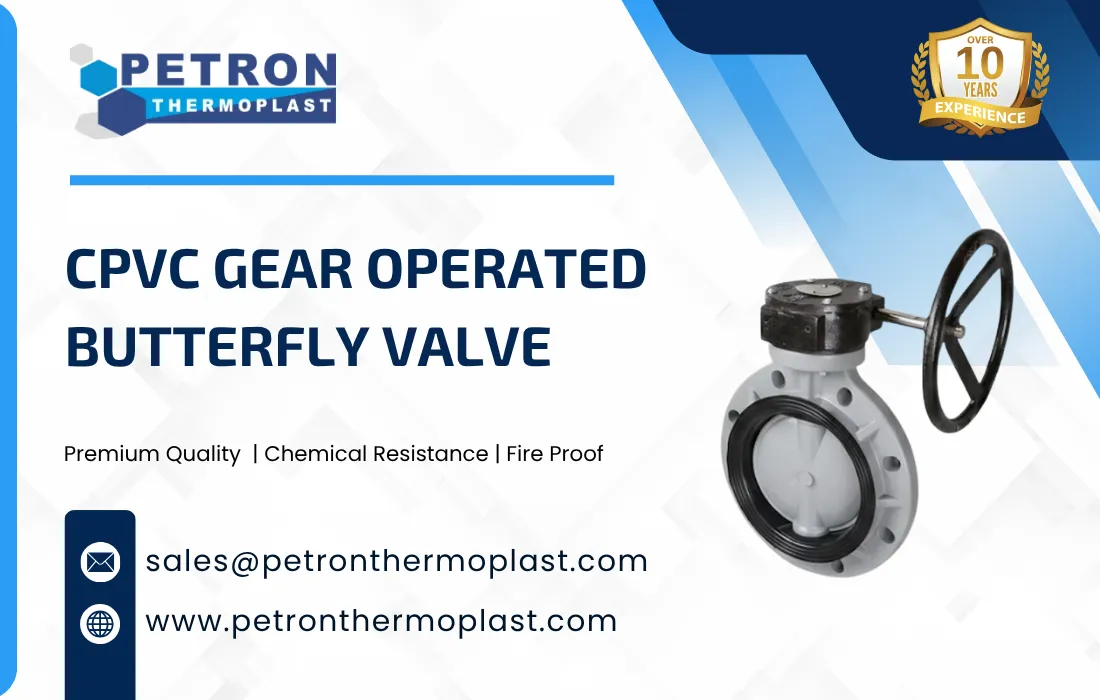
2. Gear Operated Mechanism
Equipped with a gearbox and handwheel for smooth, controlled, and low-torque operation—especially suitable for larger valve sizes.
3. Quarter-Turn Operation
Operates with a 90° rotation for quick opening and closing of fluid flow.
4. High Temperature Resistance
Can withstand higher temperatures compared to standard PVC valves, making it ideal for hot water and process applications.
5. Leak-Proof Sealing
Designed with reliable sealing components (such as EPDM or PTFE seats) to ensure tight shut-off and prevent leakage.
6. Lightweight Design
Easier to handle and install compared to metal valves, reducing labor and installation costs.
7. Low Maintenance
Non-metallic body prevents rust and scaling, ensuring longer service life with minimal upkeep.
8. Wide Size Range
Available in multiple sizes to meet various industrial and commercial piping requirements.
9. Flanged or Wafer Type Options
Can be supplied in different connection types depending on installation needs.
| Valve Size | Nominal Pressure (PN) | Working Pressure @ 23°C | Working Pressure @ 60°C | Working Pressure @ 90°C |
| ½” (15 mm) | PN16 | 16 Bar | 10–12 Bar | 6–8 Bar |
| ¾” (20 mm) | PN16 | 16 Bar | 10–12 Bar | 6–8 Bar |
| 1″ (25 mm) | PN16 | 16 Bar | 10–12 Bar | 6–8 Bar |
| 1½” (40 mm) | PN10 / PN16 | 10–16 Bar | 8–10 Bar | 5–6 Bar |
| 2″ (50 mm) | PN10 / PN16 | 10–16 Bar | 8–10 Bar | 5–6 Bar |
| 3″ (80 mm) | PN10 | 10 Bar | 6–8 Bar | 4–5 Bar |
| 4″ (100 mm) | PN10 | 10 Bar | 6–8 Bar | 4–5 Bar |

Custom Product Manufacturing Available
If you are searching for customized product designs that meet your requirements, don’t worry. Petron Thermoplast also offers custom product manufacturing services to meet the unique needs of various industries. Work with our expert engineers to create custom designs suited for your application.
Benefits of Using CPVC Compact Ball Valve
Space-Saving Design
Compact body structure makes it ideal for installations where space is limited.
Excellent Corrosion Resistance
Made from CPVC, it resists chemicals, acids, alkalis, and salt solutions.
High Temperature Resistance
Suitable for hot and cold fluids up to approximately 90°C.
Lightweight Construction
Much lighter than metal valves, making handling and installation easier.
Quick Quarter-Turn Operation
90° handle movement allows fast and easy ON/OFF control.
Leak-Proof Sealing
Tight shut-off with EPDM or PTFE seals ensures minimal leakage.
Low Maintenance
Non-metallic body prevents rusting, scaling, and corrosion buildup.
Smooth Flow Path
Full bore design reduces pressure drop and ensures efficient flow.
Long Service Life
Durable material ensures extended performance in industrial applications.
Cost-Effective Solution
Lower installation and maintenance costs compared to metal ball valves.
Types of CPVC Compact Ball Valve
1️.Single Piece (One-Piece) Compact Ball Valve
- One-piece body construction
- Lightweight and economical
- Suitable for low to medium pressure systems
- Common in water and chemical lines
2. Two-Piece Compact Ball Valve
- Body made of two assembled parts
- Better strength and sealing performance
- Suitable for medium pressure applications
3. Threaded CPVC Compact Ball Valve
- BSP or NPT threaded ends
- Easy installation and removal
- Used in small diameter pipelines
4️. Socket (Solvent Weld) Compact Ball Valve
Hydraulic gear operated butterfly valves utilize hydraulic fluid to control the valve’s movement. These valves are highly durable and are used in high-pressure applications, including oil and gas industries.
5️. Full Port (Full Bore) Compact Ball Valve
- Full internal diameter for unrestricted flow
- Low pressure drop
- Suitable for high-flow applications
6️.Reduced Port Compact Ball Valve
- Smaller internal bore
- Cost-effective and compact
- Used where full flow is not required
Why Choose Petron Thermoplast?
Petron Thermoplast is a trusted manufacturer and supplier of high-quality CPVC Compact Ball Valve engineered to deliver reliable flow control in demanding industrial environments. Our CPVC Compact Ball Valve is designed to meet international standards while offering long-term performance and cost efficiency.
1. Premium-Grade CPVC Material
We use high-quality, corrosion-resistant CPVC that ensures excellent resistance to chemicals, acids, alkalis, and saline media—making our gasket ideal for chemical, Oil gas treatment, and industrial process applications.
2. Robust & Leak-Proof Design
Petron Thermoplast CPVC Compact Ball Valve features precision-engineered discs, high-performance elastomer seals, and rigid valve bodies, ensuring bubble-tight shut-off and consistent operation under pressure.