CPVC Electric Actuator 3 Way Ball Valve
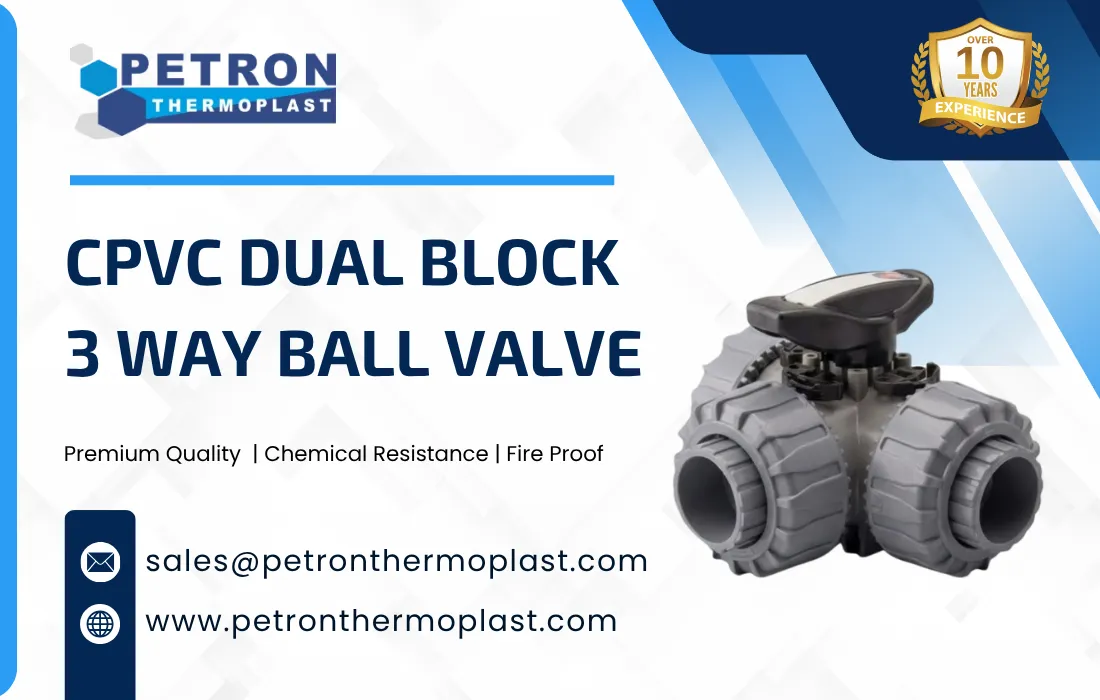
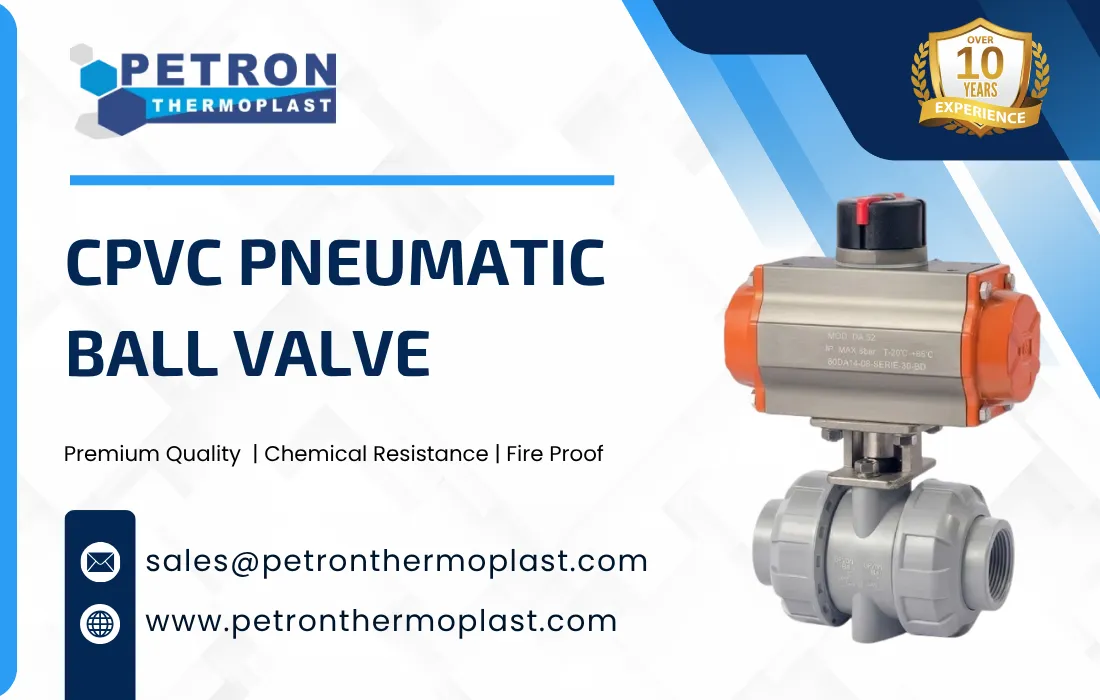
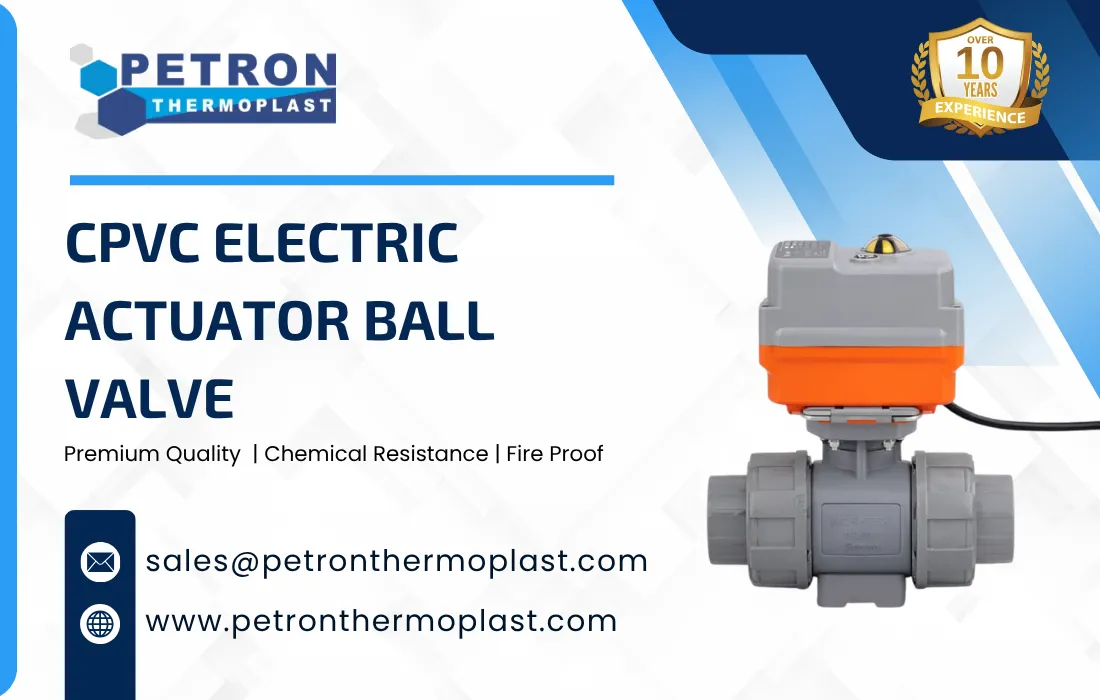
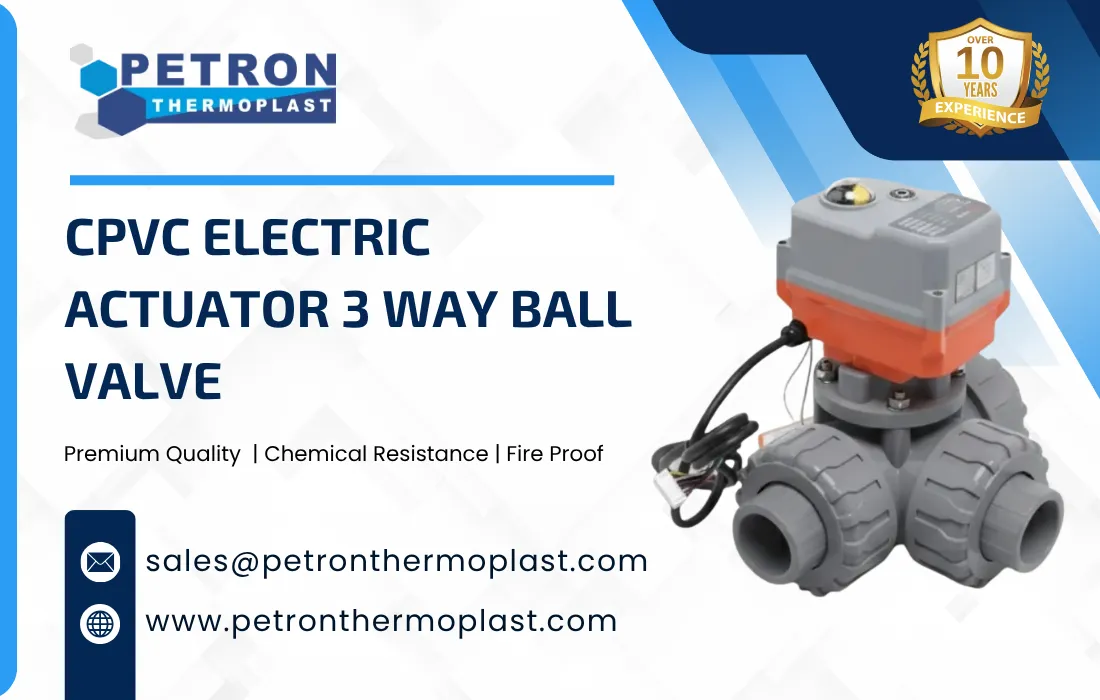
A CPVC Electric Actuator 3 Way Ball Valve is a type of automated valve made from Chlorinated Polyvinyl Chloride (CPVC) that uses an electric actuator to control the flow of fluids through three ports. It allows the fluid to be diverted, mixed, or distributed between different pipelines automatically without manual operation. The CPVC Electric Actuator 3 Way Ball Valve contains a ball with three openings (ports) inside the valve body. When the electric actuator rotates the ball, it changes the direction of the fluid flow between the ports. These valves are commonly used in water treatment, chemical processing, irrigation systems, and industrial fluid control applications.
A CPVC Electric Actuator 3 Way Ball Valve is a joint system for solvent welding, for welding (PP-H only), and for threading to the patented SEAT STOP® ball seat carrier system that lets you micro-adjust ball seats and minimise axial force effects. They easily radial disassembly allowing quick replacement of O-rings and ball seats without any need for tools. Radial dismounting valve body (True Union) made for PVC-U, PVC-C and PP-H injection moulding, equipped with built-in bores for actuation. The valve option of disassembling downstream pipes with the valve in the closed position and the high surface finish stem with double O-Ring and double connection key to the ball, equipped with a visual ball position indicator for correct handle installation.

- Chemical Resistance
- Low Maintenance Requirement
- Low Thermal Conductivity
- Long Service Life
- Easy Installation
- Corrosion Resistance
CPVC Electric Actuator 3 Way Ball Valve Details
*Technical Drawing
*Technical Data
| Parameter / Property | Details / Value |
| Valve Type | 3-Way Ball Valve (L-Port / T-Port) |
| Actuation | Electric (Motorized Actuator) |
| Body Material | CPVC (Chlorinated Polyvinyl Chloride) |
| Ball Material | CPVC / PVC / PTFE-coated |
| Seat & Seal Material | PTFE (Teflon) / EPDM / FKM (Viton) |
| Size Range | ½” to 3” (DN15 to DN80) |
| Pressure Rating | PN8 / PN10 |
| Temperature Range | 0°C to 90°C |
| End Connection | Socket / Threaded / Flanged |
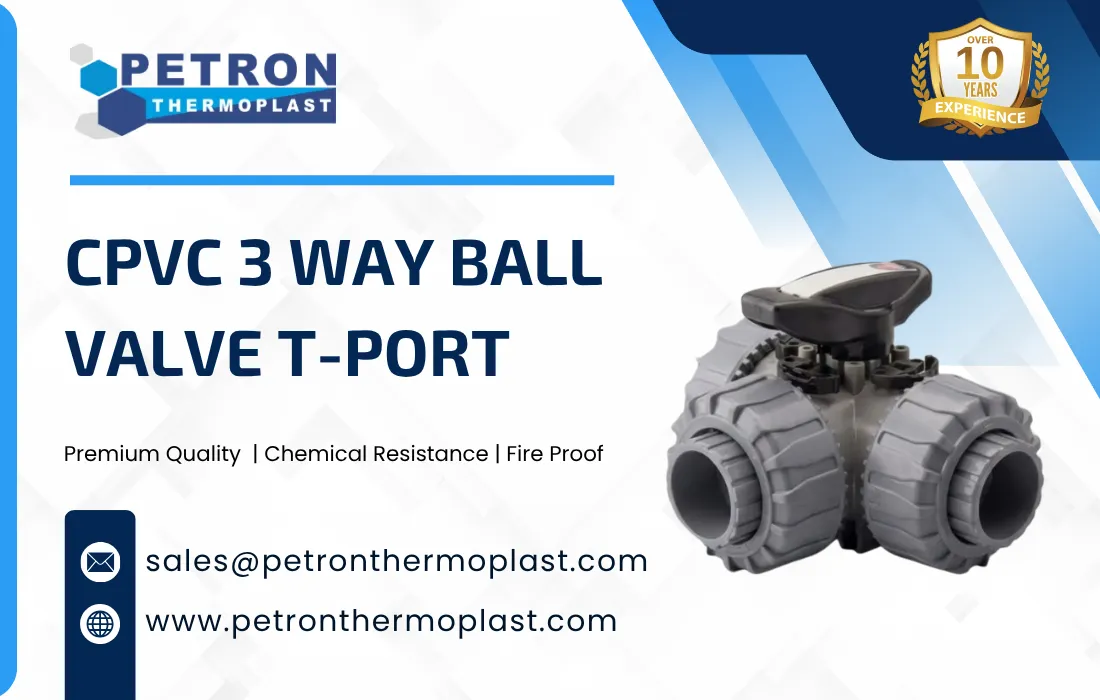
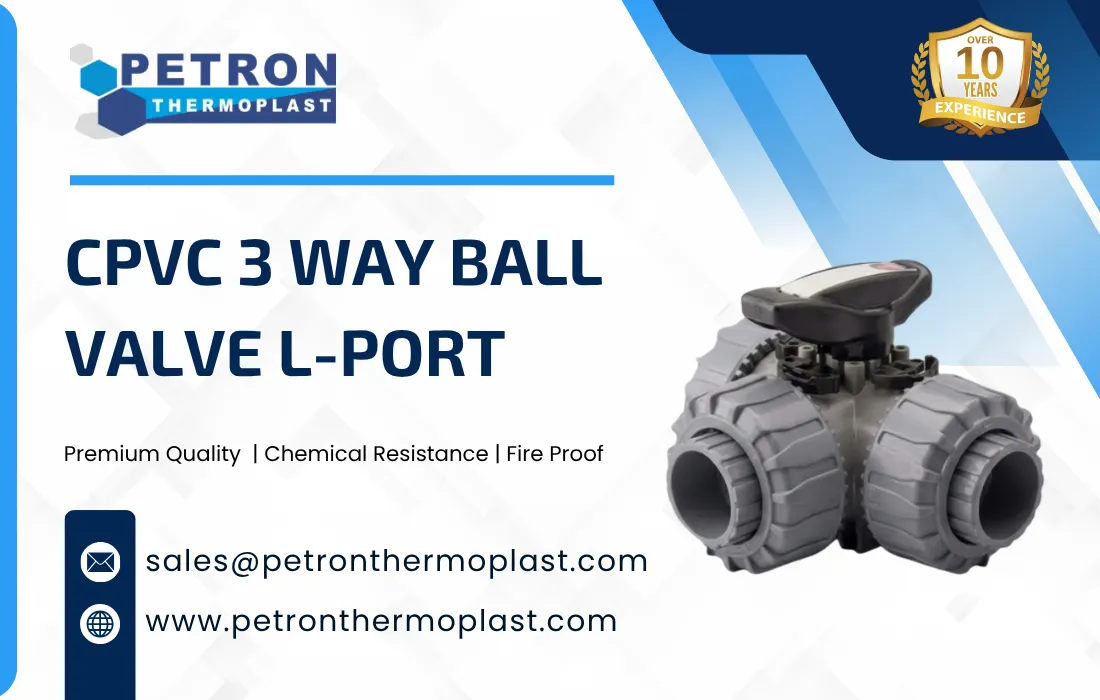
| Port Design | L-Port (diverting) / T-Port (mixing & distribution) |
| Operation / Time | Quarter-turn (90° rotation) / 5–20 seconds |
| Voltage Supply | 24V DC / 110V AC / 230V AC / 415V AC |
| Control Type | On/Off or Modulating (4–20 mA / 0–10V) |
| Mounting Standard | ISO 5211 |
| Leakage | Bubble-tight shutoff |
| Density | 1.45 – 1.58 g/cm³ |
| Tensile / Flexural Strength | 50 – 70 MPa / 80 – 100 MPa |
| Thermal Conductivity | ~0.14 W/m·K |
| Coeff. of Thermal Expansion | 6–7 × 10⁻⁵ /°C |
| Chemical Resistance | Excellent (acids, alkalis, salts) |
| Flammability | Self-extinguishing |
| UV Resistance | Moderate (UV protection recommended for outdoors) |
- Automatic Operation
Equipped with an electric actuator that allows automatic opening and closing of the valve without manual effort. - Three-Way Flow Control
Designed with three ports to control, divert, or mix the flow of fluids in a pipeline system. - Corrosion Resistance
Made from CPVC material, which provides excellent resistance to chemicals, acids, and corrosive fluids. - High Temperature Resistance
CPVC valves can handle relatively higher temperatures compared to standard PVC valves. - Compact and Lightweight Design
The valve body is lightweight, making installation easier and reducing load on the pipeline. - Leak-Proof Sealing
Equipped with high-quality seals and seats that provide tight shut-off and prevent leakage. - Low Power Consumption
Electric actuators generally consume less power and are suitable for automated industrial systems. - Remote Control Capability
Can be integrated with control panels or automation systems for remote operation. - Low Maintenance
CPVC material does not rust or scale, which reduces maintenance requirements. - Smooth Flow Performance
The ball valve design allows full-bore flow, reducing pressure loss and ensuring efficient fluid movement. - Durable Construction
A strong CPVC body provides long service life even in harsh industrial environments. - Versatile Applications
Suitable for water treatment plants, chemical processing, irrigation systems, and industrial pipelines.
| Valve Size | Pressure Rating (Bar) | Pressure Rating (PSI) |
| ½ inch (15 mm) | 16 Bar | 232 PSI |
| ¾ inch (20 mm) | 16 Bar | 232 PSI |
| 1 inch (25 mm) | 16 Bar | 232 PSI |
| 1½ inch (40 mm) | 12 Bar | 174 PSI |
| 2 inch (50 mm) | 10 Bar | 145 PSI |
| 2½ inch (65 mm) | 10 Bar | 145 PSI |
| 3 inch (80 mm) | 8 Bar | 116 PSI |
| 4 inch (100 mm) | 6 Bar | 87 PSI |

Custom Product Manufacturing Available
If you are searching for customized product designs that meet your requirements, don’t worry. Petron Thermoplast also offers custom product manufacturing services to meet the unique needs of various industries. Work with our expert engineers to create custom designs suited for your application.
Benefits of Using CPVC Electric Actuator 3 Way Ball Valve
Automatic Operation
The electric actuator allows automatic control of the valve, eliminating the need for manual operation and improving process efficiency.
Excellent Corrosion Resistance
CPVC material provides high resistance to chemicals, acids, and corrosive fluids, making it suitable for harsh environments.
Efficient Flow Control
The three-way design enables the valve to divert, mix, or distribute fluid between multiple pipelines.
Remote Control Capability
The valve can be operated remotely through control systems, making it ideal for automated industrial processes.
High Temperature Resistance
CPVC valves can handle higher temperatures compared to standard PVC, making them suitable for hot fluid applications.
Low Maintenance
The simple ball valve mechanism and corrosion-resistant material reduce wear and maintenance requirements.
Leak-Proof Sealing
PTFE seats and high-quality seals ensure tight shut-off and prevent leakage.
Energy Efficient
Electric actuators consume minimal power and operate efficiently in automated systems.
Long Service Life
Durable CPVC construction ensures a longer lifespan even in demanding industrial applications.
Wide Industrial Applications
Commonly used in water treatment plants, chemical industries, irrigation systems, pharmaceutical plants, and industrial piping systems.
Types of CPVC Electric Actuator 3 Way Ball Valve
1. L-Port (L-Pattern) 3 Way Ball Valve
- The internal bore of the ball is shaped like “L”.
- Used mainly for diverting flow from one inlet to one of two outlets.
- It connects one port to another while closing the third port.
- Common in water treatment, chemical pipelines, and automation systems.
2. T-Port (T-Pattern) 3 Way Ball Valve
- The internal bore is shaped like a “T”.
- Used for mixing or splitting fluids in pipelines.
- Can connect three ports simultaneously or in different combinations.
3. Mixing Type 3 Way Ball Valve
- Designed to combine two inlet fluids into one outlet line.
- Widely used in chemical dosing, water mixing, and process control systems.
4. Diverting Type 3 Way Ball Valve
- Used to divert one fluid stream into two different pipelines.
- The actuator selects which outlet receives the flow automatically.
Applications of CPVC Electric Actuator 3 Way Ball Valve
Process Industry
High Purity Applications
Electronic Industry
Electrical Industry
Semi-conductors Industry
Pharmaceutical Industry
Solar power panels
Sugar Industry
Paper & Pulp Industry
Nuclear Power Industry
Automotive Industry
DI water plants
Why Choose Petron Thermoplast?
At Petron Thermoplast, the CPVC Electric Actuator 3 Way Ball Valve offers a highly efficient solution for streamlining flow control needs in various industrial applications. From their space-saving design to their reliable performance. A CPVC Electric Actuator 3 Way Ball Valve is a versatile option for ensuring precise control over fluid flow. CPVC Electric Actuator 3 Way Ball Valve improves efficiency, reduces maintenance costs, and enhances overall system performance. Whether used in the oil and gas industry, chemical processing plants, or other treatment facilities.
The CPVC Electric Actuator 3 Way Ball Valve offers a practical and reliable solution for managing flow control requirements. The efficiency of CPVC Electric Actuator 3 Way Ball Valve makes them an essential component for any organisation looking to optimise their flow control processes and achieve greater operational success.