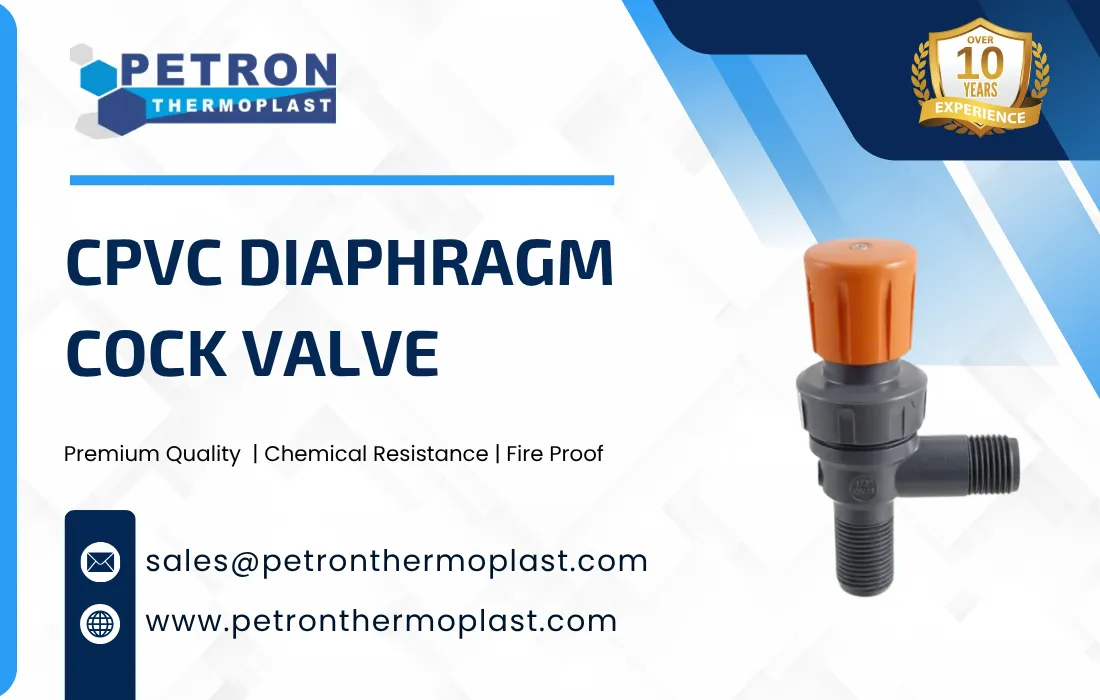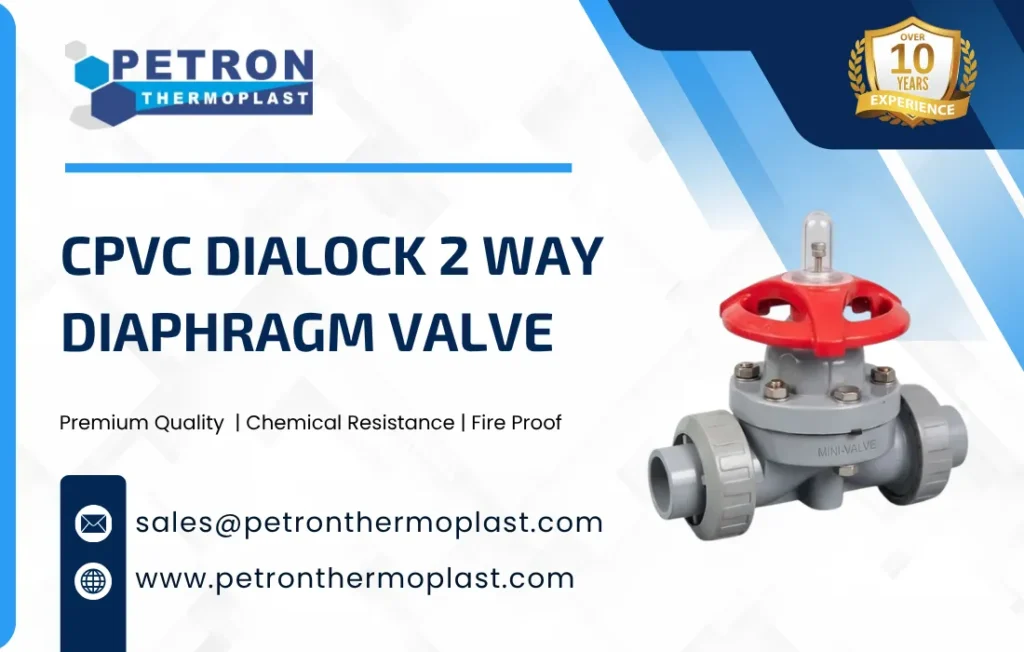
CPVC Dialock 2-Way Diaphragm Valve
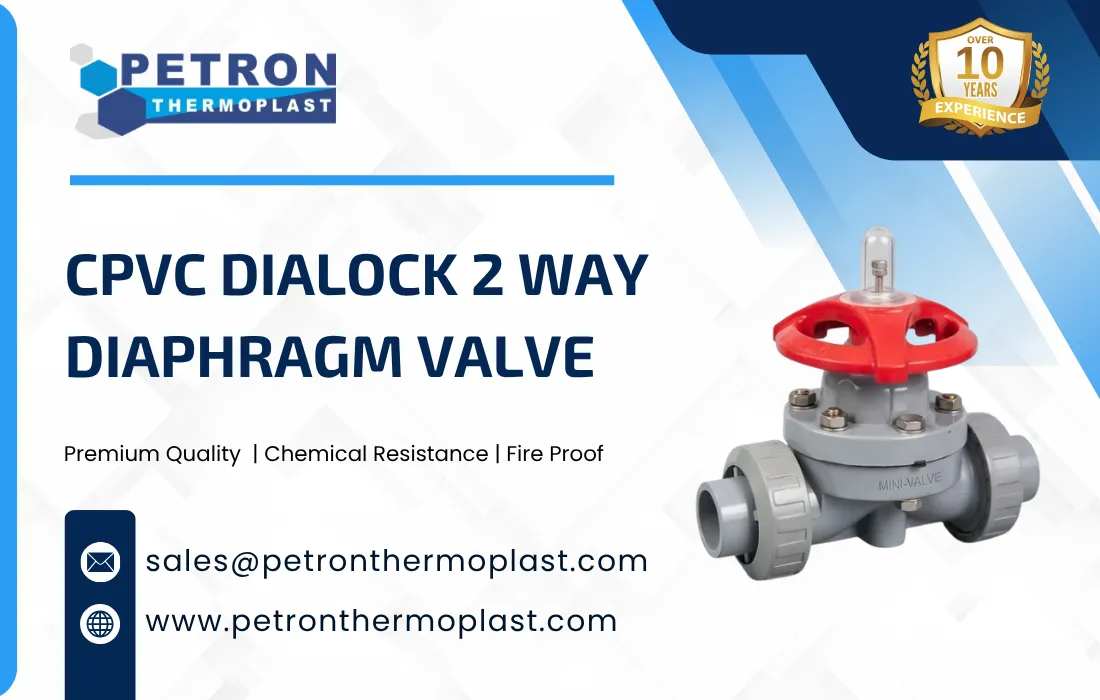
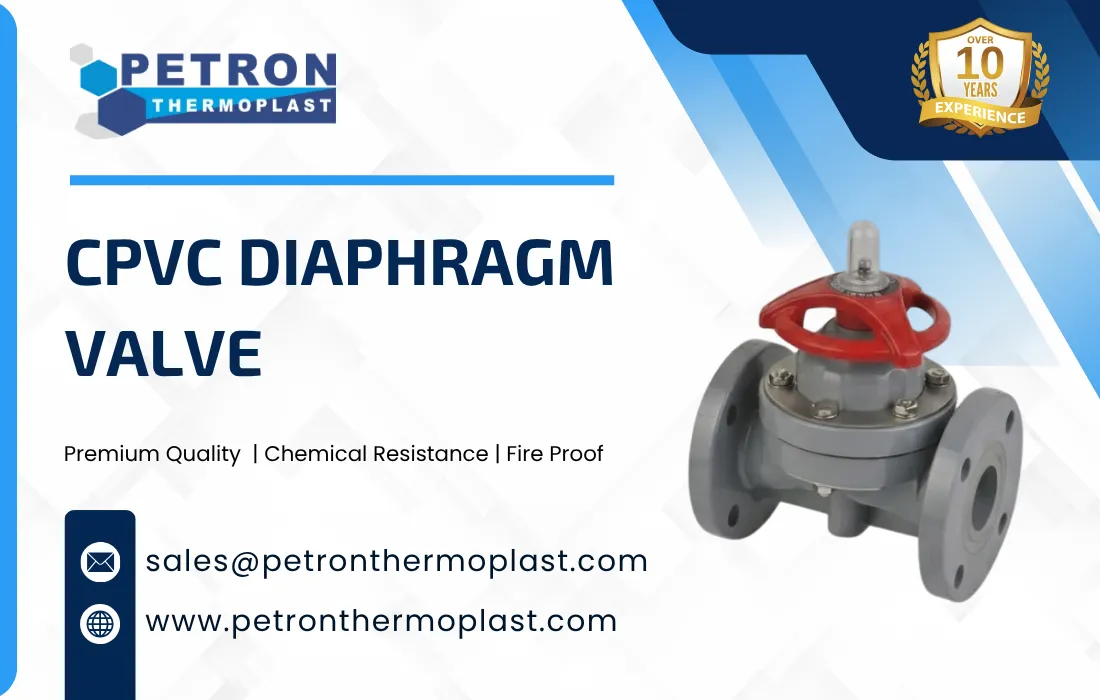
A CPVC Dialock 2 Way Diaphragm Valve is a type of flow-control valve made from CPVC (Chlorinated Polyvinyl Chloride) that uses a flexible diaphragm and Dialock locking mechanism to regulate or stop the flow of fluids in a pipeline. The diaphragm presses against the valve seat to create a tight seal, ensuring leak-proof operation and preventing contamination of the fluid. The 2-way design allows fluid to flow in one direction between one inlet and one outlet, while the Dialock system provides secure locking, easy installation, and reliable operation. These CPVC Dialock 2 Way Diaphragm Valves are widely used in chemical processing, water treatment, pharmaceutical industries, and corrosive fluid handling systems because of their excellent chemical resistance, durability, and high temperature tolerance.
The CPVC Dialock 2 Way Diaphragm Valve is used to control and close dirty or scratched substances. The redesigned internal shape of the body increases the flow coefficient and pressure drop, allowing for delicate, precise shutter adjustments over the entire stroke. The CPVC Dialock 2 Way Diaphragm Valve is quite small and lightweight. There is an ergonomic and quick locking feature on the handwheel, allowing the handwheel to be moved and secured in any position. Many different materials, body styles, and diaphragms can be used with this CPVC Dialock 2 Way Diaphragm Valve. A variety of options and accessories are available with this pneumatically operated version.

- Chemical Resistance
- Low Maintenance Requirement
- Low Thermal Conductivity
- Long Service Life
- Easy Installation
- Corrosion Resistance
CPVC Dialock 2-Way Diaphragm Valve Details
*Technical Drawing
*Technical Data
| Parameter | Specification |
| Valve Type | 2-Way Diaphragm Valve (DIALOCK® handwheel type) |
| Operation | Manual / Pneumatic (optional) |
| Size Range | DN 15 to DN 65 |
| Nominal Pressure | PN 10 (10 bar at 20°C) |
| Temperature Range | 0°C to 60°C |
| Flow Control | Linear throttling with high precision |
| End Connections | Solvent weld, threaded (BSP/NPT), flanged |
| Standards | EN ISO 16138, EN ISO 1452, EN ISO 15493 |
| Testing Standards | ISO 9393 |
| Installation Standards | DVS 2204, DVS 2221, UNI 11242 |
| Mounting | Any position |
| Locking Mechanism | DIALOCK® handwheel with multi-position locking (~300 positions) |
| Indicator | Optical position indicator with transparent cap |
| Body | CPVC / PVC-U |
| Bonnet | PP-GR (Glass Reinforced Polypropylene) |
| Handwheel | PP-GR |
| Position Indicator Cap | PVC |
| Diaphragm Seal | EPDM / FKM / PTFE |
| Fasteners | Stainless steel (externally protected) |
| Internal Components | Metal parts fully isolated from fluid |
- Dialock handwheel locking system – Equipped with a special Dialock handwheel that can be adjusted and locked in multiple positions for precise flow control.
- Optimized fluid dynamic design – The redesigned internal body geometry improves fluid flow and increases the flow coefficient while reducing pressure loss.
- Precise linear flow regulation – Provides smooth and accurate control of fluid flow throughout the full operating range.
- Corrosion-resistant construction – Internal metal components are completely isolated from the fluid and external environment, preventing corrosion.
- Non-rising handwheel design – The handwheel stays at the same height during operation and includes a clear position indicator for easy monitoring.
- Modular design – Uses limited bonnet, diaphragm, and handwheel sizes to cover several valve sizes, simplifying maintenance and spare parts management.
- Stainless-steel protected screws – Bonnet screws are protected with PE plugs to prevent exposure to the external environment and avoid corrosion.
- CDSA sealing system – The Circular Diaphragm Sealing Angle system distributes pressure evenly on the diaphragm, reducing stress on components and lowering operating torque.
- Easy cleaning and low deposit formation – The internal design reduces the risk of deposits, contamination, and crystallization.
- Compact and lightweight design – The valve body is small and easy to install in industrial piping systems.
| Valve Size | Pressure Rating (at 23°C) | Pressure Rating (at 60°C) | Pressure Rating (at 90°C) |
| 15 mm (½″) | 10 kg/cm² | 7 kg/cm² | 4 kg/cm² |
| 20 mm (¾″) | 10 kg/cm² | 7 kg/cm² | 4 kg/cm² |
| 25 mm (1″) | 10 kg/cm² | 7 kg/cm² | 4 kg/cm² |
| 32 mm (1¼″) | 10 kg/cm² | 7 kg/cm² | 4 kg/cm² |
| 40 mm (1½″) | 10 kg/cm² | 7 kg/cm² | 4 kg/cm² |
| 50 mm (2″) | 10 kg/cm² | 7 kg/cm² | 4 kg/cm² |
| 65 mm (2½″) | 8 kg/cm² | 6 kg/cm² | 3 kg/cm² |
| 80 mm (3″) | 8 kg/cm² | 6 kg/cm² | 3 kg/cm² |
| 100 mm (4″) | 8 kg/cm² | 6 kg/cm² | 3 kg/cm² |

Custom Product Manufacturing Available
If you are searching for customized product designs that meet your requirements, don’t worry. Petron Thermoplast also offers custom product manufacturing services to meet the unique needs of various industries. Work with our expert engineers to create custom designs suited for your application.
Benefits of Using CPVC Dialock 2-Way Diaphragm Valve
Excellent Corrosion Resistance
CPVC material offers high resistance to acids, alkalis, and corrosive chemicals, making the valve suitable for chemical and industrial applications.
Leak-Proof Sealing
The flexible diaphragm provides tight sealing, preventing leakage and ensuring safe operation in fluid handling systems.
High Temperature Resistance
CPVC valves can operate at temperatures up to 90–93°C, making them suitable for hot water and chemical processing systems.
Dialock Safety Mechanism
The Dialock locking system provides secure operation and prevents accidental loosening, ensuring stable valve performance.
Smooth Flow Control
The diaphragm design allows accurate flow regulation and efficient on/off control.
Low Maintenance
The simple internal design and corrosion-resistant materials reduce maintenance requirements.
Lightweight and Easy Installation
CPVC construction makes the valve lightweight, allowing easy installation and handling compared to metal valves.
Contamination-Free Operation
The diaphragm isolates the fluid from moving parts, making the valve suitable for pharmaceutical and water treatment applications.
Long Service Life
Resistant to rust, scaling, and chemical damage, ensuring durability in harsh environments.
Cost-Effective Solution
Lower installation, maintenance, and replacement costs compared to many metal valve alternatives.
Types of CPVC Dialock 2-Way Diaphragm Valve
Manual CPVC Dialock 2 Way Diaphragm Valve
- Operated using a handwheel with a Dialock locking mechanism.
- Allows precise flow control, and the valve position can be locked at different points for safety and accuracy.
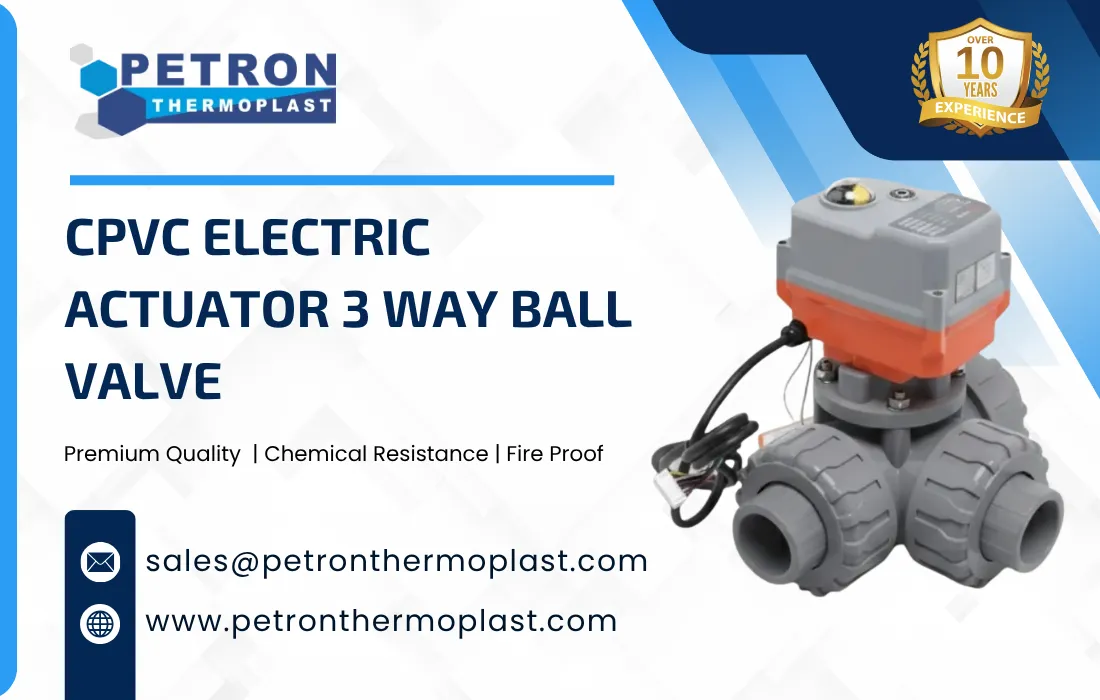
Three-Way CPVC Electric Actuator Ball Valve
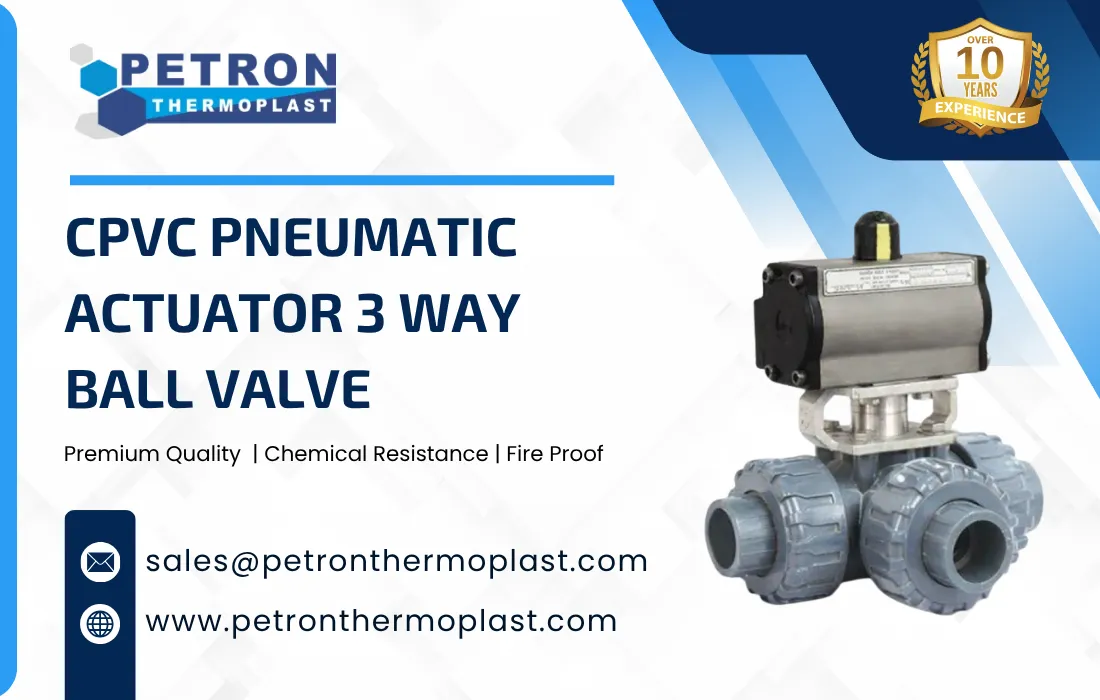
- Operated with a pneumatic actuator using compressed air.
- Suitable for automated systems where frequent valve operation is required.
Socket End CPVC Dialock 2 Way Diaphragm Valve
- Designed with socket connections for solvent welding with CPVC pipes.
- Commonly used in chemical and water treatment piping systems.
Threaded End CPVC Dialock 2 Way Diaphragm Valve
- Features threaded connections that allow easy installation and removal in piping systems.
Flanged End CPVC Dialock 2 Way Diaphragm Valve
- Comes with flanged ends for larger pipelines and high-flow industrial applications.
Weir Type CPVC Dialock Diaphragm Valve
- Designed with a raised weir inside the valve body for better sealing and precise flow regulation.
Applications of CPVC Dialock 2-Way Diaphragm Valve
Process Industry
High Purity Applications
Electronic Industry
Electrical Industry
Semi-conductors Industry
Pharmaceutical Industry
Solar power panels
Sugar Industry
Paper & Pulp Industry
Nuclear Power Industry
Automotive Industry
DI water plants
Why Choose Petron Thermoplast?
Petron Thermoplast CPVC Dialock 2 Way Diaphragm Valve is particularly favoured in chemical treatment applications due to its precision, long service life, and compatibility with corrosive water.
By harnessing the Valve effect, these devices offer a reliable, energy-efficient method for fluid injection without the need for pumps or electricity. With companies like Petron Thermoplast pushing the technology forward, the future of fluid injection remains efficient, sustainable, and powerful.