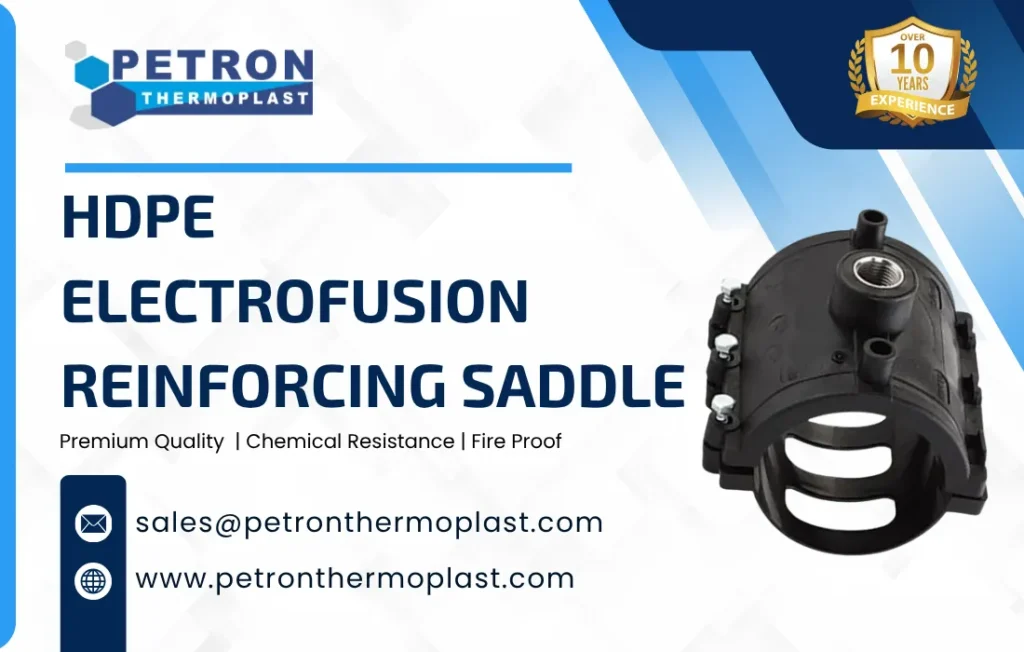
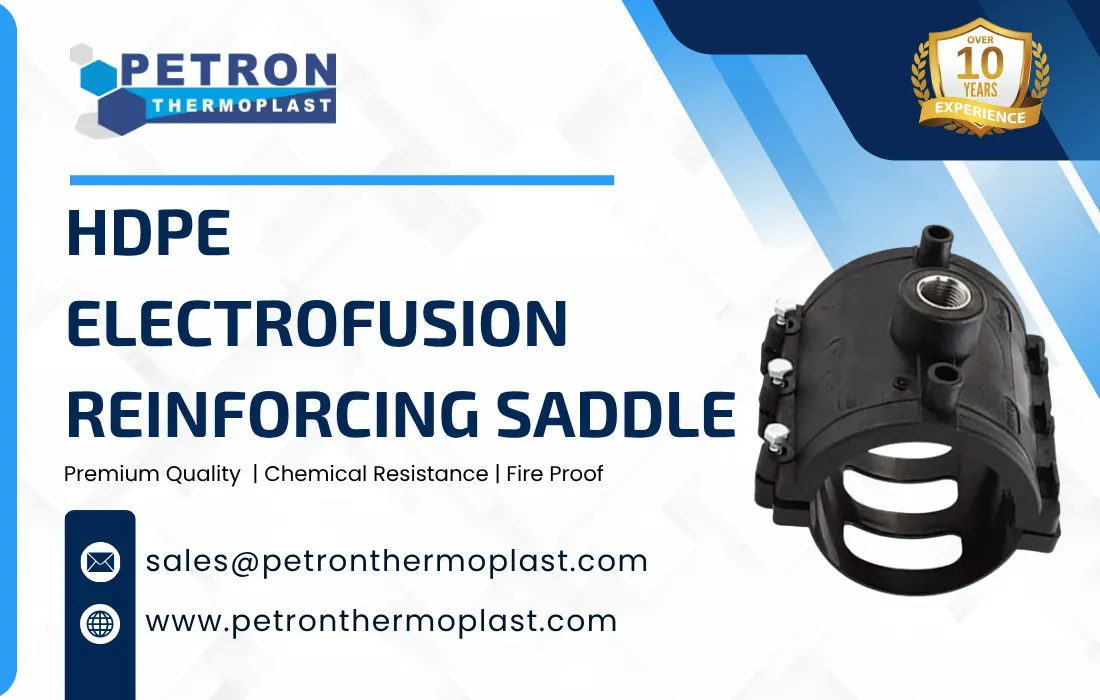
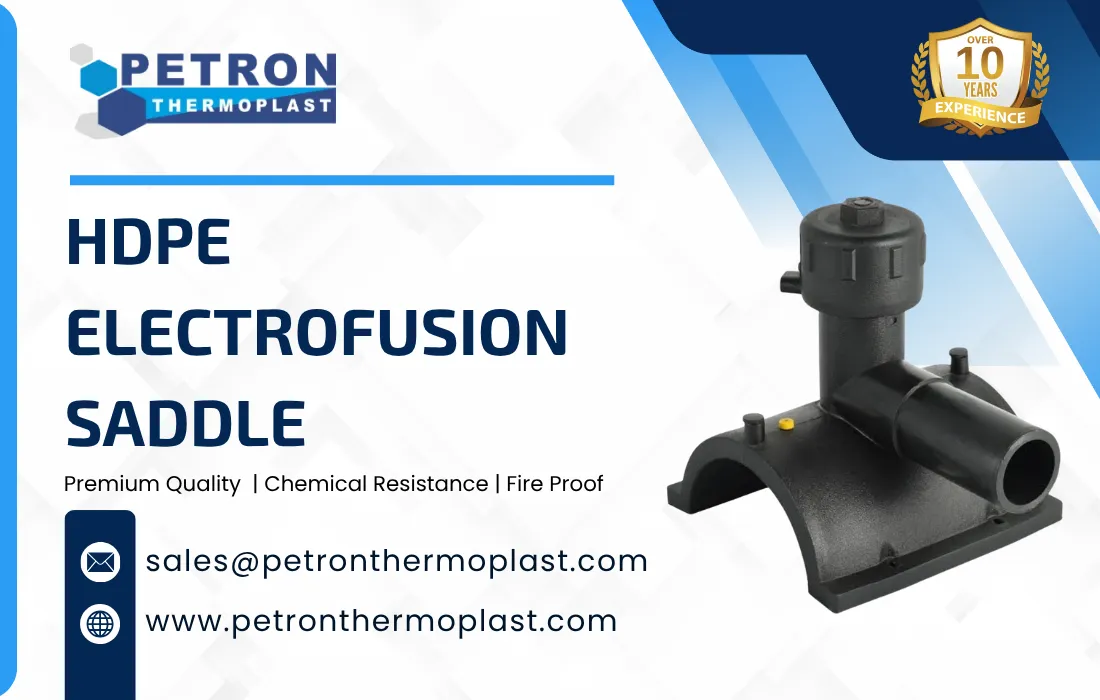
HDPE Electrofusion Reinforcing Saddle
The HDPE Electrofusion Reinforcing Saddle is designed to provide additional mechanical strength and support to HDPE pipelines, particularly around branch connections, tapping points, or previously repaired areas. Manufactured from high-quality PE100 material, this saddle uses electrofusion technology to form a strong, permanent bond with the host pipe. It ensures structural integrity in pressure pipelines and enhances long-term performance, especially in areas subject to mechanical stress or high-pressure operation.
An HDPE Electrofusion Reinforcing Saddle is a specialized fitting made from High-Density Polyethylene (HDPE) that is used to strengthen and support a branch connection on an existing HDPE pipeline. It is installed over the pipe surface and fused using electrofusion technology, where embedded heating coils melt the contact surfaces to create a strong, leak-proof bond.This type of saddle is primarily used to reinforce areas where a tapping or outlet is created, helping to distribute stress and maintain the structural integrity of the pipe. It is commonly applied in water supply, gas distribution, and industrial piping systems, especially where additional support is required for safe and long-lasting connections.

- Chemical Resistance
- Low Maintenance Requirement
- Low Thermal Conductivity
- Long Service Life
- Easy Installation
- Corrosion Resistance
HDPE Electrofusion Reinforcing Saddle Details
*Technical Diagram
*Technical Data
| Parameter | Details |
| Material | High-Density Polyethylene (HDPE – PE80 / PE100) |
| Type | Electrofusion Reinforcing Saddle |
| Function | Provides reinforcement for branch/tapping connections |
| Connection Method | Electrofusion (embedded heating coil) |
| Diameter Range | Main pipe: 63 mm to 1000 mm (varies by manufacturer) |
| Outlet Size Range | Typically 20 mm to 315 mm |
| Pressure Rating | PN6, PN10, PN12.5, PN16 (based on SDR and material grade) |
| Standard Dimension Ratio (SDR) | SDR 11, SDR 13.6, SDR 17 |
| Operating Temperature | -10°C to 45°C |
| Melting Temperature | Approx. 120°C – 130°C |
| Density | ~0.94 – 0.96 g/cm³ |
| Color | Black (often with yellow/orange marking for gas applications) |
| Joint Strength | Equal to or greater than pipe strength |
| Corrosion Resistance | Excellent resistance to chemicals, acids, and alkalis |
| UV Resistance | Good (carbon black stabilized) |
| Electrical Input | Typically 39.5V or 220V (via electrofusion control unit) |
| Fusion Time | Varies with size (usually 1–10 minutes) |
| Cooling Time | 10–30 minutes depending on size |
| Standards Compliance | ISO 4427 (water), ISO 4437 (gas), EN 12201 |
| Leakage | 100% leak-proof when properly fused |
| Installation Requirement | Requires electrofusion machine and proper surface preparation |
| Application Areas | Water pipelines, gas distribution, irrigation, industrial systems |
Enhanced Structural Support – Reinforces weak points or tapping areas in pipelines
Permanent Bonding – Electrofusion welding delivers a strong, leak-proof seal
Prevents Stress Cracks & Deformation – Ideal for pressure-rated installations
Suitable for Water, Gas & Industrial Fluids – Versatile across various industries
Simple Installation – Compatible with standard electrofusion equipment
Corrosion & Chemical Resistant – Long service life even in aggressive environments
| SDR Value | PE100 Rating (PN) | PE80 Rating (PN) |
| SDR 7.4 | PN25 | PN20 |
| SDR 9 | PN20 | PN16 |
| SDR 11 | PN16 | PN12.5 |
| SDR 13.6 | PN12.5 | PN10 |
| SDR 17 | PN10 | PN8 |
| SDR 21 | PN8 | PN6 |
| SDR 26 | PN6 | PN5 |

Custom Product Manufacturing Available
If you are searching for customized product designs that meet your requirements, don’t worry. Petron Thermoplast also offers custom product manufacturing services to meet the unique needs of various industries. Work with our expert engineers to create custom designs suited for your application.
Benefits of Using HDPE Electrofusion Reinforcing Saddle
Leak-Proof Joints
The electrofusion process creates a strong and leak-proof joint, reducing the risk of water or gas leaks.
High Durability
HDPE material is highly resistant to corrosion and abrasion, making it suitable for harsh environments.
Low Maintenance
HDPE pipes and fittings require minimal maintenance compared to traditional materials like steel or concrete.
Flexibility
HDPE pipes can be bent and shaped to fit complex piping layouts, reducing the need for additional fittings.
Easy Installation
The electrofusion technology allows for easy installation with minimal tools and training, reducing labor costs and installation time.
Types of HDPE Electrofusion Reinforcing Saddle
1. Standard Reinforcing Saddle
- Basic type used to strengthen the pipe surface around a branch connection.
- Installed before or along with tapping fittings.
- Applications: General water and low-pressure systems.
2. Tapping Reinforcing Saddle
- Designed to allow branch connections (outlets) from a live pipeline.
- Often used with tapping tools for creating outlets without shutting down the system.
- Applications: Water supply and gas distribution networks.
3. Full Encirclement Reinforcing Saddle
- Wraps completely around the pipe circumference.
- Provides maximum reinforcement and load distribution.
- Applications: High-pressure pipelines and critical infrastructure.
4. Half Saddle (Partial Reinforcing Saddle)
- Covers only a portion of the pipe surface.
- Easier and quicker to install compared to full encirclement type.
- Applications: Medium to low-pressure systems.
5. Outlet (Branch) Reinforcing Saddle
- Comes with a pre-molded outlet for direct pipe connection.
- Eliminates the need for separate fittings.
- Applications: Irrigation, industrial piping, and distribution lines.
6. Repair Reinforcing Saddle
- Used to strengthen damaged or weakened pipe sections.
- Helps prevent leakage or failure without replacing the pipe.
- Applications: Maintenance and emergency repairs.
7. Customized Reinforcing Saddle
- Designed as per specific project requirements (size, pressure, or geometry).
- Used in special industrial or infrastructure projects.
Applications of HDPE Electrofusion Reinforcing Saddle
Process Industry
High Purity Applications
Electronic Industry
Electrical Industry
Semi-conductors Industry
Pharmaceutical Industry
Solar power panels
Sugar Industry
Paper & Pulp Industry
Nuclear Power Industry
Automotive Industry
DI water plants
Why Choose Petron Thermoplast?
At Petron Thermoplast, HDPE Electrofusion Reinforcing Saddle is designed for modern pipeline systems. The saddles are manufactured using advanced techniques and are constructed with high-density polyethylene. Polyethylene is proven to be strong and resistant to many chemicals and environmental factors. The HDPE Electrofusion Reinforcing Saddle fused using electrofusion which forms a saddle and pipe bond that is permanent, leak-proof, and can hold high pressures. Petron Thermoplast, production facilities of the art and follow a set technology process that is global to ensure their quality control systems are followed. Petron Thermoplast have the ability to custom design to the needs of our various clients in diverse fields, from municipal water systems to industrial gas. Petron Thermoplast primary focus is on innovation which influences the evolution of sustainable systems in the global market. Our HDPE Electrofusion Reinforcing Saddle can be successfully deployed when coupled with our strong customer support, technical assistance, and after sale services.
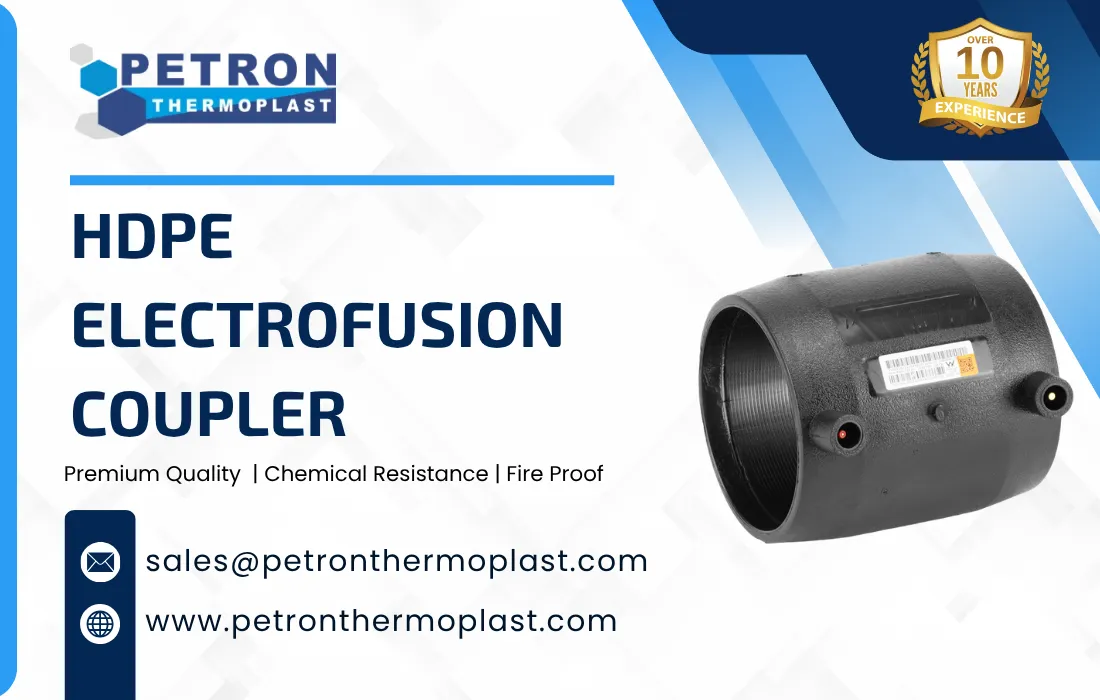
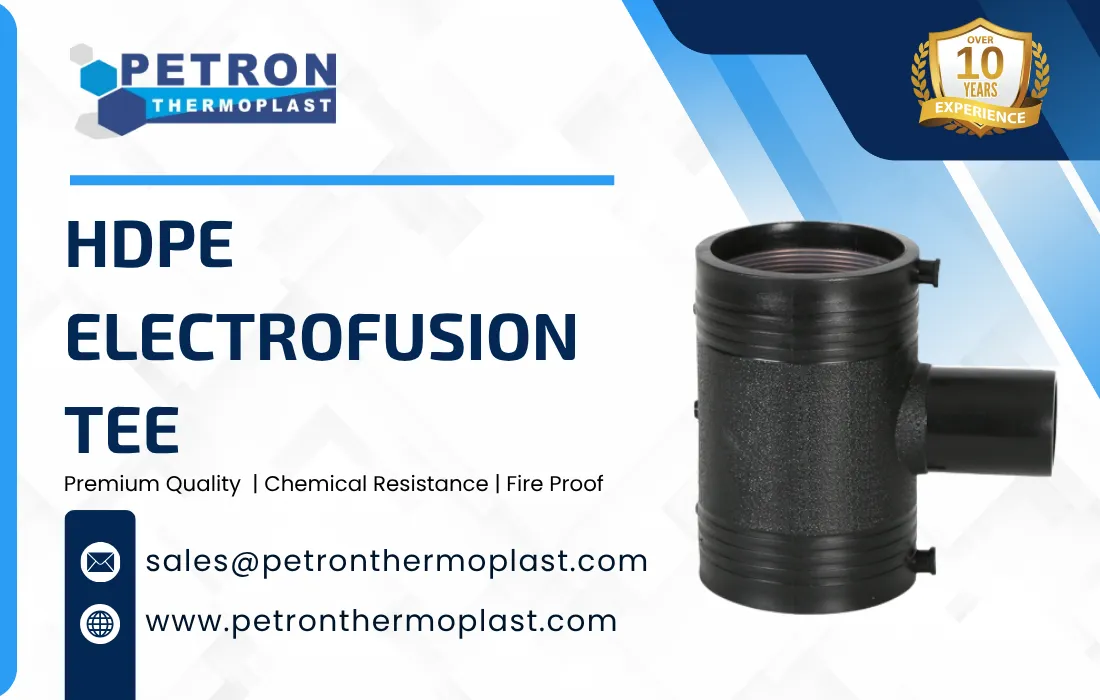
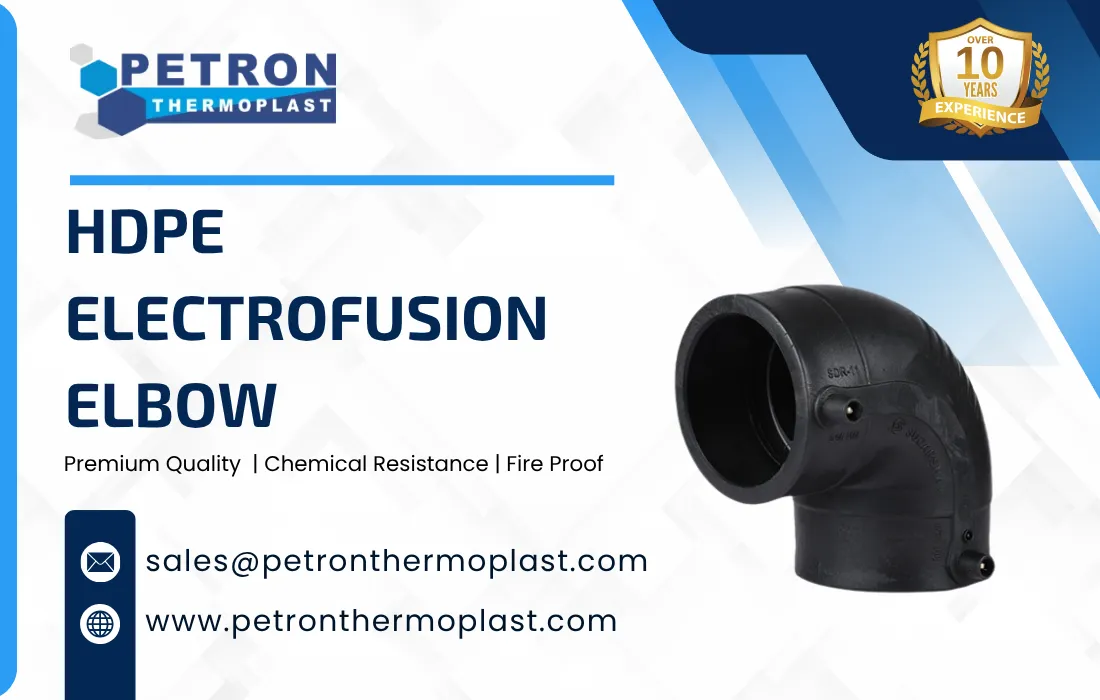
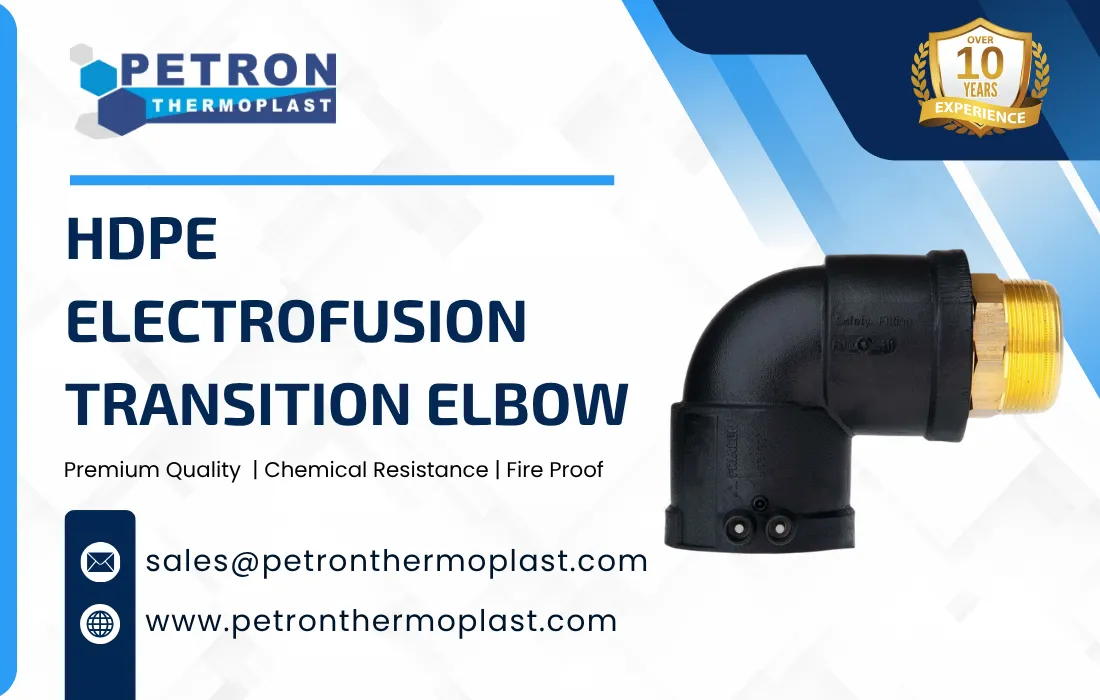
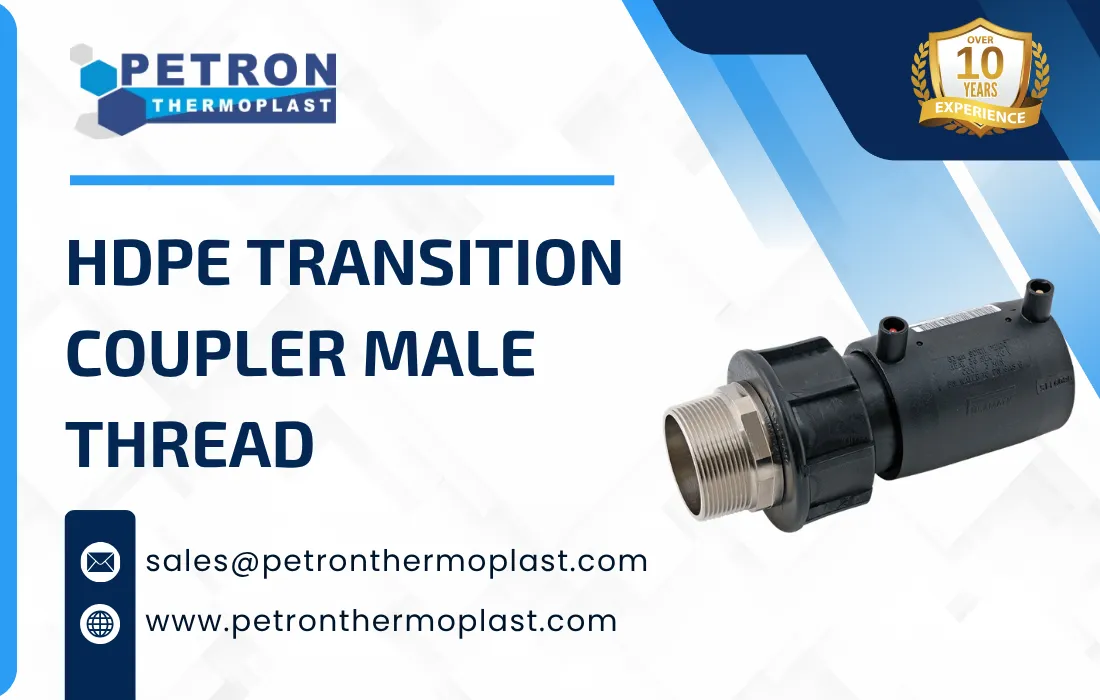
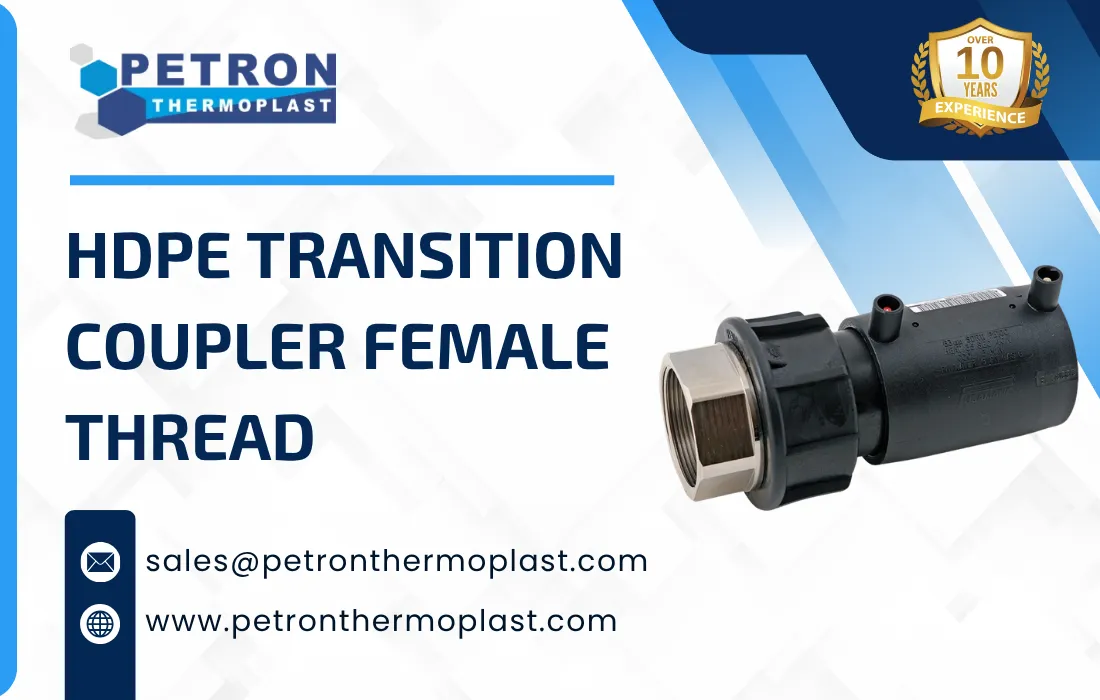
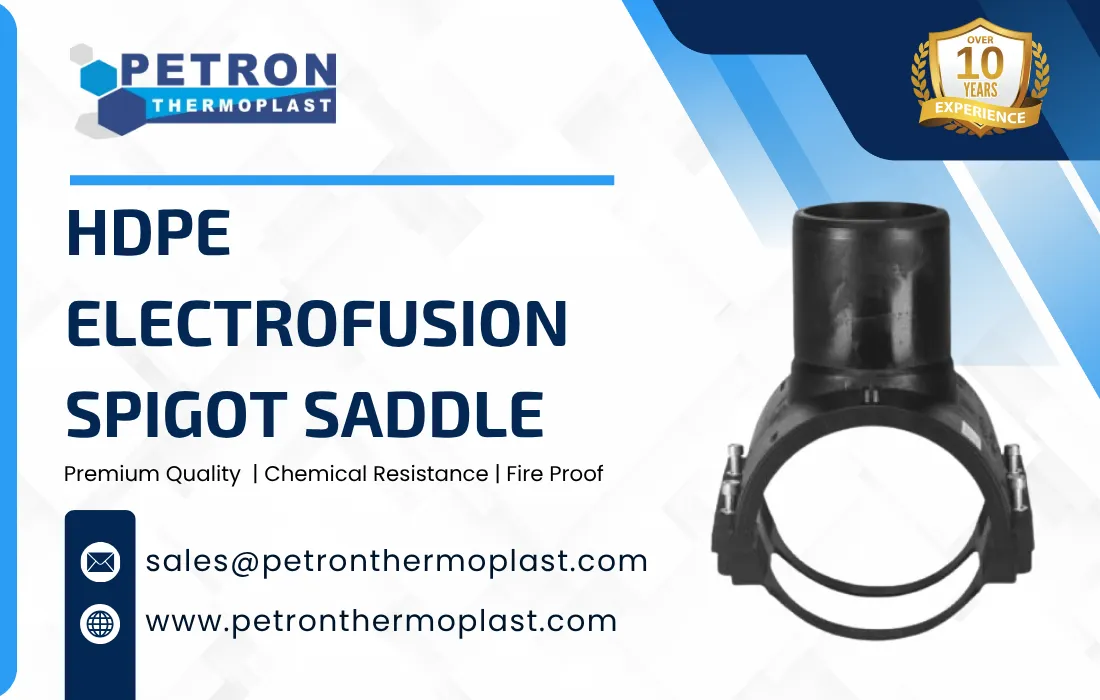
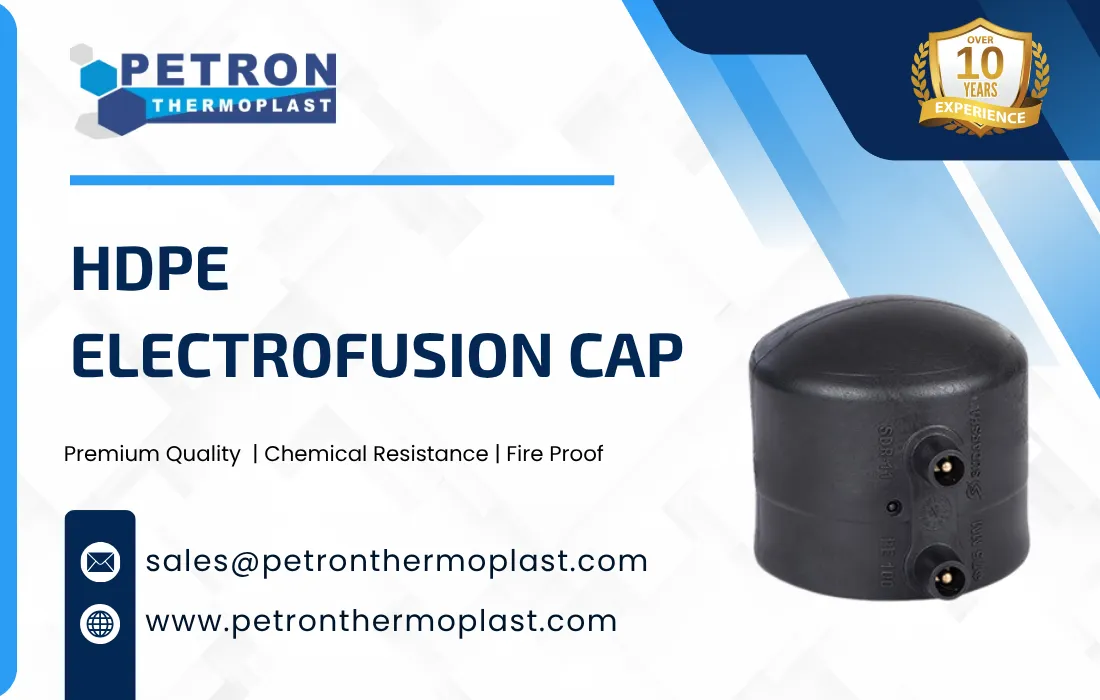
HDPE Electro Fusion Fittings
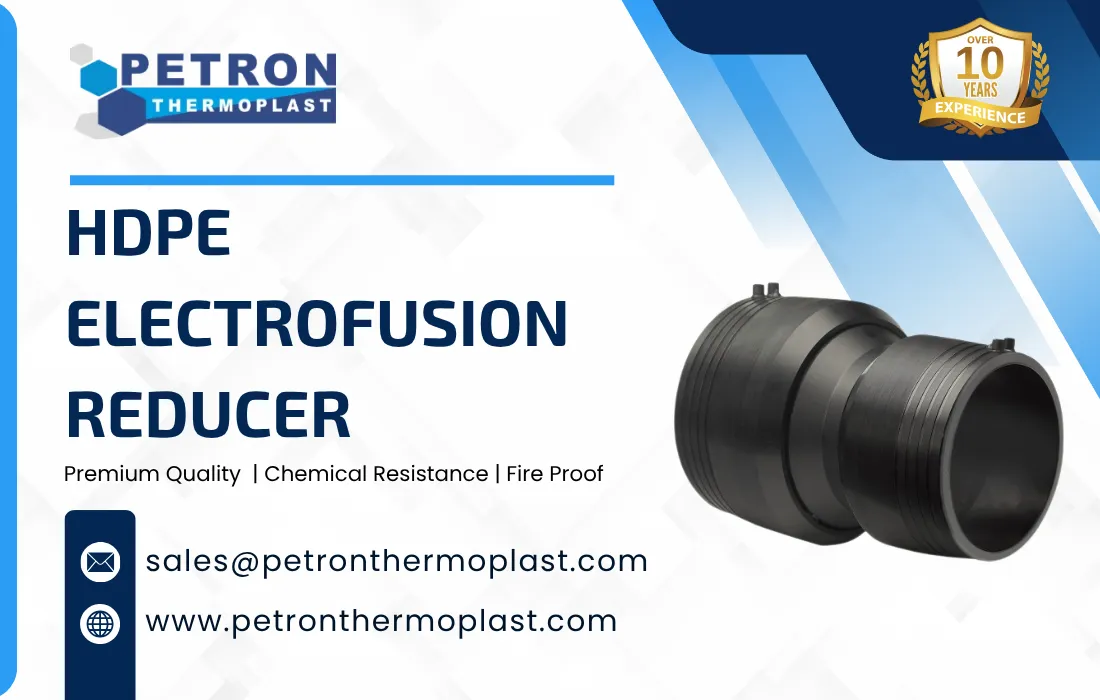
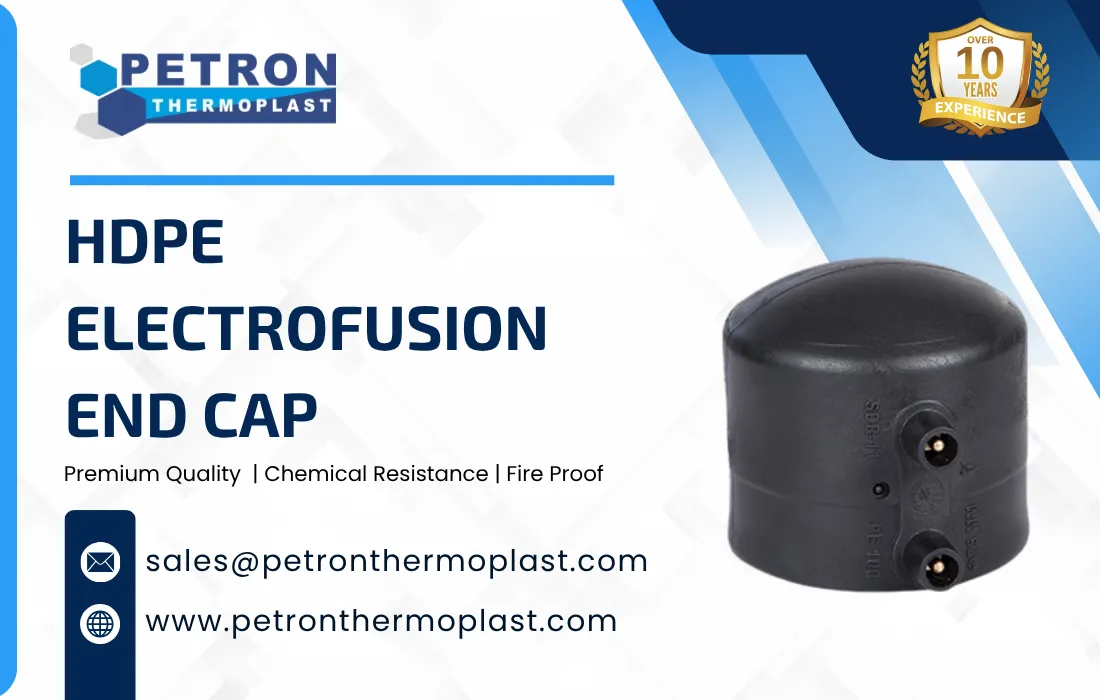
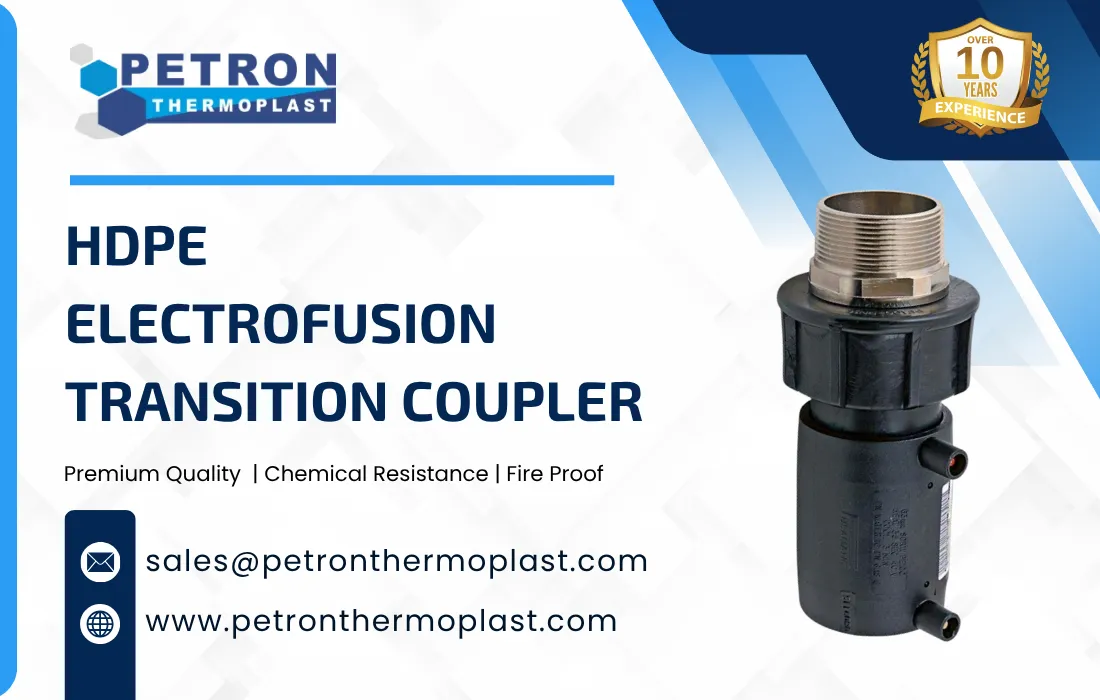
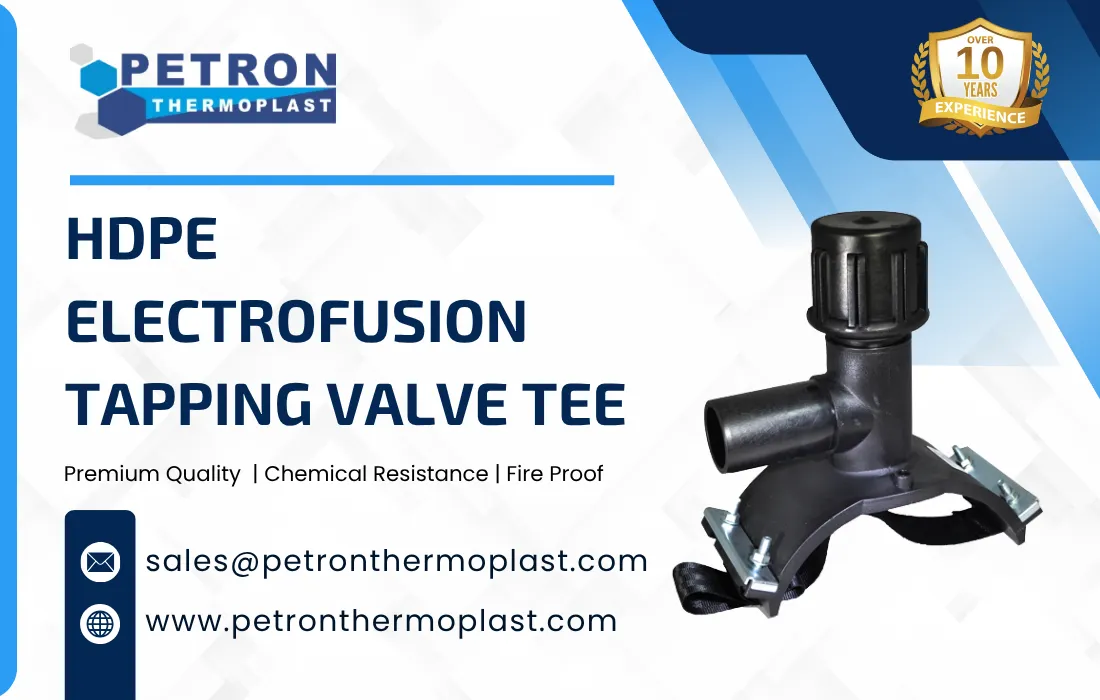
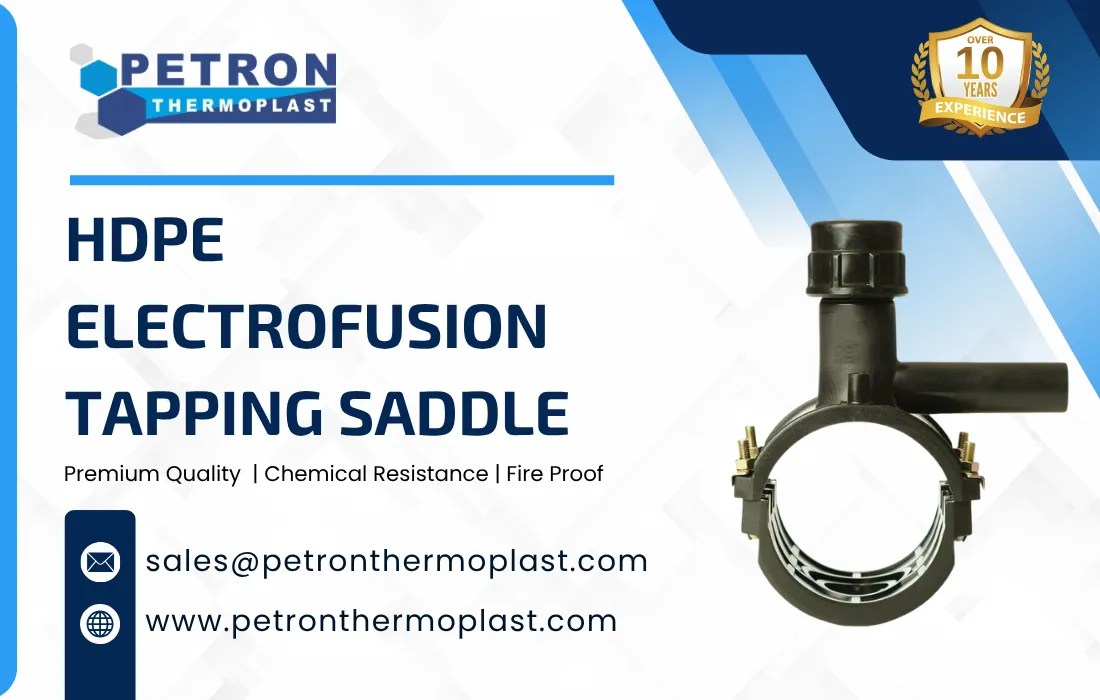
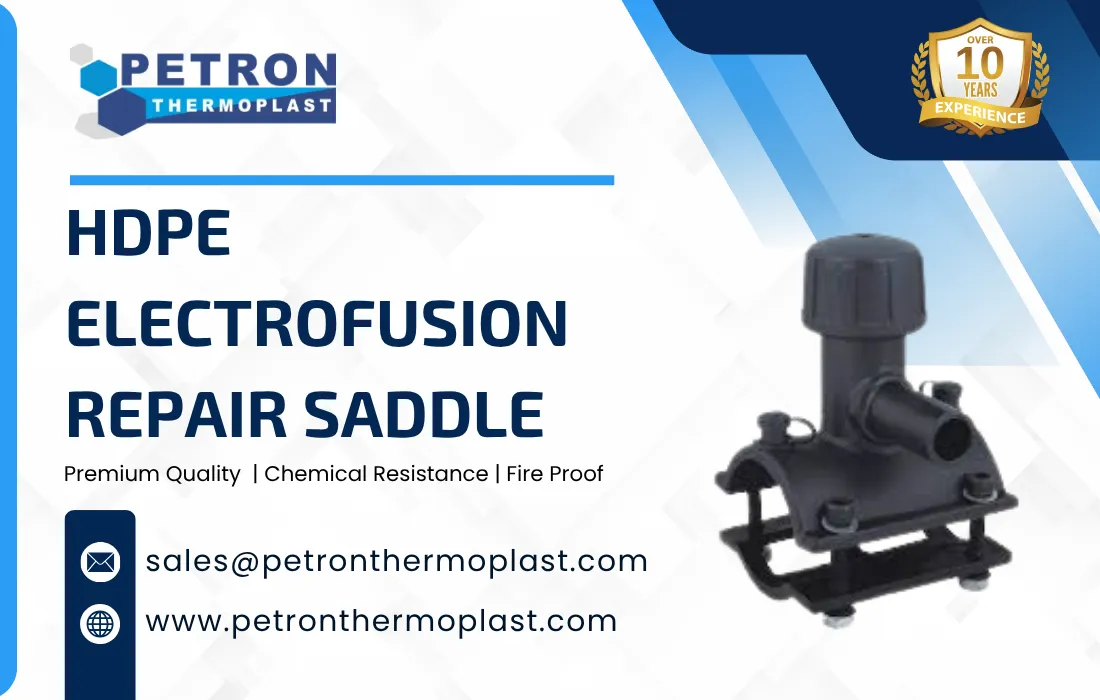
Electrofusion fittings are specialized HDPE components designed with embedded electric heating elements that, when energized, melt and fuse the fitting to the pipe surface. This technique provides a secure, leak-proof, and durable joint, making it ideal for high-pressure and critical pipeline applications. Electrofusion is especially preferred when working in confined spaces, where using large butt fusion equipment is impractical.
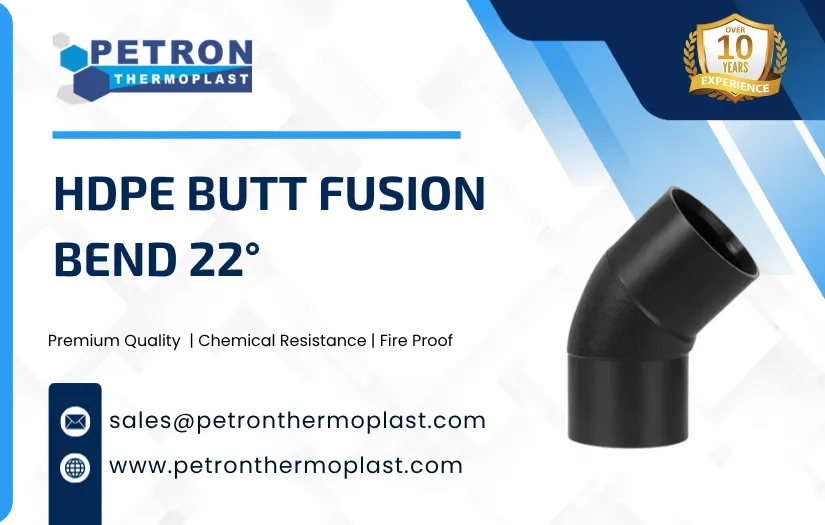
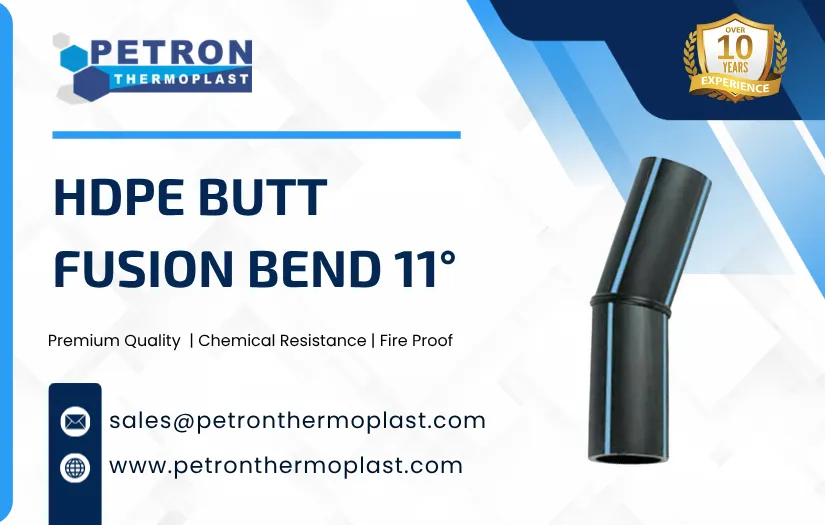
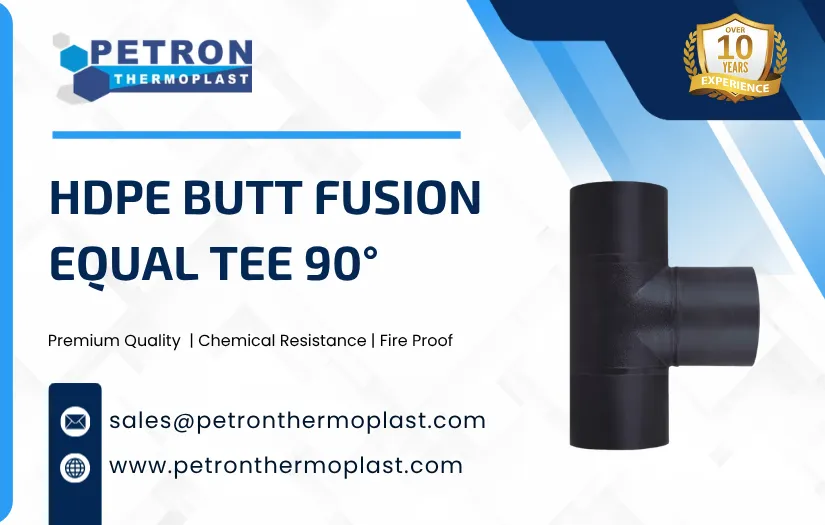
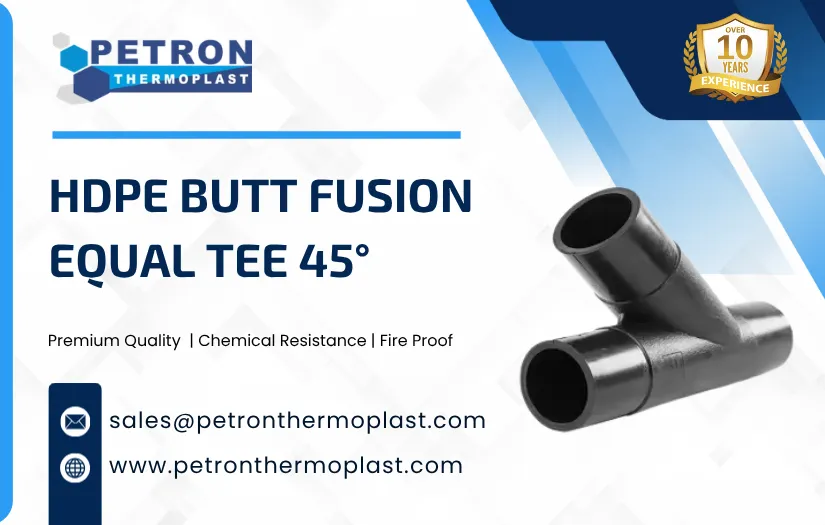
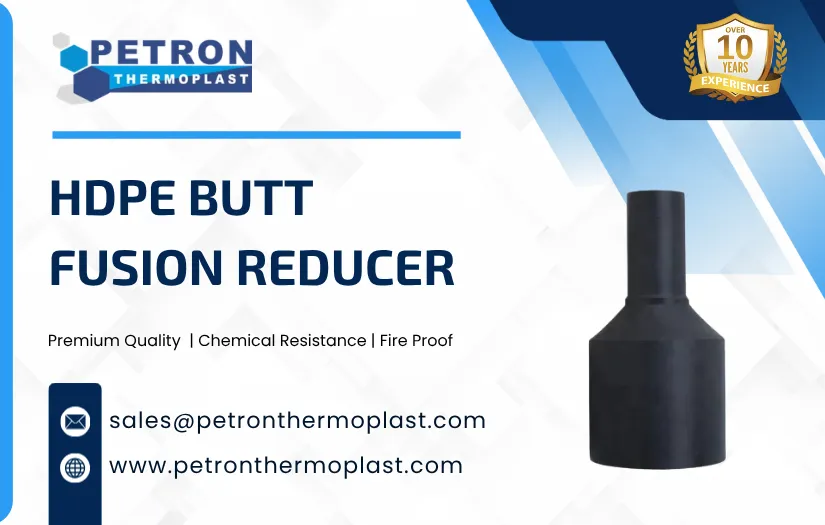
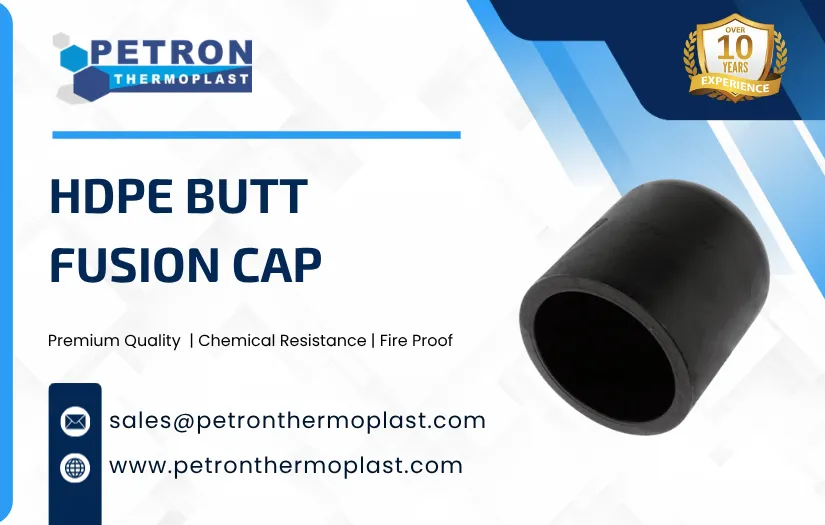
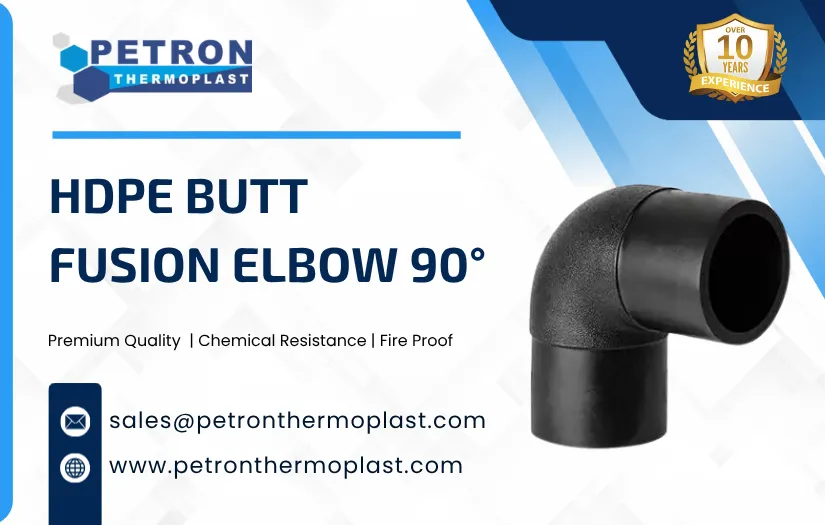
HDPE Butt Fusion Fittings
Butt fusion fittings are one of the most reliable and widely used types of HDPE pipe fittings. These fittings are joined using a butt fusion welding process, which involves heating the ends of both the pipe and the fitting to a precise temperature (typically around 200–220°C), then pressing them together under controlled pressure until they fuse into a single continuous piece. This results in a permanent, seamless, and high-integrity joint.