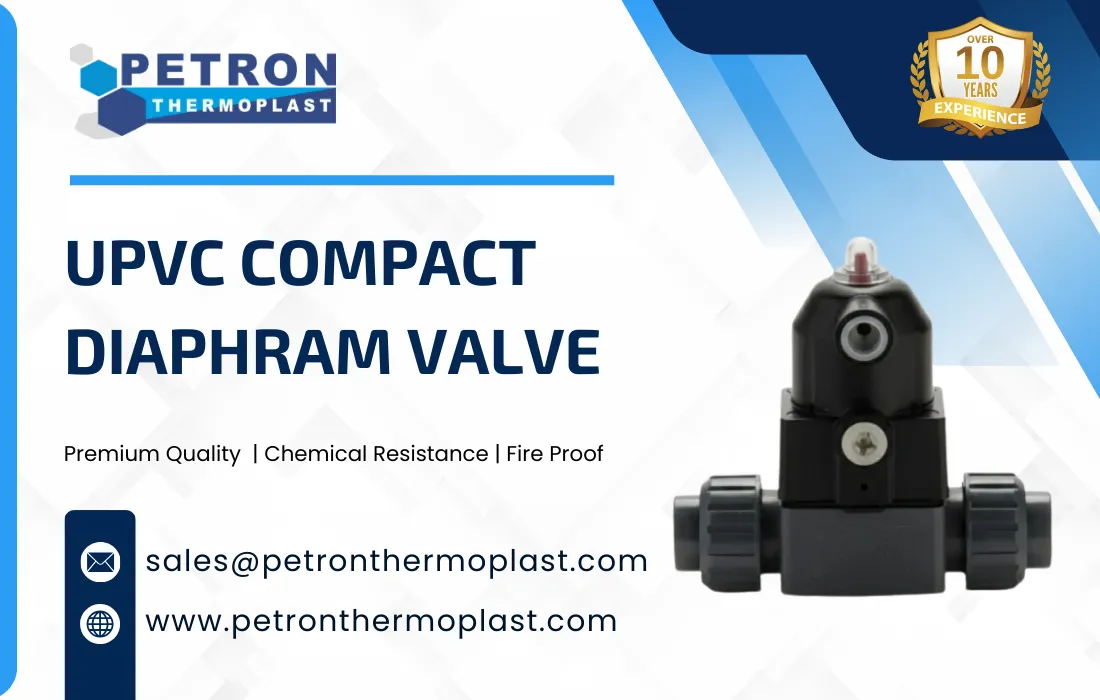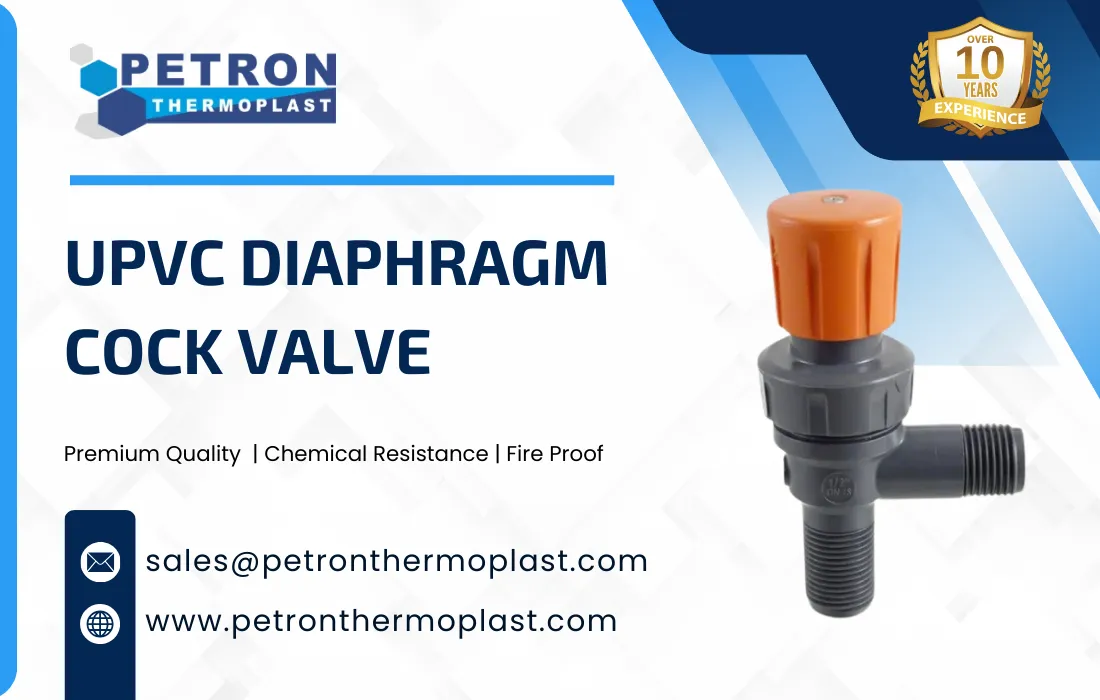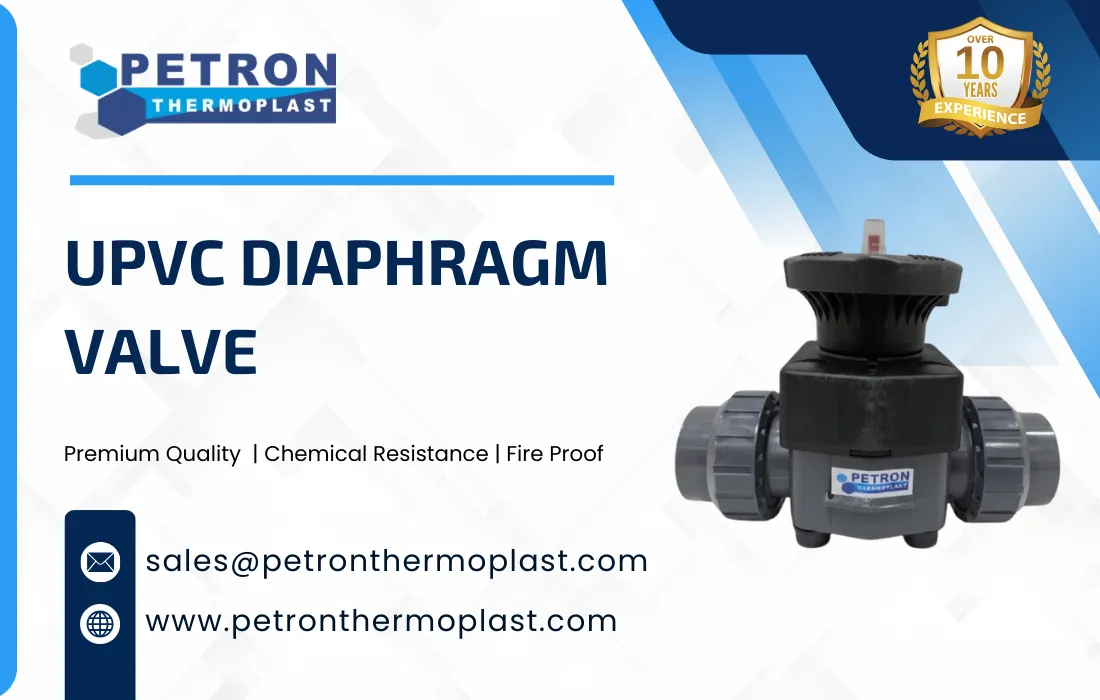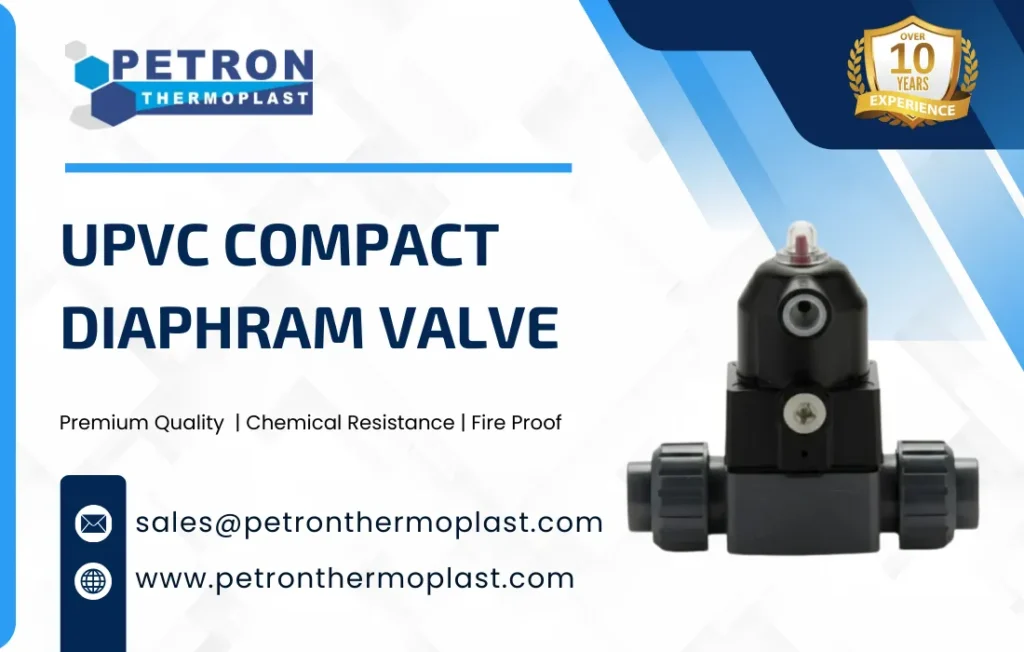
UPVC Compact Diaphragm Valve
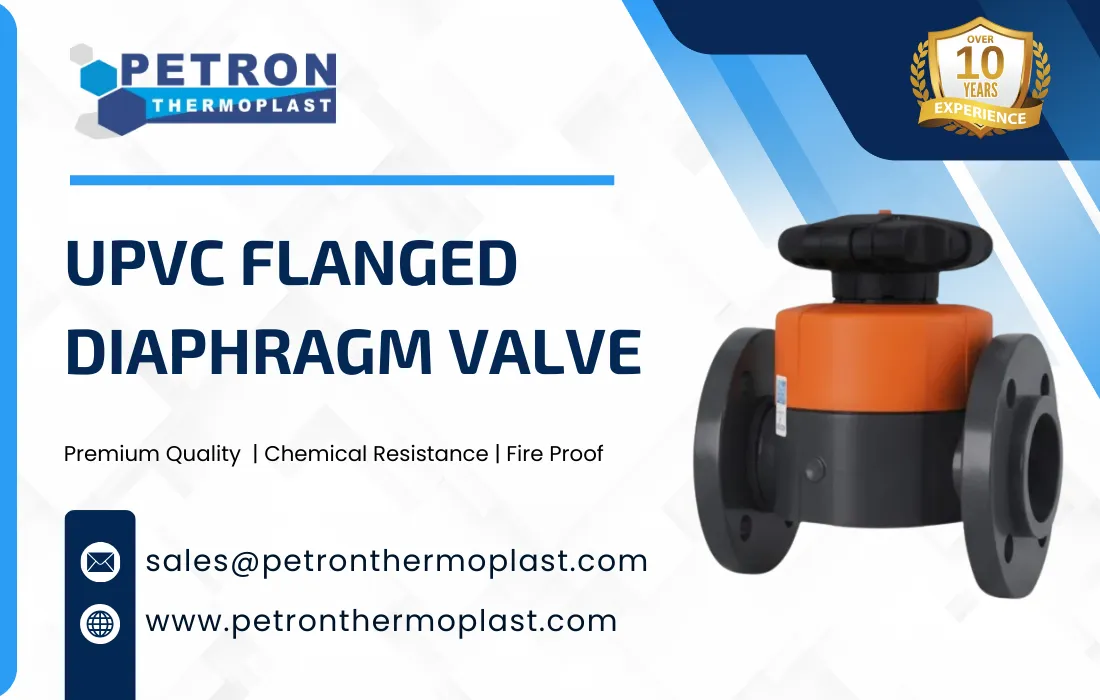
A UPVC Compact Diaphragm Valve is a type of corrosion-resistant valve made from UPVC material, designed to regulate or control the flow of liquids or gases. It uses a flexible diaphragm that presses against a valve seat to either stop, start, or throttle flow. The compact design means the valve body is small, lightweight, and easy to install in pipelines with limited space.
UPVC Compact Diaphragm Valve has a flexible disc that seals with a seat at the top of the valve body. It is excellent for usage in restricted places. We have a wide range of uses in virtually every industrial field. A UPVC Compact Diaphragm Valve is the most versatile of all the valves. The main benefit is that only two parts, the valve body and diaphragm, touch the active substance. The “minimum dead leg” valve type of the UPVC compact diaphragm valve is well known in the industry. For industrial and ecological engineering, as well as the manufacturing industries, the broad material range makes it excellent for hostile media, scratchy media, and highly viscous media.

- Chemical Resistance
- Low Maintenance Requirement
- Low Thermal Conductivity
- Long Service Life
- Easy Installation
- Corrosion Resistance
UPVC Compact Diaphragm Valve Details
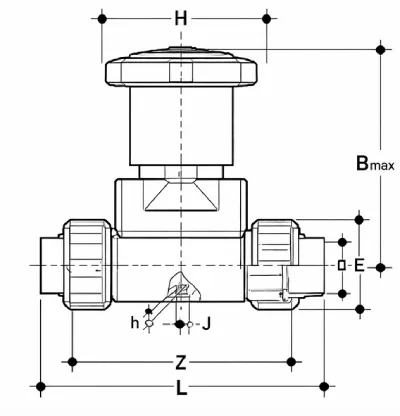
d: Outside diameter
DN: Nominal diameter
R1: Thread size (inches)
PN: Nominal pressure (bar)
E: Body diameter
H: Overall height
H1: Center-to-bottom height
Z: Face-to-face length
I: Mounting hole distance
J: Mounting bolt thread (Metric)
FPM/PTFE: Material types (Fluorinated Rubber / Teflon)
| Diaphragm Type | d | DN | R1 | PN | E | H | H1 | Z | I | J |
| EPDM | 20 | 15 | 1″ | 6 | 41 | 129.5 | 58.5 | 97.5 | 35 | M5 |
| FPM | 20 | 15 | 1″ | 6 | 41 | 129.5 | 58.5 | 97.5 | 35 | M5 |
| PTFE | 20 | 15 | 1″ | 6 | 41 | 129.5 | 58.5 | 97.5 | 35 | M5 |
| Parameter | Specification / Details |
| Valve Type | Diaphragm Valve (Compact type) |
| Body & Bonnet Material | uPVC (Unplasticized Polyvinyl Chloride) |
| Diaphragm Material | EPDM (Standard) / PTFE (For aggressive chemicals) |
| Operation Type | Manual (Handwheel) / Pneumatic / Electric Actuated |
| Size Range (DN) | DN15 to DN150 (½″ to 6″) |
| Pressure Rating | PN10 – PN16 (10–16 bar) |
| Temperature Range | 0°C to 60°C (uPVC limit) |
| End Connections | Socket, Threaded (BSP/NPT), Flanged (ANSI/DIN) |
| Flow Characteristic | Linear or Equal Percentage (Design dependent) |
| Sealing / Leakage | Zero leakage (Bubble-tight shutoff) |
| Density | ~1.38 g/cm³ |
| Tensile Strength | 50 – 60 MPa |
| Flexural Strength | 60 – 70 MPa |
| Hardness | Shore D 70–80 |
| Thermal Conductivity | 0.19 – 0.25 W/m·K |
| Expansion Coeff. | ~80 × 10⁻⁶ /°C |
| Chemical Resistance | Excellent (Acids, alkalis, salts, oxidizing agents) |
| Fire Resistance | Self-extinguishing (Does not propagate flame) |
| Surface Finish | Smooth (Reduces deposits and clogging) |
| Maintenance | Top-entry (Diaphragm replacement without body removal) |
| Standards | ISO 9001, DIN, ANSI compliant |
1. Corrosion Resistance
- Made from unplasticized PVC (uPVC), which is highly resistant to acids, alkalis, salts, and most chemicals.
- Ideal for handling corrosive liquids without risk of rust or metal contamination.
2. Compact and Lightweight
- Smaller footprint compared to traditional diaphragm valves.
- Lightweight design makes installation and handling easier.
- Suitable for tight or space-restricted piping systems.
3. Leak-Tight and Reliable Sealing
- The diaphragm provides a positive seal, preventing leakage.
- Effective even with aggressive chemicals or viscous fluids.
- Reduces the risk of spills, contamination, or environmental hazards.
4. Easy Operation
- Can be operated manually, pneumatically, or electrically.
- Smooth actuation with low torque.
- Simple maintenance, with easy diaphragm replacement without removing the valve body in many designs.
5. Excellent Flow Control
- Allows precise throttling and bubble-tight shutoff.
- Internal design minimizes dead zones, reducing stagnation or contamination.
- Weir type is suitable for slurries and viscous fluids; straight-through type for clean liquids.
6. Durability and Long Service Life
- Resistant to chemical attack and UV exposure.
- The diaphragm can withstand repeated actuation cycles.
- Low maintenance compared to metal valves in corrosive environments.
7. Versatile End Connections
- Available in socket, flanged, or threaded types.
- Can be integrated into various piping systems easily.
8. Cost-Effective
- UPVC material is less expensive than metals..
- Lightweight design reduces installation costs.
- Long lifespan in corrosive applications reduces replacement frequency.
9. Environmentally Friendly
- UPVC is recyclable and chemically stable.
- Minimal risk of contamination due to corrosion or leaching.
10. Wide Application Range
- Suitable for chemical processing, oil, gas treatment, pharmaceuticals, food and beverage, and industrial fluid handling.
| Nominal Size (DN / Inch) | Max Working Pressure (PN / Bar) | Notes |
| DN15 – DN25 (1/2″ – 1″) | PN16 (16 bar) | Standard uPVC with EPDM diaphragm |
| DN32 – DN50 (1 1/4″ – 2″) | PN16 (16 bar) | Standard size for small pipelines |
| DN65 – DN80 (2 1/2″ – 3″) | PN10 (10 bar) | Larger diameters have lower pressure limits |
| DN100 – DN150 (4″ – 6″) | PN10 (10 bar) | Common upper size limit for uPVC |
| Special Diaphragm (PTFE) | Up to PN16 (16 bar) | For aggressive chemical handling |
| Temperature Derating | Varies | Reduce pressure at higher temperatures |

Custom Product Manufacturing Available
If you are searching for customized product designs that meet your requirements, don’t worry. Petron Thermoplast also offers custom product manufacturing services to meet the unique needs of various industries. Work with our expert engineers to create custom designs suited for your application.
Benefits of Using UPVC Compact Diaphragm Valve
1. Corrosion and Chemical Resistance
- Made from UPVC, these valves resist corrosion from acids, alkalis, salts, and other aggressive chemicals.
- Ideal for handling corrosive liquids without degradation or contamination.
- No risk of rust or metal ion leaching, which is critical in the pharmaceutical and food industries.
2. Compact and Lightweight Design
- The “compact” design reduces space requirements compared to conventional diaphragm valves.
- Lighter than metal valves, making installation easier and less labor-intensive.
- Ideal for tight piping layouts or retrofit projects.
3. Leak-Tight Operation
- The diaphragm acts as a positive seal between the fluid and the actuator.
- Prevents leaks, even with aggressive or viscous chemicals.
- Reduces maintenance and the risk of environmental hazards.
4. Easy to Operate and Maintain
- Simple actuation: can be manual, pneumatic, or electric.
- Fewer moving parts mean lower maintenance.
- Diaphragm replacement is straightforward without removing the entire valve from the line.
5. Smooth Flow Control
- Provides bubble-tight shutoff and precise throttling of flow.
- No dead zones in the valve body, which minimizes contamination or buildup.
- Ideal for processes requiring sanitary conditions.
6. Cost-Effective
- UPVC material is cheaper than metals
- Lower installation cost due to lightweight and easy handling.
- Long service life in corrosive environments reduces replacement frequency.
7. Wide Temperature and Pressure Range
- Suitable for most cold and ambient temperature chemical processes.
- Can handle moderate pressures depending on size and design.
8. Environmentally Friendly
- UPVC is resistant to chemical leaching and can be recycled.
- No metal corrosion means less environmental contamination.
Types of UPVC Compact Diaphragm Valve
1. Based on End Connections
- Socket (Solvent Weld) Type
- Connected using solvent cement.
- Common in small pipelines (up to 50mm).
- Easy to install but not suitable for frequent dismantling.
- Flanged Type
- Bolted connection to piping flanges.
- Ideal for larger pipelines and applications requiring frequent maintenance.
- Threaded (Screwed) Type
- For small diameter pipes (typically ≤50mm).
- Easy to install and remove.
- Not suitable for very high-pressure systems.
3. Based on Flow Pattern
- Weir Type Diaphragm Valve
- Has a raised weir inside the valve body.
- Ideal for slurry or viscous fluids to avoid clogging.
- Good for throttling and regulation.
- Straight-Through (Straightway) Type
- Flow passes straight through the valve.
- Less pressure drop than weir type.
- Suitable for clean liquids and corrosive solutions.
2. Based on Actuation
- Manual Compact Diaphragm Valve
- Operated with a handwheel or lever.
- Simple, cost-effective, and widely used.
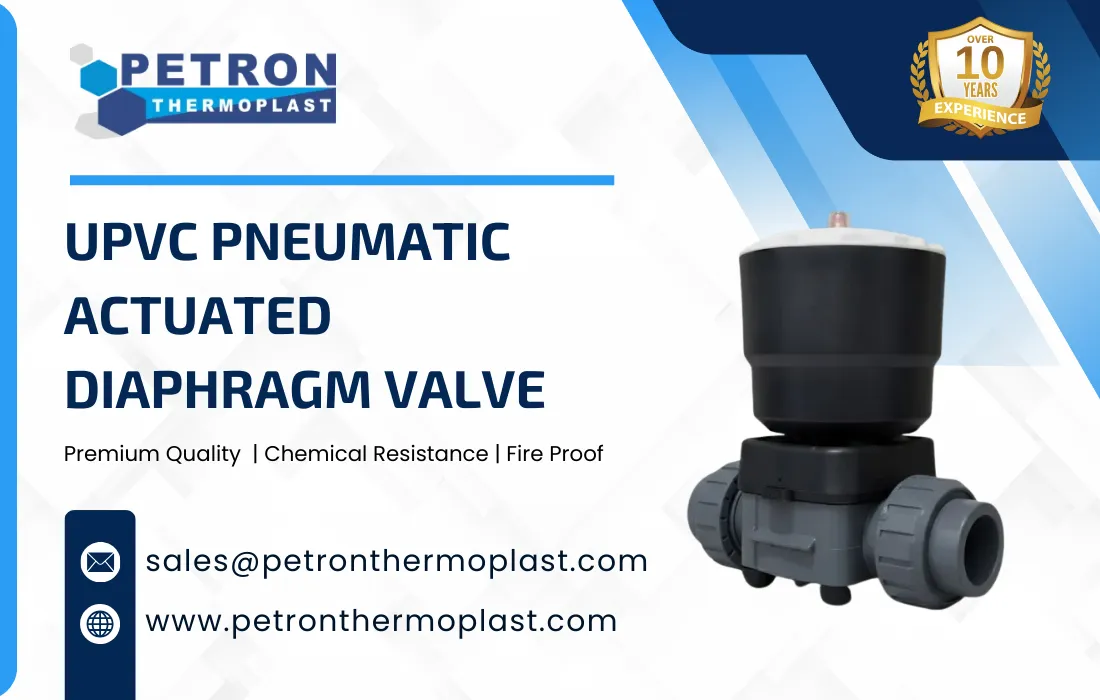
- Pneumatic (Air-Operated) Valve
- Actuated by compressed air.
- Ideal for remote control or automated processes.
- Electric Actuated Valve
- Uses an electric motor or actuator.
- Suitable for fully automated systems with precise control.
4. Based on Application / Specialty
- Sanitary / Hygienic uPVC Diaphragm Valve
- Smooth surfaces, no dead zones.
- Used in pharmaceutical, food, and beverage industries.
- High-Pressure / Reinforced Valves
- Reinforced body to withstand higher pressures.
- Used in industrial chemical processing.
Why Choose Petron Thermoplast?
Petron Thermoplast specialises in manufacturing world-class sewerage & drainage systems for commercial applications and UPVC systems that find applications in industrial and infrastructure projects. As a leading UPVC Compact Diaphragm Valve manufacturer in India, Petron Thermoplast also serves the agriculture sector through products in the borewell and agriculture chemical categories. The world’s largest manufacturers and inventors of UPVC compounds give us a sharp competitive edge amongst flange companies in India, as we exclusively bring Petron Thermoplast UPVC Compact Diaphragm Valve to the market – the first choice globally for potable Chemical applications. Petron Thermoplast’s robust distribution network, combined with best-in-class technology, is set to create a strong & sustainable partnership in the chemical Industry.