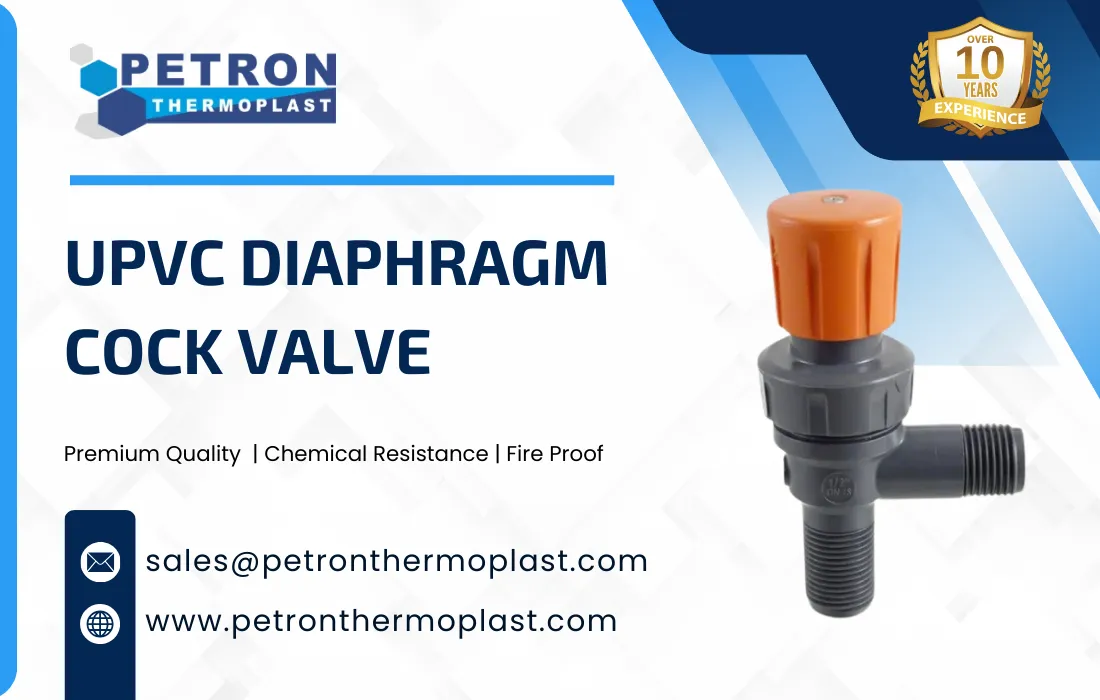
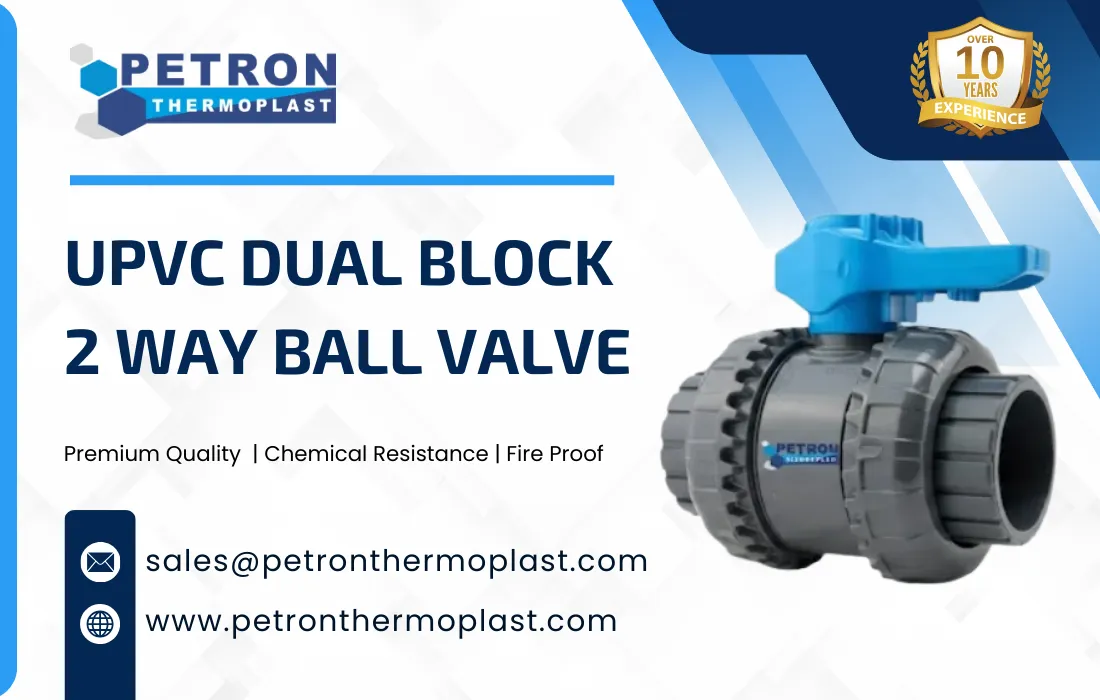
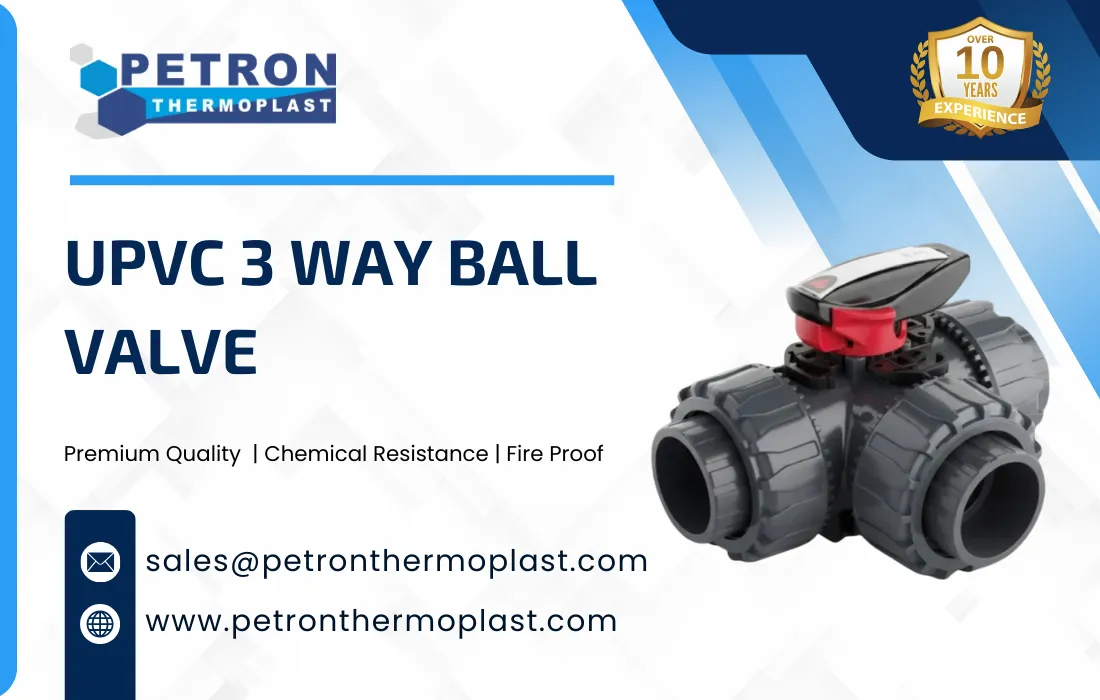
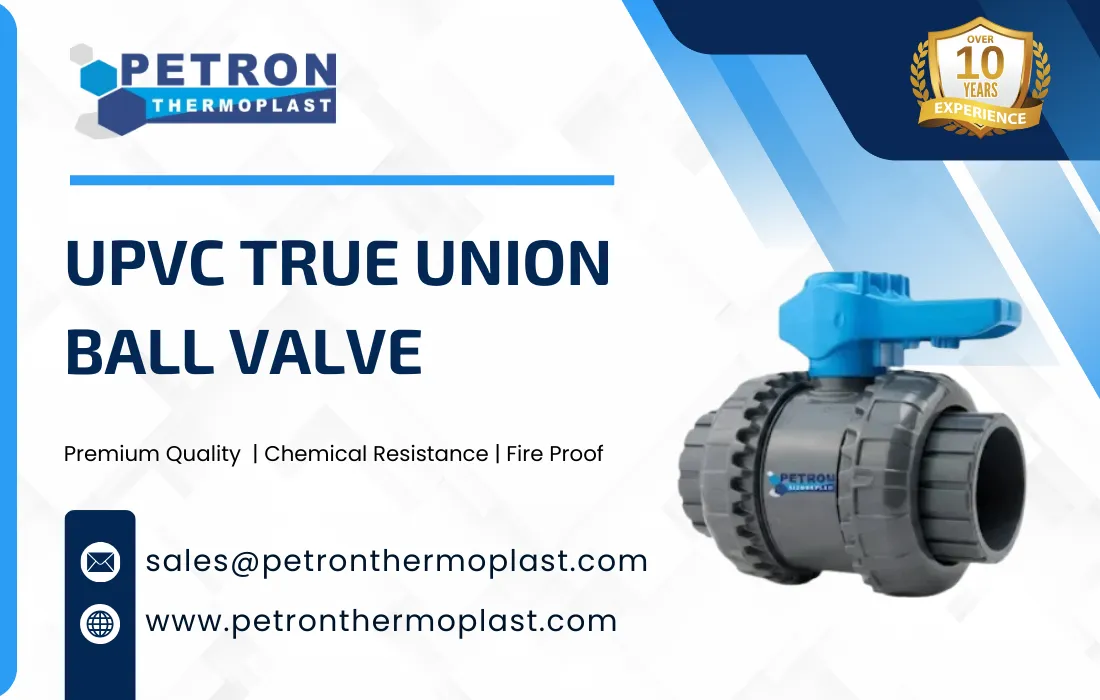
UPVC Globe Valve
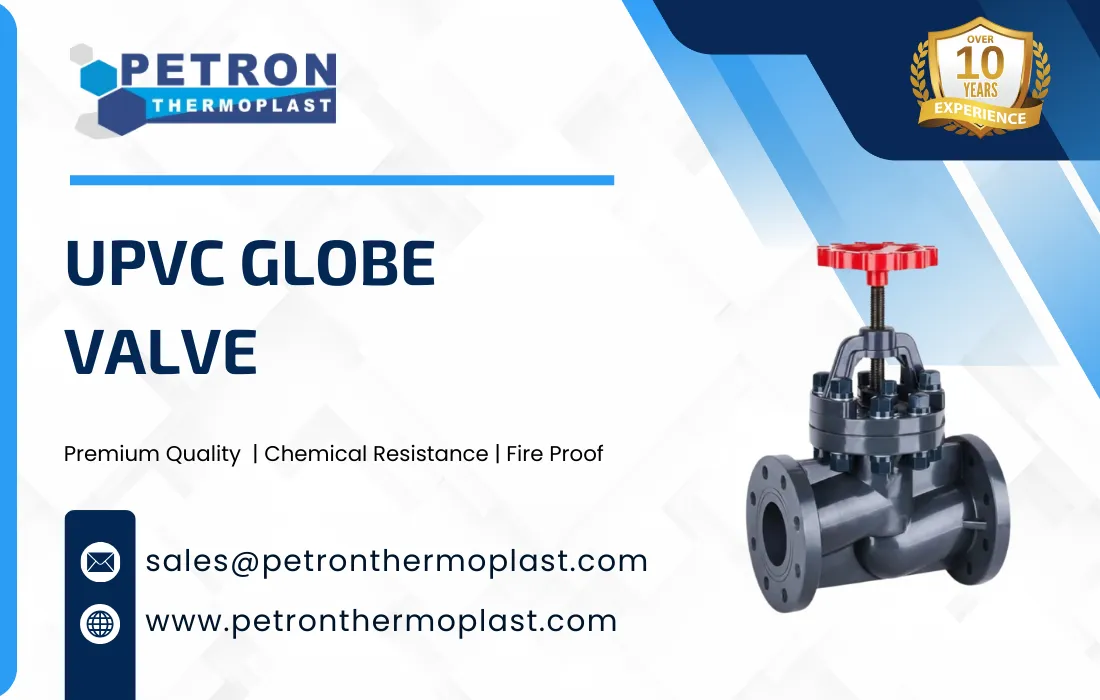
A UPVC globe valve using a linear motion for moving a disc into the seating surface. A UPVC Globe Valves form a globular-shaped cavity around the port region. The disc can be of various shapes and moves perpendicular to the globe valve seat. This disc movement helps in the valves’ opening and closure. UPVC Globe valves are generally used for pipes of a certain size.
Depending on the design of the seat and disc, the seating load of upvc globe valves can be positively controlled by a screwed stem. The sealing capacity of the globe valve is high.
They can be used for on-off duty if the flow resistance from the tortuous flow passage of these valves is acceptable. Some globe valves are also specifically designed for low flow resistance for use in on-off duty. Because of the short travel distance of the disc between the open and closed positions, Upvc globe valves are ideal if the valve has to be opened and closed frequently. Thus, upvc globe valves can be used for a wide range of duties.

- Chemical Resistance
- Low Maintenance Requirement
- Low Thermal Conductivity
- Long Service Life
- Easy Installation
- Corrosion Resistance
UPVC Globe Valve Details

Sizes: Nominal Pipe Diameter
A: Flange To Center
B: Center To Flange
C: Face To Face
D (Open): Maximum Open Height
E: Handwheel Outer Diameter
F: Flange Outer Diameter
G: Body End Distance
LIFT: Disc Travel Distance
| Sizes | A | B | C | D (Open) | E | F | G | LIFT |
| 2-1/2” | 1-1/16 | 3-1/4 | 9-1/2 | 12-1/2 | 6-9/16 | 7-1/2 | 4-3/4 | 2-1/8 |
| 3” | 1-1/16 | 3-1/4 | 9-1/2 | 12-1/2 | 6-9/16 | 7-1/2 | 4-3/4 | 2-1/8 |
| 4” | 1-1/8 | 4-1/4 | 11-1/2 | 13-1/4 | 11 | 9 | 5-3/4 | 2-3/16 |
| 6” | 1-1/4 | 6-5/16 | 16-1/4 | 17-7/8 | 11 | 11 | 8-1/8 | 3-1/4 |
| Parameter | Specification / Description |
| Valve Type | Globe Valve (Linear motion for flow regulation) |
| Body Material | UPVC (Unplasticized Polyvinyl Chloride) |
| Seal Material | EPDM / FPM / NBR |
| Size Range | ½” to 8” (15 mm to 200 mm) |
| Pressure Rating | PN10 / PN16 (10–16 bar at 20°C) |
| Temperature Range | 0°C to 60°C |
| Operation Type | Manual (Handwheel) / Optional Actuated |
| End Connections | Socket, Threaded, Flanged, Union End |
| Flow Control | Throttling + Shut-off (Precise regulation) |
| Body Design | Straight / Angle / Y-pattern |
| Standards | ISO 4422 / DIN 8063 / ASTM D1785 |
| Flow Direction | Uni-directional (As per arrow marking) |
| Density | ~1.38 g/cm³ |
| Tensile Strength | 50 – 60 MPa |
| Flexural Strength | 70 – 80 MPa |
| Impact Strength | 1.0 – 2.0 kJ/m² |
| Hardness | Shore D 75–80 |
| Thermal Conductivity | ~0.16 W/m·K |
| Expansion Coeff. | 0.07 – 0.10 mm/m·°C |
| Water Absorption | < 0.1% |
| Corrosion Resistance | Excellent (Acids, alkalis, salts) |
| Electrical Prop. | Very low conductivity (Insulator) |
| Surface Finish | Smooth internal bore (Low friction) |
Excellent Flow Regulation: Designed to offer precise control of flow rate with minimal turbulence.
Chemical Resistance: UPVC body and internal parts provide strong resistance to aggressive chemicals and corrosive media.
Corrosion-Free Construction: Non-metallic components prevent rust and degradation.
Durable & Long-Lasting: High impact strength and excellent thermal stability.
Smooth Operation: Handwheel operation allows for easy and accurate adjustment of flow.
Low Maintenance: No lubrication or complex servicing required; simple cleaning and inspection.
Reliable Sealing: High-quality seats and seals ensure leak-proof performance.
| Parameter | Typical Rating | Unit | Remarks |
| Nominal Pressure Class | PN10 | bar | Most common pressure class for UPVC globe valves |
| Max Working Pressure @ 20 °C | 10 | bar | Full-rated pressure at ambient temperature |
| Max Working Pressure @ 30 °C | ~8 | bar | Temperature derating begins |
| Max Working Pressure @ 40 °C | ~6 – 7 | bar | Reduced pressure due to UPVC material limits |
| Max Working Pressure @ 60 °C | ~3 – 4 | bar | Upper operating temperature limit |
| Hydrostatic Test Pressure | 15 | bar | Typically 1.5 × rated pressure |
| Vacuum Rating | Up to full vacuum | — | Depends on valve design and sealing |
| Minimum Operating Pressure | 0 | bar | Can operate at zero pressure |
| Valve Size | Pressure Class | Standard |
| ½″ – 2″ (15–50 mm) | PN10 | DIN / ISO |
| 2½″ – 4″ (65–100 mm) | PN10 | DIN / ISO |
| Above 4″ | PN6 – PN10 | Manufacturer dependent |

Custom Product Manufacturing Available
If you are searching for customized product designs that meet your requirements, don’t worry. Petron Thermoplast also offers custom product manufacturing services to meet the unique needs of various industries. Work with our expert engineers to create custom designs suited for your application.
Benefits of Using UPVC Globe Valve
1. Corrosion Resistance
- UPVC (unplasticized polyvinyl chloride) is highly resistant to corrosion from chemicals, acids, and alkalis.
- Unlike metal valves, it does not rust, making it ideal for water treatment plants, chemical industries, and irrigation systems.
2. Lightweight
- UPVC is much lighter than metal, making globe valves easier to install, transport, and handle.
- Reduced structural support is needed compared to heavy metal valves.
3. Low Maintenance
- These valves require minimal maintenance because they do not corrode or scale internally.
- Seals and seats generally last longer, reducing replacement frequency.
4. Cost-Effective
- UPVC valves are cheaper than metal counterparts like brass and bronze..
- Lower installation and maintenance costs also make them economical for large piping networks.
5. Smooth Flow Control
- Globe valves are designed for precise flow regulation.
- UPVC’s smooth internal surface reduces friction, improving efficiency and flow control.
6. Chemical Compatibility
- UPVC is compatible with a wide range of fluids, including potable water, acids, alkalis, and salts.
- This makes UPVC globe valves suitable for industrial, municipal, and agricultural applications.
7. Non-Conductive and Safe
- UPVC is non-conductive, reducing the risk of electrical hazards in pipelines carrying chemicals.
- Safe for potable water systems because it doesn’t leach harmful substances.
8. Easy Installation
- Solvent welding (glue joining) or mechanical fittings make installation simple and leak-free.
- No heavy tools or welding equipment needed.
9. Longevity
- With proper use, UPVC globe valves can last for 15–25 years.
- Resistant to weathering, UV radiation, and wear.
10. Environmentally Friendly
- UPVC can be recycled.
- Reduces dependence on metals, lowering environmental impact.
Types of UPVC Globe Valve
1. Based on Connection Type
Socket/Welded End Globe Valve
- Connected to pipes using solvent cement (glue).
- Common in residential and chemical piping.
- Easy to install and leak-proof if glued properly.
Threaded End Globe Valve
- Screwed onto male threaded pipes.
- Suitable for small diameter pipelines (usually up to 2 inches).
- Convenient for maintenance or replacement.
Flanged Globe Valve
- Bolted to a matching flange on the pipe.
- Common in larger diameter systems.
- Easier to remove for maintenance but more expensive.
2. Based on Flow Control Mechanism
Rising Stem Globe Valve
- The stem moves up and down as the valve opens/closes.
- The handwheel moves with the stem.
- Visual indication of valve position (open/closed).
- Ideal for precision flow control.
Non-Rising Stem Globe Valve
- The stem does not rise; only the disc moves inside the valve.
- The handwheel rotates in place.
- Suitable for tight spaces.
- Easier to install in compact systems.
3. Based on Internal Construction
Balanced Plug Globe Valve
- The disc is designed to balance fluid pressure.
- Reduces operating torque.
- Used in higher pressure applications.
Unbalanced Plug Globe Valve
- The disc directly faces fluid pressure.
- Requires more torque to operate under high pressure.
- Common for low-pressure or small systems.
4. Based on Usage
Standard uPVC Globe Valve
- For water supply, irrigation, and general fluid control.
- Works in moderate pressure applications.
Chemical-Resistant uPVC Globe Valve
- Special grades of uPVC for acidic or alkaline fluids.
- Often used in chemical plants and wastewater treatment.
Why Choose Petron Thermoplast?
Petron Thermoplast is your go-to solution when you need precise flow control in industrial applications. They create higher pressure drops than some alternatives, but that tortuous flow path is exactly what gives them their incredible throttling capability.
Use Petron Thermoplast UPVC globe valves when: