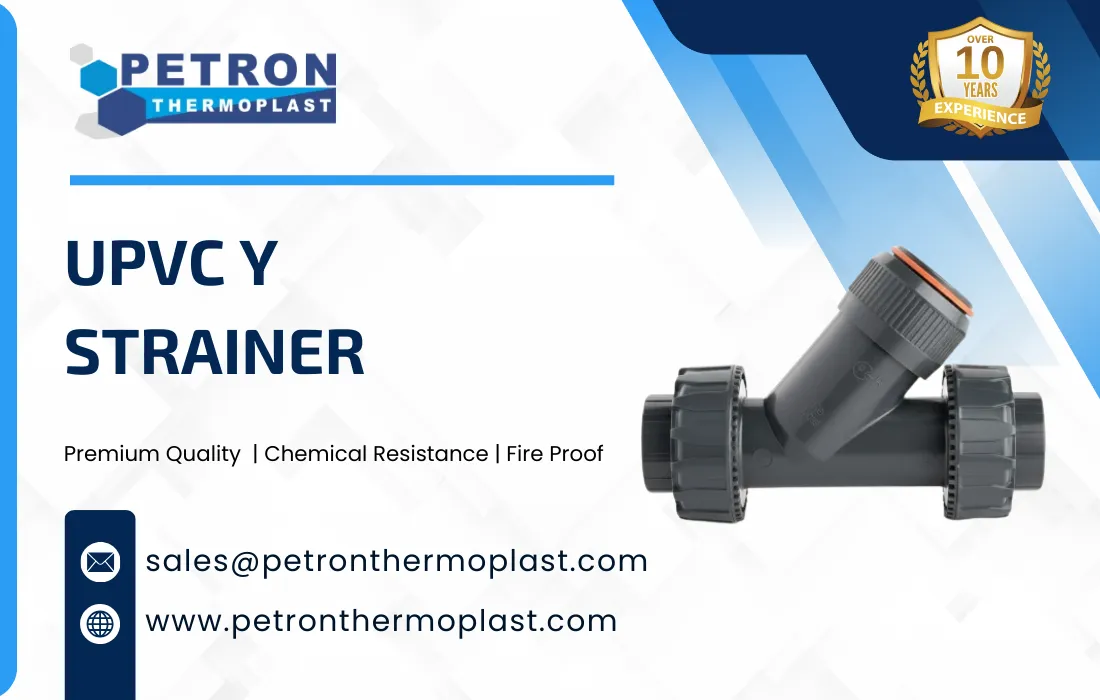
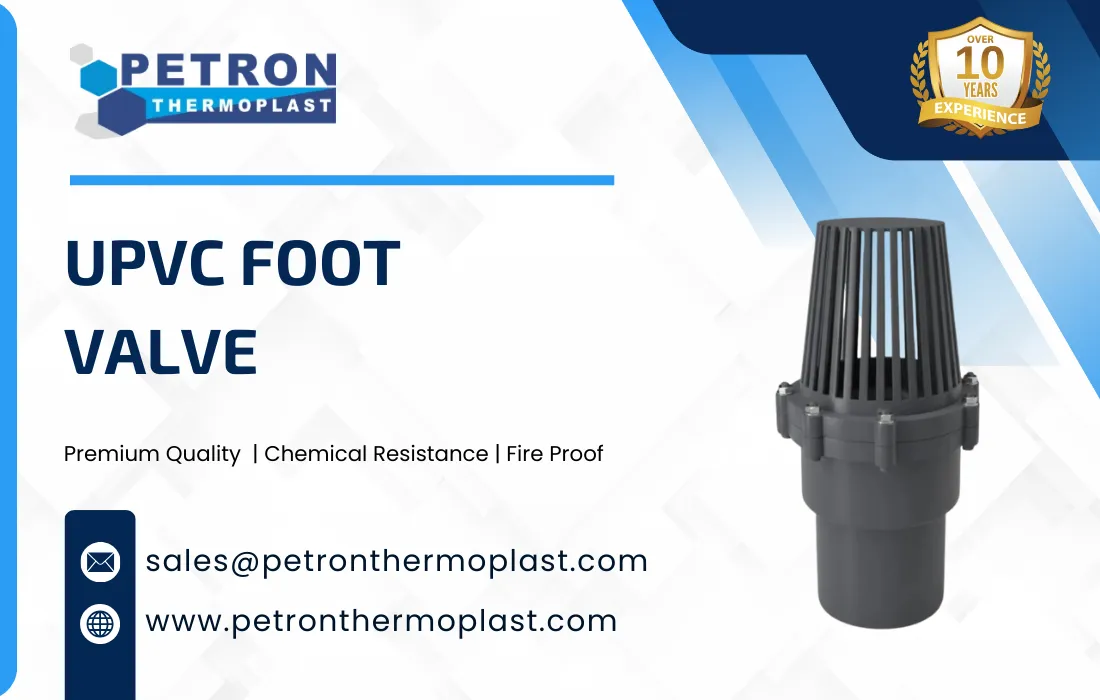
UPVC Angle Seat Valve
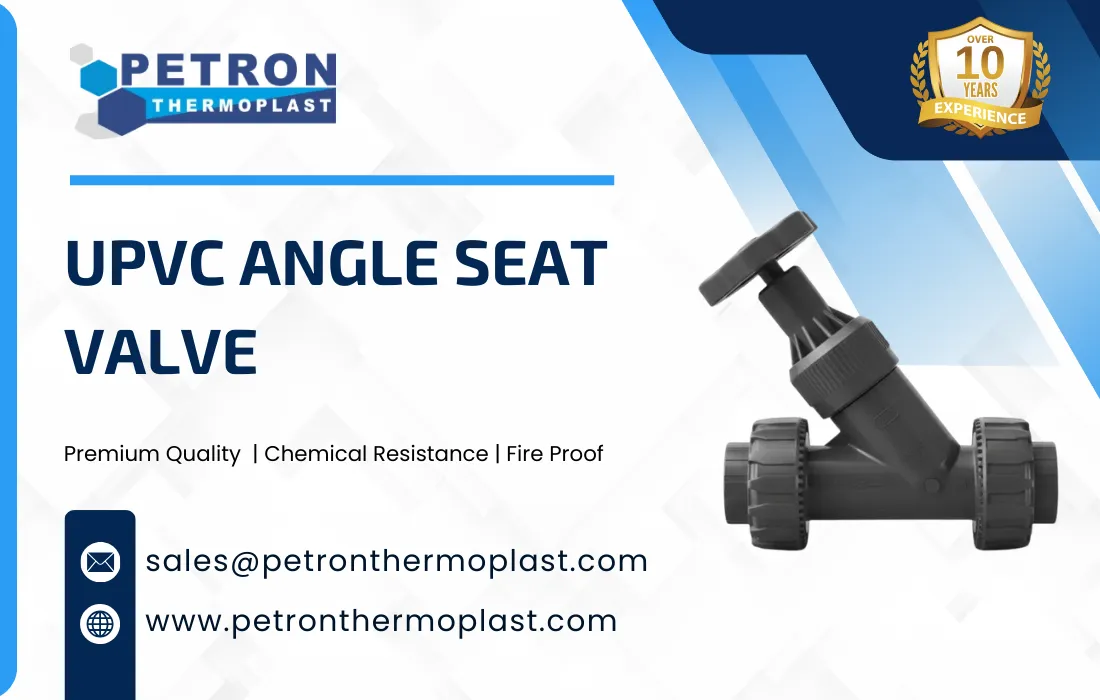
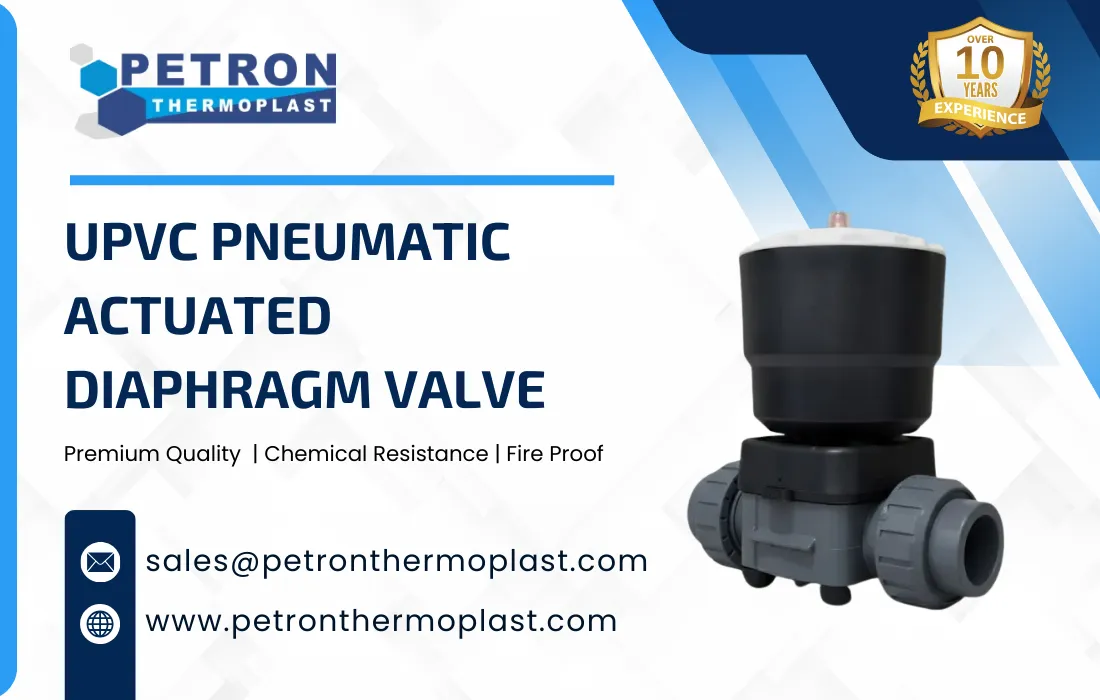
The UPVC Angle seat valves are two by two way pneumatically piston valves actuated. The actuator piston provides a linear motion to lift the seat off its seat. The seat is positioned at an angle, and the flow is impeded minimally in the open position, resulting in an excellent flow rate and a low pressure loss. These are used to regulate the flow of liquids, gases, steam, vacuum, and even aggressive fluids. Also can also operate with high temperatures and high viscosity media, even under zero differential pressures.
The UPVC angle seat valve is a popular choice for harsh applications, and they have a very high life cycle. Therefore, they are an excellent alternative to Ball valves with an actuator combo. These UPVC angle seat valves are also suitable for alternatives to solenoid valves, especially with contamination. They may be operated using a single-acting or double-acting configuration, which has an influence on their pressure rating.

- Chemical Resistance
- Low Maintenance Requirement
- Low Thermal Conductivity
- Long Service Life
- Easy Installation
- Corrosion Resistance
UPVC Angle Seat Valve Details
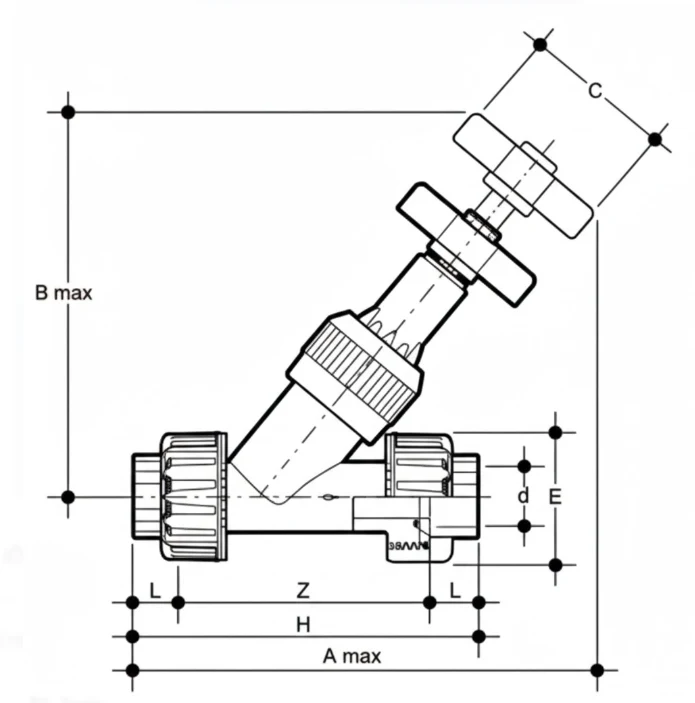
B max → Maximum Overall Height (top to bottom)
C → Handle / Head Width
E → End-to-End Length (branch outlet)
L → Socket / Connection Length
Z → Center-to-End Distance
H → Overall Height (horizontal assembly)
A max → Maximum Overall Length
d → Nominal Size (in mm)
DN → Diamètre Nominal (Nominal Diameter, in mm)
PN → Pressure Nominal (Pressure Rating, in bar)
| d | DN | PN | B max | C | E | L | Z | H | A max |
| 16 | 10 | 16 | 124 | 60 | 55 | 14 | 107 | 135 | 170 |
| 20 | 15 | 16 | 124 | 60 | 55 | 16 | 103 | 135 | 173 |
| 25 | 20 | 16 | 146 | 60 | 66 | 19 | 120 | 158 | 197 |
| 32 | 25 | 16 | 173 | 70 | 75 | 22 | 132 | 176 | 223 |
| 40 | 32 | 10 | 195 | 85 | 87 | 26 | 155 | 207 | 258 |
| 50 | 40 | 10 | 222 | 105 | 100 | 31 | 181 | 243 | 295 |
| 63 | 50 | 10 | 269 | 130 | 120 | 38 | 222 | 298 | 359 |
| Parameter | Specification / Typical Value | Remarks |
| Valve Type | Angle Seat Valve | 45° or 90° angle design |
| Body Material | uPVC (Unplasticized PVC) | Corrosion resistant |
| Seat Material | PTFE / uPVC | Low friction, good sealing |
| Seal Material | EPDM / FKM (Viton) | Based on fluid compatibility |
| Size Range | DN15 – DN100 | ½” – 4″ |
| End Connection | Socket / Threaded / Flanged | As per DIN / ASTM |
| Pressure Rating | PN10 / PN16 | At 20 °C |
| Working Pressure | Up to 16 bars | Depends on size & temperature |
| Operating Temp | 0 °C to 60 °C | Above this, derating is required |
| Flow Direction | Unidirectional | Marked on the valve body |
| Operation Type | Pneumatic / Manual | Normally Open / Normally Closed |
| Actuator Material | Polyamide / Stainless Steel | Depends on design |
| Actuation Pressure | 4 – 8 bar (pneumatic) | Standard air supply |
| Mounting Position | Any (preferred vertical) | Follow manufacturer guidance |
| Flow Coeff. (Kv) | High (size dependent) | Low pressure loss |
| Leakage Class | Bubble-tight | With a PTFE seat |
| Media | Water, air, chemicals | Compatibility check required |
| Applications | Water treatment, chemical, dosing | Industrial use |
Angle Body Design
Provides a smooth flow path with low pressure drop and high flow capacity.
Corrosion-Resistant uPVC Body
Ideal for water and chemical services; immune to rust, scaling, and electrochemical corrosion.
Pneumatic / Manual Operation
Available in normally open, normally closed, and double-acting configurations.
High Cycle Life
Designed for frequent on/off operation without loss of sealing performance.
Bubble-Tight Shutoff
PTFE or soft seat ensures excellent sealing with minimal leakage.
Fast Response Time
The pneumatic actuator allows quick opening and closing.
Lightweight Construction
Easier installation and reduced piping stress compared to metal valves.
Multiple End Connections
Socket, threaded, and flanged options for installation flexibility.
Wide Chemical Compatibility
Suitable for acids, alkalis, salts, and treated water (compatibility to be verified).
Low Maintenance Design
Fewer moving parts and corrosion-free materials reduce service requirements.
Fail-Safe Options
Spring-return designs ensure safe valve position during air failure.
Compact & Space-Saving
Suitable for installations with limited space.
| Nominal Size (DN) | Size (inch) | Pressure Rating @ 20 °C | PN Class |
| DN15 | ½” | 16 bar (232 psi) | PN16 |
| DN20 | ¾” | 16 bar (232 psi) | PN16 |
| DN25 | 1″ | 16 bar (232 psi) | PN16 |
| DN32 | 1¼” | 16 bar (232 psi) | PN16 |
| DN40 | 1½” | 16 bar (232 psi) | PN16 |
| DN50 | 2″ | 16 bar (232 psi) | PN16 |
| DN65 | 2½” | 10 bar (145 psi) | PN10 |
| DN80 | 3″ | 10 bar (145 psi) | PN10 |
| DN100 | 4″ | 10 bar (145 psi) | PN10 |

Custom Product Manufacturing Available
If you are searching for customized product designs that meet your requirements, don’t worry. Petron Thermoplast also offers custom product manufacturing services to meet the unique needs of various industries. Work with our expert engineers to create custom designs suited for your application.
Benefits of Using UPVC Angle Seat Valve
Excellent Corrosion Resistance
UPVC angle seat valve is immune to rust, scaling, and most chemical attacks, making it ideal for water and chemical applications
High Flow Capacity
This angled body design allows smooth flow with low pressure drop compared to straight-through valves.
Fast and Reliable Operation
Upvc Angle Seat valve is pneumatically operated, which provides a quick response and high cycle life.
Long Service Life
These are non-metallic bodies and PTFE seats to reduce wear and ensure consistent sealing over time.
Lightweight Construction
They are easier to handle and install than metal angle seat valves, and there is no need to support heavy pipe.
Low Maintenance
Fewer moving parts and corrosion-free material reduce maintenance and cost.
Bubble-Tight Shutoff
PTFE or soft seats to ensure excellent sealing with minimal leakage.
Suitable for High-Cycle Applications
Upvc angle seat valve is designed to handle frequent opening and closing without performance loss.
Good Chemical Compatibility
These are suitable for acids, alkalis, salts, and treated water (compatibility to be verified).
Energy Efficient
Need to have low flow resistance, which reduces the pumping energy requirements.
Types of UPVC Angle Seat Valve
1. Normally Closed (NC) Angle Seat Valve
- Valve remains closed when the air supply is off
- Opens when pneumatic air is applied
2. Normally Open (NO) Angle Seat Valve
- Valve remains open when the air supply is off
- Closes when pneumatic air is applied
3. Double-Acting Angle Seat Valve
- Uses air pressure for both opening and closing
- Faster response and better control
4. Single-Acting (Spring Return) Angle Seat Valve
- Operates with air in one direction and a spring return in the other
- Simple design and safer operation
5. Manual Angle Seat Valve
- Operated by hand lever or wheel
- No air supply required
6. Flanged uPVC Angle Seat Valve
- Flanged end connections (DIN / ANSI)
- Suitable for larger pipe sizes
7. Threaded / Socket End Angle Seat Valve
- Compact design with threaded or solvent-cement ends
- Easy installation
Why Choose Petron Thermoplast?
Petron Thermoplast has selected the right UPVC angle seat valve to require balancing material quality, actuation needs, and system compatibility. For high-performance applications involving steam, chemicals, or automated control. The certified actuators deliver optimal reliability. While the entry level of options exists for non-critical uses, investing in a well-engineered valve reduces downtime and maintenance costs over time.