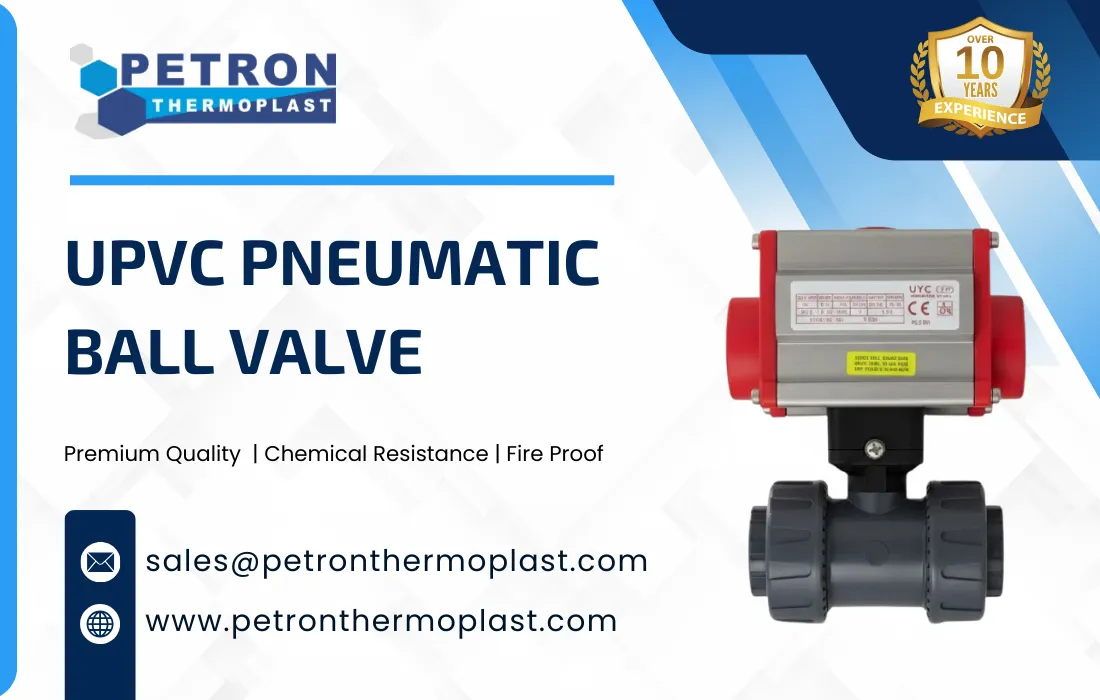
UPVC Pneumatic Ball Valve
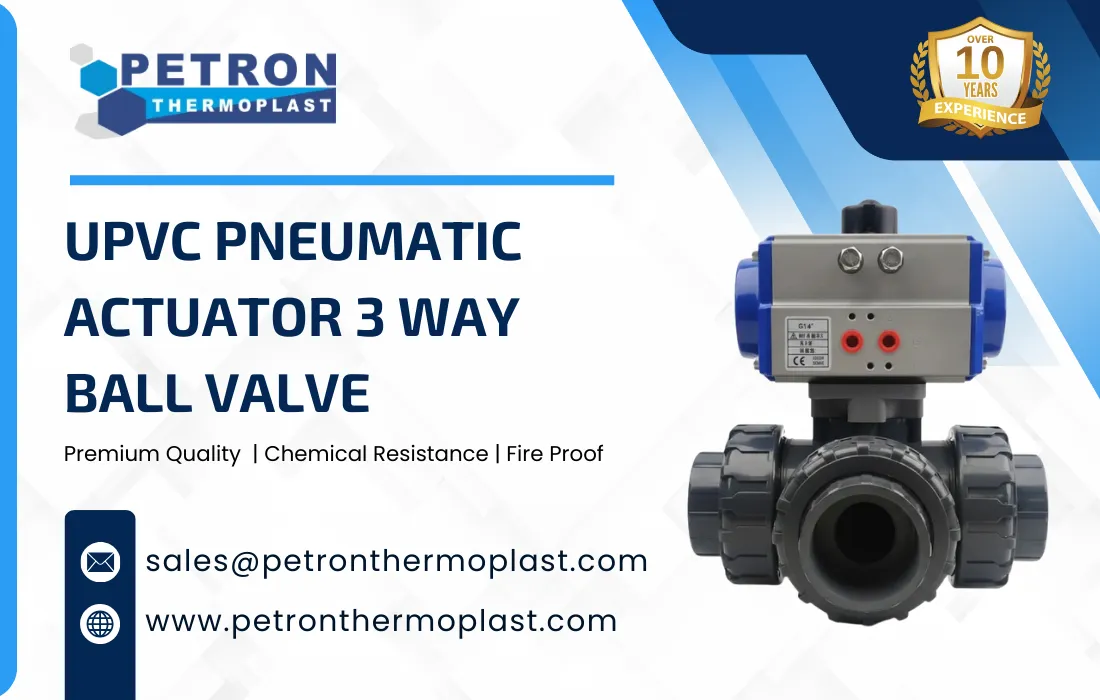
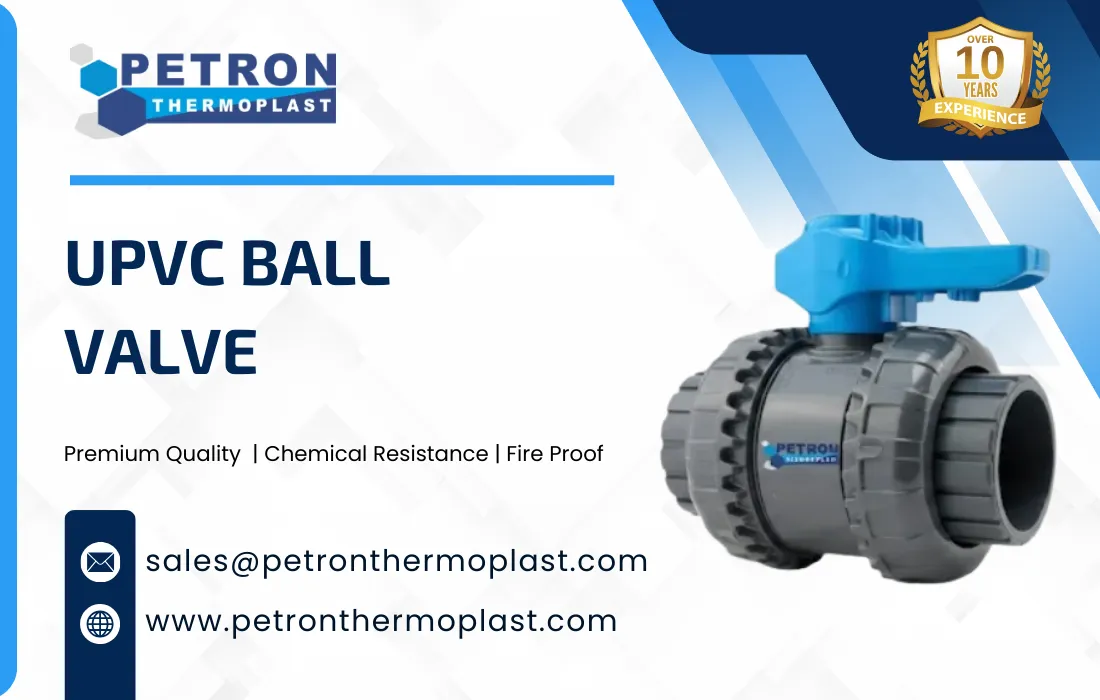
A UPVC pneumatic ball valve is a unified assembly consisting of a process valve mated to a pneumatic actuator. A UPVC pneumatic ball valve is a type of valve used to control the flow of fluids in a pipeline. The manual valves that required the human intervention, these devices utilize air pressure acting on internal pistons to convert the linear force into quarter-turn rotary motion. This mechanism allows for rapid cycling and makes them ideal for high-speed applications where immediate flow diversion or isolation is critical. The design typically features quarter-turn valves, which move from fully open to fully closed with a 90-degree rotation. UPVC pneumatic ball valve is a durable and corrosion-resistant material, making it suitable for various industries and applications.
The design of the UPVC pneumatic ball valve consists of a hollow, perforated, and pivoting ball to regulate the flow. When the valve is open, the ball allows fluid to pass through the pipeline. Conversely, when the valve is closed, the ball blocks the flow, preventing the passage of fluids. The UPVC pneumatic ball valve aspect refers to the method used to control the valve. UPVC pneumatic ball valve systems use compressed air-operated valves, providing efficient and reliable control over the flow of fluids. These valves can be remotely controlled, allowing for automated operations in industrial settings. UPVC pneumatic ball valves have resistance to corrosion, chemicals, and various environmental factors.

- Chemical Resistance
- Low Maintenance Requirement
- Low Thermal Conductivity
- Long Service Life
- Easy Installation
- Corrosion Resistance
UPVC Pneumatic Ball Valve Details
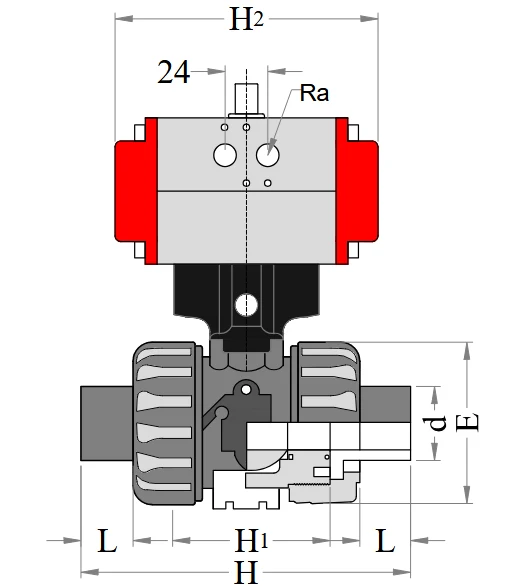
H2: Actuator Overall Length
Ra: Air Port Connection
E: Valve Body Outside Diameter
d: Nominal Pipe Diameter
H: Total Face-to-Face Length
H1: Internal Body Length
L: Socket Insertion Depth
| Size | d | H | H1 | E | L | Ra | H2 |
| 1/2” | 20 | 103 | 65 | 54 | 71 | G1/8” | 160 |
| 3/4” | 25 | 115 | 70 | 65 | 77 | G1/8” | 138 |
| 1” | 32 | 128 | 78 | 73 | 84 | G1/8” | 138 |
| 1-1/4” | 40 | 146 | 88 | 86 | 94 | G1/4” | 155.5 |
| 1-1/2” | 50 | 164 | 93 | 98 | 102 | G1/4” | 155.5 |
| 2” | 63 | 199 | 111 | 122 | 123 | G1/4” | 155.5 |
| 2-1/2” | 75 | 235 | 133 | 164 | 44 | G1/4” | 210 |
| 3” | 90 | 270 | 149 | 203 | 51 | G1/4” | 228 |
| 4” | 110 | 308 | 167 | 238 | 61 | G1/4” | 280.5 |
| Parameter | Specification / Description |
| Valve Type | Ball Valve (Quarter-turn type) |
| Actuation Type | Pneumatic (Air-operated actuator) |
| Actuator Operation | Double Acting / Single Acting (Spring Return) |
| Valve Body & Ball | UPVC (Unplasticized Polyvinyl Chloride) |
| Seat Material | PTFE (Teflon) |
| Seal / O-ring | EPDM / Viton / NBR |
| Size Range | DN15 to DN100 (½″ to 4″) |
| End Connections | Socket, Threaded (BSP/NPT), Flanged, Union |
| Working Pressure | PN10 / PN16 (10–16 bar at 20°C) |
| Air Supply Pressure | 2 – 8 bar (Compressed air) |
| Operating Temp. | 0°C to 60°C |
| Rotation Angle | 90° (Quarter-turn operation) |
| Travel Adjustment | ±5° (For fine-tuning open/closed positions) |
| Mounting Standard | ISO 5211 / NAMUR interface |
| Flow Type | Full bore (Minimal pressure drop) |
| Flow Direction | Bi-directional |
| Leakage Class | Bubble-tight shutoff |
| Density | ~1.38 g/cm³ |
| Tensile Strength | 45 – 60 MPa |
| Hardness | Shore D 75–80 |
| Corrosion Resistance | Excellent (Acids, alkalis, salts) |
| Electrical Prop. | Non-conductive (Insulator) |
| Automation Options | Solenoid valve, limit switch box, positioner |
1. Material Advantage
- Made of unplasticized PVC (UPVC), providing excellent corrosion resistance against chemicals, acids, and alkalis.
- Lightweight yet durable, reducing installation strain.
2. Pneumatic Actuation
- Automated operation via compressed air.
- Can be single-acting (spring return) or double-acting, allowing precise control.
- Reduces manual intervention and improves operational efficiency.
3. Tight Shut-Off
- UPVC Pneumatic Ball Valve design ensures full closure without leakage.
- Reliable for both liquids and gases in various pipelines.
4. Flow Efficiency
- Full-bore design allows minimal pressure drop.
- Smooth, unrestricted flow ensures system efficiency.
5. Chemical Compatibility
- Resistant to most industrial chemicals, oil & gas treatment agents.
- Suitable for chemical plants.
6. Low Maintenance
- Does not rust, corrode, or scale internally.
- Minimal cleaning or repair is required over its lifespan.
7. Easy Installation
- Available in socket, threaded, or flanged connections.
- Lightweight design allows quick installation and easy handling.
8. Safety Features
- Remote operation reduces exposure in hazardous environments.
- Single-acting valves can fail safe on air loss (open or close as needed).
9. Durability
- Resistant to UV rays and outdoor weathering, making it suitable for exposed installations.
- Long service life under standard operating conditions.
10. Versatility
- Works in a variety of applications: Oil, gas treatment, chemical industries, irrigation systems, and industrial pipelines.
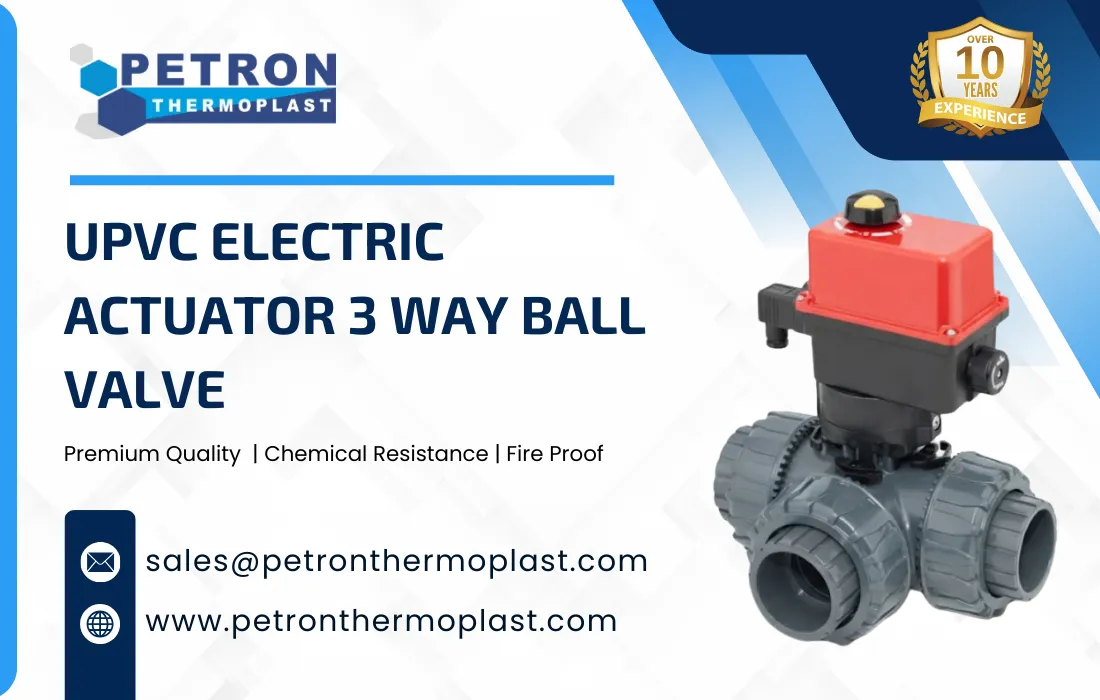
- Available in 2-way and 3-way configurations for flow control or diversion.
| Valve Size | Pressure Rating (PN) | Approx. Working Pressure @ 20 °C | Notes |
| DN15 (½″) | PN16 | 16 bar | Smaller valves are often rated higher (PN16) |
| DN20 (¾″) | PN16 | 16 bar | Standard uPVC flanged/true-union types |
| DN25 (1″) | PN16 | 16 bar | Typical for DN15–DN50 range |
| DN32 (1¼″) | PN16 | 16 bar | Depends on manufacturer/design |
| DN40 (1½″) | PN16 | 16 bar | Socket/flanged type up to PN16 |
| DN50 (2″) | PN16 | 16 bar | Common upper limit for PN16 |
| DN65 (2½″) | PN10 | 10 bar | Larger sizes are often reduced to PN10 |
| DN80 (3″) | PN10 | 10 bar | Larger flange/union valves |
| DN100 (4″) | PN10 | 10 bar | Larger sizes are typical at PN10 |
| >DN100 | PN10 | ~10 bar or lower | Many manufacturers rate larger sizes PN10 |

Custom Product Manufacturing Available
If you are searching for customized product designs that meet your requirements, don’t worry. Petron Thermoplast also offers custom product manufacturing services to meet the unique needs of various industries. Work with our expert engineers to create custom designs suited for your application.
Benefits of Using UPVC Pneumatic Ball Valve
1. Corrosion Resistance
- UPVC (unplasticized polyvinyl chloride) is highly resistant to chemical corrosion, acids, and alkalis.
- Ideal for chemical processing, oil & gas treatment, and industrial applications where metal valves would corrode.
2. Lightweight
- UPVC Pneumatic Ball Valve is much lighter than metal, making the valve easier to install, handle, and maintain.
- Reduces structural stress on piping systems.
3. Cost-Effective
- Cheaper than metal alternatives.
- Lower maintenance costs due to corrosion resistance and durability.
4. Smooth Operation
- Pneumatic actuation allows fast, reliable, and automated opening/closing.
- Reduces manual labor and improves process efficiency.
5. Low Maintenance
- No rusting or scaling inside the valve.
- Long operational life without frequent replacement.
6. Excellent Sealing Performance
- UPVC Pneumatic Ball Valve Ball valves provide a tight shut-off, preventing leakage.
- Pneumatic operation ensures consistent actuation force, improving reliability.
7. Chemical Compatibility
- Compatible with a wide range of chemicals, including chlorine, acids, alkalis, and solvents.
- Ideal for industrial, Oil & gas treatment, and chemical plants.
8. High Flow Capacity
- Ball design allows full-bore flow, reducing pressure drop.
- Efficient for systems where a maximized flow rate is important.
9. Safety and Automation
- Pneumatic actuation allows remote operation, reducing risk in hazardous environments.
- Can integrate with control systems for automated processes.
10. Durability
- Resistant to UV rays and weather conditions.
- Suitable for outdoor or exposed environments.
Types of UPVC Pneumatic Ball Valve
Based on Connection Type
1. Threaded UPVC Pneumatic Ball Valve
- Screwed directly into threaded UPVC pipes.
- Small diameter pipelines and modular systems.
- Easy installation and removal; good for maintenance.
2. Flanged UPVC Pneumatic Ball Valve
- Bolted flanges connect to pipeline flanges.
- Medium to large pipelines, industrial setups.
- Strong mechanical connection; easy to remove and replace.
Based on Ball Valve Design
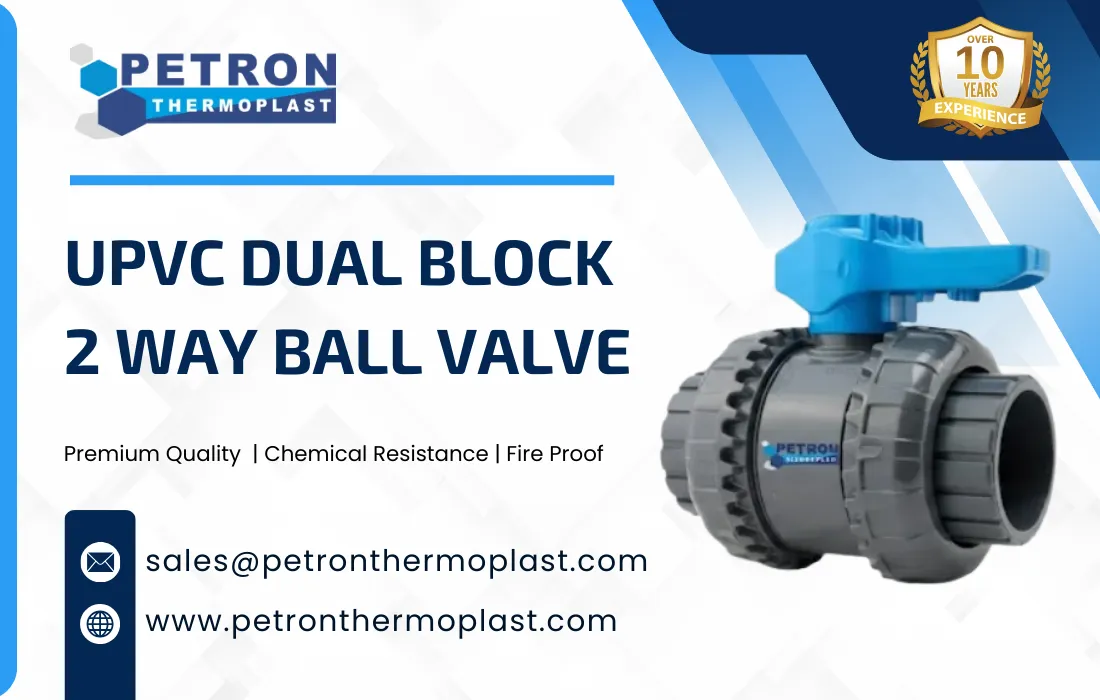
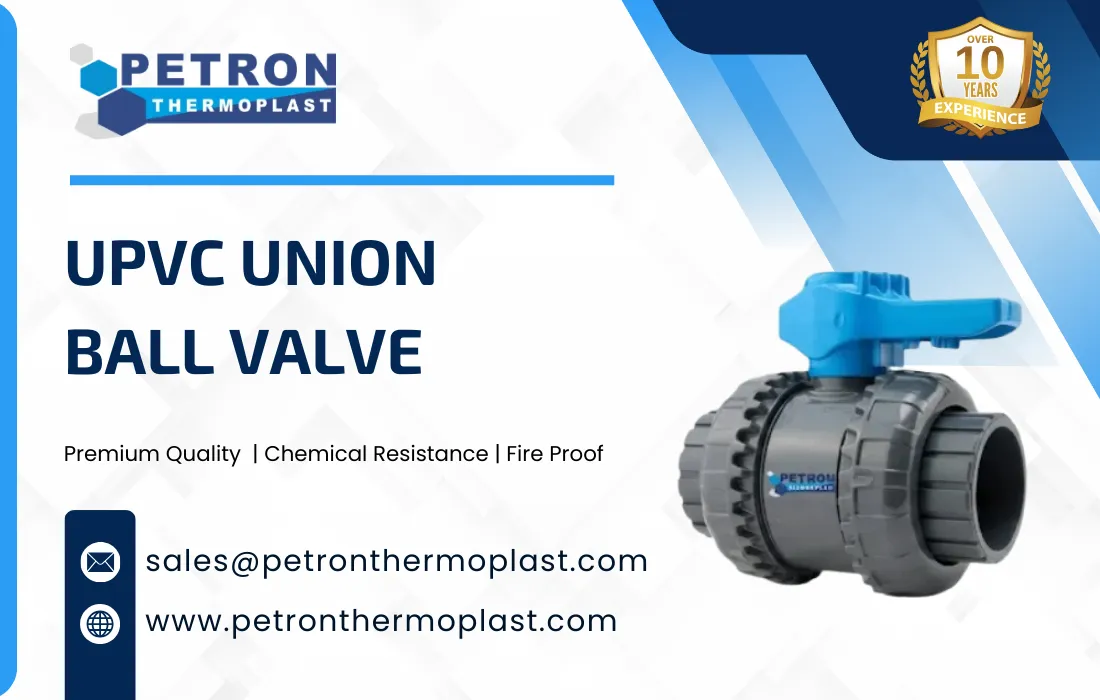
1. Two-Way UPVC Pneumatic Ball Valve
- Simple ON/OFF control in one pipeline.
- Standard oil or chemical flow control.
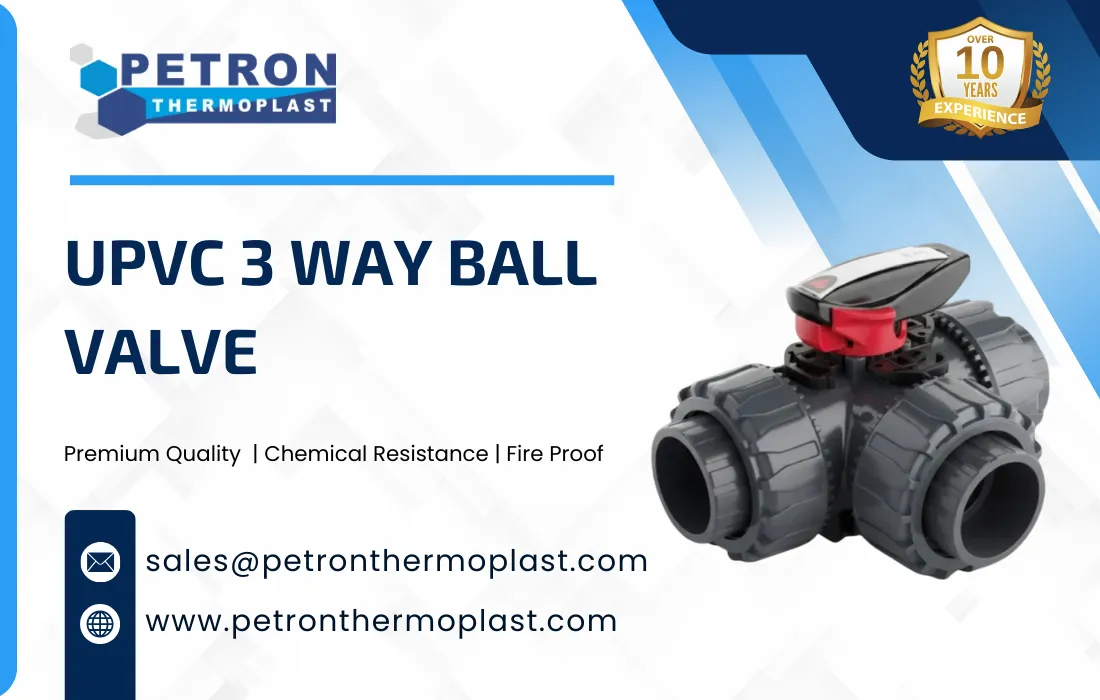
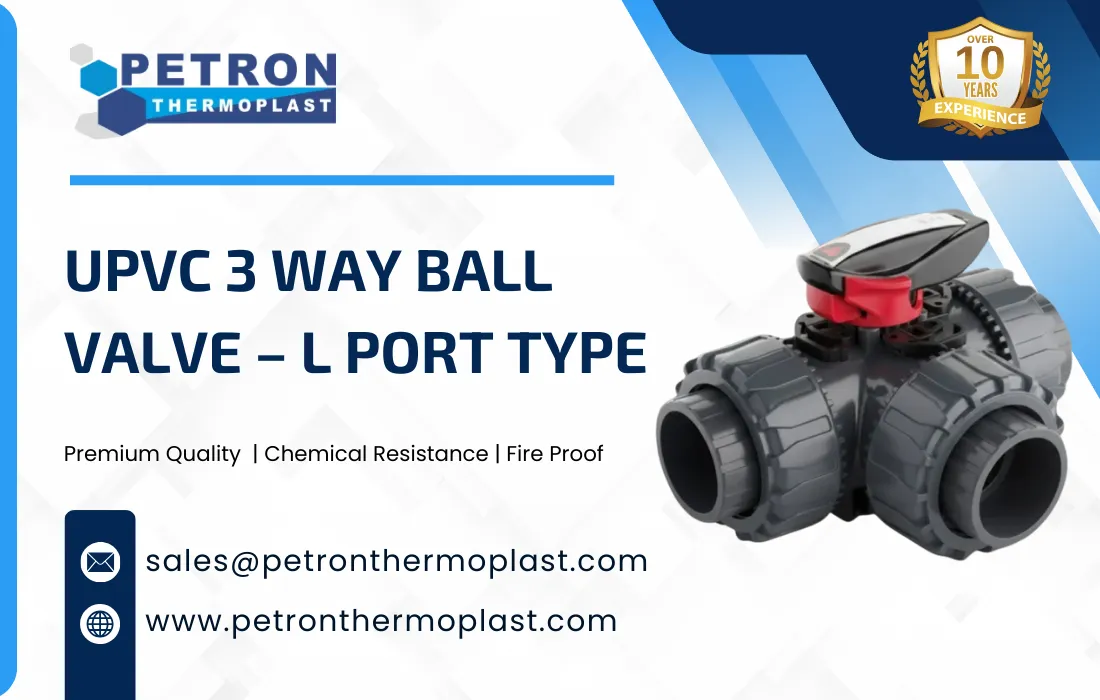
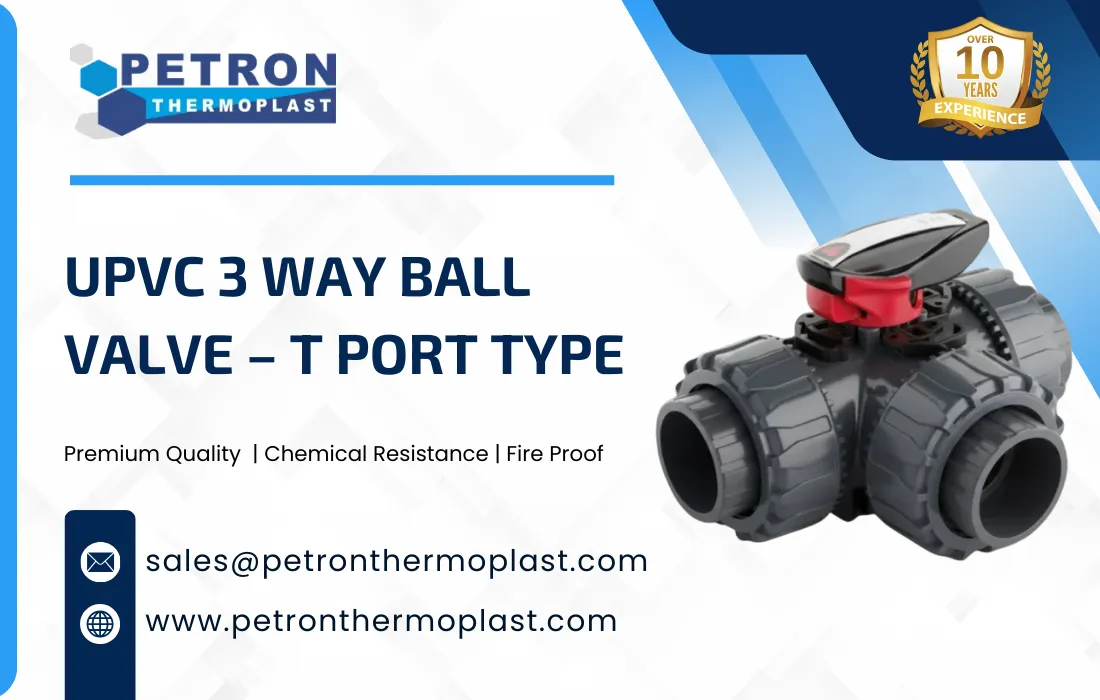
2. Three-Way UPVC Pneumatic Ball Valve
- Can divert flow between two outlets or mix two inlets.
- Complex piping systems need diversion or mixing.
Based on Actuation
1. Single-Acting Pneumatic Ball Valve (Spring Return)
- Spring returns the valve to the default position when air is removed.
- Safety systems where the valve must fail-safe (open or close) on air failure.
2. Double-Acting Pneumatic Ball Valve
- Air pressure is needed for both opening and closing.
- Systems requiring precise control and not reliant on a spring return.
Based on Pressure Rating
- Standard Pressure UPVC Pneumatic Ball Valve usually 10–16 bar.
- High-Pressure UPVC Pneumatic Ball Valve has special designs for higher pressure, often reinforced.
Why Choose Petron Thermoplast?
Petron Thermoplast has selected the right UPVC Pneumatic Ball Valve to require balancing material quality, actuation needs, and system compatibility. For high-performance applications involving steam, chemicals, or automated control. The certified actuators deliver optimal reliability. While the entry level of options exists for non-critical uses, investing in a well-engineered valve reduces downtime and maintenance costs over time.