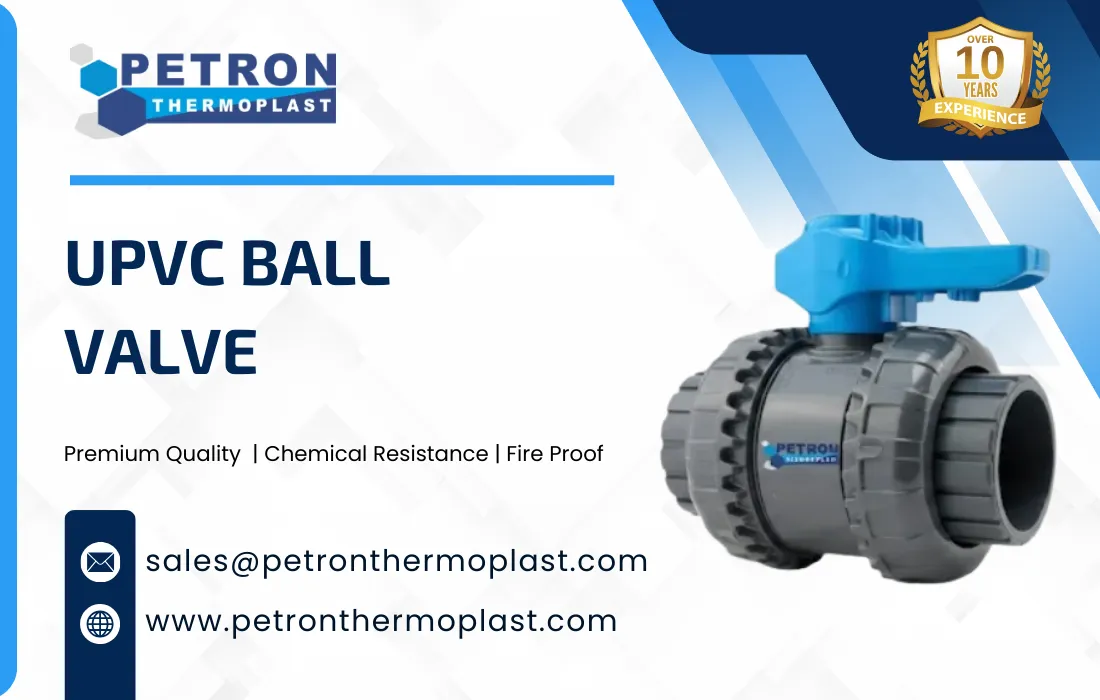
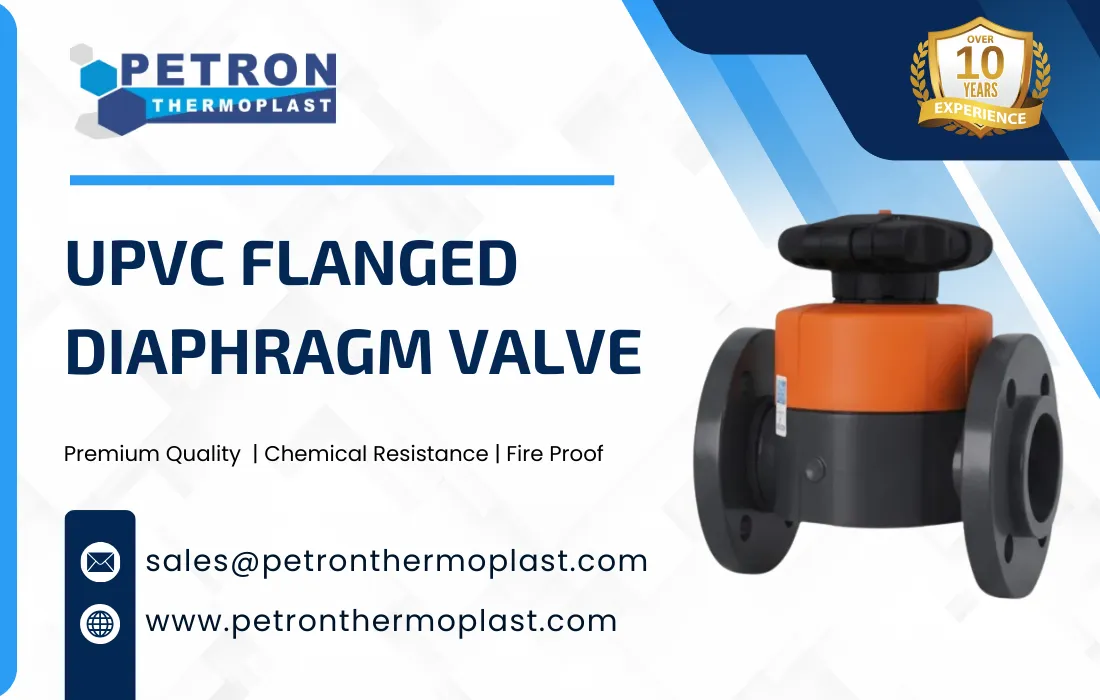
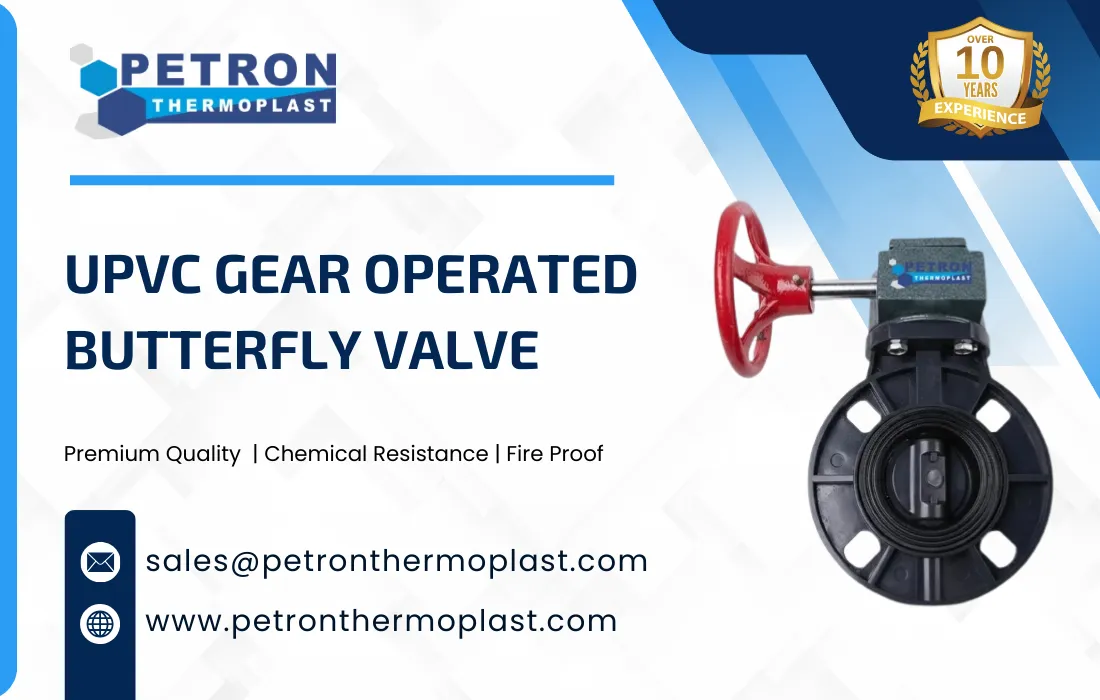
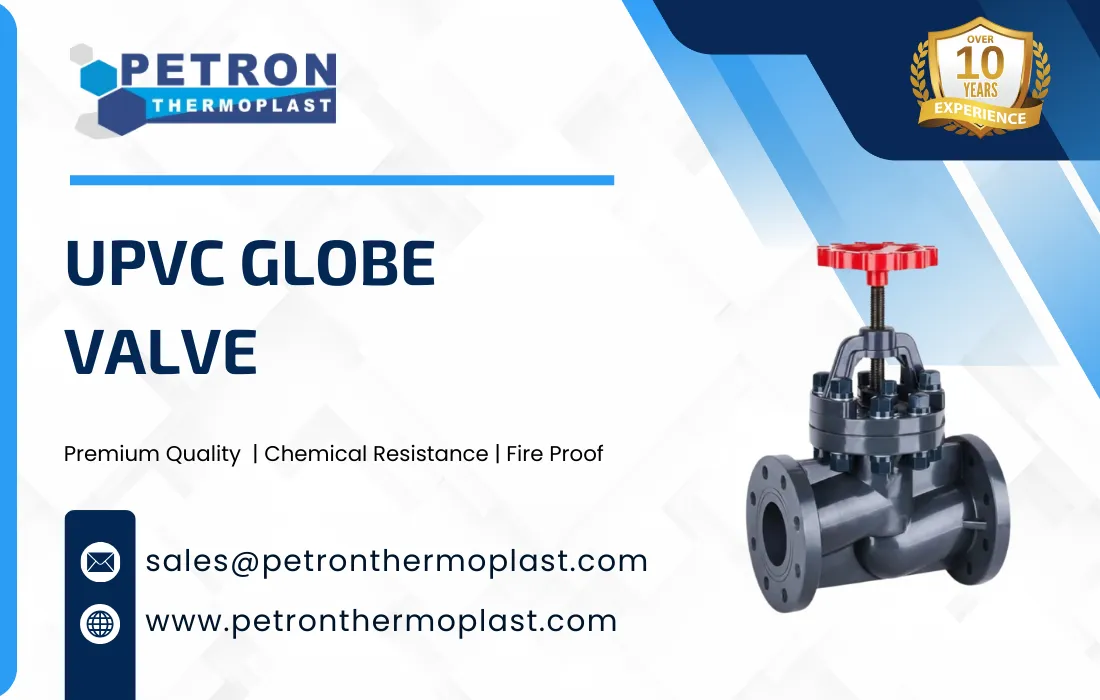
UPVC Electric Actuator Ball Valve
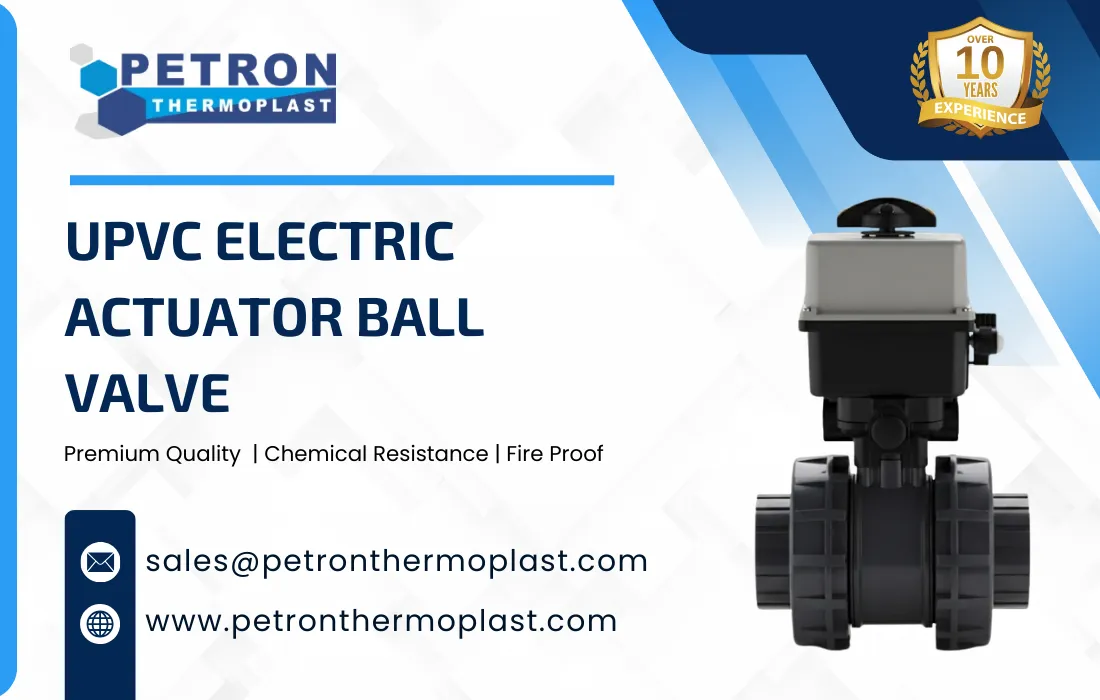
UPVC Electric Actuator Ball Valve is a device that replaces the levers to allow remote control of the valves to control. UPVC Electric Actuator Ball Valves are often employed in various industries and settings in order to automate the opening and closing actions of valves; there are multiple styles available, and these devices work with various valves. Upvc Electric actuated ball valve is essential for controlling the flow of liquids, gases and other fluids in industrial applications. Electric actuators are a vital component of any automated system, where they use an electrical signal to control the opening and closing motion of a valve.
UPVC Electric Actuator Ball Valve is known for having a solid opposition against synthetics, daylight, and oxidation from water. UPVC is generally utilized in development since it is robust, modest, and easily installed. UPVC Electric Actuator Ball Valve is a piston or a diaphragm that develops the driving force. UPVC Electric Actuator Ball Valve is a simple and efficient item for dispersion in private, business, and Industrial Buildings with numerous benefits over the common channeling framework.

- Chemical Resistance
- Low Maintenance Requirement
- Low Thermal Conductivity
- Long Service Life
- Easy Installation
- Corrosion Resistance
UPVC Electric Actuator Ball Valve Details
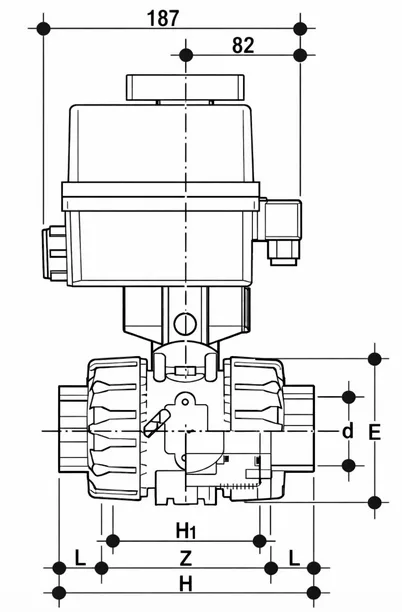
d: Outside diameter
DN: Nominal Diameter
PN: Nominal Pressure
E: Outside diameter of the valve/fitting body
H: Total height
H1: Height from the center of the pipe to the bottom
L: Insertion depth (length of the socket)
Z: Face-to-face length
EPDM: Ethylene Propylene Diene Monomer
| O-Ring Type | d | DN | PN | E | H | H1 | L | Z |
| EPDM | 16 | 10 | 16 | 54 | 103 | 65 | 14 | 75 |
| EPDM | 20 | 15 | 16 | 54 | 103 | 65 | 16 | 71 |
| EPDM | 25 | 20 | 16 | 65 | 115 | 70 | 19 | 77 |
| EPDM | 32 | 25 | 16 | 73 | 128 | 78 | 22 | 84 |
| EPDM | 40 | 32 | 16 | 86 | 146 | 88 | 26 | 94 |
| EPDM | 50 | 40 | 16 | 98 | 164 | 93 | 31 | 102 |
| EPDM | 63 | 50 | *10 | 122 | 199 | 111 | 38 | 123 |
| Parameter | Specification / Description |
| Valve Type | Electric Actuated Ball Valve (2-Way / 3-Way) |
| Actuation Type | Electric Motorized Quarter-Turn Actuator |
| Valve Body Material | uPVC (Unplasticized Polyvinyl Chloride) |
| Ball Material | uPVC / CPVC / PVDF (Model dependent) |
| Seat Material | PTFE (Teflon) |
| Seal / O-Ring Material | EPDM / FKM (Viton) |
| Stem Material | Stainless Steel (SS304 / SS316) |
| Actuator Material | Aluminum alloy / Plastic housing |
| Port Configuration | Straight-through (2-Way) / L-Port or T-Port (3-Way) |
| Rotation Angle | 90° (Quarter Turn) |
| Size Range | DN15 – DN100 (½″ – 4″) |
| Pressure Rating | PN10 – PN16 (Up to 10–16 bar) |
| Supply Voltage | AC 24V / 110V–380V or DC 12V–24V |
| Control Type | On/Off (Simple) or Modulating (4-20mA / 0-10V) |
| Open/Close Time | ~20–100 Seconds |
| Torque Output | 50 Nm – 160 Nm (Size dependent) |
| Protection Rating | IP65 / IP67 (Dust & Water protection) |
| Operating Temp (Fluid) | −10°C to 60°C (uPVC limit) |
| Operating Temp (Amb.) | −30°C to 60°C |
| Connection Types | True Union Socket / Threaded / Union |
| Manual Override | Yes (Handwheel/Wrench for emergency operation) |
| Mounting Standard | ISO 5211 Drive Interface |
| Position Indicator | Integrated Visual Indicator |
| Leakage Class | Bubble-tight shut-off |
| Weight | Lightweight (40–60% less than metal valves) |
| Applications | Chemical dosing, water treatment, industrial automation |
1. Electric Actuation
- Operated by an electric motor.
- Provides automated open/close or modulating control.
- Can be integrated with PLC, DCS, SCADA, or BMS systems.
2. UPVC Construction
- Valve body and ball made of uPVC (sometimes CPVC/PVDF for higher chemical resistance).
- Highly resistant to corrosion and chemicals (acids, alkalis, salts).
- Lightweight, reducing installation and support costs.
3. Tight Shut-Off
- Ball design ensures bubble-tight sealing.
- Prevents leakage, suitable for isolation and dosing applications.
4. 2-Way or 3-Way Flow Configurations
- 2-Way: Simple on/off flow control.
- 3-Way (L-Port / T-Port): Diverting or mixing of flows.
5. Manual Override
- Most electric actuators include manual handwheels.
- Enables operation during power failure or maintenance.
6. Control Options
- On/Off control (fully open/closed).
- Modulating/proportional control (0–90° positioning).
- Compatible with analog or digital control signals.
| Valve Size | Pressure Rating @ 20°C | Pressure Class / Notes |
| DN15 (½″) | PN16 (≈16 bar) | Higher class for small sizes |
| DN20 (¾″) | PN16 (≈16 bar) | Typical smaller size rating |
| DN25 (1″) | PN16 (≈16 bar) | Standard rating for small sizes |
| DN32 (1¼″) | PN16 (≈16 bar) | Still rated at PN16 |
| DN40 (1½″) | PN16 (≈16 bar) | Common up to ~2″ |
| DN50 (2″) | PN16 (≈16 bar) | Typical small-medium size |
| DN65 (2½″) | PN10 (≈10 bar) | Larger sizes derated |
| DN80 (3″) | PN10 (≈10 bar) | Common for up to 3″ valves |
| DN100 (4″) | PN10 (≈10 bar) | Larger sizes lower rated |

Custom Product Manufacturing Available
If you are searching for customized product designs that meet your requirements, don’t worry. Petron Thermoplast also offers custom product manufacturing services to meet the unique needs of various industries. Work with our expert engineers to create custom designs suited for your application.
Benefits of Using UPVC Electric Actuator Ball Valve
1. Excellent Corrosion Resistance
- UPVC is non-metallic, so it does not rust or corrode.
- Ideal for chemicals, acids, alkalis, saline water, and aggressive fluids.
- Longer service life compared to metal valves in corrosive environments.
2. Automated & Remote Operation
- An electric actuator enables automatic open/close or modulating control.
- Easily integrated with PLC, DCS, SCADA, and BMS systems.
- Reduces manual operation and human error.
3. Precise Flow Control
- Quarter-turn ball design ensures:
- Accurate positioning
- Repeatable operation
- Modulating actuators allow proportional control for flow regulation.
4. Low Maintenance
- The UPVC body does not require painting or corrosion protection.
- Fewer moving parts than gear or gate valves.
- Electric actuators require minimal servicing.
5. Energy Efficient
- Electric actuators consume power only during operation, not continuously.
- More energy-efficient than pneumatic systems where compressed air is costly.
6. Lightweight Construction
- UPVC is significantly lighter than brass.
- Easier installation and handling.
- Lower load on pipelines and supports.
7. Tight Shut-Off Performance
- Ball valve design provides bubble-tight sealing.
- Prevents leakage even after repeated cycles.
- Suitable for on/off isolation duties.
8. Wide Voltage & Control Options
- Available in AC and DC voltages (24V, 110V, 230V, etc.).
- Compatible with:
- On/Off control
- 3-point control
- 4–20 mA or 0–10 V modulating signals
9. Safe & Reliable Operation
- No need for compressed air (unlike pneumatic systems).
- Suitable for indoor installations and controlled environments.
- Many models include manual override for emergency operation.
10. Cost-Effective Solution
- Lower cost than electric valves.
- Reduced installation and maintenance expenses.
- Long-term operational savings.
11. Clean & Quiet Operation
- No air exhaust noise.
- Ideal for laboratories, Oil & gas treatment plants, HVAC systems, and indoor facilities.
Types of UPVC Electric Actuator Ball Valve
1. By Flow Configuration
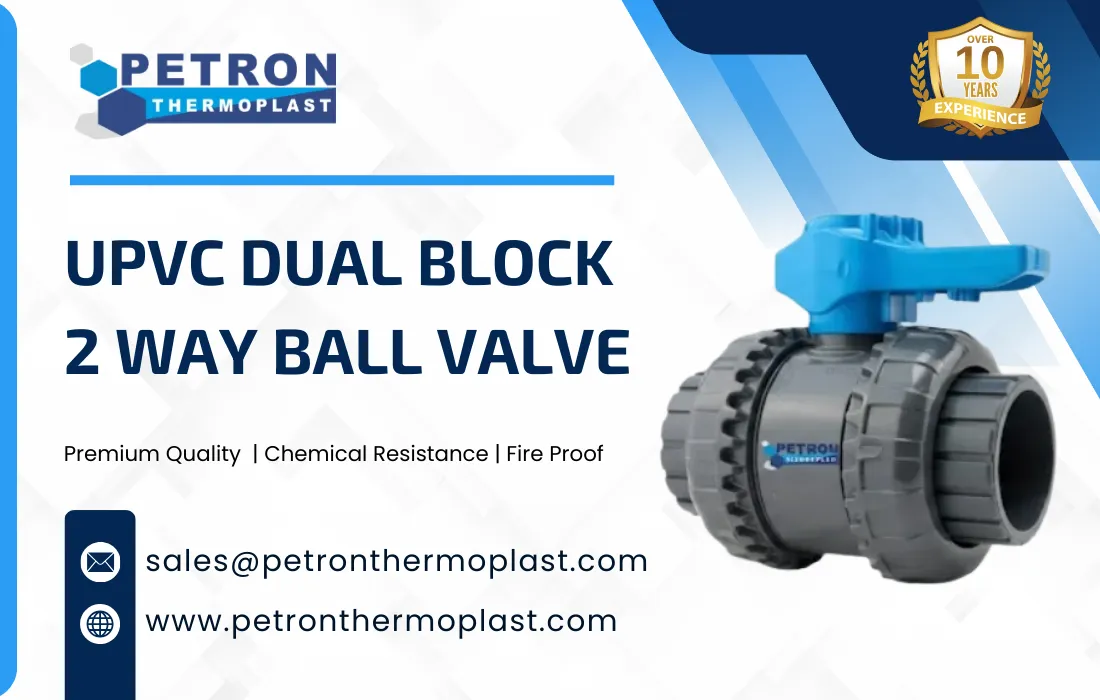
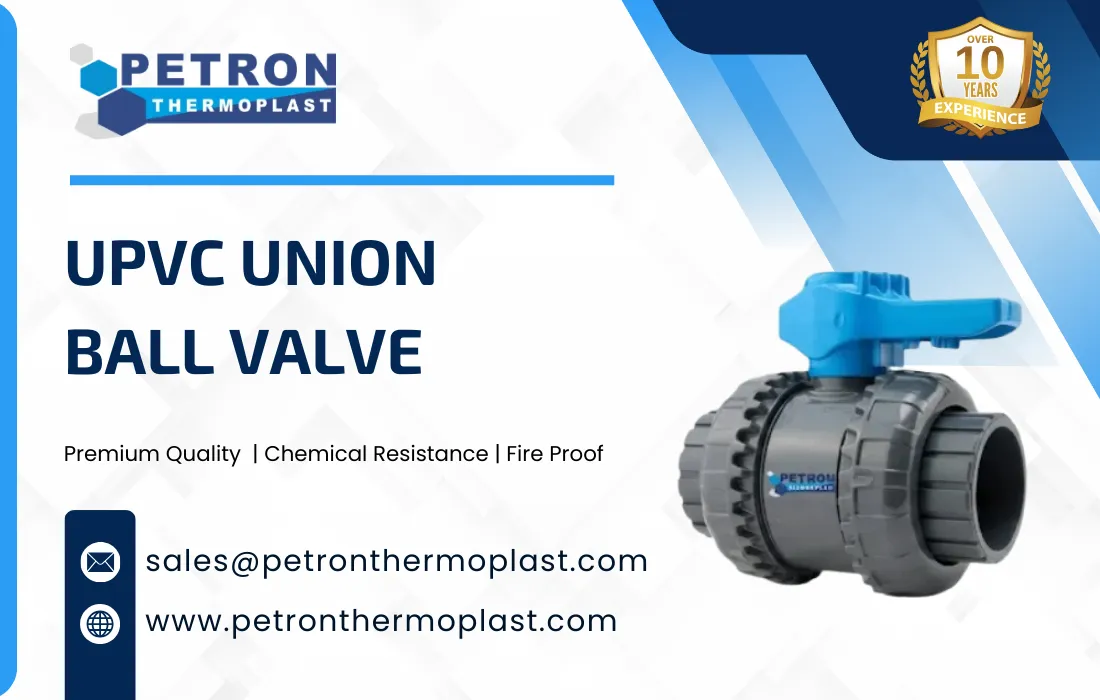
2-Way Ball Valves
- Simplest design with two ports (inlet + outlet).
- Used for on/off flow control or isolation.
- Most common type.
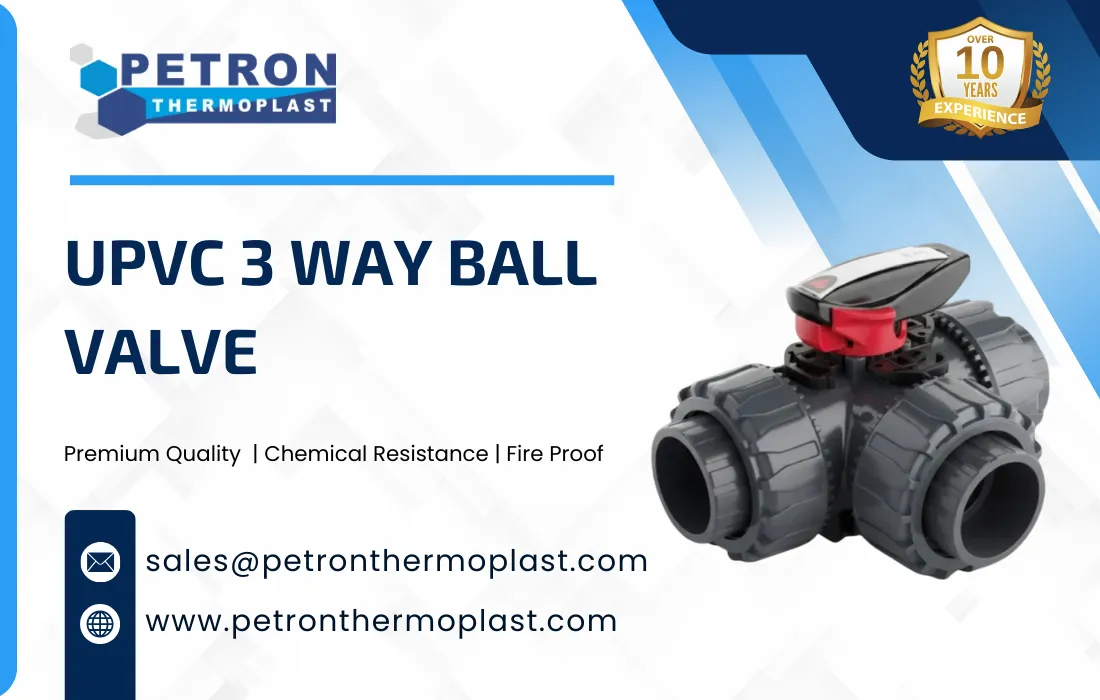
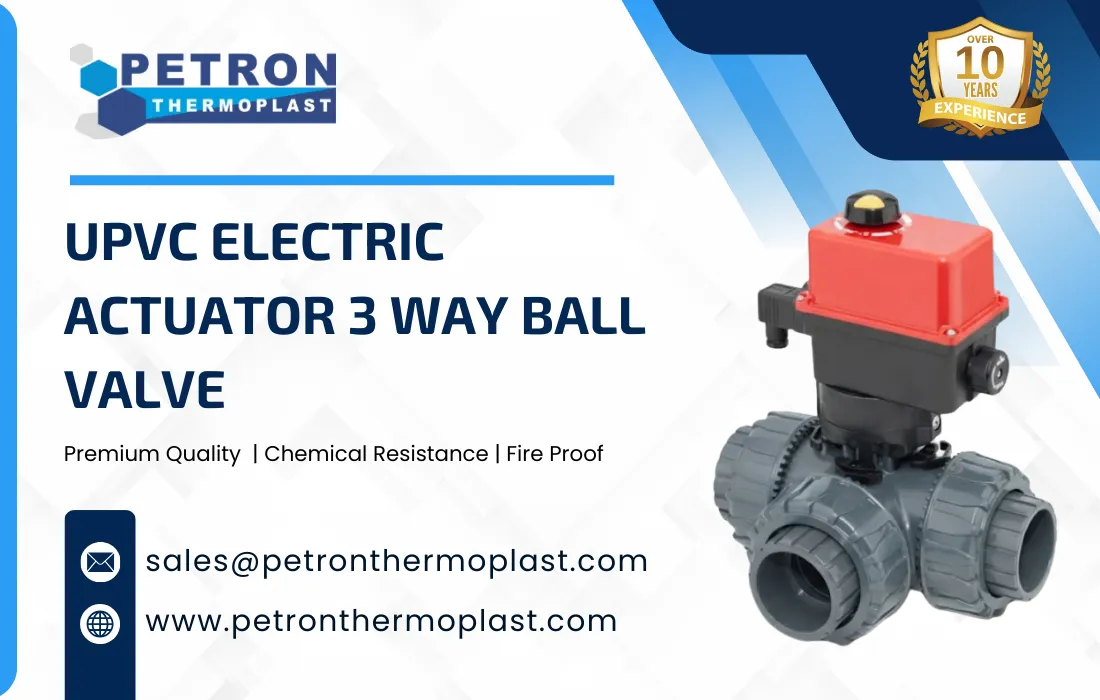
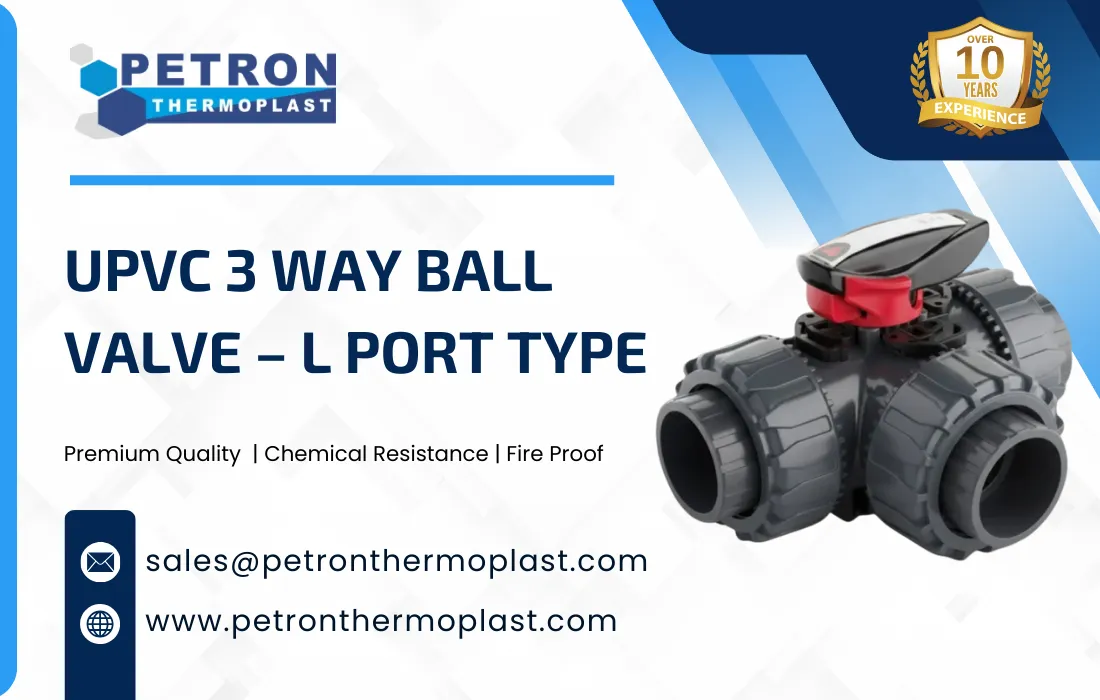
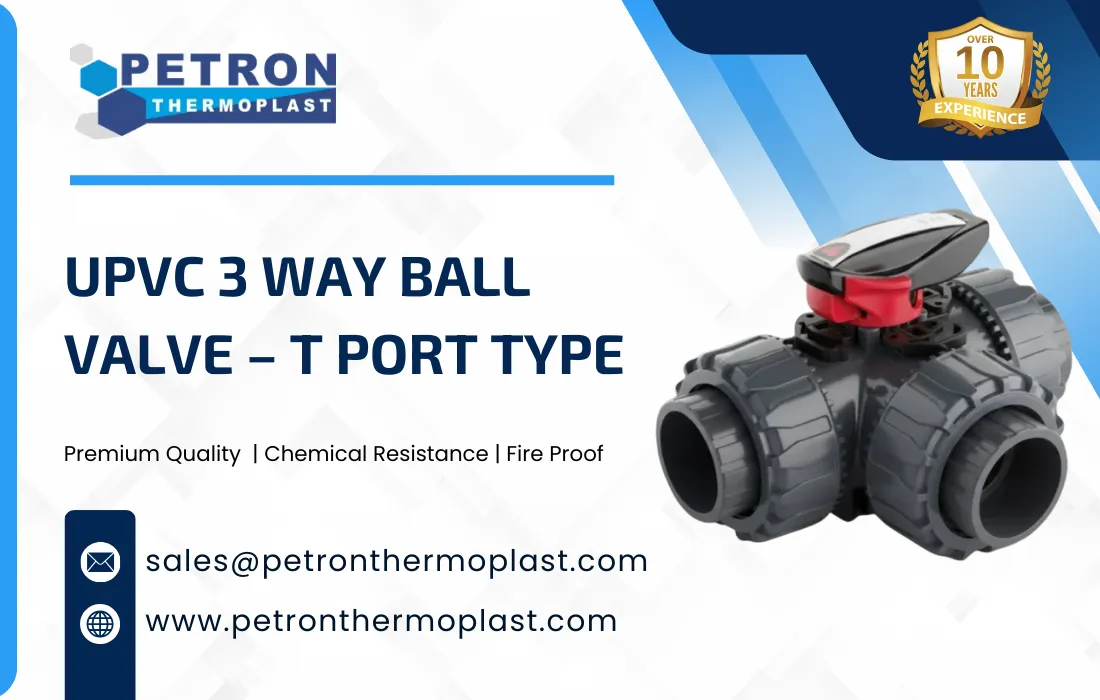
3-Way Ball Valves
- Has three ports arranged in L-port or T-port patterns.
- Used for:
- Diverting flow (L-port)
- Mixing/distributing flow (T-port)
3. By Body Type / Connection Style
- Jointed via solvent cement to uPVC piping.
- Permanent, leak-resistant joints.
- Screwed onto piping.
- Easier to install or replace.
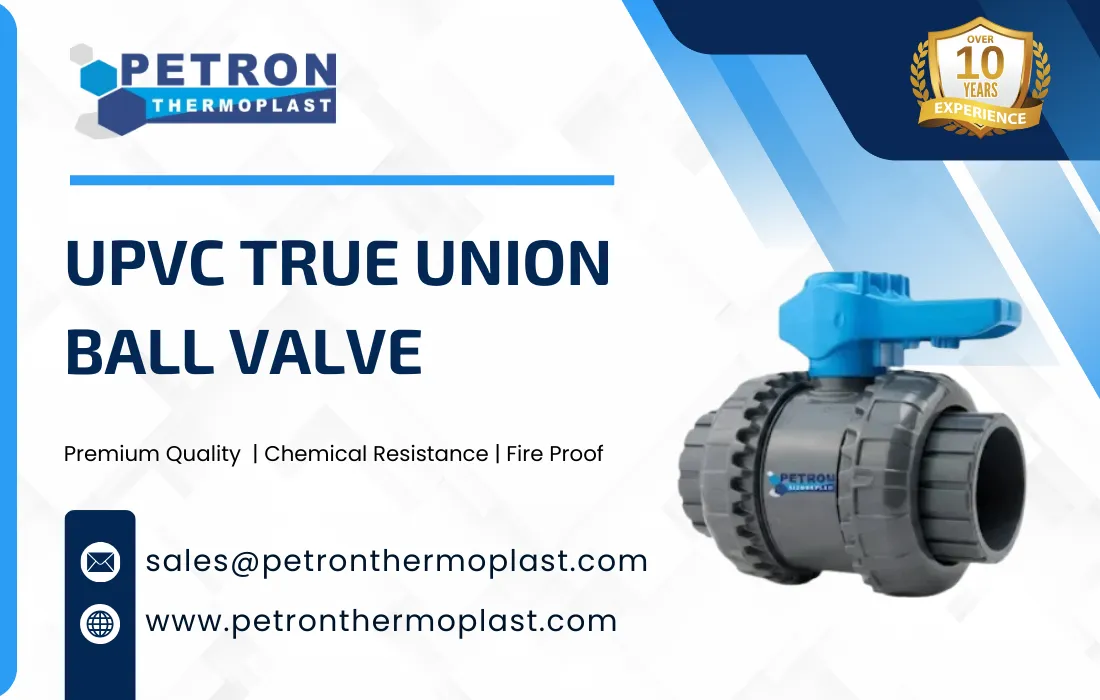
- Removable union fittings.
- Easy maintenance and replacement.
5. By Fail-Safe / Override Features
- The actuator includes a manual handwheel.
- Useful during power failures.
- The spring-loaded mechanism returns the valve to preset a safe position (open or closed) when power fails.
2. By Electric Actuator Control Type
- Only fully open or fully closed positions.
- Controlled by a simple electric signal.
- Good for isolation and basic automation.
- The actuator can position the valve at any angle between 0–90°.
- Allows precise flow control with feedback signals (e.g., 4–20 mA).
4. By Actuator Voltage / Control Interface
- Operate on 24 V DC or 24 V AC
- Useful for low-power systems, battery backup, solar, PLC interface.
- Operate on 110 V / 230 V AC
- Standard for industrial control panels.
- Integrated with digital positioners or network interfaces (Modbus, BACnet, etc.)
- Ideal for advanced automation.
6. By Compliance or Certification
- Uses electric actuator
- Ideal for precise on/off control
- Used in chemical treatment and automation systems
Why Choose Petron Thermoplast?
At Petron Thermoplast, we prioritise quality and performance. Our UPVC Electric Actuator Ball Valve meets the highest standards, providing you with reliable and efficient solutions. Whether you’re dealing with high-pressure fluids or gases or looking for durable fittings that can withstand demanding conditions, our products are built to deliver.
In summary, the UPVC Electric Actuator Ball Valve from Advanced Chemical Systems stands out due to its quality, versatility, and wide range of sizes. Choose the right fittings for your specific needs to ensure the longevity and efficiency of your chemical system.