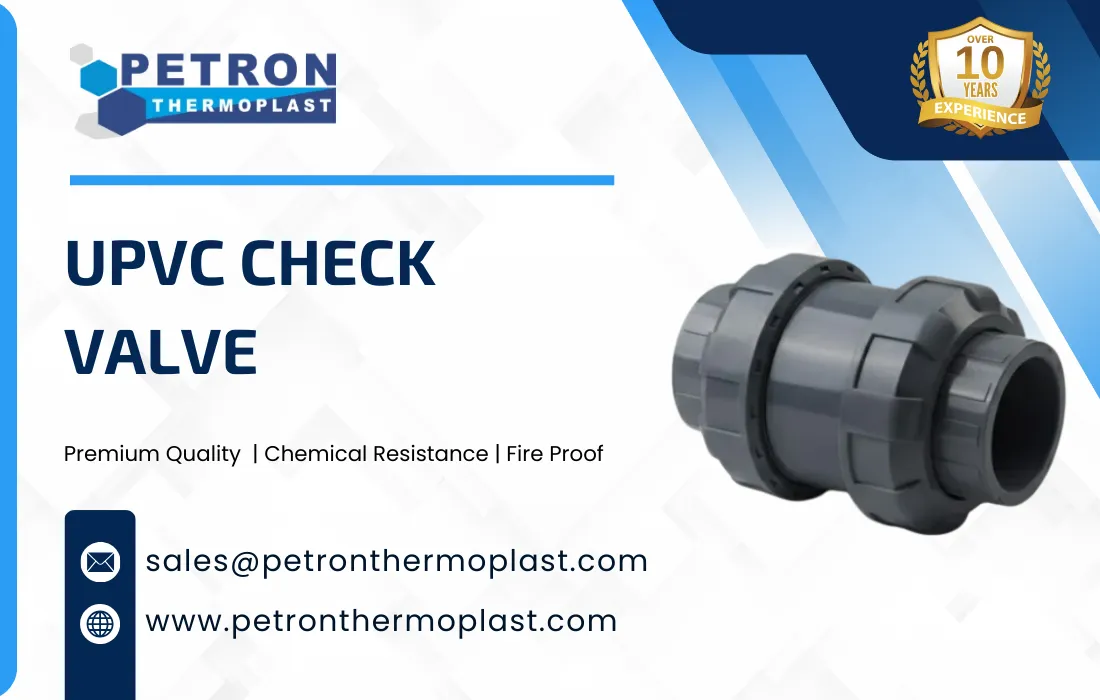
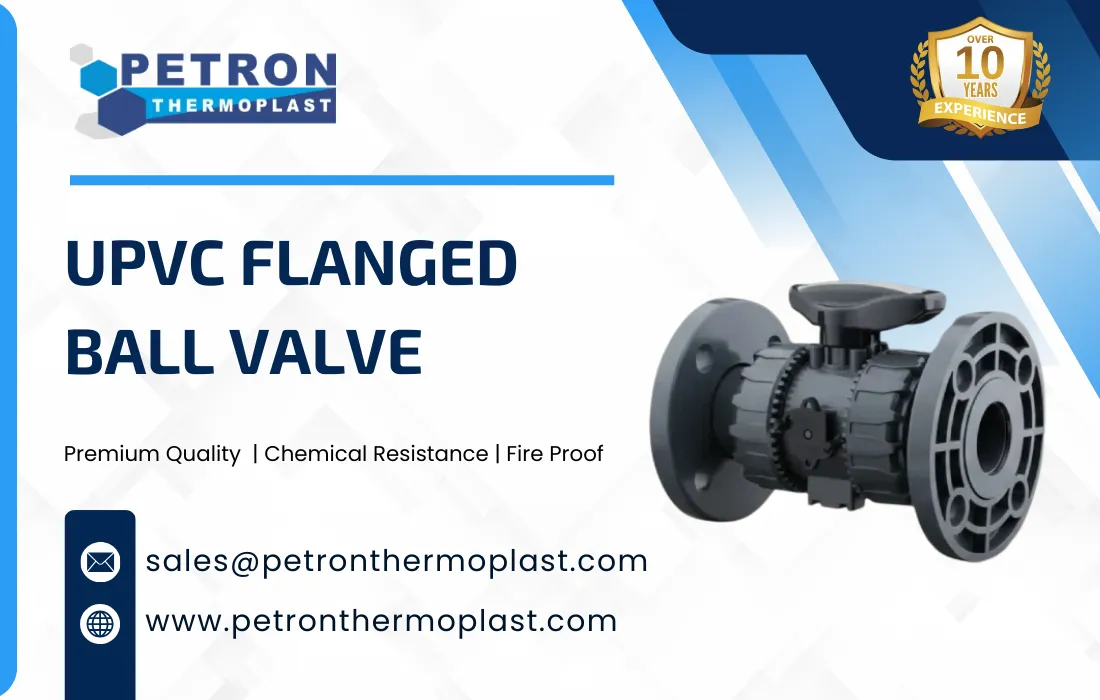
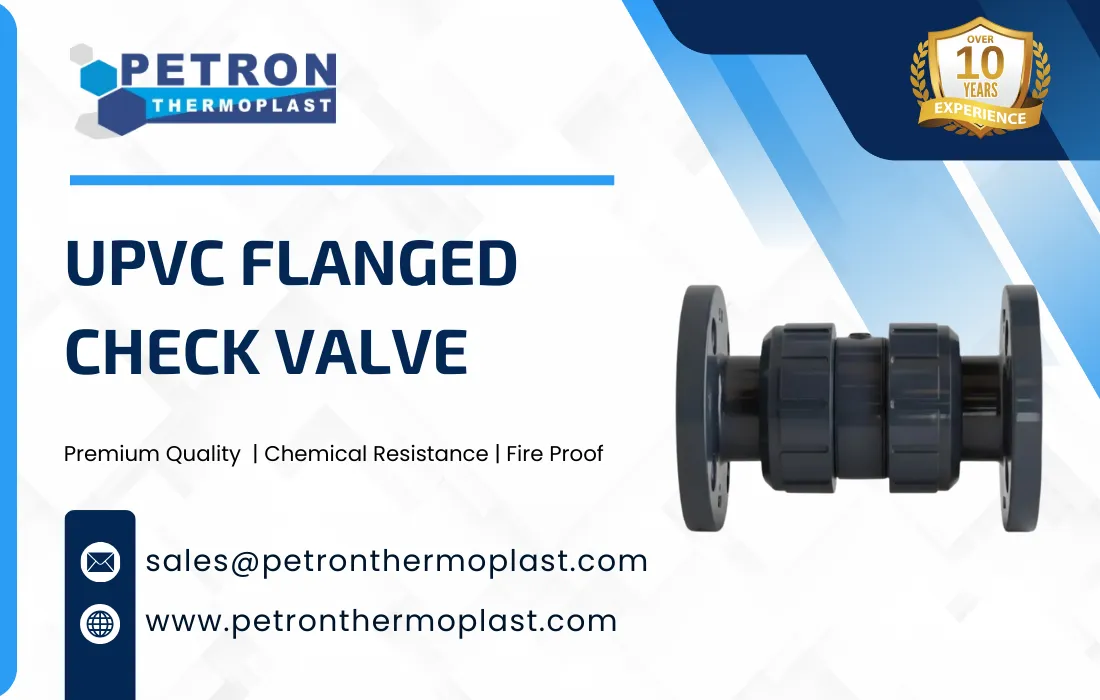
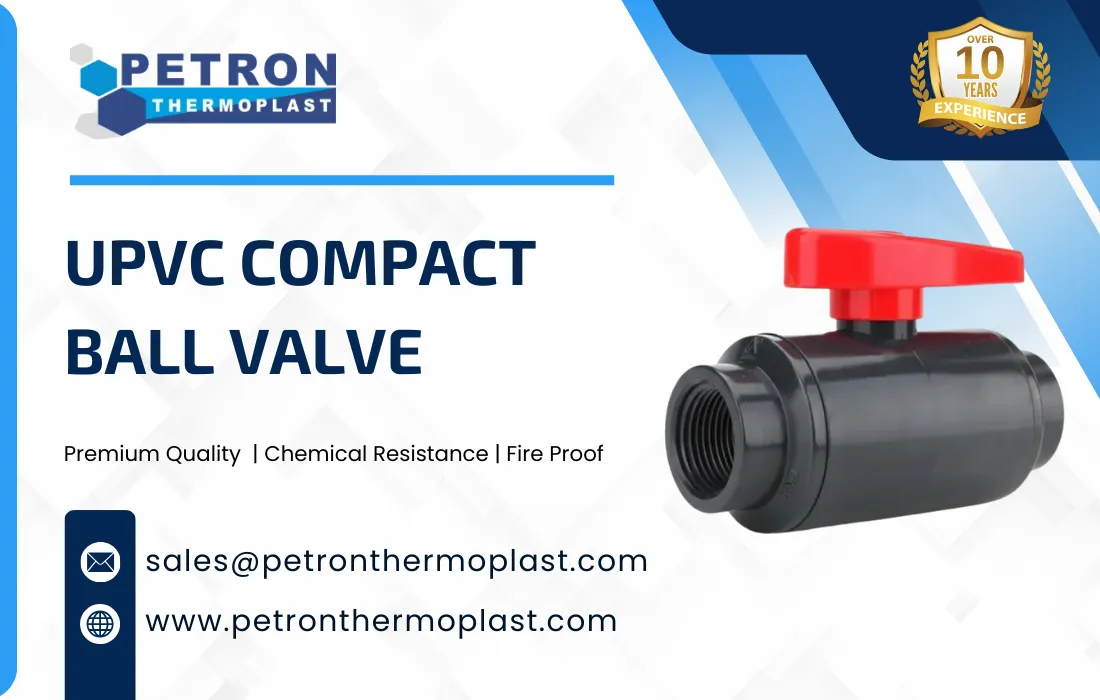
UPVC Check Valve
UPVC check valves are the essential components of fluid control systems. They had to play a crucial role in the reverse of fluid flow within the pipelines and piping systems. UPVC check valves are popular as non-return valves or one-way valves. They work on differential pressure. It means the UPVc check valve will open only if the upstream pressure is more than the downstream pressure. In situations where the downstream pressure is higher, the valve will close, preventing reverse flow.
UPVC check valves are used in a wide range of industries and applications to ensure the efficiency, safety, and integrity of fluid systems. This valve is ideal for use in corrosive and chemical environments due to its excellent chemical resistance and non-metallic structure. The UPVC check valve is lightweight and durable, making it suitable for water treatment, irrigation, and various industrial applications.

- Chemical Resistance
- Low Maintenance Requirement
- Low Thermal Conductivity
- Long Service Life
- Easy Installation
- Corrosion Resistance
UPVC Check Valve Details
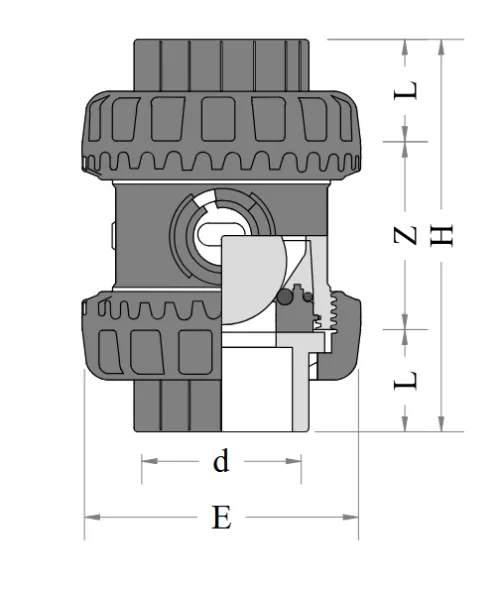
d → Nominal Pipe Size (inches)
DN → Diameter Nominal (mm)
PN → Pressure Nominal / Pressure Rating (Bar)
E → Total Length / End-to-End Dimension (mm)
H → Overall Height of Valve (mm)
L → Socket Depth / Insertion Length (mm)
Z → Installation Length / Center-to-End Distance (mm)
g → Weight of Valve (grams)
| Size (Inch) | DN (mm) | PN (bar) | L | H | D1 | D2 | Weight/Other |
| 3/8″ | 10 | 16 | 54 | 78 | 14.5 | 49 | 153 |
| 1/2″ | 15 | 16 | 54 | 82 | 16.5 | 49 | 148 |
| 3/4″ | 20 | 16 | 63 | 91 | 19 | 53 | 190 |
| 1″ | 25 | 16 | 72 | 103 | 22.5 | 58 | 130 |
| 1 1/4″ | 32 | 16 | 85 | 120 | 26 | 68 | 460 |
| 1 1/2″ | 40 | 16 | 100 | 139 | 30 | 79 | 675 |
| 2″ | 50 | 16 | 118 | 174 | 36 | 102 | 1080 |
| 2 1/2″ | 65 | 16 | 157 | 211 | 44.5 | 122 | 2839 |
| 3″ | 80 | 16 | 174 | 248 | 48 | 152 | 3597 |
| 4″ | 100 | 16 | 212 | 283 | 57.5 | 168 | 6289 |
| Parameter | Specification / Typical Value | Remarks |
| Valve Type | Check Valve (Non-Return Valve) | Allows one-way flow, prevents backflow |
| Design Types | Ball Type / Swing Type / Spring Type | Depends on application |
| Body Material | UPVC (Unplasticized Polyvinyl Chloride) | High corrosion resistance |
| Disc / Ball | UPVC / PP / EPDM-coated | Ensures proper sealing |
| Seal Material | EPDM / FKM (Viton) | Leak-proof and chemical resistant |
| Size Range | ½” to 6” (15 mm to 160 mm) | Standard industrial sizes |
| Pressure Rating | PN10 (up to 10 bar / 150 psi) | At 20°C |
| Operating Temp | 0°C to 60°C | Suitable for UPVC systems |
| End Connections | Socket (SW), Threaded (BSP/NPT), Flanged | As per DIN / ASTM standards |
| Installation | Horizontal or Vertical (upward flow) | Ensures proper operation |
| Flow Direction | Unidirectional (marked on body) | Prevents reverse flow |
| Mechanism | Automatic (pressure-operated) | No manual control required |
| Standards | ASTM, DIN, ISO | Industrial compatibility |
| Color | Grey / Light Grey | Standard UPVC appearance |
| Corrosion Res. | Excellent | Suitable for acids, alkalis, salts |
| Weight | Lightweight | Easy handling and installation |
| Maintenance | Low | Simple design, long service life |
| Applications | Water, irrigation, chemical & industrial | Widely used in fluid systems |
Non-Return Function: Prevents backflow automatically, safeguarding equipment and system integrity.
Corrosion & Chemical Resistant: UPVC material resists acids, alkalis, and aggressive media.
Low Maintenance: No manual intervention required; simple and reliable operation.
Durable Construction: Long service life with high impact strength and wear resistance.
Leak-Proof Sealing: Precision seat and disc ensure tight sealing to eliminate leakage.
Compact & Lightweight: Easy to install and integrate into existing systems.
Multiple End Connections: Available in socket, threaded, and flanged options to suit different system requirements.
| Nominal Size (DN) | Pipe Size (inch) | Typical Pressure Rating | PN Class |
| DN15 | ½” | 16 bar (232 psi) | PN16 |
| DN20 | ¾” | 16 bar (232 psi) | PN16 |
| DN25 | 1″ | 16 bar (232 psi) | PN16 |
| DN32 | 1¼” | 16 bar (232 psi) | PN16 |
| DN40 | 1½” | 16 bar (232 psi) | PN16 |
| DN50 | 2″ | 16 bar (232 psi) | PN16 |
| DN65 | 2½” | 10 bar (145 psi) | PN10 |
| DN80 | 3″ | 10 bar (145 psi) | PN10 |
| DN100 | 4″ | 10 bar (145 psi) | PN10 |
| DN125 | 5″ | 6–10 bar (87–145 psi) | PN6–PN10 |
| DN150 | 6″ | 6 bar (87 psi) | PN6 |

Custom Product Manufacturing Available
If you are searching for customized product designs that meet your requirements, don’t worry. Petron Thermoplast also offers custom product manufacturing services to meet the unique needs of various industries. Work with our expert engineers to create custom designs suited for your application.
Benefits of Using UPVC Check Valve
Corrosion Resistant
UPVC check valve does not rust, pit, or scale, also making it ideal for water, wastewater, and many chemical applications.
Lightweight
UPVC is much lighter than metal valves, so it is easier to handle, transport, and install.
Low Cost
These are generally cheaper than metal or specialty plastic valves, both in initial cost and installation.
Low Maintenance
No corrosion means fewer failures, longer service life, and minimal upkeep.
Smooth Internal Surface
They reduce the pressure loss and prevent the buildup or fouling inside the valve.
Good Chemical Compatibility
Upvc Check Valves are suitable for acids, alkalis, salts, and many industrial and chemical applications.
Electrical & Thermal Insulation
They are non-conductive, so there are no galvanic corrosion and stray current issues.
Quiet Operation
Especially true for ball-type or spring-loaded designs—less water hammer compared to metal valves.
Easy Installation
The availability of easy installation with threaded, flanged, and socket ends makes it simple to join using methods like solvent cementing.
Non-Contaminating
Upvc check valve not to leach metals into the fluid and safe for potable water in approved grades.
Types and Uses of UPVC Check Valve
Swing Check Valves
The symbol has an arc or semicircle to show the swinging motion of the valve disc.
Ball Check Valves
The symbol features a ball inside the valve body outline to represent the ball’s movement.
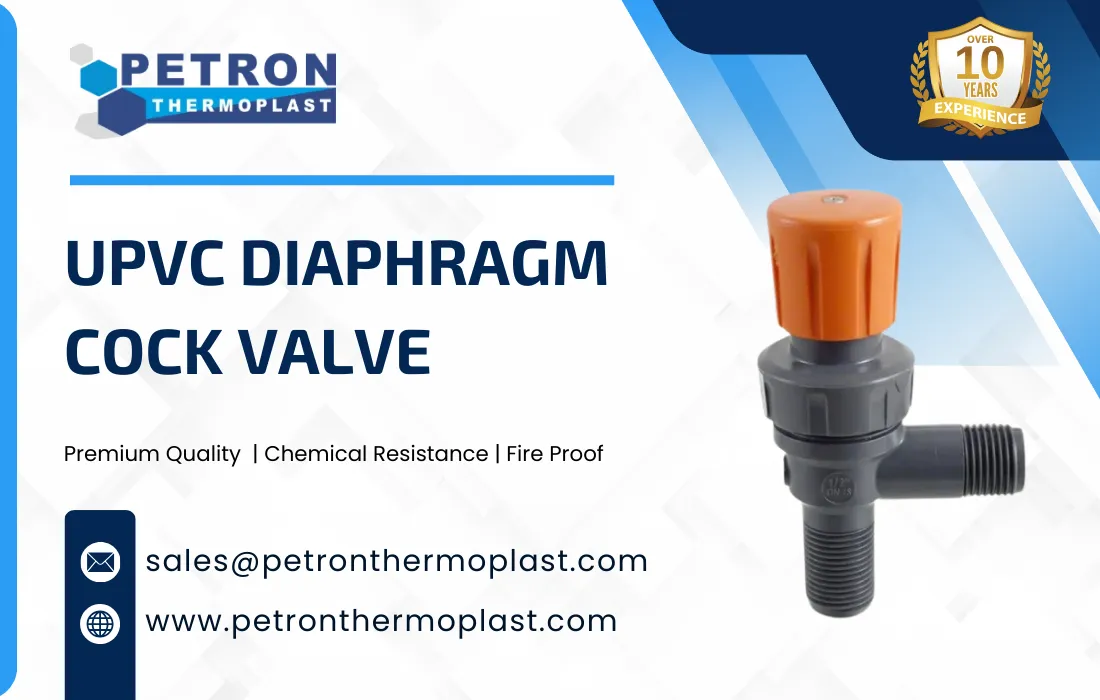
Diaphragm Check Valves
The symbol has a curved line or diaphragm to show the flexible diaphragm controlling the flow.
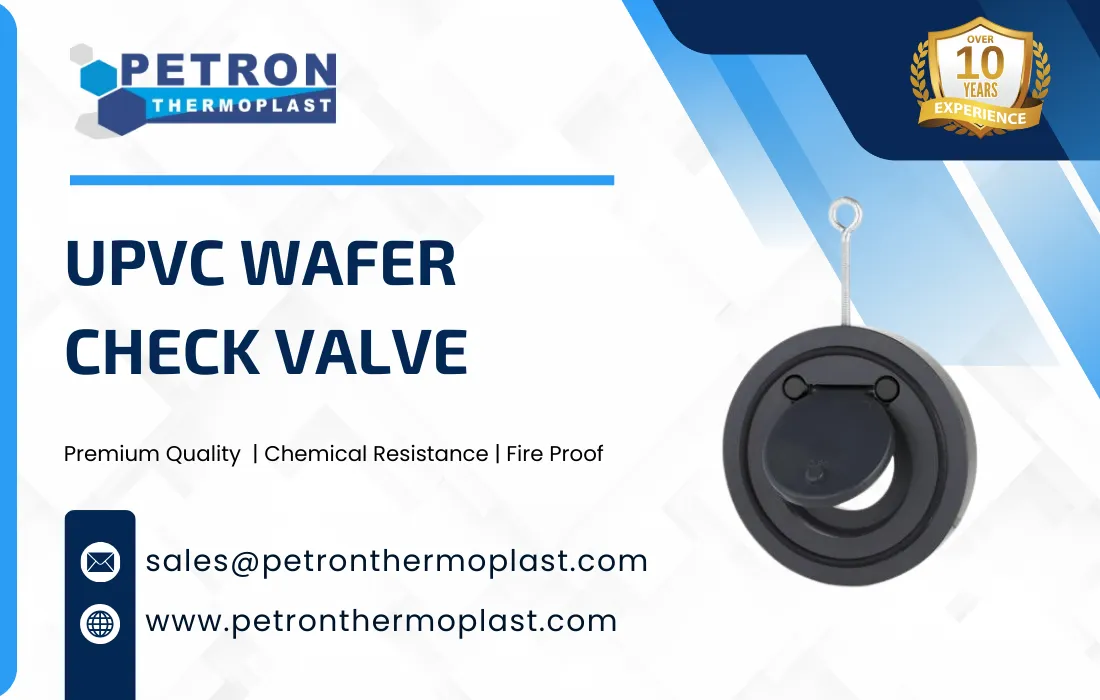
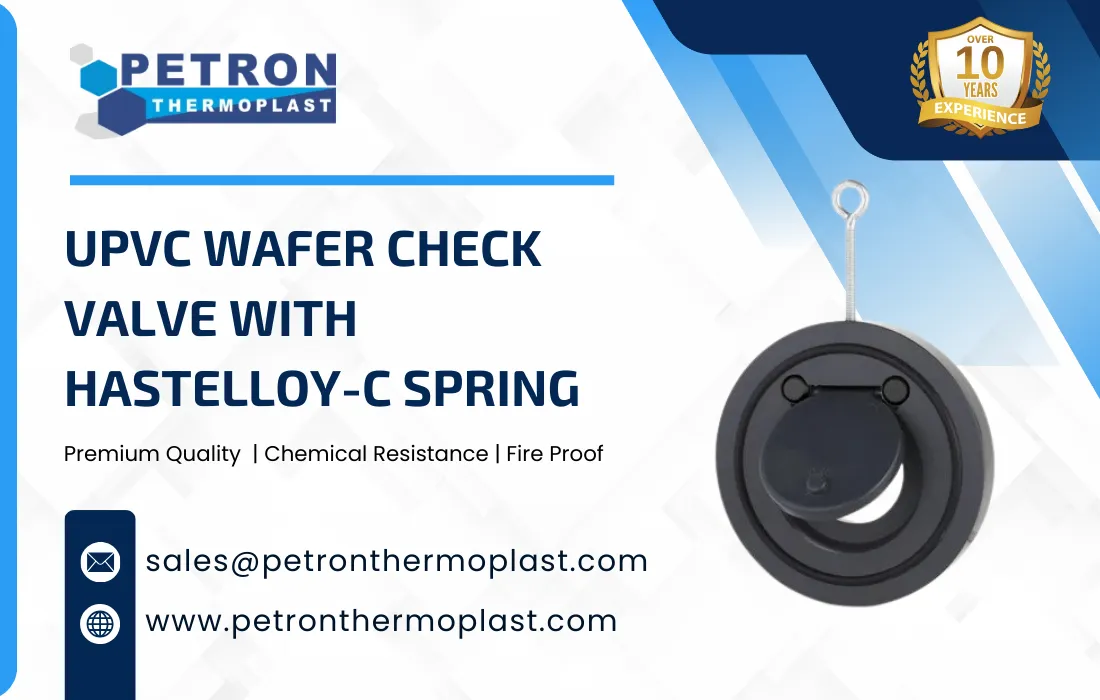
Wafer Check Valves
The compact symbol between two parallel lines shows the valve is placed between flanges.
Lift Check Valves
The symbol includes a perpendicular line or dot to indicate the lifting mechanism that controls the flow.
Why Choose Petron Thermoplast?
At Petron Thermoplast, the UPVC check valves are an important industrial valve for unidirectional flow in fluid systems by preventing backflow. These valves function accurately, responding to pressure variations, unlike electric gate valves. This makes them indispensable in applications requiring continuous flow without active control.
Flow Characteristics
- Flow rate range
- Pressure requirements
- Temperature extremes
- Fluid properties (viscosity, corrosiveness, solids content)
Installation Constraints
- Available space
- Pipe orientation
- Access for maintenance
- Connection types needed