CPVC Pipe
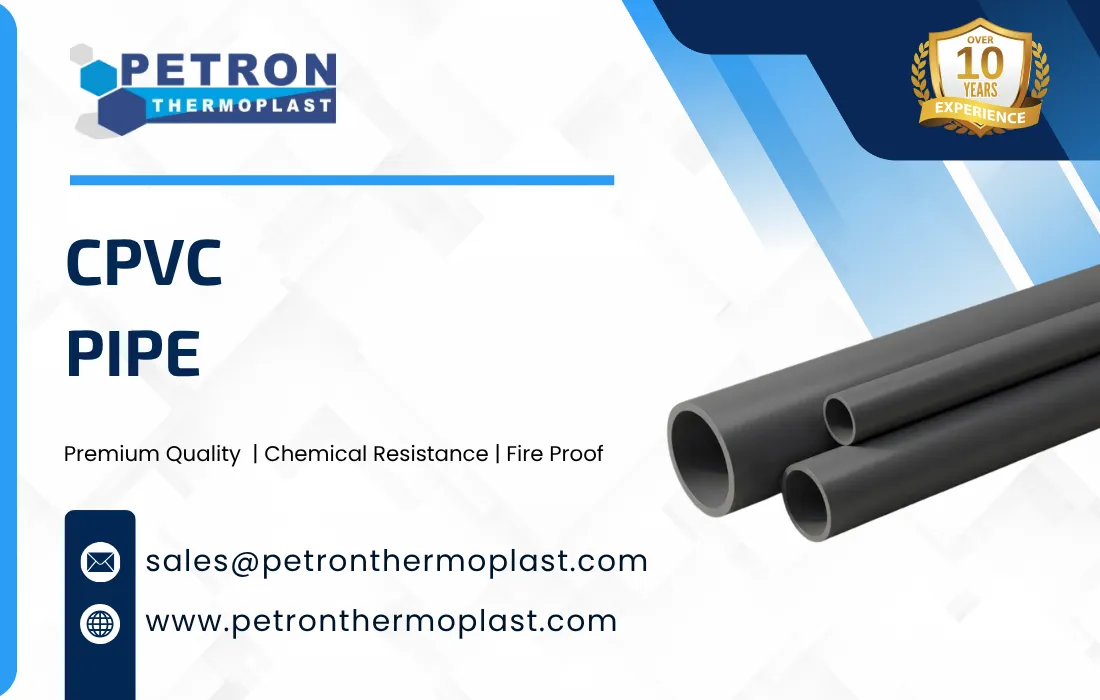
CPVC Pipes (Chlorinated Polyvinyl Chloride Pipes) are thermoplastic piping products made from CPVC resin, which is produced by chlorinating PVC. This process increases the chlorine content of the material, giving the pipes higher temperature resistance, improved strength, and excellent chemical resistance. CPVC pipes are primarily used for water distribution systems, industrial fluid handling, and chemical processing applications. They are known for being lightweight, corrosion-resistant, durable, and easy to install compared to traditional metal piping materials.
CPVC pipes are plastic pipes designed to safely transport liquids in industrial piping systems. CPVC Pipe (Chlorinated Polyvinyl Chloride Pipe) is a durable, corrosion-resistant piping solution used extensively for industrial, commercial, applications. Engineered to handle water, aggressive chemicals, and high-pressure systems, CPVC pipes offer excellent mechanical strength and long-lasting performance under harsh operating conditions. CPVC pipes deliver superior temperature resistance and are ideal for transporting hot fluids up to 93°C (200°F). With their lightweight structure, smooth interior finish, and ease of installation, CPVC pipes are the preferred choice for a wide range of fluid-handling applications.

- Chemical Resistance
- Low Maintenance Requirement
- Low Thermal Conductivity
- Long Service Life
- Easy Installation
- Corrosion Resistance
CPVC Pipe Details
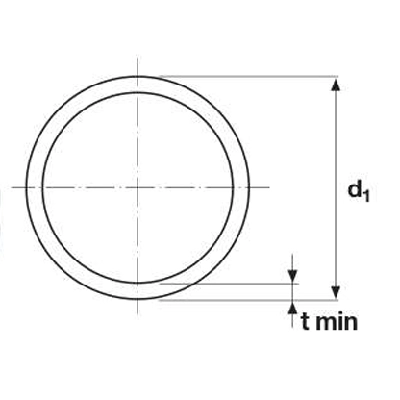
OD – Outer Diameter
| Nominal Size (Inch/mm) | Average OD (mm) | Min. Wall Thickness (mm) |
| 1/2″ (15 mm) | 21.34 | 3.73 |
| 3/4″ (20 mm) | 26.67 | 3.91 |
| 1″ (25 mm) | 33.40 | 4.55 |
| 1 1/4″ (32 mm) | 42.16 | 4.85 |
| 1 1/2″ (40 mm) | 48.26 | 5.08 |
| 2″ (50 mm) | 60.32 | 5.54 |
| 2 1/2″ (65 mm) | 73.02 | 7.01 |
| 3″ (80 mm) | 88.90 | 7.62 |
| 4″ (100 mm) | 114.30 | 8.56 |
| 5″ (125 mm) | 141.30 | 9.62 |
| 6″ (150 mm) | 168.28 | 10.97 |
| 8″ (200 mm) | 219.08 | 12.70 |
| 10″ (250 mm) | 273.05 | 15.06 |
| 12″ (300 mm) | 323.85 | 17.45 |
| Parameter / Property | Details / Value |
| Valve Type | Spring Check Valve (Non-Return Valve) |
| Operation | Automatic (Spring-loaded closing) |
| Body Material | CPVC (Chlorinated Polyvinyl Chloride) |
| Disc / Plunger Material | CPVC / PP |
| Spring Material | Stainless Steel (SS304 / SS316) |
| Seat / Seal Material | EPDM / FKM (Viton) |
| Size Range | ½” to 4” (DN15 to DN100) |
| Pressure Rating | PN10 / PN16 |
| Temperature Range | 0°C to 90°C |
| End Connection | Socket / Threaded |
| Flow Direction | One-way (indicated by arrow) |
| Cracking Pressure | Low to medium (spring-dependent) |
| Installation | Horizontal or Vertical (upward flow) |
| Density | 1.45 – 1.58 g/cm³ |
| Tensile / Flexural Strength | 50 – 70 MPa / 80 – 100 MPa |
| Thermal Conductivity | ~0.14 W/m·K |
| Coeff. of Thermal Expansion | 6–7 × 10⁻⁵ /°C |
| Chemical & Corrosion Resistance | Excellent (Acids, Alkalis, Salts) |
| Flammability | Self-extinguishing |
| Electrical Conductivity | Non-conductive |
| UV Resistance | Moderate (Outdoor protection recommended) |
- Automatic Operation
The valve operates automatically using a spring-loaded mechanism, opening with forward flow and closing when the flow stops or reverses. - Prevents Backflow
Designed to allow fluid flow in only one direction, protecting the piping system from reverse flow. - Fast Response Time
The internal spring ensures quick closing of the valve, reducing the chances of water hammer. - Excellent Chemical Resistance
CPVC material provides strong resistance to many chemicals, acids, and alkalis. - Corrosion and Rust Free
Unlike metal valves, CPVC valves do not corrode or rust, ensuring long service life. - High Temperature Resistance
Suitable for systems carrying hot fluids, as CPVC can handle temperatures from 0 to 100°C. - Compact and Lightweight Design
The valve is lightweight and compact, making installation and handling easier. - Leak-Proof Sealing
Equipped with reliable sealing components to prevent leakage and ensure efficient performance. - Low Maintenance Requirement
The durable design and corrosion resistance reduce maintenance needs. - Versatile Applications
Widely used in water treatment plants, irrigation, and industrial fluid handling systems.
Standard Pressure Rating of CPVC Pipes (Schedule 40)
| Nominal Size (Inch) | Nominal Size (mm) | Pressure Rating (PSI) | Pressure Rating (Bar) |
| 1/2 inch | 15 mm | 450 PSI | 31 Bar |
| 3/4 inch | 20 mm | 370 PSI | 25 Bar |
| 1 inch | 25 mm | 330 PSI | 23 Bar |
| 1 1/4 inch | 32 mm | 300 PSI | 21 Bar |
| 1 1/2 inch | 40 mm | 260 PSI | 18 Bar |
| 2 inch | 50 mm | 220 PSI | 15 Bar |
| 2 1/2 inch | 65 mm | 190 PSI | 13 Bar |
| 3 inch | 80 mm | 160 PSI | 11 Bar |
| 4 inch | 100 mm | 140 PSI | 10 Bar |
Standard Pressure Rating of CPVC Pipes (Schedule 80)
| Nominal Size (Inch) | Nominal Size (mm) | Pressure Rating (PSI) | Pressure Rating (Bar) |
| 1/2 inch | 15 mm | 850 PSI | 58 Bar |
| 3/4 inch | 20 mm | 690 PSI | 48 Bar |
| 1 inch | 25 mm | 630 PSI | 43 Bar |
| 1 1/4 inch | 32 mm | 520 PSI | 36 Bar |
| 1 1/2 inch | 40 mm | 470 PSI | 32 Bar |
| 2 inch | 50 mm | 400 PSI | 28 Bar |
| 2 1/2 inch | 65 mm | 360 PSI | 25 Bar |
| 3 inch | 80 mm | 330 PSI | 23 Bar |
| 4 inch | 100 mm | 280 PSI | 19 Bar |
Standard Thickness & Size Chart of CPVC Pipes (Schedule 40)
| Nominal Size (Inch) | Nominal Size (mm) | Outer Diameter (mm) | Wall Thickness (mm) |
| 1/2 inch | 15 mm | 21.34 mm | 2.77 mm |
| 3/4 inch | 20 mm | 26.67 mm | 2.87 mm |
| 1 inch | 25 mm | 33.40 mm | 3.38 mm |
| 1 1/4 inch | 32 mm | 42.16 mm | 3.56 mm |
| 1 1/2 inch | 40 mm | 48.26 mm | 3.68 mm |
| 2 inch | 50 mm | 60.33 mm | 3.91 mm |
| 2 1/2 inch | 65 mm | 73.03 mm | 5.16 mm |
| 3 inch | 80 mm | 88.90 mm | 5.49 mm |
| 4 inch | 100 mm | 114.30 mm | 6.02 mm |
Standard Thickness & Size Chart of CPVC Pipes (Schedule 80)
| Nominal Size (Inch) | Nominal Size (mm) | Outer Diameter (mm) | Wall Thickness (mm) |
| 1/2 inch | 15 mm | 21.34 mm | 3.73 mm |
| 3/4 inch | 20 mm | 26.67 mm | 3.91 mm |
| 1 inch | 25 mm | 33.40 mm | 4.55 mm |
| 1 1/4 inch | 32 mm | 42.16 mm | 4.85 mm |
| 1 1/2 inch | 40 mm | 48.26 mm | 5.08 mm |
| 2 inch | 50 mm | 60.33 mm | 5.54 mm |
| 2 1/2 inch | 65 mm | 73.03 mm | 7.01 mm |
| 3 inch | 80 mm | 88.90 mm | 7.62 mm |
| 4 inch | 100 mm | 114.30 mm | 8.56 mm |
| Property | Value |
| Maximum Operating Temperature | Up to 90°C – 95°C |
| Minimum Operating Temperature | 0°C (Recommended for safe operation) |
| Short-Term Temperature Resistance | Up to 100°C |
| Material Density | 1.50 – 1.60 g/cm³ |
| Thermal Stability | Suitable for process fluid systems |
More Information About CPVC Pipe
- Process Fluids Systems
CPVC pipes are commonly used in homes and apartments for process fluids distribution. - Commercial Buildings
They are widely used in hotels, hospitals, offices, and commercial complexes for water supply systems. - Industrial Piping Systems
CPVC pipes are used in industries to transport hot water, chemicals, and other industrial fluids. - Chemical Processing Plants
Due to their excellent chemical resistance, CPVC pipes are suitable for handling acids, alkalis, and corrosive chemicals. - Water Treatment Plants
CPVC pipes are used in water purification and wastewater treatment systems to carry water and treatment chemicals. - Fire Sprinkler Systems
Special CPVC pipes are used in fire sprinkler systems because they can withstand high temperatures and provide reliable performance. - Irrigation Systems
They are used in irrigation pipelines for efficient water distribution in farms. - HVAC Systems
CPVC pipes are used in cooling and heating systems for transporting hot water and other fluids. - Laboratory and Pharmaceutical Industries
These pipes are suitable for laboratory and pharmaceutical fluid handling systems due to their chemical resistance.
- High Temperature Resistance
CPVC pipes can handle temperatures up to 90°C – 95°C, making them suitable for hot water and industrial applications. - Excellent Chemical Resistance
They are resistant to acids, alkalis, salts, and many corrosive chemicals, making them ideal for chemical processing industries. - Corrosion and Rust Free
Unlike metal pipes, CPVC pipes do not rust, corrode, or scale, ensuring clean water flow and longer service life. - Lightweight Material
CPVC pipes are lighter than metal pipes, making them easy to transport, handle, and install. - Easy Installation
They can be easily joined using solvent cement, reducing installation time and labor costs. - Smooth Internal Surface
The smooth inner wall reduces friction and pressure loss, allowing efficient fluid flow. - Low Maintenance
CPVC pipes require very little maintenance due to their corrosion resistance and durable structure. - Long Service Life
These pipes are designed to provide long-lasting performance, often lasting for decades in proper conditions. - Cost-Effective
CPVC piping systems are more economical compared to many metal piping systems due to lower installation and maintenance costs. - Safe for Drinking Water
CPVC pipes are non-toxic and safe for potable water, making them suitable for commercial water supply systems.
Installation of CPVC Pipe
- Measure and Cut the Pipe
Measure the required pipe length and cut the CPVC pipe using a pipe cutter or fine-tooth saw to ensure a clean and straight cut. - Deburring and Cleaning
Remove any burrs or rough edges from the pipe end and clean the pipe and fitting surfaces to remove dust or debris. - Apply Primer
Apply a CPVC primer to soften the surface and prepare the pipe and fitting for bonding. - Apply Solvent Cement
Apply an even layer of CPVC solvent cement to both the pipe end and the fitting socket. - Join the Pipe and Fitting
Insert the pipe fully into the fitting and twist slightly (about ¼ turn) to spread the cement evenly. - Hold the Joint
Hold the pipe in place for 20–30 seconds to allow the joint to set properly. - Allow Proper Curing Time
Allow sufficient curing time (usually 24 hours) before pressurizing the system. - Pressure Testing
After installation, perform a pressure test to ensure there are no leaks in the pipeline.
Maintanance of CPVC Pipe
- Regular Inspection
Periodically check the piping system for leaks, cracks, or damage. - Avoid Excessive Pressure
Ensure the system operates within the recommended pressure and temperature limits. - Protect from Mechanical Damage
Avoid heavy impact or external stress on the pipes. - Keep Pipes Clean
Remove any dirt, scale, or chemical deposits from the piping system. - Replace Damaged Sections
If any part of the pipe is damaged, replace the section immediately to maintain system safety. - Proper Support
Ensure pipes are properly supported with clamps or brackets to prevent sagging.
- Process fluids Industry
CPVC pipes are commonly used in commercial systems for process fluids distribution. - Chemical Processing Industry
They are used in chemical plants to transport corrosive liquids such as acids, alkalis, and chemical solutions safely. - Water Treatment Industry
CPVC pipes are widely used in water purification and wastewater treatment plants for transporting water and treatment chemicals. - Pharmaceutical Industry
In pharmaceutical manufacturing, CPVC pipes are used in fluid handling systems where corrosion resistance and cleanliness are essential. - Food and Beverage Industry
CPVC pipes are used in liquid transfer systems where safe and corrosion-resistant piping materials are required. - Irrigation Industry
They are used in irrigation systems to distribute water efficiently in farms fields. - Construction Industry
CPVC pipes are widely used in building construction projects for water supply systems. - Power Generation Industry
In power plants, CPVC pipes are used in cooling water systems and chemical handling pipelines. - Textile Industry
Textile processing units use CPVC pipes for handling water, dyes, and chemical solutions. - HVAC Industry
CPVC pipes are also used in heating and cooling systems for fluid transport.
- Size Customization
CPVC pipes can be manufactured in various diameters and lengths to meet different industrial piping requirements. - Wall Thickness Options
Pipes can be produced in different wall thicknesses such as Schedule 40, Schedule 80, or SDR ratings depending on the required pressure capacity. - Pressure Rating Customization
Manufacturers can design CPVC pipes with different pressure ratings suitable for low, medium, or high-pressure applications. - Color Options
CPVC pipes can be produced in different colors for identification in complex piping systems, such as grey, ivory, or custom colors. - Length and Cutting Options
Pipes can be supplied in standard lengths or customized lengths according to project requirements. - Special Coatings or Markings
Custom markings, branding, and identification codes can be added for industrial or commercial use.
Processing
- Extrusion Process
CPVC pipes are primarily manufactured using the extrusion process, where heated CPVC material is pushed through a die to form the pipe shape. - Cooling and Sizing
After extrusion, the pipes pass through a cooling system and sizing unit to maintain the correct diameter and shape. - Cutting Process
The continuous pipe is cut into standard or customized lengths based on customer requirements. - Surface Finishing
Pipes are checked and finished to ensure smooth surfaces and uniform thickness. - Quality Inspection
Before packaging, pipes undergo quality checks such as pressure testing, dimensional inspection, and material testing.
1. CPVC Resin
CPVC resin is the main raw material used in the production of CPVC pipes. It is produced by chlorinating PVC resin, which increases the chlorine content and improves temperature resistance, chemical resistance, and mechanical strength.
2. Heat Stabilizers
Heat stabilizers are added to protect the CPVC material during high-temperature processing. They prevent degradation of the resin and help maintain the pipe’s strength and stability.
3. Lubricants
Lubricants are used to reduce friction during the extrusion process and allow smooth movement of the material through manufacturing equipment. They also improve the surface finish of the pipes.
4. Impact Modifiers
Impact modifiers increase the toughness and impact resistance of CPVC pipes, helping prevent cracking or damage during handling and installation.
5. Processing Aids
Processing aids improve the flow properties and melt strength of the CPVC compound, ensuring consistent pipe shape and uniform wall thickness during manufacturing.
6. Fillers
Certain fillers may be added to enhance dimensional stability and rigidity while maintaining the structural integrity of the pipes.
7. Pigments or Colorants
Pigments are added to give CPVC pipes their distinct color and appearance. They may also provide UV resistance for outdoor applications.

Custom Product Manufacturing Available
If you are searching for customized product designs that meet your requirements, don’t worry. Petron Thermoplast also offers custom product manufacturing services to meet the unique needs of various industries. Work with our expert engineers to create custom designs suited for your application.
Benefits of Using CPVC Pipe
1. High Temperature Resistance
CPVC pipes can withstand temperatures up to 90°C – 95°C, making them suitable for both water distribution systems.
2. Excellent Chemical Resistance
They provide strong resistance to acids, alkalis, salts, and many corrosive chemicals, making them ideal for chemical and industrial applications.
3. Corrosion and Rust Free
Unlike metal pipes, CPVC pipes do not rust, corrode, or scale, ensuring clean water flow and longer service life.
4. Lightweight and Easy Handling
CPVC pipes are lighter than metal pipes, which makes transportation, handling, and installation easier.
5. Easy Installation
They can be installed easily using solvent cement joints, reducing installation time and labor costs.
6. Smooth Internal Surface
The smooth inner surface reduces friction and pressure loss, allowing efficient water flow.
7. Low Maintenance
CPVC pipes require minimal maintenance due to their corrosion resistance and durable material.
8. Long Service Life
These pipes are designed to provide long-lasting performance in industrial piping systems.
9. Cost-Effective
CPVC pipes are generally more economical than metal piping systems due to lower material and maintenance costs.
10. Safe for Drinking Water
CPVC pipes are non-toxic and safe for potable water systems, making them suitable for domestic.
Types of CPVC Pipe
1. Schedule 40 CPVC Pipes
Schedule 40 CPVC pipes have moderate wall thickness and are commonly used for commercial systems. They are suitable for water distribution and general fluid handling.
2. Schedule 80 CPVC Pipes
Schedule 80 CPVC pipes have thicker walls than Schedule 40, which allows them to handle higher pressure applications. They are widely used in industrial piping systems and chemical processing plants.
3. Industrial CPVC Pipes
Industrial CPVC pipes are specially designed for chemical processing, industrial fluid transport, and corrosive environments. They offer high chemical resistance and temperature tolerance.
4. SDR (Standard Dimension Ratio) CPVC Pipes
SDR CPVC pipes are classified based on the ratio of pipe diameter to wall thickness. These pipes are commonly used in water supply systems and distribution networks.
5. CTS (Copper Tube Size) CPVC Pipes
CTS CPVC pipes are designed to match the outer diameter of copper pipes, making them suitable for chemical systems and water supply lines.
Advantages of CPVC Pipe
1. High Temperature Resistance
CPVC pipes can handle temperatures up to 90°C – 95°C, making them suitable for hot water and industrial applications.
2. Excellent Chemical Resistance
They are resistant to acids, alkalis, salts, and many corrosive chemicals, making them ideal for chemical processing industries.
3. Corrosion and Rust Free
Unlike metal pipes, CPVC pipes do not rust, corrode, or scale, ensuring clean water flow and longer service life.
4. Lightweight Material
CPVC pipes are lighter than metal pipes, making them easy to transport, handle, and install.
5. Easy Installation
They can be easily joined using solvent cement, reducing installation time and labor costs.
6. Smooth Internal Surface
The smooth inner wall reduces friction and pressure loss, allowing efficient fluid flow.
7. Low Maintenance
CPVC pipes require very little maintenance due to their corrosion resistance and durable structure.
8. Long Service Life
These pipes are designed to provide long-lasting performance, often lasting for decades in proper conditions.
9. Cost-Effective
CPVC piping systems are more economical compared to many metal piping systems due to lower installation and maintenance costs.
10. Safe for Drinking Water
CPVC pipes are non-toxic and safe for potable water, making them suitable for commercial water supply systems.
Featured List of Applications
Process Industry
High purity applications
Electronic Industry
Electrical Industry
Semi-conductors industry
Pharmaceutical Industry
Solar power panels
Sugar Industry
Paper & pulp Industry
Nuclear power industry
Automotive Industry
DI water plants
Why Choose Petron Thermoplast?
The Petron Thermoplast CPVC Pipes is a versatile and reliable type of pipes that is used in a variety of industrial applications. They offer precise over fluid flow control, are easy to maintain, and are available in CPVC materials and configurations.
They are an ideal choice for applications requiring precise control over fluid flow and low maintenance requirements. When it comes to industrial-grade systems, the choice of the right manufacturer is as important as the material itself. Petron Thermoplast has earned a reputation as a trusted global leader in the field of CPVC Pipes and industrial flow solutions. Our products are known for precision, performance, and durability, designed to meet the most demanding industry standards across the chemical and infrastructure sectors.