CPVC Stub End Flange
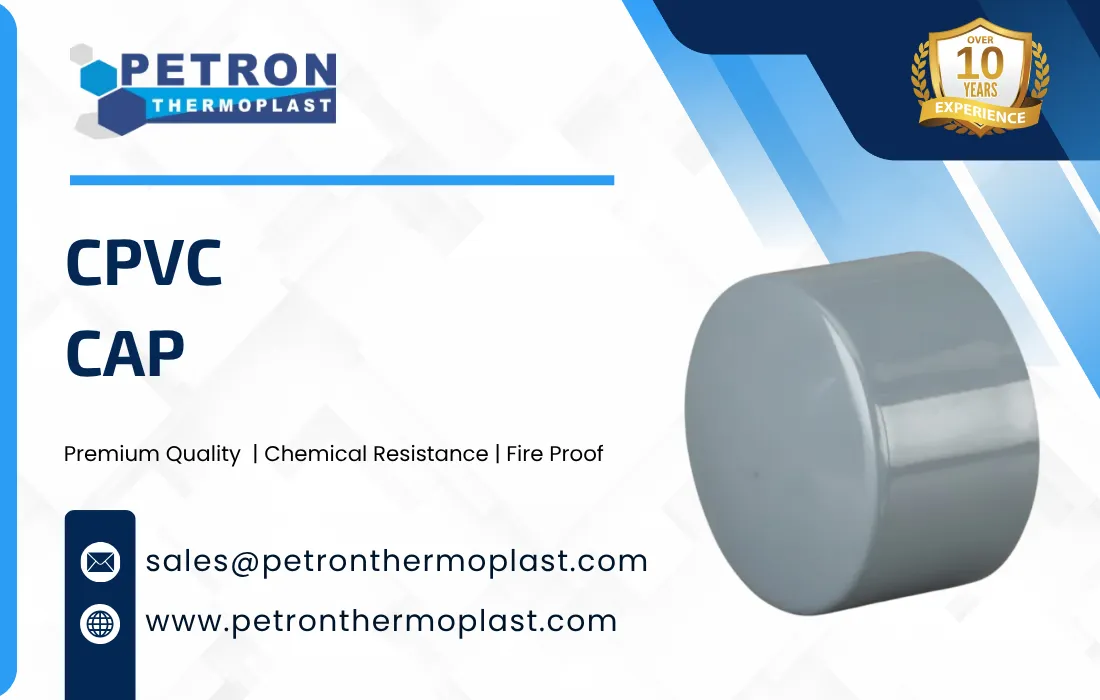
A CPVC Cap is a type of pipe fitting made from Chlorinated Polyvinyl Chloride (CPVC) that is used to close or seal the end of a CPVC pipe in a piping system. It fits over the outside of the pipe and permanently blocks the flow of fluids, preventing leakage and protecting the pipeline. The best CPVC end cap is made from a combination of plastic and vinyl. Pipes are long-lasting, do not wear out quickly, and can be used for a long time. CPVC material is resistant to wear and tear.
CPVC caps are commonly used in chemical processing and water distribution systems where high temperature and chemical resistance are required. They are typically solvent-cemented to the pipe end, creating a strong, leak-proof connection and allowing the pipeline to be safely terminated or sealed for future expansion or maintenance. It is widely used in water piping systems, underground wiring, and conduit lines. You will need to close the top of the cap to keep it from leaking. The CPVC cap is usually available for pipes with a diameter of two inches or more.

- Chemical Resistance
- Low Maintenance Requirement
- Low Thermal Conductivity
- Long Service Life
- Easy Installation
- Corrosion Resistance
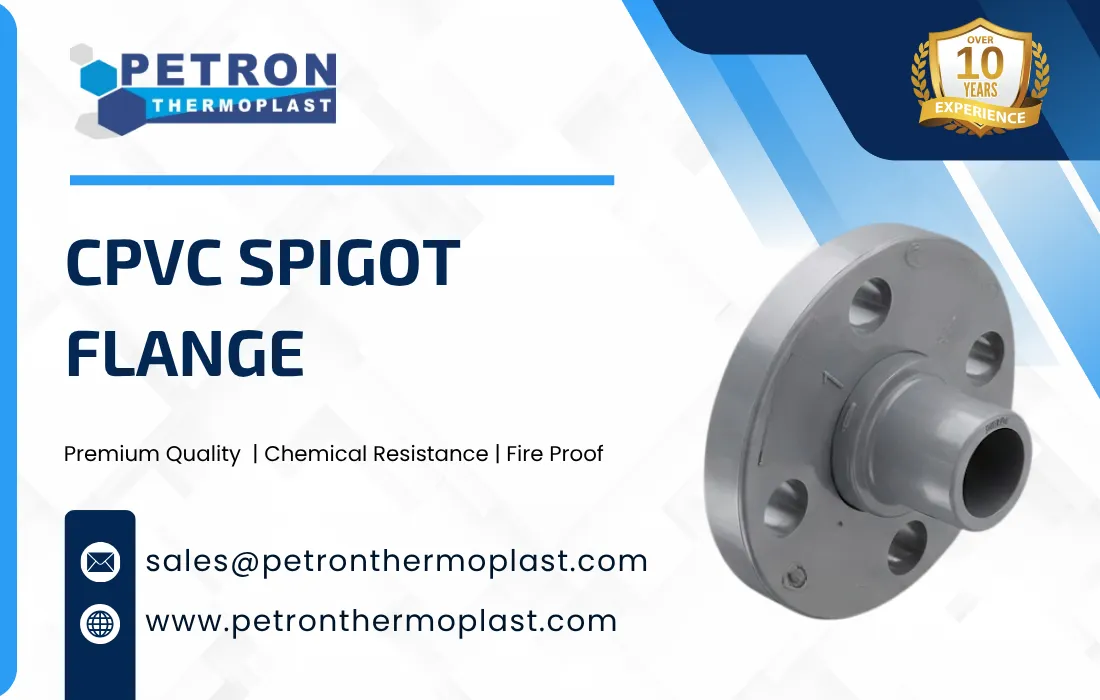
CPVC Stub End Flange Details
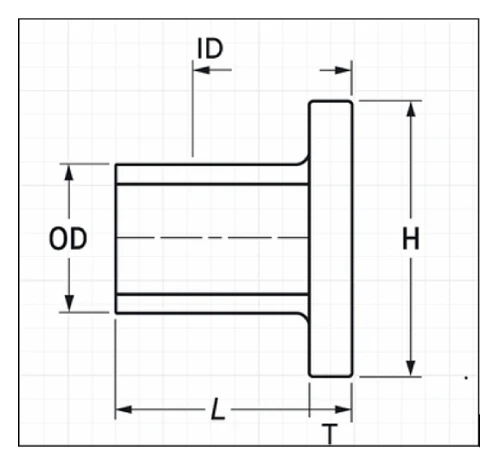
- NB: Nominal Bore
- OD: Outer Diameter
- ID: Inner Diameter
- WT: Wall Thickness
- L: Total Length
- H: Depth/Height of Socket
| Size (NB) | OD (mm) | ID (mm) | WT (mm) | L (mm) | H (mm) |
| 15 (½″) | 21.34 | 15.80 | 2.77 | 26 | 16 |
| 20 (¾″) | 26.67 | 20.93 | 2.87 | 28 | 18 |
| 25 (1″) | 33.40 | 26.64 | 3.38 | 30 | 20 |
| 32 (1¼″) | 42.16 | 35.00 | 3.56 | 34 | 22 |
| 40 (1½″) | 48.26 | 40.89 | 3.68 | 36 | 24 |
| 50 (2″) | 60.33 | 52.51 | 3.91 | 40 | 25 |
| 65 (2½″) | 73.03 | 64.09 | 4.01 | 45 | 28 |
| 80 (3″) | 88.90 | 77.93 | 4.49 | 50 | 30 |
| 100 (4″) | 114.30 | 100.77 | 4.85 | 60 | 34 |
| 125 (5″) | 141.30 | 125.73 | 5.28 | 66 | 38 |
| 150 (6″) | 168.28 | 152.21 | 5.54 | 72 | 40 |
| 200 (8″) | 219.08 | 202.74 | 6.17 | 80 | 45 |
| Parameter | Specification |
| Material | Chlorinated Polyvinyl Chloride (CPVC) |
| Type | Stub End (used with backing ring / loose flange) |
| Size Range | ½” to 12” (15 mm to 315 mm) |
| Pressure Rating | PN10 / Class 150 / SCH 80 (varies by standard & size) |
| Temperature Range | Up to 93°C (200°F) |
| Connection Type | Solvent cement joint + bolted flange connection |
| Standards | ASTM D1784, ASTM F439, DIN, ISO |
| Flange Compatibility | ANSI / DIN / BS backing rings |
| End Design | Stub end (lap joint / van stone type) |
| Installation | Solvent welding + bolting with gasket |
| Density | 1.45 – 1.55 g/cm³ |
| Colour | Light grey / off-white |
| Surface Finish | Smooth, non-porous |
| Weight | Lightweight (compared to metal flanges) |
| Corrosion Resistance | Excellent (no rust, scaling, or pitting) |
| Chemical Resistance | Resistant to acids, alkalis, salts, and organic chemicals |
| Impact Strength | Good mechanical strength and durability |
| Thermal Conductivity | Low (good insulation property) |
| Toxicity | Non-toxic, suitable for potable water systems |
| Fire Behavior | Self-extinguishing, does not support combustion easily |
High Temperature Resistance: Suitable for hot water and high-temperature chemical applications up to 93°C (200°F).
Chemical Resistance: Withstands a broad range of acids, bases, salts, and organic compounds.
Durable Construction: Tough and rigid structure ensures longevity and mechanical reliability.
Easy Assembly and Disassembly: Facilitates maintenance or system changes without cutting the pipe.
Lightweight: Easier to handle and install compared to metal flanges.
Corrosion-Free: CPVC material is inherently resistant to rust, scaling, and microbial growth.
Cost-Effective Alternative: Offers performance similar to metal components at a lower cost.
| Pipe Size (Inch) | Pipe Size (mm) | Pressure Rating (psi) | Pressure Rating (bar) | Maximum Temperature |
| ½” | 15 mm | 150 psi | 10.3 bar | Up to 93°C |
| ¾” | 20 mm | 150 psi | 10.3 bar | Up to 93°C |
| 1″ | 25 mm | 150 psi | 10.3 bar | Up to 93°C |
| 1¼” | 32 mm | 150 psi | 10.3 bar | Up to 93°C |
| 1½” | 40 mm | 150 psi | 10.3 bar | Up to 93°C |
| 2″ | 50 mm | 150 psi | 10.3 bar | Up to 93°C |
| 2½” | 65 mm | 150 psi | 10.3 bar | Up to 93°C |
| 3″ | 80 mm | 150 psi | 10.3 bar | Up to 93°C |
| 4″ | 100 mm | 150 psi | 10.3 bar | Up to 93°C |

Custom Product Manufacturing Available
If you are searching for customized product designs that meet your requirements, don’t worry. Petron Thermoplast also offers custom product manufacturing services to meet the unique needs of various industries. Work with our expert engineers to create custom designs suited for your application.
Benefits of Using CPVC Stub End Flange
Easy Installation
CPVC stub end flanges are easy to install because the stub end is solvent-cemented to the pipe while the backing ring allows simple bolting.
Flexible Alignment
The loose backing ring can rotate around the stub end, making it easier to align bolt holes during installation.
Leak-Proof Connection
When used with a gasket and proper bolting, it provides a tight and reliable leak-free seal.
Corrosion Resistance
Made from CPVC material, it resists rust, corrosion, and many chemicals, increasing system durability.
High Temperature Resistance
CPVC stub end flanges can handle temperatures up to 93°C, suitable for hot and cold fluid systems.
Lightweight
Compared to metal flanges, CPVC stub end flanges are lightweight, making handling and installation easier.
Cost-Effective
Lower material and maintenance costs make them an economical option for piping systems.
Smooth Flow Characteristics
The smooth internal surface reduces friction and prevents scaling or deposits inside the pipeline.
Easy Maintenance
Flanged joints can be easily dismantled for inspection, cleaning, or replacement of equipment.
Long Service Life
Due to its chemical and corrosion resistance, CPVC stub end flanges provide long-term performance in plumbing and industrial applications.
Types of CPVC Stub End Flange
Standard CPVC Stub End Flange
This is the most commonly used type. It is solvent-cemented to the CPVC pipe and used with a loose backing ring to create a flanged connection.
Short Pattern CPVC Stub End Flange
This type has a shorter hub length and is used where space is limited in the piping system.
Long Pattern CPVC Stub End Flange
It has a longer hub length compared to the short pattern and provides better strength and support for the pipe connection.
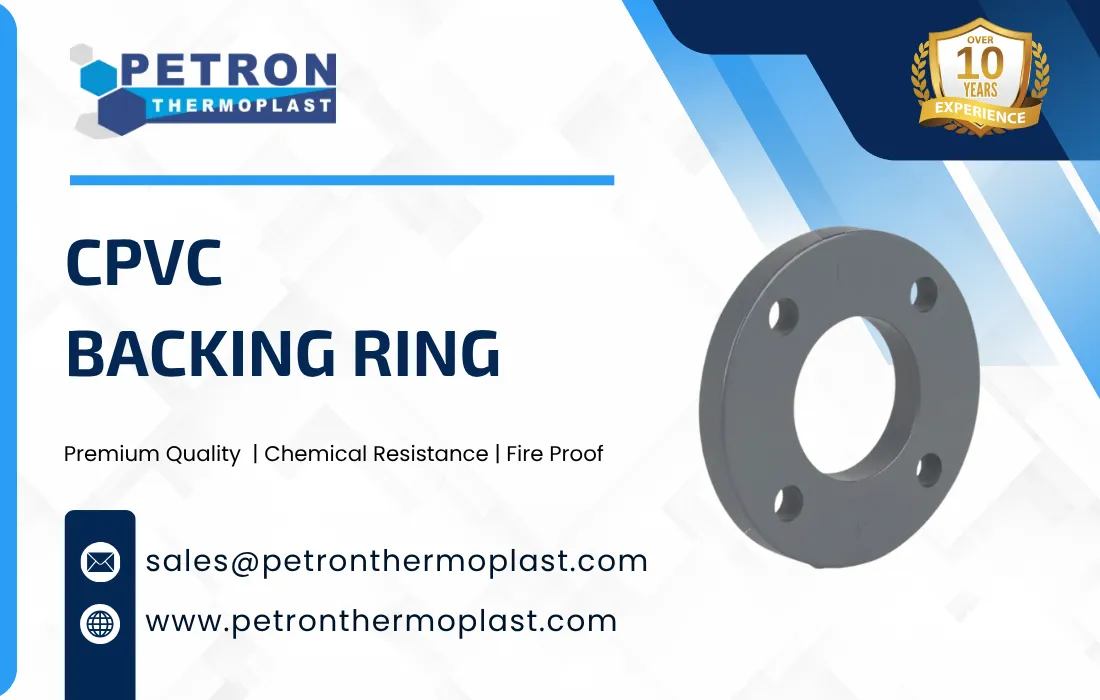
CPVC Stub End Flange with Metal Backing Ring
In this type, the CPVC stub end is used together with a metal backing ring (such as steel or stainless steel) to provide additional mechanical strength.
CPVC Stub End Flange with Plastic Backing Ring
This type uses a PVC or CPVC backing ring instead of metal, providing a fully corrosion-resistant flanged connection for chemical or water systems.
Applications of CPVC Stub End Flange
Process Industry
High Purity Applications
Electronic Industry
Electrical Industry
Semi-conductors Industry
Pharmaceutical Industry
Solar power panels
Sugar Industry
Paper & Pulp Industry
Nuclear Power Industry
Automotive Industry
DI water plants
Why Choose Petron Thermoplast?
Petron Thermoplast has selected the right CPVC Stub End Flange to require balancing material quality, actuation needs, and system compatibility. For high-performance applications involving steam, chemicals, or automated control. The certified actuators deliver optimal reliability. While the entry level of options exists for non-critical uses, investing in a well-engineered valve reduces downtime and maintenance costs over time. Inspect seals every 6–12 months as per system runtime. Lubricate piston rods with silicone-free grease. Test actuator responsiveness periodically.