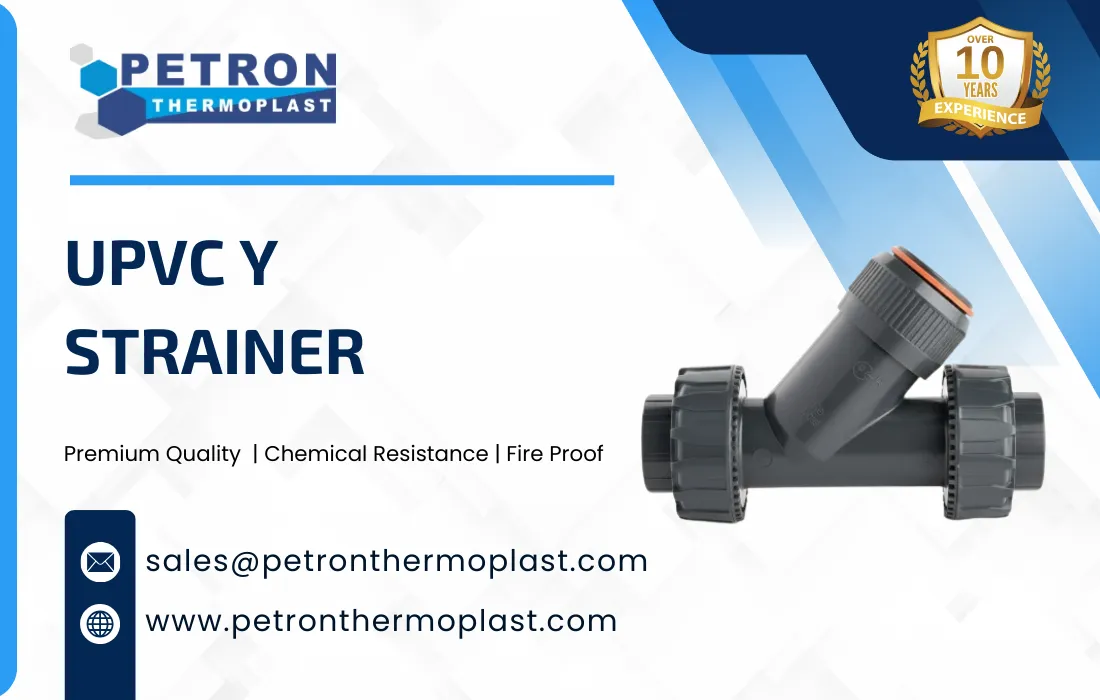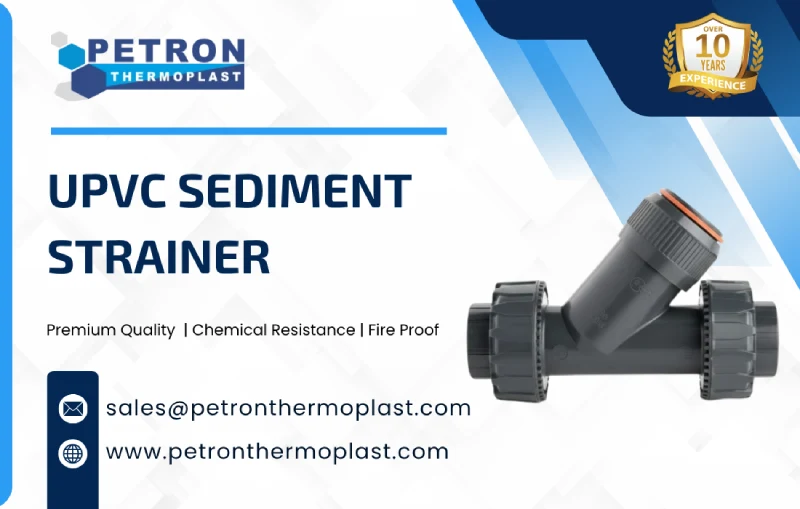
UPVC Sediment Strainer
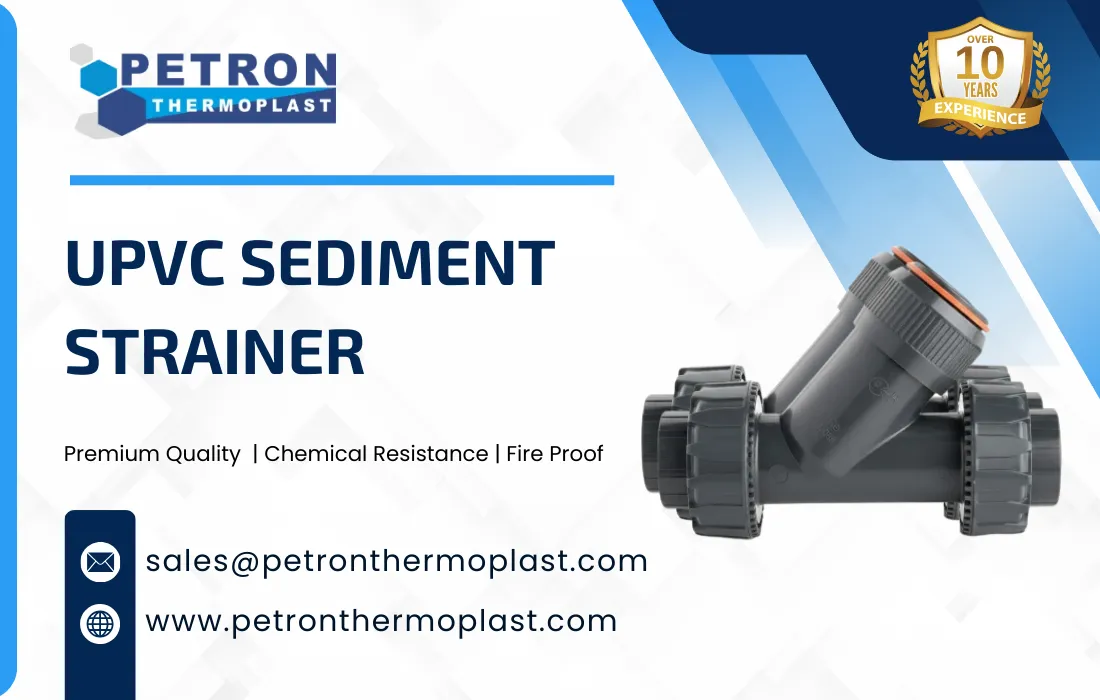
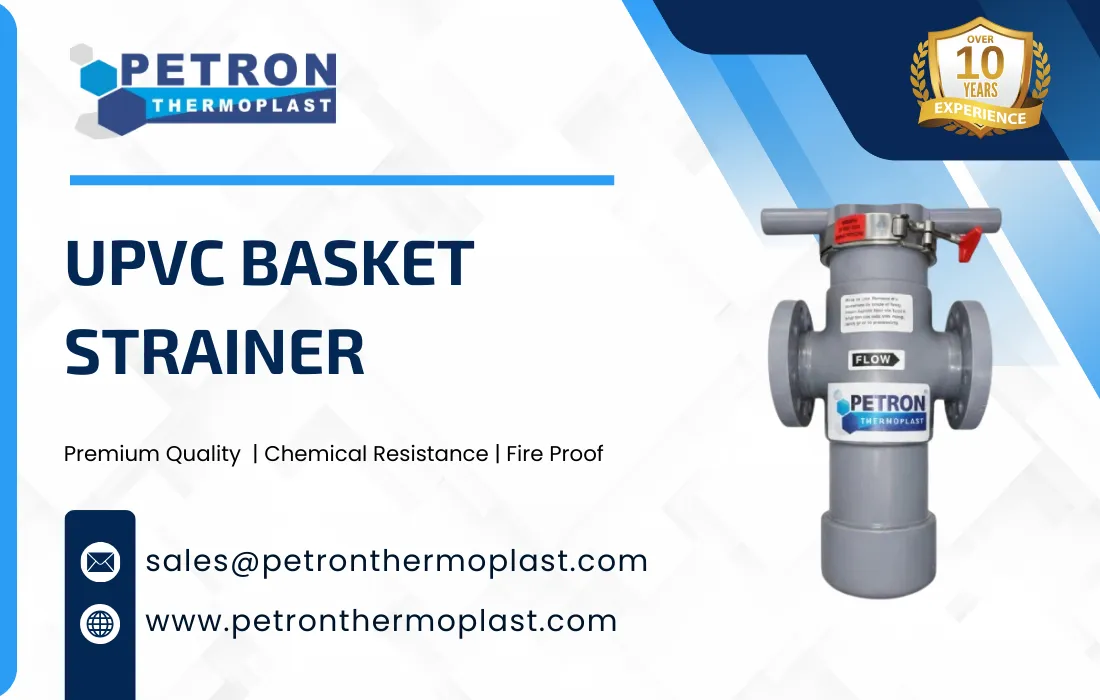
A UPVC sediment strainer is capturing and removing the particulate matter, like dirt and debris, from your water and harsh chemicals. UPVC sediment is a generic term for all particulate matter in your water, but not in liquid form. Rainwater can carry silt, clay, soil, and grains of sand into your well’s groundwater supply. Flow changes in your water main can also transport sediment to your home.
The UPVC sediment strainer is the first line of defense against these dirt particles and debris. It prohibits all this solid particulate from entering your water supply and impeding the performance of your water filtration system. Pumps and metres are protected by a UPVC Sediment Strainer, which removes suspended particles and contaminants. The screen’s condition may be easily determined because of its transparent thermoplastic composition.

- Chemical Resistance
- Low Maintenance Requirement
- Low Thermal Conductivity
- Long Service Life
- Easy Installation
- Corrosion Resistance
UPVC Sediment Strainer Details
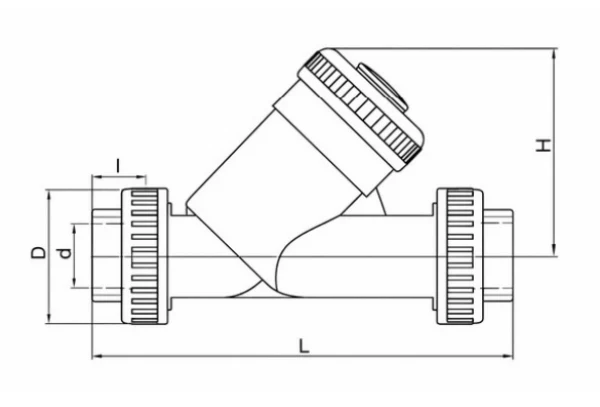
Size: Pipe size (usually in inches).
d: External pipe diameter.
DN: Nominal Diameter (internal size)
L: Total length of the valve.
H: Total height of the valve.
I: Depth of the socket/thread.
Seal: The material used for internal sealing (e.g., FKM/Viton).
| Size | d | DN | L | H | I | Seal |
| 1/2″ | 20 | 15 | 184 | 80 | 18 | FKM |
| 3/4″ | 25 | 20 | 187 | 80 | 21 | FKM |
| 1″ | 32 | 25 | 205 | 93 | 26 | FKM |
| 1-1/2″ | 50 | 40 | 271 | 120 | 37 | FKM |
| 2″ | 63 | 50 | 305 | 143 | 37 | FKM |
| 3″ | 90 | 80 | 440 | 236 | 50 | FKM |
| 4″ | 110 | 100 | 565 | 236 | 69 | FKM |
*All dimensions are in mm
| Parameter | Technical Details / Typical Values |
| Valve Type | Y-Strainer (Sediment Filter) |
| Body Material | uPVC (Unplasticized Polyvinyl Chloride) |
| Filter/Screen | Stainless Steel / PVC / uPVC mesh |
| Connection Type | Threaded, Socket, Flanged |
| Size Range | 15 mm to 200 mm (½” to 8”) |
| Pressure Rating | PN6 / PN10 (size & manufacturer dependent) |
| Operating Temp | 0°C to 60°C |
| End Connection Std | ISO / DIN / ASTM |
| Filtration Mesh | 20–200 mesh (depending on application) |
| Flow Direction | Inlet → Screen → Outlet |
| Working Media | Water, mild chemicals, non-abrasive fluids |
| Corrosion Res. | Excellent (uPVC body & SS/Chemical-resistant screen) |
| Maintenance | Easy cleaning by removing the screen; low maintenance |
| Leakage Class | Tight sealing with gasket (EPDM / NBR) |
| Weight | Lightweight, easy to handle and install |
| Installation | Vertical or horizontal (depending on design) |
| Standards | ISO 9001, DIN, ASTM |
| Durability | Long service life in water & chemical environments |
| Special Features | Removable screen, smooth flow, minimal pressure drop |
1. Material Advantages
- They are corrosion-resistant, do not rust or corrode, and are suitable for water, chemicals, and saline environments.
- Upvc sediment Strainers are easier to handle, transport, and install compared to metal strainers.
- The durability is resistant to chemical attack and UV degradation (for outdoor use with UV-stabilized uPVC).
2. Filtration Performance
- Mesh or perforated screens: Can trap fine or coarse particles depending on mesh size.
- The elements of upvc sediment strainer screens can be cleaned and replaced without dismantling the entire system.
- Efficient debris removal reduces the wear and tear on pumps, valves, and downstream equipment.
3. Design Flexibility
- Available in Y-strainer, T-strainer, basket strainer, inline strainer, and foot valve types.
- They can be installed horizontally or vertically, depending on the system.
- Compact designs are suitable for tight spaces in piping layouts.
4. Pressure & Temperature Ratings
- They are typically designed for low to medium pressure systems (often up to ~10 bar, depending on the manufacturer)
- They are suitable for temperatures up to 60–70°C, depending on the grade of uPVC.
5. Maintenance & Operation
- Easy to maintain, the screens can be cleaned quickly without special tools.
- Low operating costs are achieved with no lubrication or anti-corrosion coatings needed.
- Long service life is minimal wear when they are used in compatible chemical and water systems.
6. Environmental & Safety Features
- Non-toxic and safe for potable water applications.
- Smooth internal surfaces are reducing the pressure drop and sediment accumulation.
- Resistant to biofouling in water systems.
7. Installation & Versatility
- Can be glued (solvent welded) or threaded into pipelines.
- Suitable for irrigation, potable water, chemical, and wastewater systems.
- Compatible with other plastic piping systems like CPVC, HDPE, and PVC.
| Strainer Size (mm / inch) | PN6 (bar) | PN10 (bar) | Notes / Remarks |
| 15–50 mm (½”–2”) | 6 | 10 | Standard small-size strainers |
| 65–100 mm (2½”–4”) | 6 | 10 | Medium-size strainers |
| 125–150 mm (5″–6″) | 6 | 10 | Larger sizes may have reduced PN10 rating |
| 200 mm fits of UPVC Sediment (8″) | 6 | 10 | Check manufacturer for exact PN10 limit |
| Temperature Derating | 0–20°C: Full PN rating | 20–40°C: ~10% reduction | 40–60°C: ~20% reduction |

Custom Product Manufacturing Available
If you are searching for customized product designs that meet your requirements, don’t worry. Petron Thermoplast also offers custom product manufacturing services to meet the unique needs of various industries. Work with our expert engineers to create custom designs suited for your application.
Benefits of Using UPVC Sediment Strainer
1. Corrosion Resistance
- UPVC sediment strainer is made from unplasticized PVC (UPVC); these strainers are resistant to rust and chemical corrosion, unlike metal strainers.
- These are ideal for hard water, chemicals, or acidic/alkaline fluids.
2. Lightweight and Easy to Install
- UPVC is much lighter than other metals, makes the easier to handle and install
- No need for heavy-duty support to structure pipelines.
3. Low Maintenance
- UPVC sediment strainers are designed to trap debris like sand, silt, leaves, and rust particles
- UPVC does not require painting or anti-corrosion treatment.
- Transparent or removable baskets make for simple cleaning and are quick.
4. Cost-Effective
- UPVC strainers are less expensive than metal alternatives.
- Lower maintenance and longer lifespan in non-extreme temperature environments, reducing the overall costs.
5. Smooth Internal Surface
- The smooth inner walls of UPVc sediment strainers reduce the friction loss and prevent sediment buildup inside the pipe.
- Helps maintain the good flow rates.
6. Versatility
- These can handle a range of fluids: water, mild chemicals, and some oils.
- All are available in various sizes, mesh types, and configurations to suit different systems.
7. Non-Toxic and Safe for Drinking Water
- Food-grade UPVC sediment strainers are safe for potable water.
- Do not leach harmful substances, making them suitable for domestic and industrial water systems.
8. Durable and Long-Lasting
- They are resistant to UV light and weathering if used outdoors.
- They can perform many of last year’s operations under normal operating conditions.
Types of UPVC Sediment Strainer
1. Y-Strainers
- Shaped like a “Y” with a strainer element inside.
- The installation is inline with the pipeline; the leg of the “Y” contains the strainer basket.
- These are ideal for pipelines where debris removal is needed, but space is limited.
- Easy to clean and can handle the higher pressures than basket strainers of the same size.
2. Basket Strainers
- These sizes and shapes are in cylindrical or rectangular baskets inside a chamber.
- Inline and larger diameter pipe sections often use basket strainers for installation purposes
- The Systems with high debris loads, like cooling water systems, irrigation, or pump protection.
- They can hold more sediment than Y-strainers; easy to remove and clean the basket.
3. Tee-Strainers
- Resembles a “T” in the size of the pipeline and the vertical section of the strainer element.
- These applications are often used in low-flow applications, where the debris volume is moderate.
- Simple designs are more compact for certain pipeline layouts.
4. Inline Strainers
- Directly integrated into the pipeline without a separate chamber.
- Light-duty filtration, domestic water systems, or chemical pipelines.
- Compact, minimal footprint, low-cost solution.
5. Transparent/See-Through Strainers
- UPVC sediment strainers are made of transparent UPVC to visually inspect sediment accumulation.
- Where frequent monitoring is needed.
- Easy to see when cleaning is required; avoids unnecessary dismantling.
6. Duplex Strainers
- Two strainer chambers in parallel with a valve system.
- Continuous systems where flow cannot be stopped for cleaning.
- Allowing one chamber to operate while the other is cleaned.
Why Choose Petron Thermoplast?
Petron Thermoplast is one of the trusted UPVC sediment strainer manufacturers and suppliers in India, delivering high-performance mechanical splicing solutions for civil and structural engineering sectors. Our UPVC sediment strainer is crafted using certified materials and advanced machining processes to be strong and reliable, ensuring the connections in every project.
Particle Size
Determine the size of the particulates in your water to choose a filter with the appropriate micron rating.
Flow Rate
Ensure the filter can handle the water flow rate of your home without causing significant pressure drops.
Filter Material and Design
Consider the type of filter (screen, cartridge, or bag) based on your maintenance preferences and water quality requirements.