- Email us for Quote - sales@petronthermoplast.com
- Call OR Whatsapp - +91-8218684097

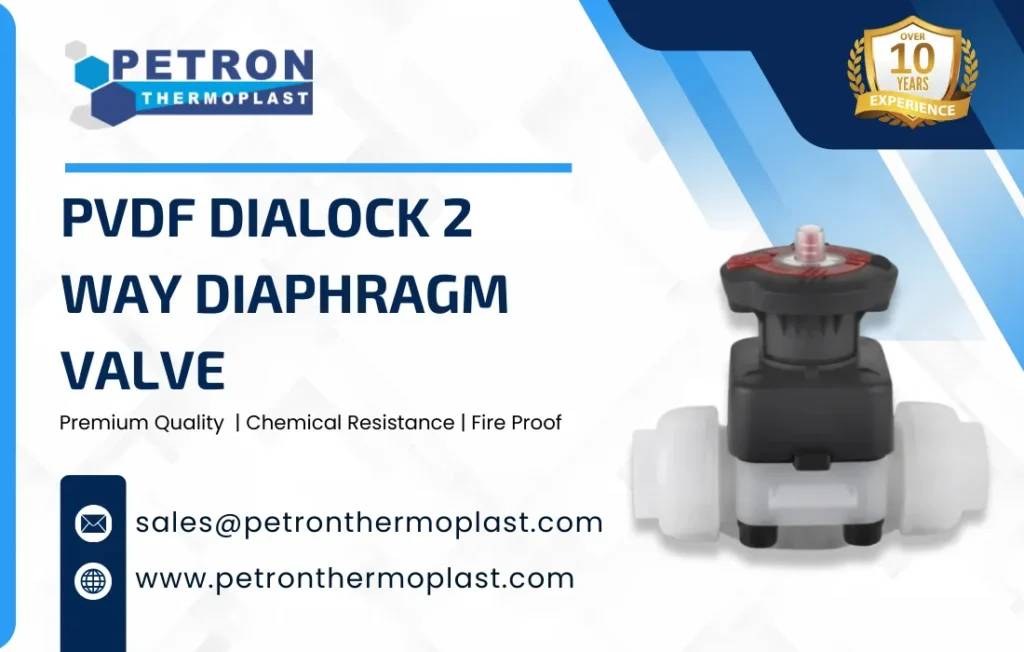
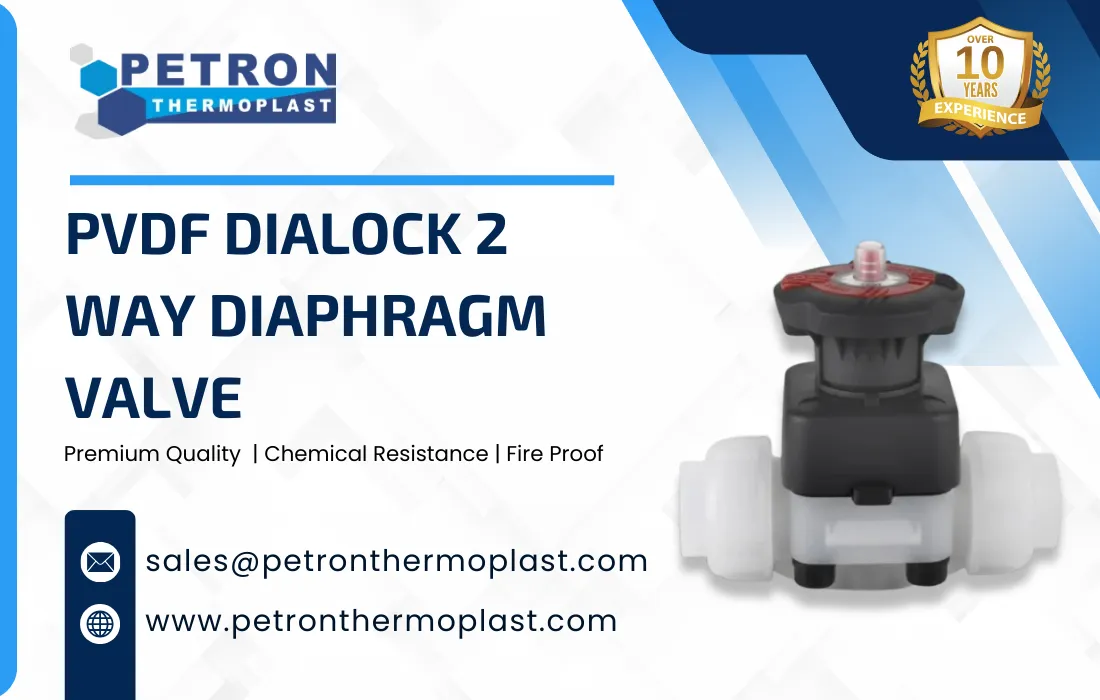
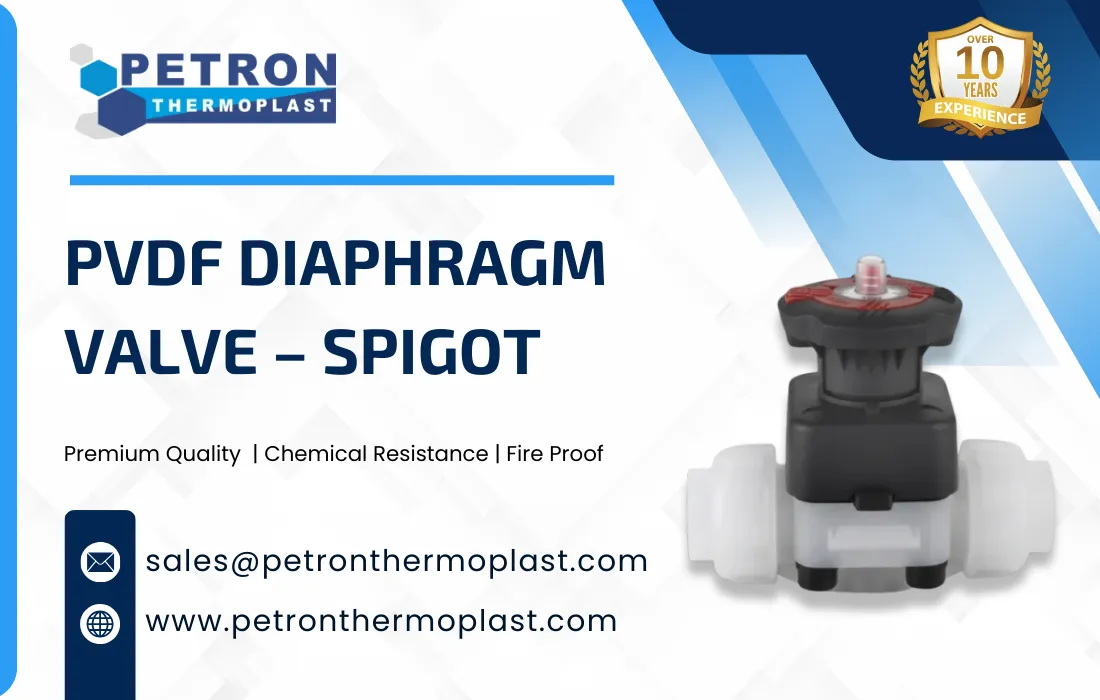
PVDF Dialock 2 Way Diaphragm Valve
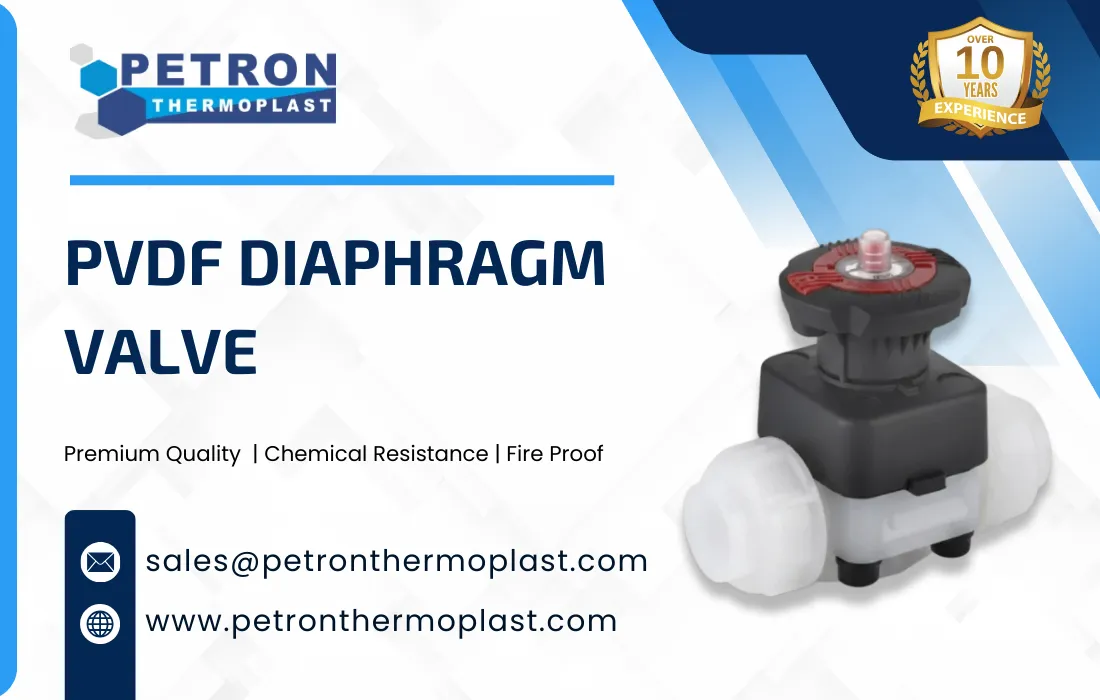
A PVDF Dialock 2 Way Diaphragm Valve is a corrosion-resistant, manually operated flow control valve and is designed with a Dialock (double-locking) safety mechanism to securely regulate fluid flow in two directions (one inlet and one outlet). It is primarily used in chemical and industrial piping systems where a safe, leak-proof, and reliable shutoff is required. PVDF Dialock 2 Way Diaphragm Valve is mainly used to control and close dirty or scratched materials. The redesigned internal shape of the body increases the flow coefficient and pressure drop, allowing for delicate, precise shutter adjustments over the entire stroke. The PVDF Dialock 2 Way Diaphragm Valve is quite small and lightweight.
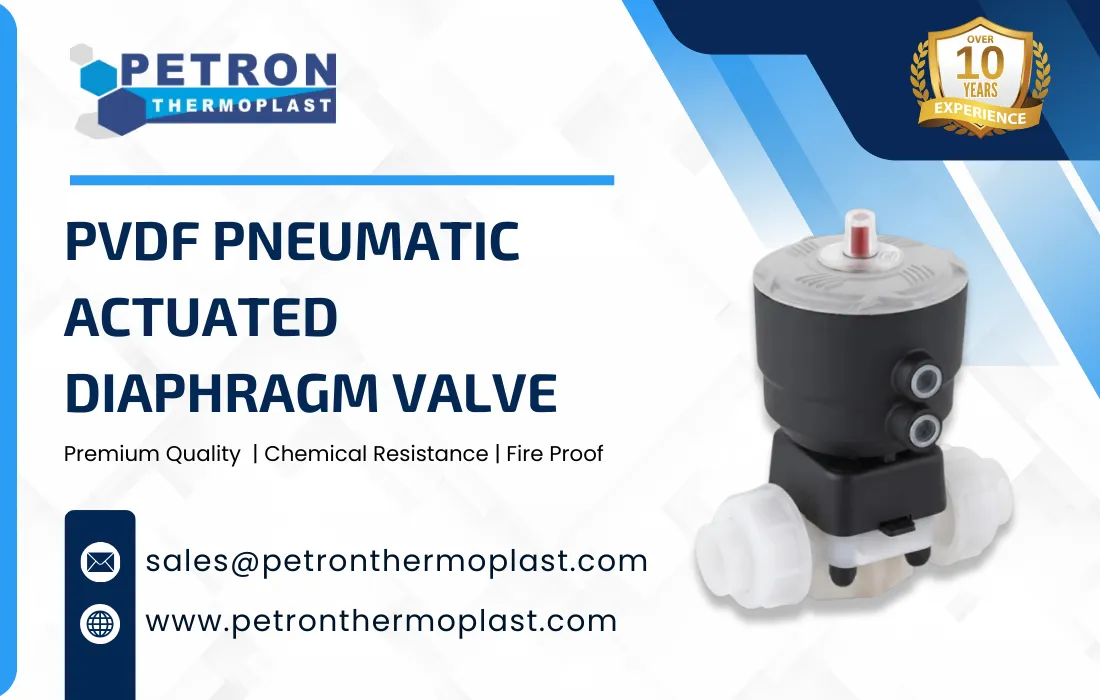
PVDF Dialock 2 Way Diaphragm Valve has many different materials, body styles, and diaphragms that can be used with the wear style body re-design improves flow rate and allows for precise linear flow regulation across the full range of operation of the valve. A variety of options and accessories are available with this pneumatically operated version. In addition, the PVDF Dialog 2 Way Diaphragm Valve allows for precise linear flow control.

- Chemical Resistance
- Low Maintenance Requirement
- Low Thermal Conductivity
- Long Service Life
- Easy Installation
- Corrosion Resistance
PVDF Dialock 2 Way Diaphragm Valve Details
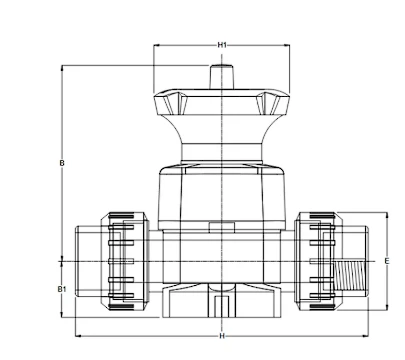
d: Outer pipe diameter (mm).
DN: Nominal diameter (mm).
PN: Pressure rating (bar).
H/H1: Overall height and actuator height.
Z: Total length/face-to-face dimension.
| d | DN | Seal Type | PN | B1 | E | H | H1 | Z |
| 20 | 15 | FKM/PTFE | 10 | 25 | 41 | 128 | 80 | 101 |
| 25 | 20 | FKM/PTFE | 10 | 30 | 50 | 150 | 80 | 119 |
| 32 | 25 | FKM/PTFE | 10 | 33 | 58 | 163 | 80 | 127 |
| 40 | 32 | FKM/PTFE | 10 | 30 | 72 | 184 | 80 | 145 |
| 50 | 40 | FKM/PTFE | 10 | 35 | 79 | 210 | 120 | 165 |
| 63 | 50 | FKM/PTFE | 10 | 46 | 98 | 248 | 120 | 195 |
| Parameter | Details |
| Product Type | 2 Way Diaphragm Valve (DIALOCK System) |
| Material (Body) | Polyvinylidene Fluoride (PVDF) |
| Diaphragm Material | PTFE / EPDM (backed diaphragm) |
| Bonnet Material | PP-GR (Glass reinforced polypropylene) |
| Valve Type | Linear motion diaphragm valve |
| Operation Type | Manual (Handwheel) / Pneumatic (optional) |
| Working Principle | Diaphragm presses against seat to stop flow |
| Valve Design | Weir-type / straight-through design |
| Connection Type | Socket weld / Threaded / Flanged |
| Available Sizes | DN15 to DN65 (½″ to 2½″ approx.) |
| Pressure Rating | PN10 – PN16 (10–16 bar) |
| Operating Temperature | -10°C to +120°C (PVDF range) |
| Flow Direction | Bi-directional |
| Flow Control | Throttling + On/Off control |
| Handwheel Type | Non-rising handwheel with locking system |
| Locking Mechanism | DIALOCK system (300+ adjustable positions) |
| Position Indicator | Optical indicator with transparent cap |
| Internal Design | Optimized flow geometry (high flow coefficient) |
| Pressure Drop | Reduced due to smooth internal design |
| Metal Parts Exposure | Fully isolated from fluid and environment |
| Sealing System | CDSA (Circular Diaphragm Sealing Angle) |
| Torque Requirement | Low operating torque |
| Weight | Lightweight and compact design |
| Corrosion Resistance | Excellent (acids, alkalis, aggressive chemicals) |
| Chemical Compatibility | Highly resistant to corrosive and abrasive fluids |
| Surface Finish | Smooth internal bore for efficient flow |
| Mounting Option | Panel / wall mounting with bracket |
| Maintenance | Low maintenance, easy diaphragm replacement |
| Standards | DIN / ANSI / ISO compatible |
| Applications | Chemical processing, water treatment, pharma, slurry handling |
1. Chemical-Resistant PVDF Body
- Made of Polyvinylidene Fluoride (PVDF).
- Resistant to acids, alkalis, oxidizers, and corrosive chemicals.
- Does not corrode or rust like metal valves.
2. Dialock Safety Mechanism
- Equipped with a double-locking handwheel.
- Prevents accidental or unauthorized operation.
- Enhances operational safety in chemical plants and labs.
3. Leak-Proof Diaphragm Seal
- Uses PTFE, EPDM, or FKM diaphragms.
- Provides bubble-tight shutoff.
- Ensures no fluid leakage even with aggressive chemicals.
4. High Purity & Non-Contaminating
- Smooth internal surfaces prevent particle buildup.
- Suitable for pharmaceutical, biotech, and ultra-pure chemical systems.
5. Corrosion-Free & Durable
- Resistant to UV and weathering.
- Long service life in harsh chemical environments.
6. Easy Operation & Maintenance
- Simple manual operation via handwheel.
- The diaphragm is replaceable, reducing downtime.
7. Versatile Connections
- Available with threaded, flanged, or socket ends.
- Compatible with a wide range of piping systems.
8. Moderate Pressure & Temperature Rating
- Typically rated up to 6–10 bar depending on size.
- Operating temperature up to 90°C (higher with PTFE diaphragm).
| Valve Size (DN / Inch) | Max Pressure @ 25°C (Bar) | Max Pressure @ 60°C (Bar) | Max Pressure @ 90°C (Bar) | Notes |
| DN10 / 3/8″ | 10 bar | 8 bar | 6 bar | Suitable for small chemical lines |
| DN15 / 1/2″ | 10 bar | 8 bar | 6 bar | Common lab & dosing applications |
| DN20 / 3/4″ | 10 bar | 7–8 bar | 5–6 bar | Pressure reduces at higher temperatures |
| DN25 / 1″ | 10 bar | 7 bar | 5 bar | Standard industrial use |
| DN32 / 1¼″ | 8–10 bar | 6–7 bar | 4–5 bar | Depends on diaphragm thickness |
| DN40 / 1½″ | 8 bar | 6 bar | 4–5 bar | Larger size reduces rating |
| DN50 / 2″ | 6–8 bar | 5–6 bar | 4 bar | Maximum rating varies by design |

Custom Product Manufacturing Available
If you are searching for customized product designs that meet your requirements, don’t worry. Petron Thermoplast also offers custom product manufacturing services to meet the unique needs of various industries. Work with our expert engineers to create custom designs suited for your application.
Benefits of Using PVDF Dialock 2 Way Diaphragm Valve
1. Excellent Chemical Resistance
- Made from PVDF (Polyvinylidene Fluoride).
- Highly resistant to acids, alkalis, salts, and aggressive chemicals.
- Ideal for corrosive industrial environments.
2. Secure Dialock Safety Mechanism
- Equipped with a Dialock (double-locking) handwheel system.
- Prevents accidental or unauthorized valve operation.
- Improves operational safety in chemical plants.
3. Leak-Proof Sealing
- Uses a flexible diaphragm seal (PTFE/EPDM/FKM).
- Provides bubble-tight shutoff.
- Prevents leakage of hazardous fluids.
4. High Purity & Non-Contaminating
- PVDF does not rust or leach metal ions.
- Smooth internal surface reduces contamination.
- Suitable for pharmaceutical, laboratory, and ultra-pure applications.
5. Corrosion-Free & Long Service Life
- Does not corrode like metal valves.
- Resistant to UV and weather exposure.
- Durable even in harsh chemical conditions.
6. Low Maintenance
- Simple internal construction with few moving parts.
- Replaceable diaphragm extends service life.
- Easy servicing reduces downtime.
7. Good Pressure & Temperature Performance
- Typically rated up to 6–10 bar (depending on size).
- Operating temperature up to 90°C (higher with PTFE diaphragm).
8. Compact & Lightweight Design
- Easier handling and installation compared to metal valves.
- Suitable for tight piping layouts.
9. Versatile Connection Options
- Available in threaded, flanged, and socket weld types.
- Compatible with various piping systems.
10. Reliable Flow Control
- Straight-through 2-way design ensures smooth flow.
- Ideal for on/off and throttling applications.
Types of PVDF Dialock 2 Way Diaphragm Valve
1. Based on Operation / Actuation
- Manual Dialock 2-Way Diaphragm Valve
- Operated with a handwheel.
- Dialock mechanism prevents accidental operation.
- Common in chemical tanks and lab systems.
- Pneumatic Actuated Dialock 2-Way Diaphragm Valve
- Uses air pressure to move the diaphragm.
- Suitable for automated or remote control systems.
- Electric Actuated Dialock 2-Way Diaphragm Valve
- Motor-driven for automated control.
- Can be integrated into PLC or SCADA systems.
2. Based on Diaphragm Material
- PTFE Diaphragm Dialock Valve
- Excellent chemical resistance, wide temperature range.
- Ideal for high-purity, corrosive, or aggressive chemicals.
- EPDM Diaphragm Dialock Valve
- Resistant to acids, alkalis, and some solvents.
- Good for oil gas treatment and moderate chemical applications.
- FKM / Viton Diaphragm Dialock Valve
- High resistance to oils, aggressive chemicals, and high temperatures.
3. Based on Connection Type
- Threaded Dialock 2-Way Valve
- NPT or BSPT threads.
- Easy installation in small pipelines.
- Socket / Welded Dialock Valve
- PVDF socket or butt fusion ends.
- Ensures leak-free joints in chemical pipelines.
- PVDF socket or butt fusion ends.
- Flanged Dialock 2-Way Valve
- Bolted connection for larger piping systems.
4. Based on Special Applications
- High-Purity / Ultra-Pure Dialock Valve
- Smooth internal surfaces to prevent contamination.
- Used in the pharmaceutical, semiconductor, and biotech industries.
- Chemical Dosing / Metering Dialock Valve
- Designed for precise flow control of chemicals.
- Designed for precise flow control of chemicals.
Applications of PVDF Dialock 2 Way Diaphragm Valve
Process Industry
High Purity Applications
Electronic Industry
Electrical Industry
Semi-conductors Industry
Pharmaceutical Industry
Solar power panels
Sugar Industry
Paper & Pulp Industry
Nuclear Power Industry
Automotive Industry
DI water plants
Why Choose Petron Thermoplast?
At Petron Thermoplast, we are committed to delivering high-quality products that meet industry standards and exceed customer expectations. Our products have been rigorously tested and certified through various tests to ensure their durability and performance.
At Petron Thermoplast, PVDF Dialock 2 Way Diaphragm Valves offer a range of benefits and applications that make them an ideal solution for regulating fluid flow in various industries. Their precision and accuracy in fluid flow control provide reliable and consistent results during industrial processes. With their easy maintenance and wide range of fluid compatibility, reduced risk of contamination, they have become a popular choice for various industries such as chemical production, pharmaceuticals, and food processing.
PVDF Valves
Petron Thermoplast