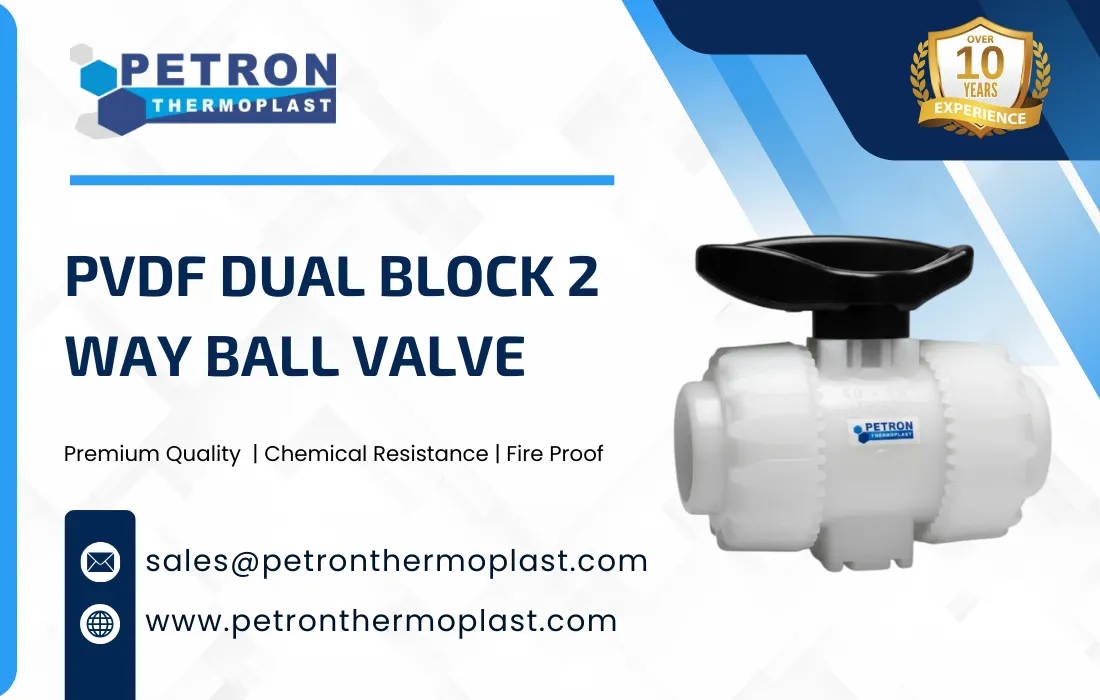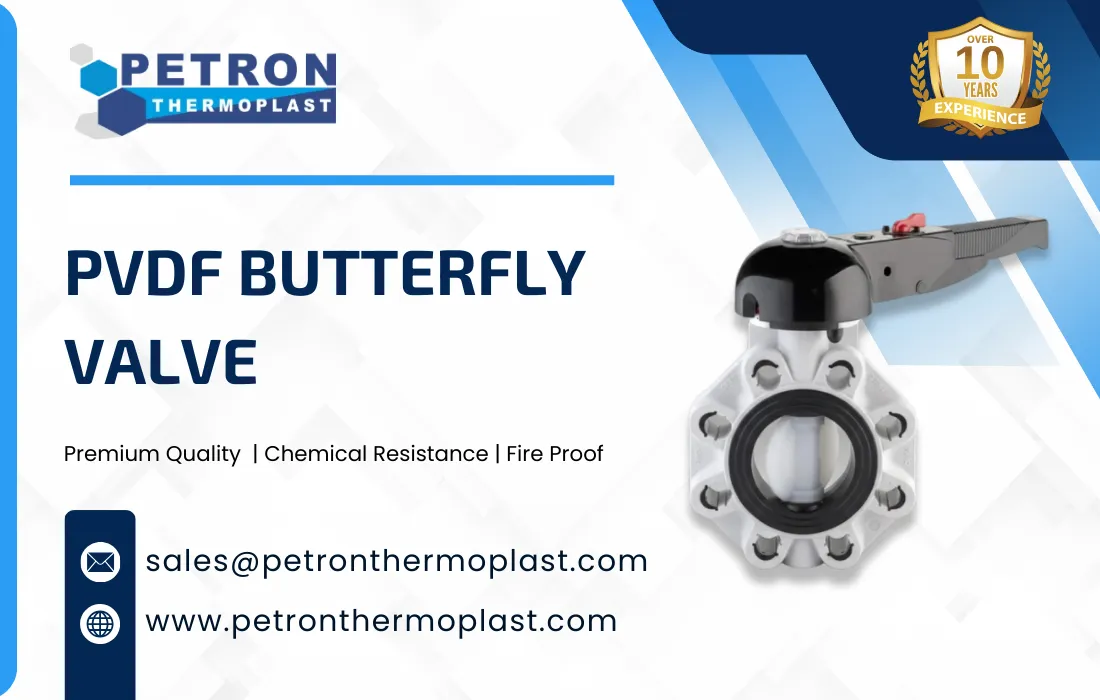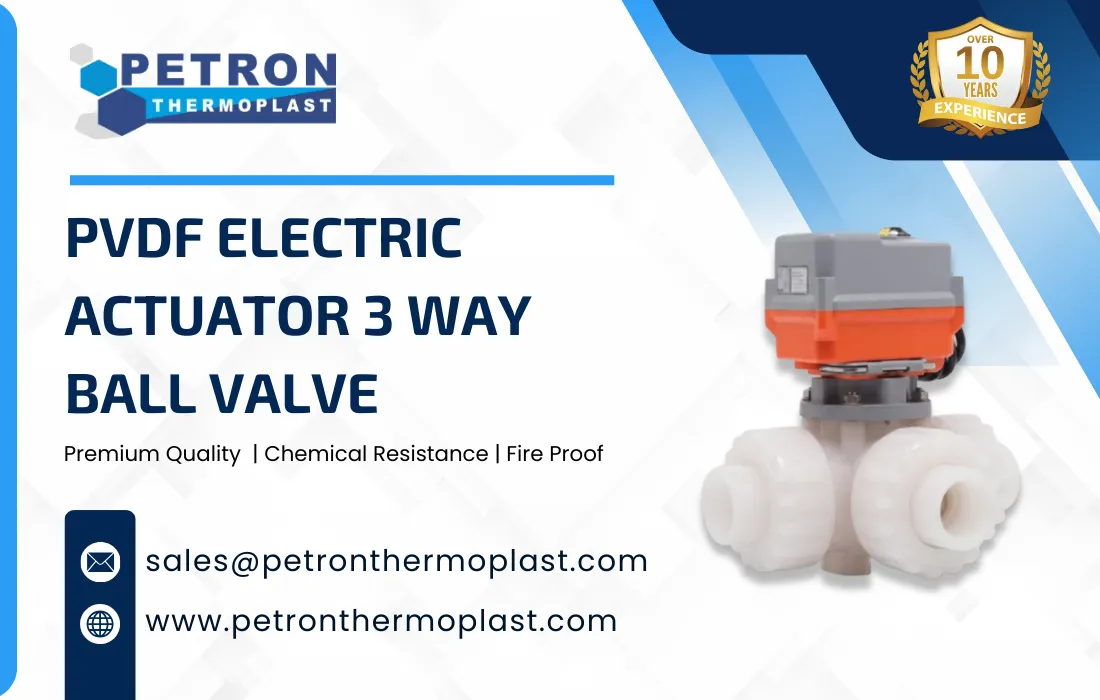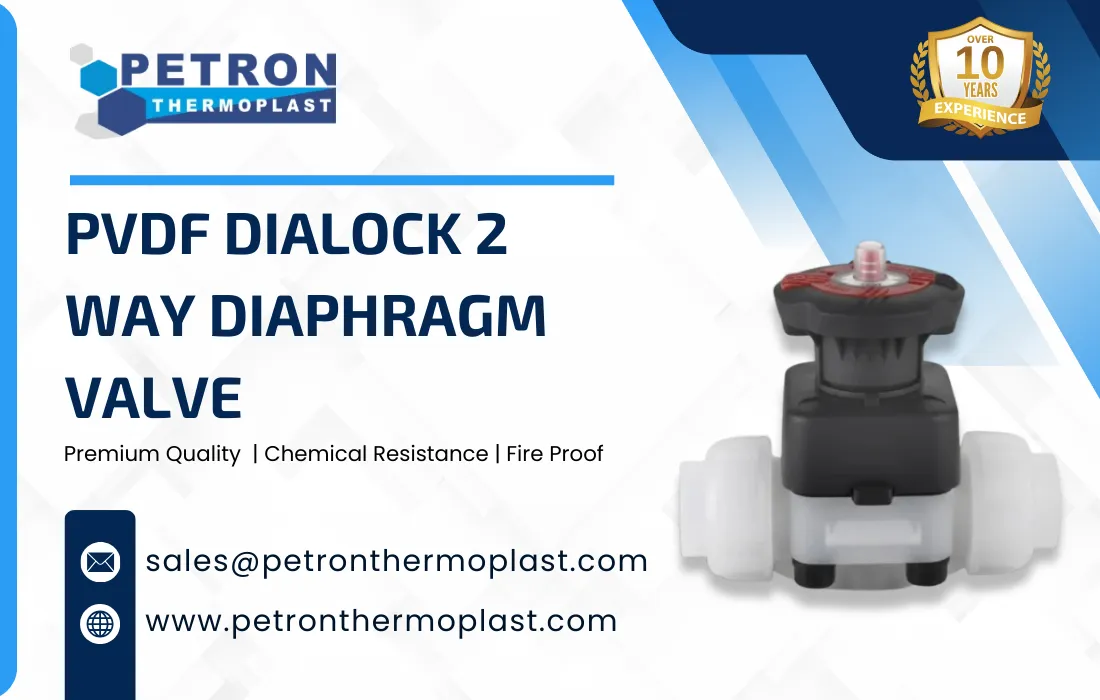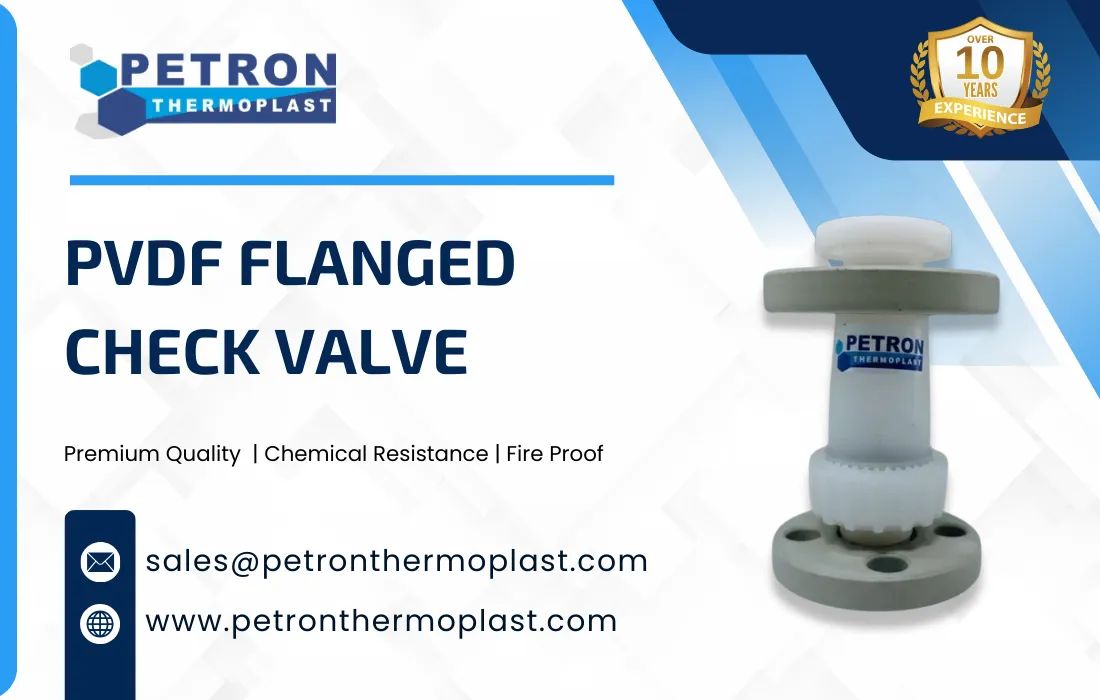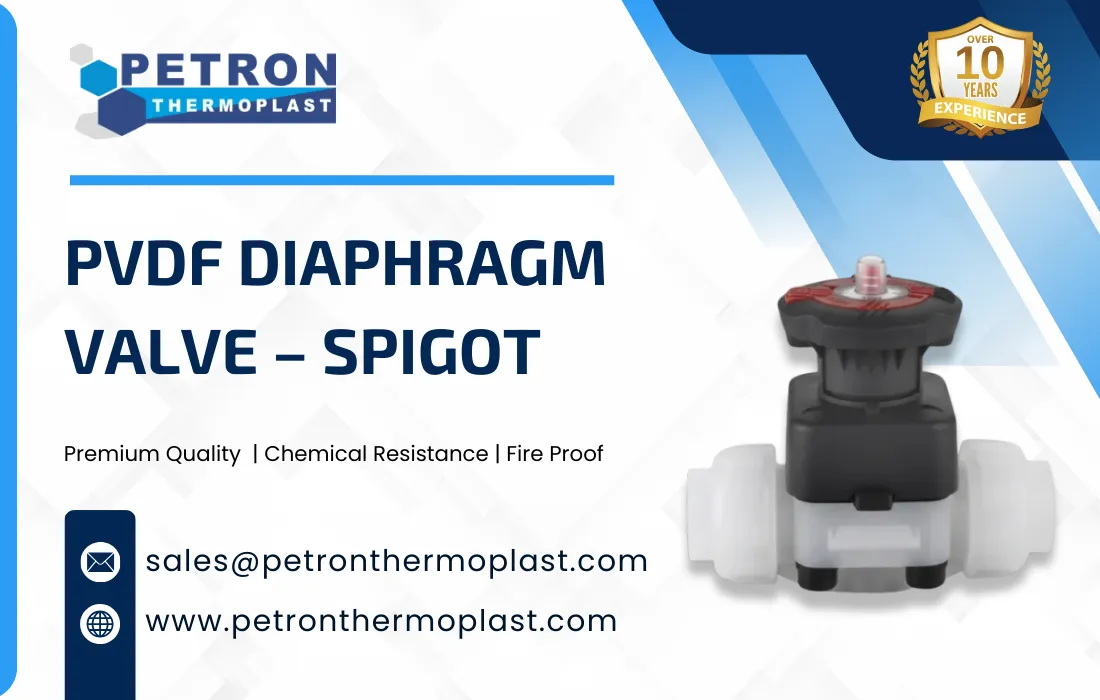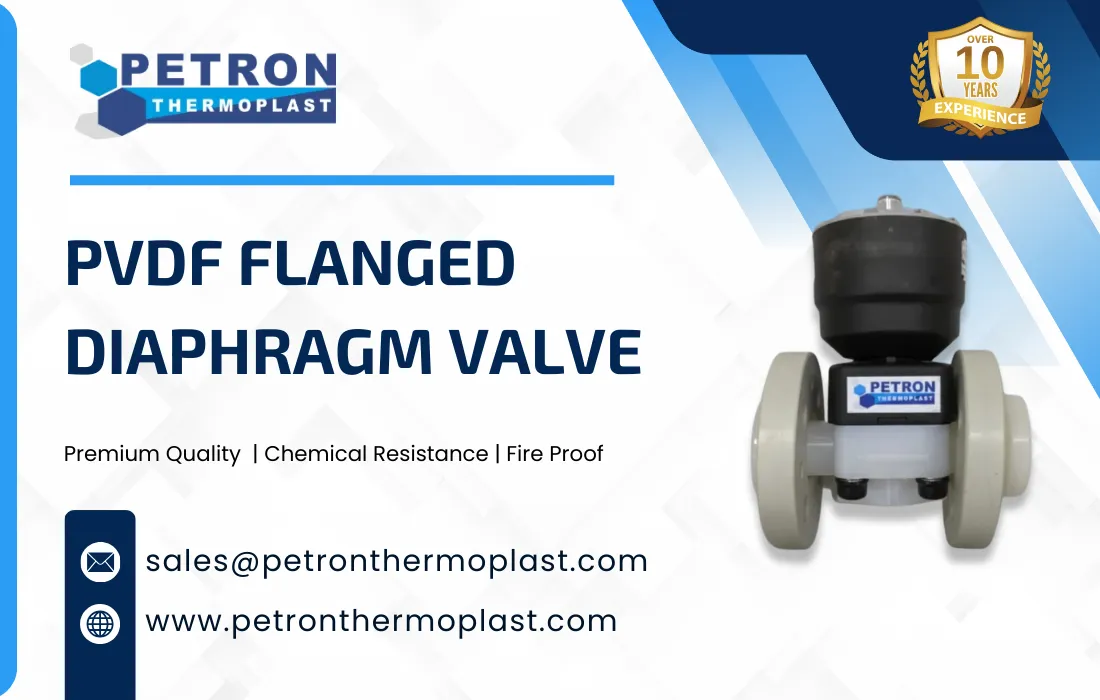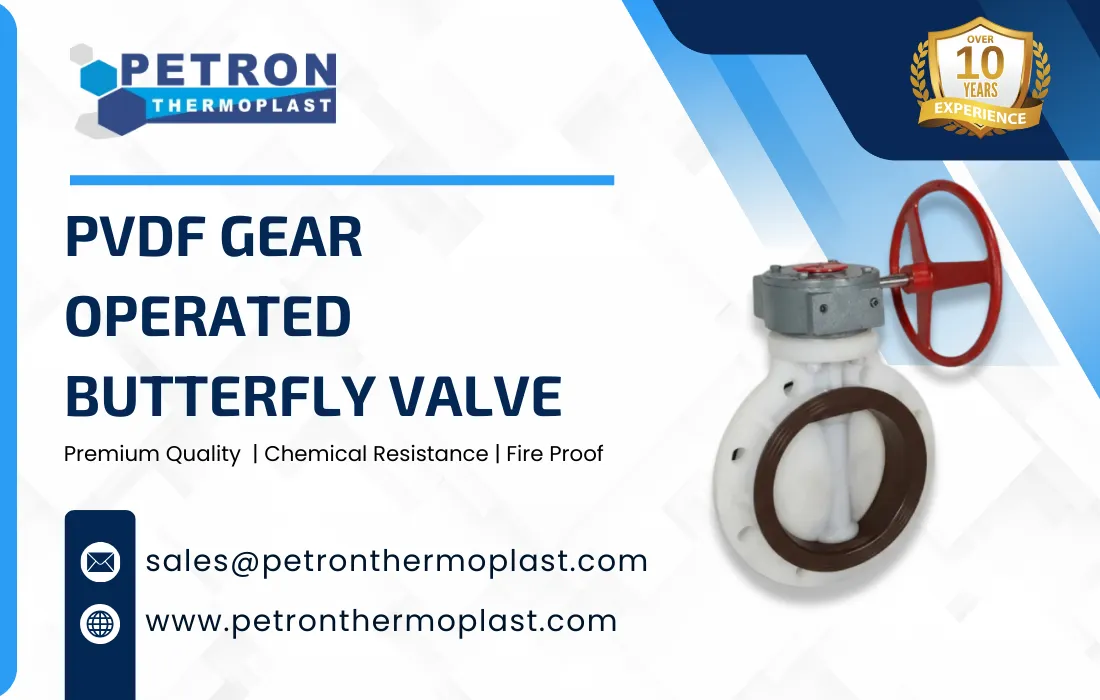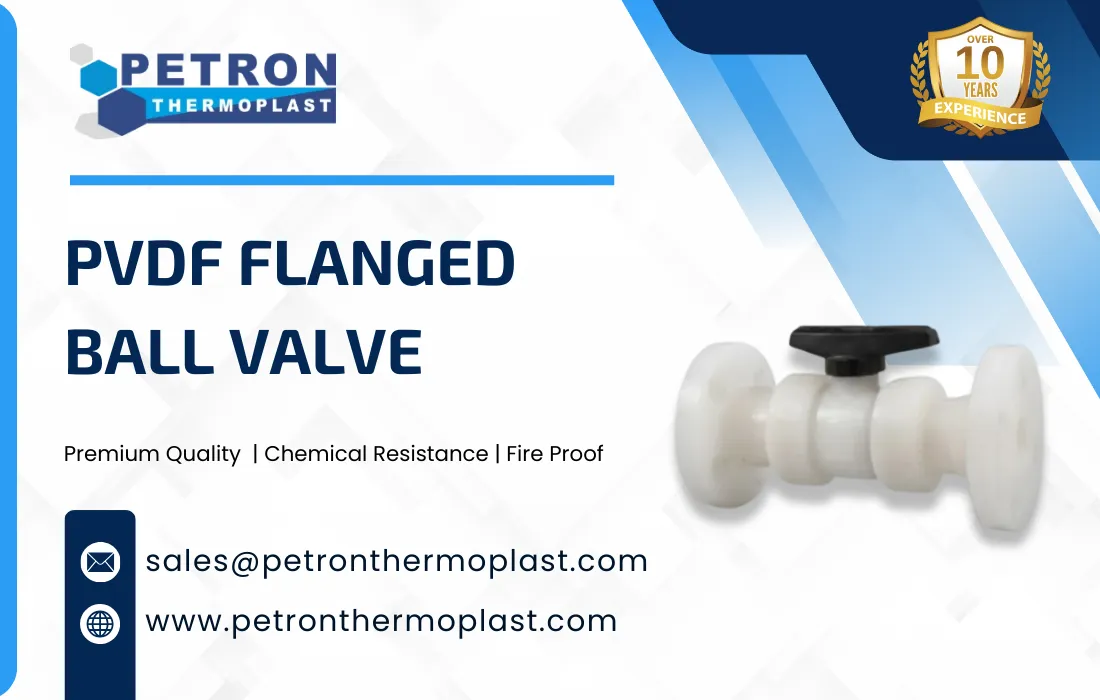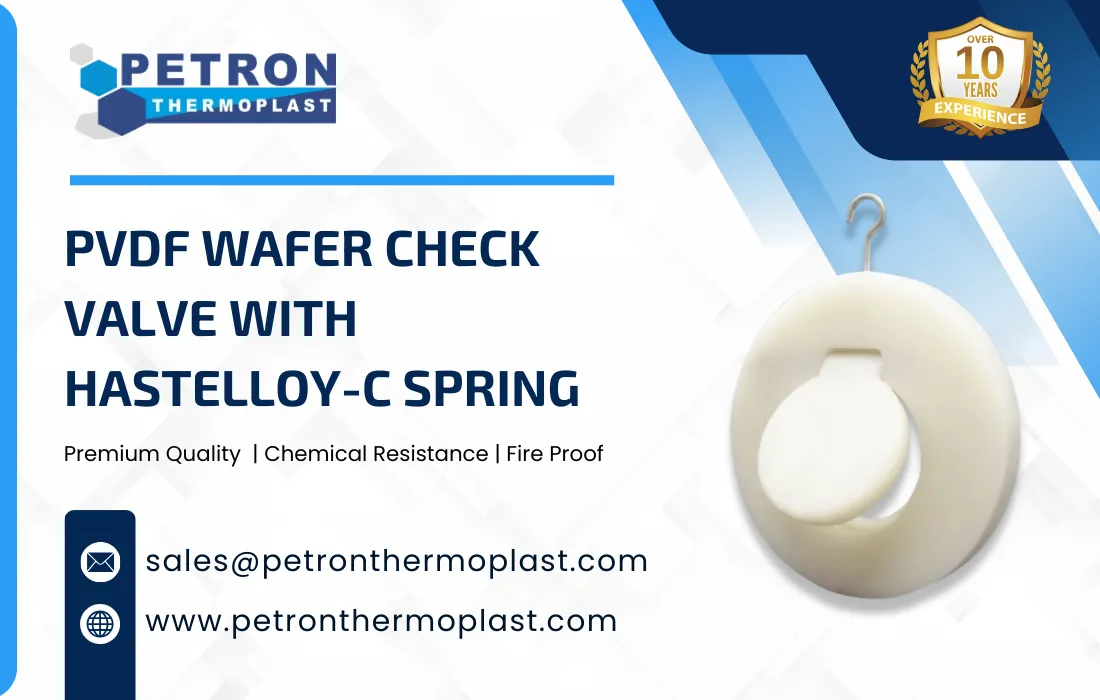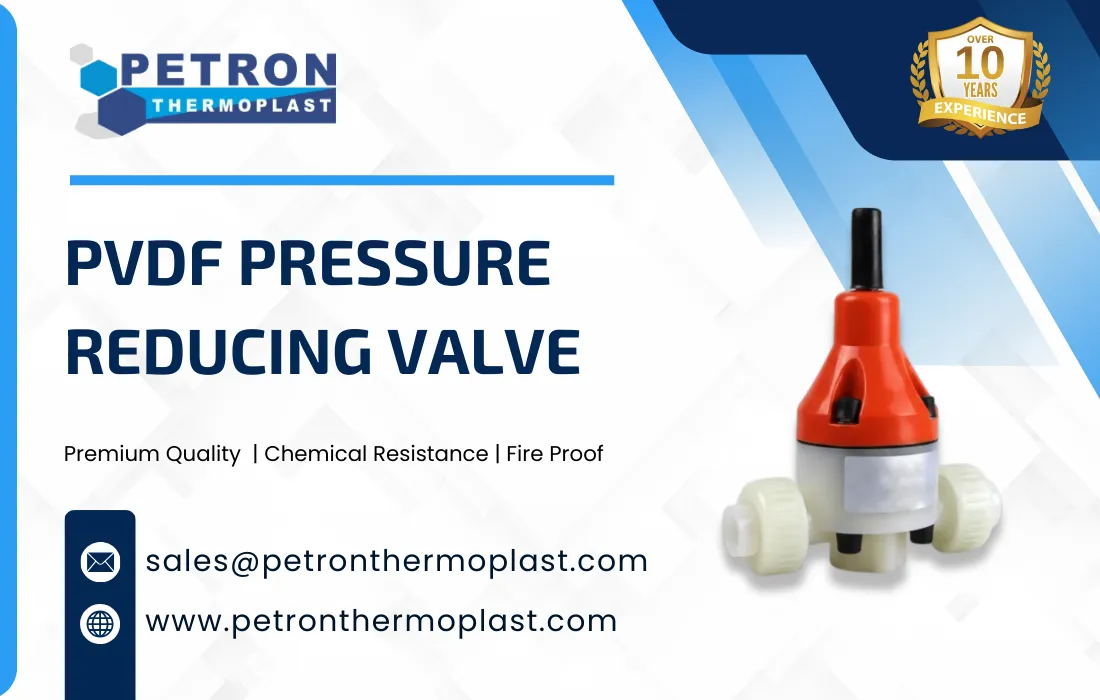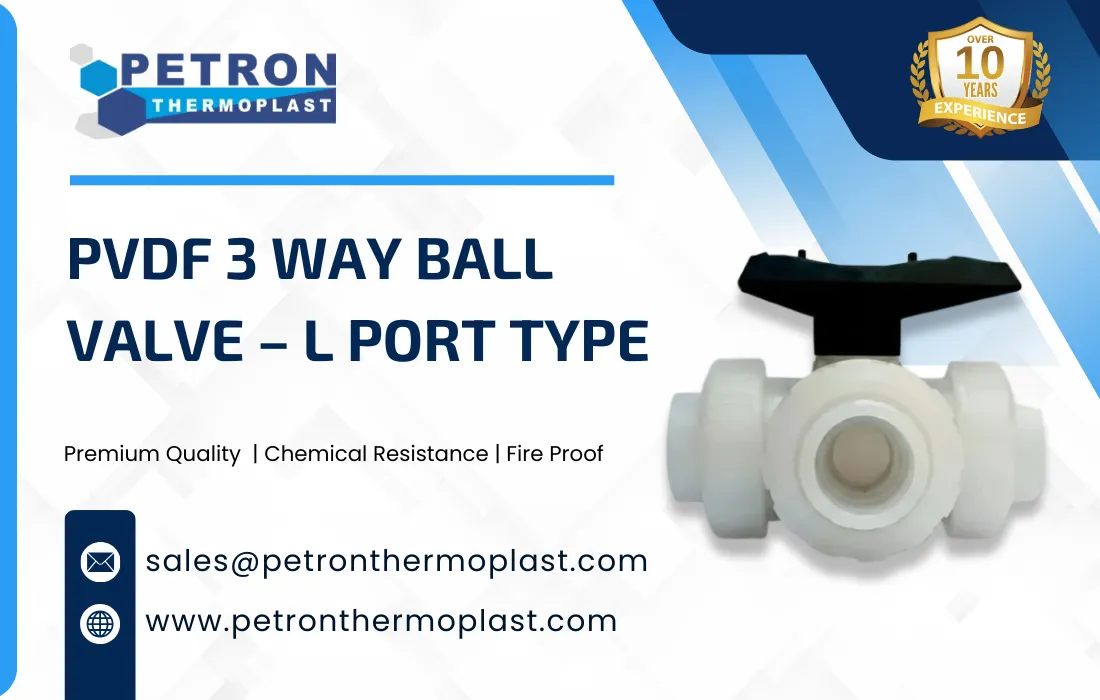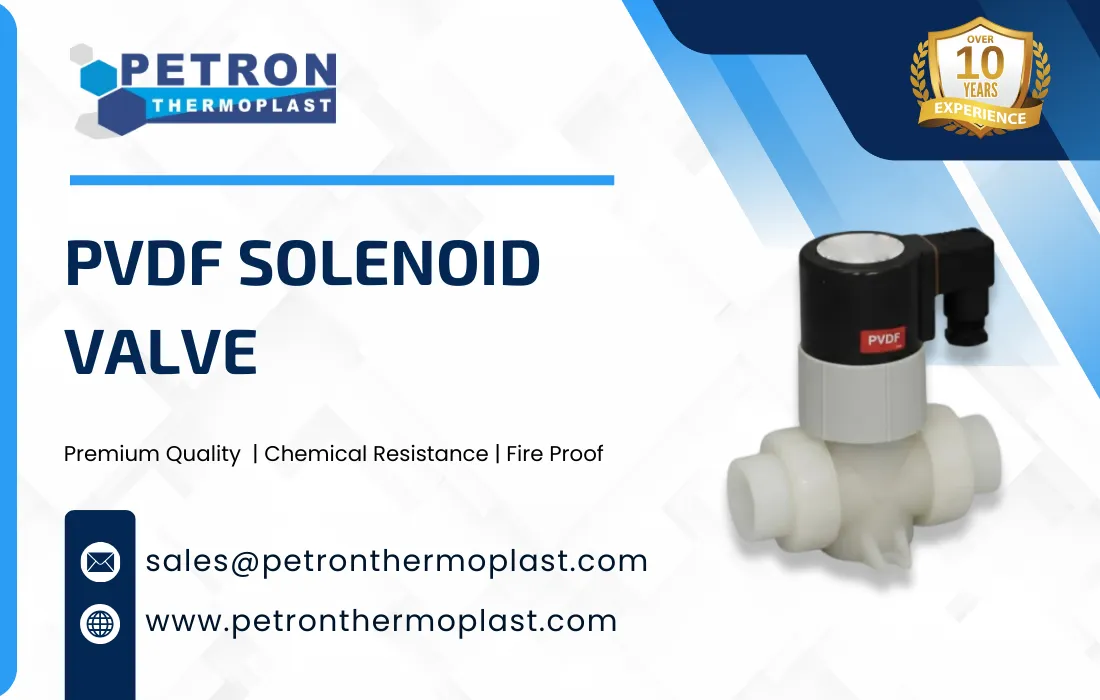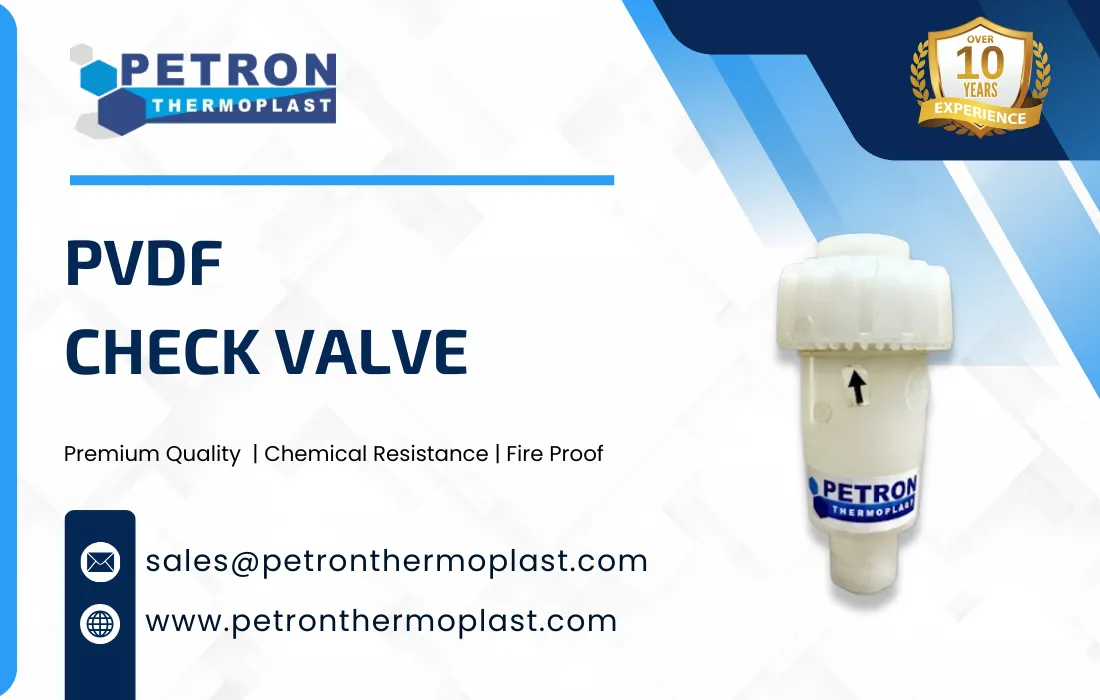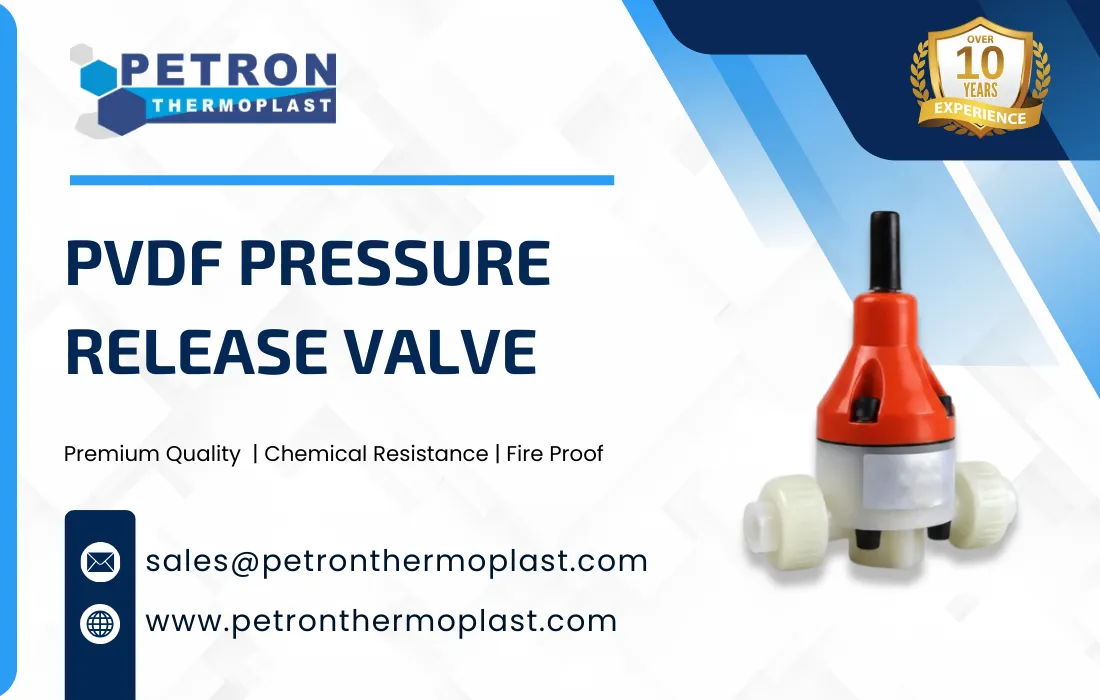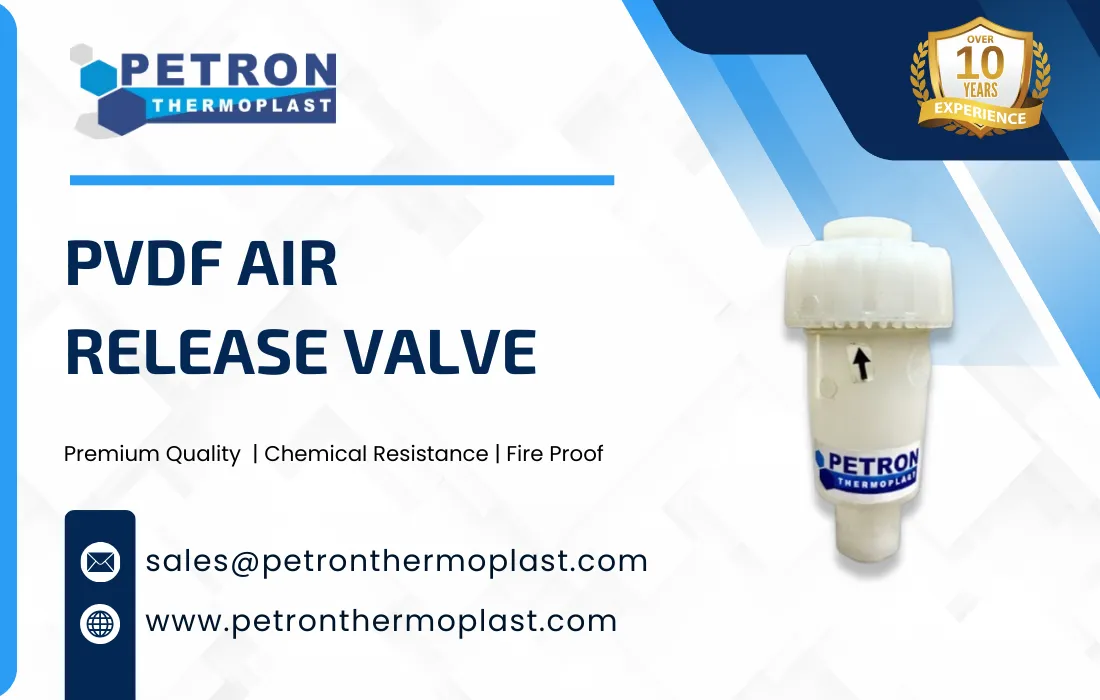
PVDF Union Ball Valve
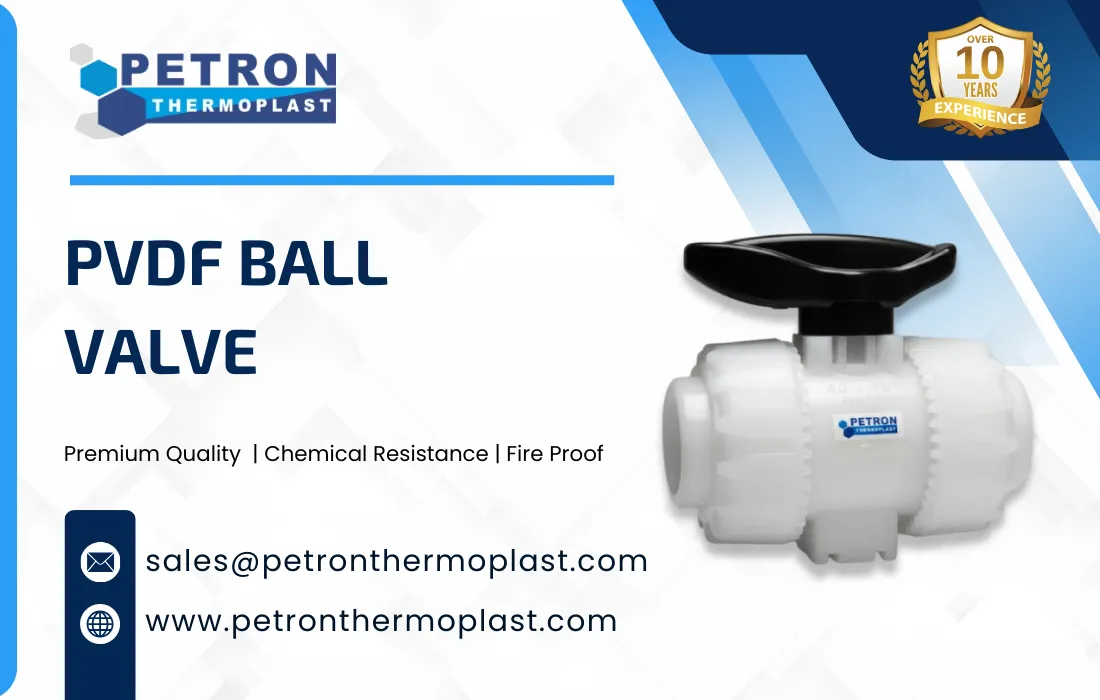
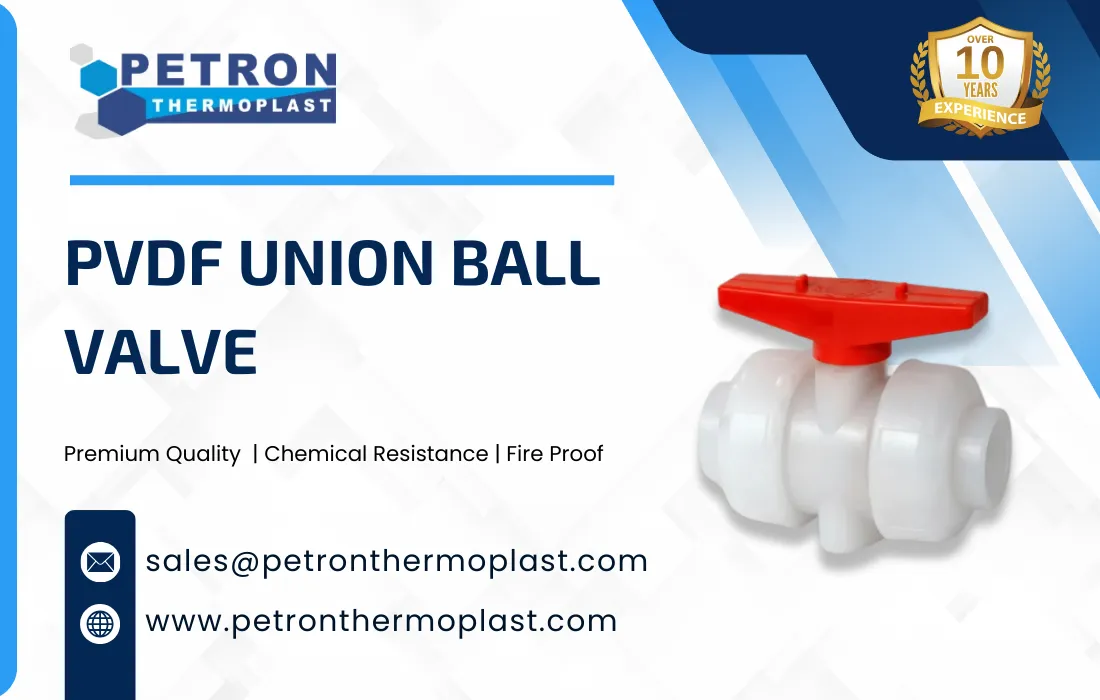
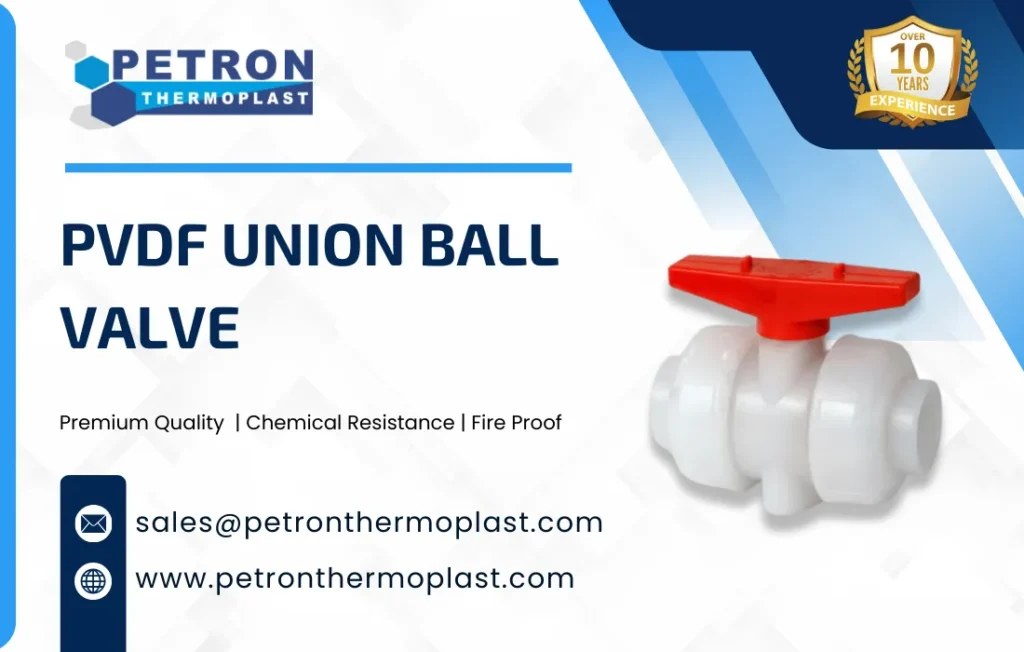
A PVDF Union Ball Valve is a chemical-resistant valve featuring a PVDF body and ball, equipped with union ends for easy installation and maintenance, in which flow is controlled by rotating the ball with a central bore 90° to open or close the passage. A PVDF Union Ball Valve is a type of valve made from Polyvinylidene Fluoride (PVDF) that uses a spherical ball with a central bore to control the flow of liquids or gases. The term “union” refers to the union-type connection ends, which allow the valve to be easily installed or removed from a pipeline without disturbing the adjoining piping.
The PVDF Union Ball Valve is a high-performance, chemically resistant valve designed for demanding industrial applications involving corrosive fluids. This union-type ball valve offers superior durability, precision flow control, and easy maintenance. The union design allows quick disassembly for cleaning or part replacement without disturbing the pipeline system, making it ideal for chemical processing, pharmaceuticals, oil and gas treatment, and other aggressive environments.

- Chemical Resistance
- Low Maintenance Requirement
- Low Thermal Conductivity
- Long Service Life
- Easy Installation
- Corrosion Resistance
PVDF Union Ball Valve Details
*Technical Drawing
*Technical Data
| Parameter / Feature | Specification / Details |
| Material (Body & Ball) | PVDF (Polyvinylidene Fluoride) |
| Seat Material | PTFE (Teflon) |
| Seal / O-Ring Material | EPDM / FKM (Viton) |
| Size Range | ½” to 4” (DN15 to DN100) |
| Connection Type | True Union (Socket, Threaded, Flanged) |
| Pressure Rating | PN10 (≈10 bar / 150 PSI) |
| Temperature Range | -20°C to +120°C (up to ~150°C in specific designs) |
| Operation Type | Manual (lever handle), optional pneumatic/electric actuator |
| Standards | ANSI, DIN, JIS, ISO |
| Flow Control | Quarter-turn (90° rotation) |
| Port Type | Full bore / full port |
| End Connections | BSP, NPT, Socket weld, Flanged |
| Leakage Class | Bubble-tight shutoff |
| — | — |
| Design Type | True union (removable ends for easy maintenance) |
| Structure | Three-piece body (central valve + two union ends) |
| Ball Design | Precision-machined floating ball |
| Handle Type | Ergonomic lever (easy grip, low torque) |
| Weight | Lightweight compared to metal valves |
| Surface Finish | Smooth, non-stick, corrosion-resistant |
| Color | Typically natural white / off-white or grey |
| Sealing System | Double O-ring sealing for leak-proof performance |
| Installation | Easy installation and removal without pipeline cutting |
| Maintenance | Quick dismantling and replacement of internal parts |
| Flow Path | Straight-through (minimal pressure drop) |
Material: Manufactured from virgin PVDF for exceptional chemical resistance and thermal stability.
Union Design: Facilitates easy installation, removal, and maintenance without cutting the pipeline.
Leak-Proof Performance: Equipped with high-quality seals (EPDM or FPM) to ensure a secure, leak-free operation.
Corrosion Resistance: Inert to most acids, bases, and aggressive chemicals.
Temperature Tolerance: Excellent performance in high-temperature environments.
Smooth Operation: Quarter-turn operation ensures smooth and reliable flow control.
Low Maintenance: Self-lubricating ball design for extended service life and minimal wear.
| Valve Size (inch/mm) | Max Pressure @ 20°C (psi/bar) | Max Pressure @ 60°C (psi/bar) | Max Pressure @ 100°C (psi/bar) | Max Pressure @ 140°C (psi/bar) |
| ½” (15 mm) | 232 psi / 16 bar | 174 psi / 12 bar | 145 psi / 10 bar | 116 psi / 8 bar |
| ¾” (20 mm) | 232 psi / 16 bar | 174 psi / 12 bar | 145 psi / 10 bar | 116 psi / 8 bar |
| 1″ (25 mm) | 232 psi / 16 bar | 174 psi / 12 bar | 145 psi / 10 bar | 116 psi / 8 bar |
| 1½” (40 mm) | 203 psi / 14 bar | 145 psi / 10 bar | 116 psi / 8 bar | 87 psi / 6 bar |
| 2″ (50 mm) | 174 psi / 12 bar | 116 psi / 8 bar | 87 psi / 6 bar | 58 psi / 4 bar |
| 3″ (80 mm) | 145 psi / 10 bar | 116 psi / 8 bar | 87 psi / 6 bar | 58 psi / 4 bar |
| 4″ (100 mm) | 116 psi / 8 bar | 87 psi / 6 bar | 58 psi / 4 bar | 29 psi / 2 bar |

Custom Product Manufacturing Available
If you are searching for customized product designs that meet your requirements, don’t worry. Petron Thermoplast also offers custom product manufacturing services to meet the unique needs of various industries. Work with our expert engineers to create custom designs suited for your application.
Benefits of Using PVDF Union Ball Valve
1. Excellent Chemical Resistance
- PVDF material is highly resistant to strong acids, bases, and solvents.
- Ideal for corrosive fluids where metals or standard plastics would degrade.
2. High Purity & Low Contamination
- PVDF is non-toxic and has low leaching properties, making it suitable for ultra-pure chemical, pharmaceutical, and semiconductor processes.
- The smooth internal surface reduces particle buildup, preventing contamination.
3. Durability & Mechanical Strength
- Stronger than many other thermoplastics, offering high impact resistance.
- Withstands higher pressures and mechanical stresses compared to PVC or PP valves.
4. Easy Installation & Maintenance (Union Design)
- The union type allows the valve to be removed without disturbing the piping system.
- Simplifies cleaning, inspection, or replacement, reducing downtime.
5. Leak-Proof Performance
- The ball design ensures tight shut-off, minimizing leakage.
- Provides reliable control over fluid flow in critical applications.
6. Wide Temperature Range
- It can typically handle temperatures from -40°C to 150°C (-40°F to 302°F), making it suitable for both hot and cold fluids.
7. Lightweight
- PVDF is much lighter than metal valves, which makes handling, installation, and support easier.
8. Cost-Effective
- Long service life and minimal maintenance reduce overall operating costs, especially in corrosive environments.
Types of PVDF Union Ball Valve
1. By Operation Method
- Manual PVDF Ball Valve
- Operated via a lever handle.
- Simple, reliable, and cost-effective.
- Suitable for on/off control in chemical and oil, gas systems.
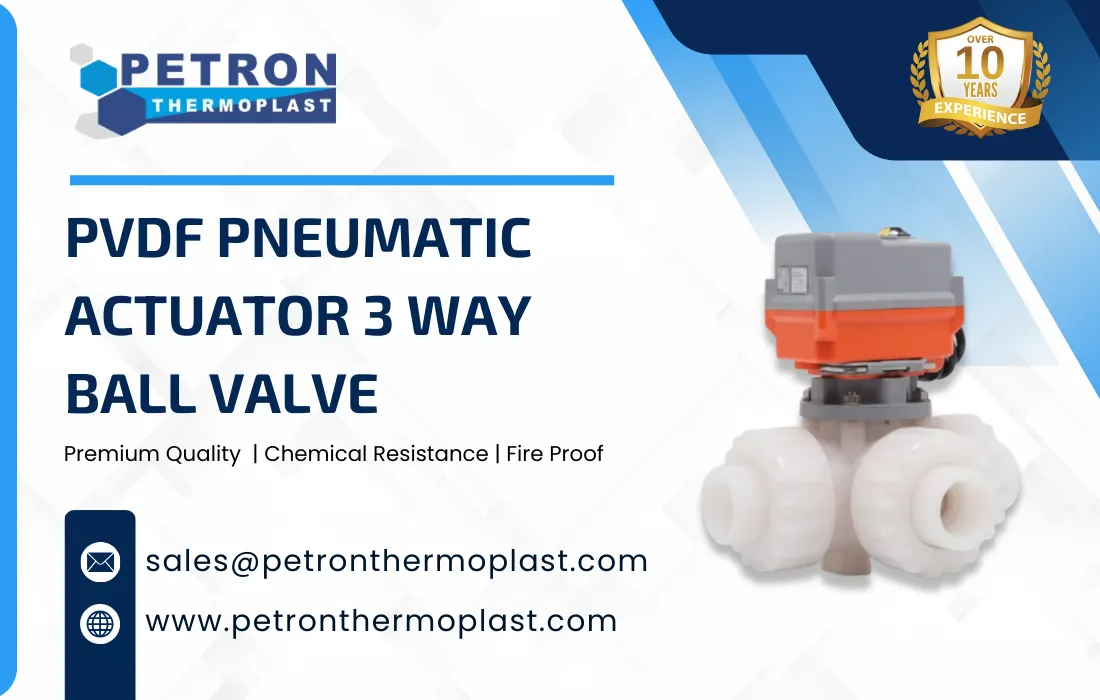
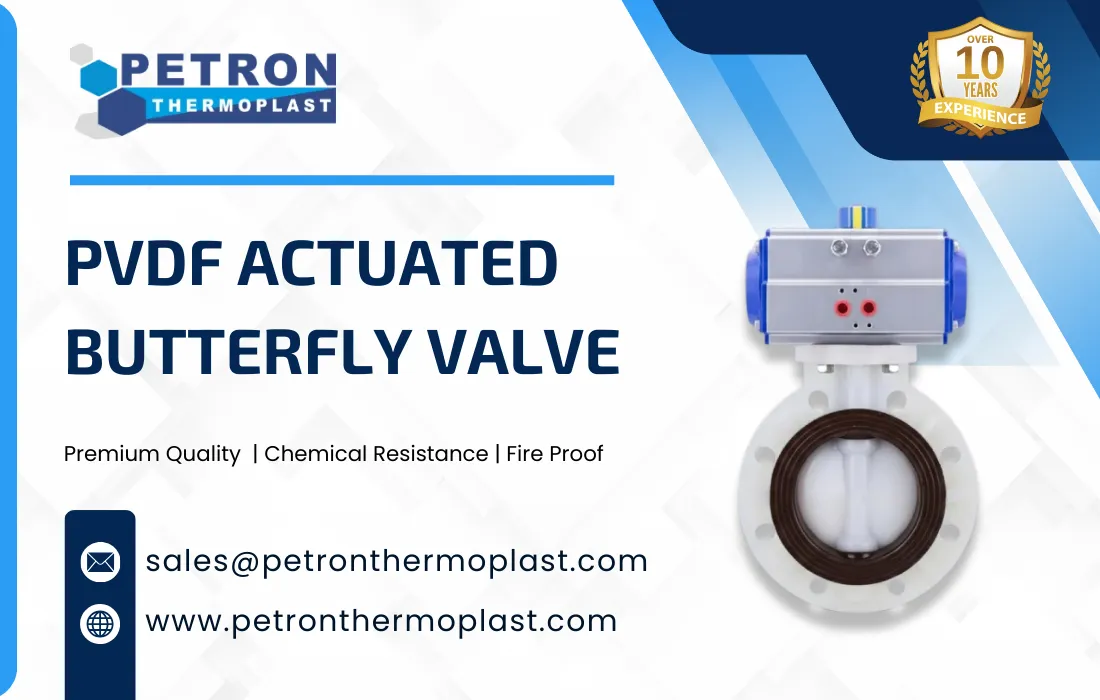
- Actuated PVDF Ball Valve
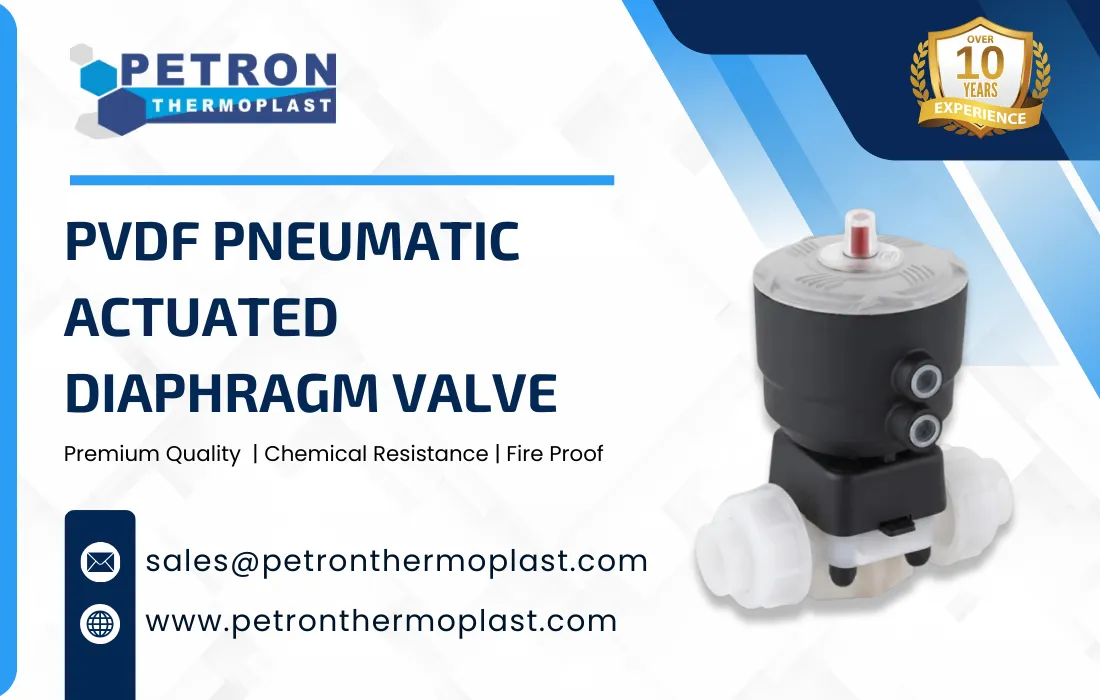
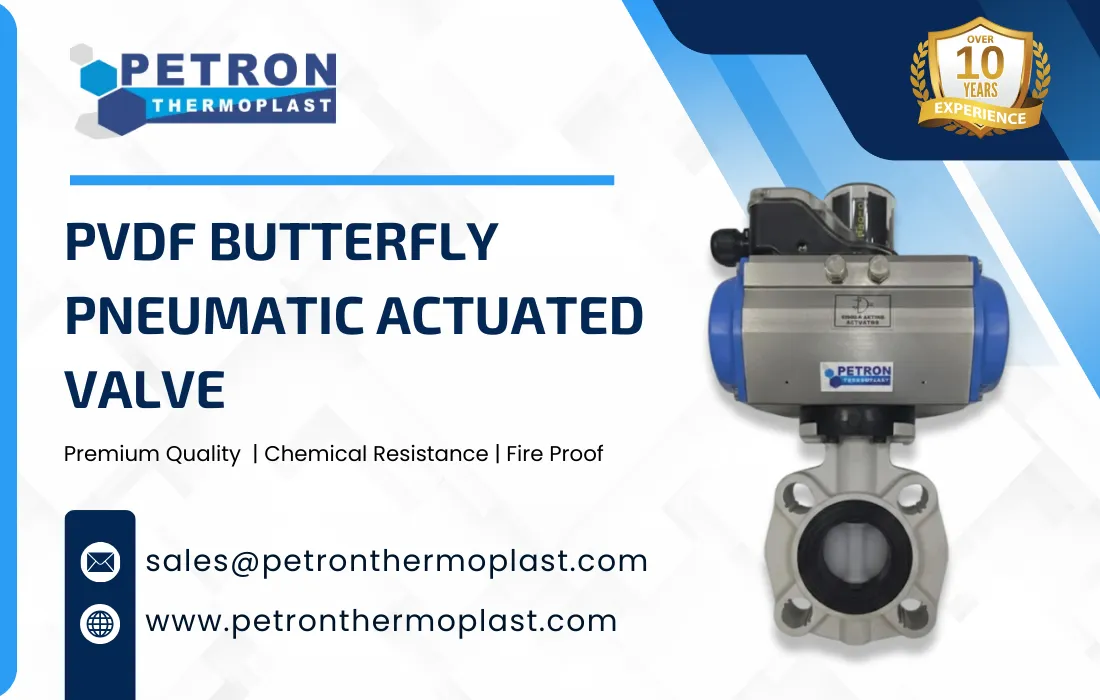
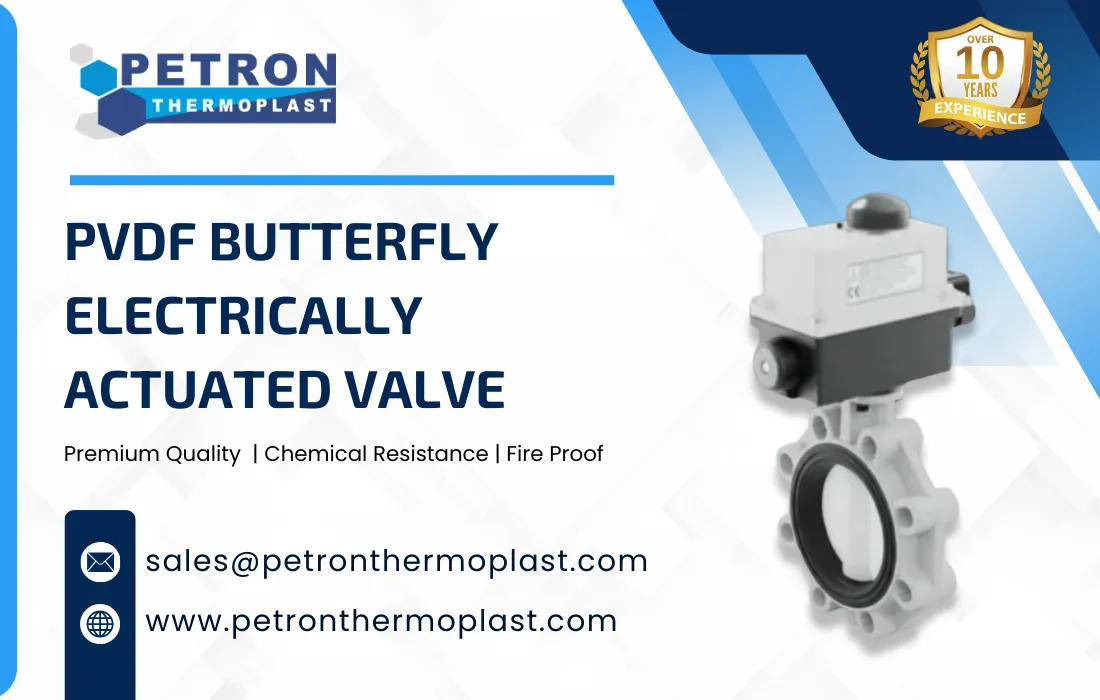
- Equipped with pneumatic, electric, or hydraulic actuators.
- Allows remote or automated control of flow.
- Common in industrial automation or hazardous chemical handling.
3. By Sealing Type
- PTFE Sealed Ball Valve
- Uses PTFE (Teflon) seats and seals.
- Excellent chemical resistance and low friction.
- EPDM/FKM Sealed Ball Valve
- Provides better temperature or mechanical resistance.
- Selected based on fluid type and operating conditions.
2. By Connection Type (Union Design)
- Threaded Union Ball Valve
- End connections are threaded (e.g., BSP or NPT).
- Easy to install and remove for maintenance.
- Socket Fusion Union Ball Valve
- Ends are designed for fusion welding with PVDF pipes.
- Provides a leak-proof, permanent connection.
- Flanged Union Ball Valve
- Flanged ends with bolts for connection.
- Ideal for larger diameter pipelines or high-pressure systems.
4. By Port Configuration
- Full Bore (Full Port) Ball Valve
- The ball opening equals the pipe diameter.
- Minimal pressure drop and good for pipelines requiring pigging or clean flow.
- Reduced Bore (Standard Port) Ball Valve
- Slightly smaller opening than the pipe diameter.
- Less expensive and suitable for general flow control.
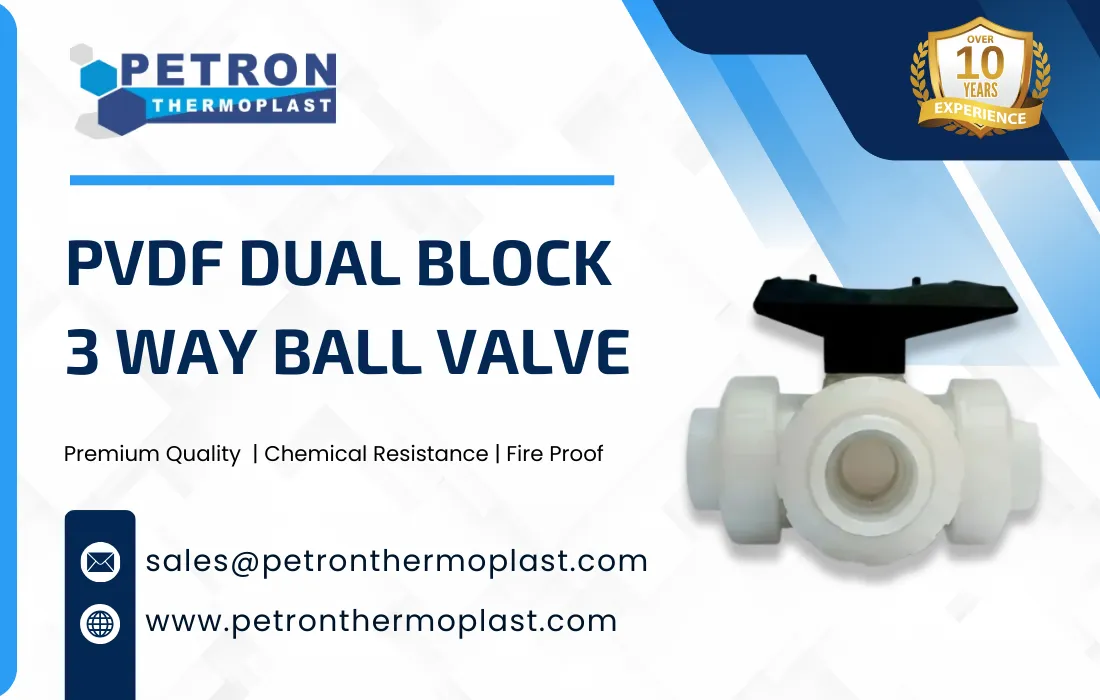
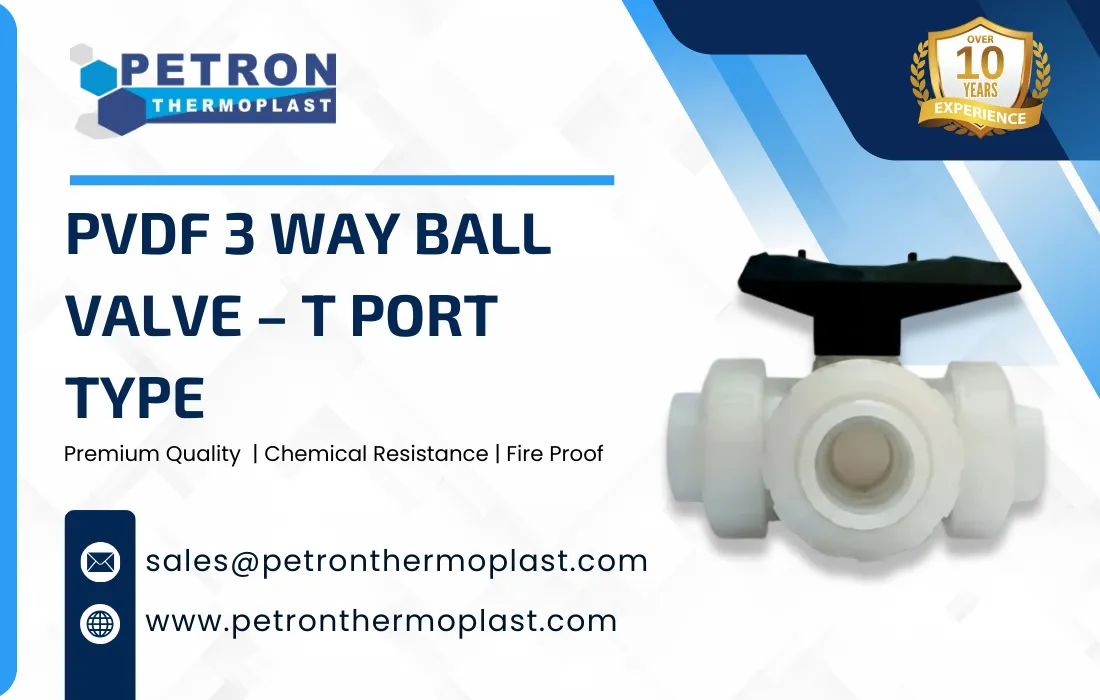
- Three-Way Ball Valve
- Allows flow to be diverted or mixed between two outlets.
- Useful for process routing in chemical or water systems.
Applications of PVDF Union Ball Valve
Process Industry
High Purity Applications
Electronic Industry
Electrical Industry
Semi-conductors Industry
Pharmaceutical Industry
Solar power panels
Sugar Industry
Paper & Pulp Industry
Nuclear Power Industry
Automotive Industry
DI water plants
Why Choose Petron Thermoplast?
At Petron Thermoplast, PVDF union ball valves have become indispensable in chemical manufacturing, semiconductor fabrication, pharmaceutical production, and oil and gas treatment facilities, where purity, reliability, and longevity are critical.
Chemical Compatibility
Ensure PVDF is resistant to your specific media concentration and temperature.
Seal Material
Choose FKM or PTFE seats based on your solvent or acid profile.
Connection Style
Select Socket Fusion, Threaded, or Flanged to match existing.
Actuation Needs
Determine if manual levers or automated electric/pneumatic actuators are required for safety.