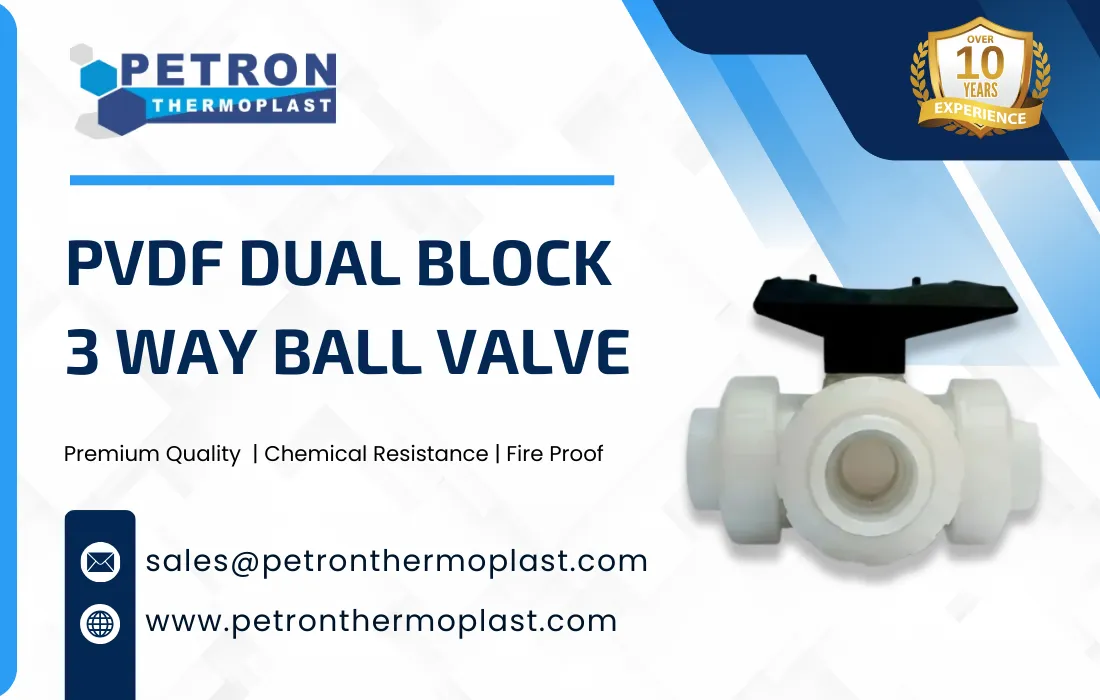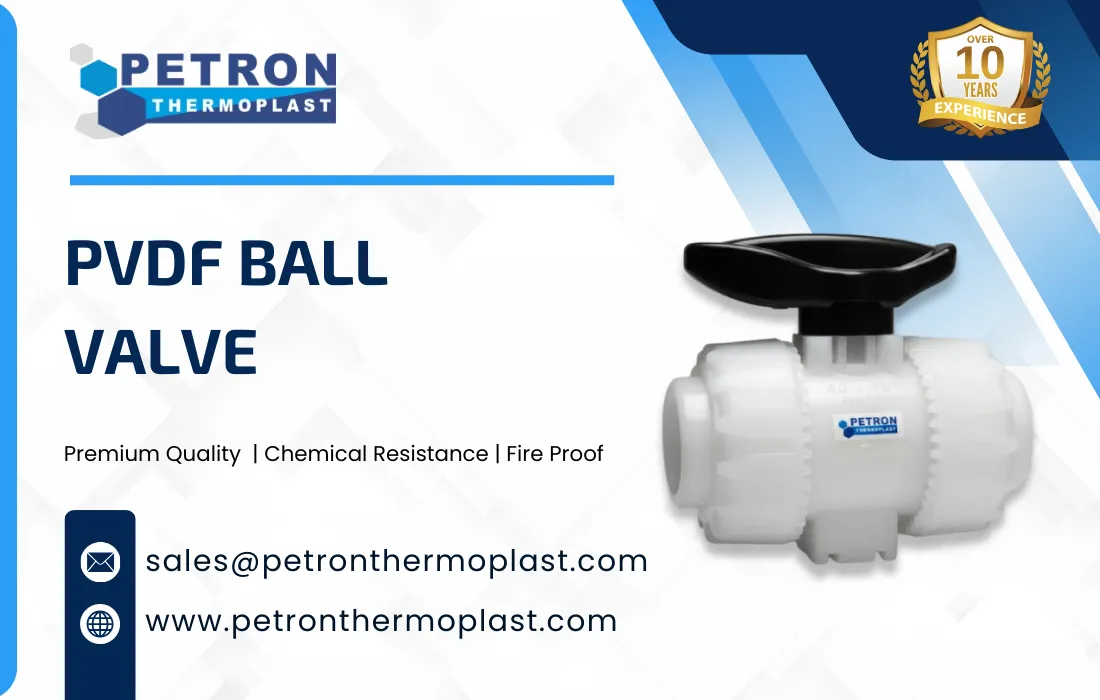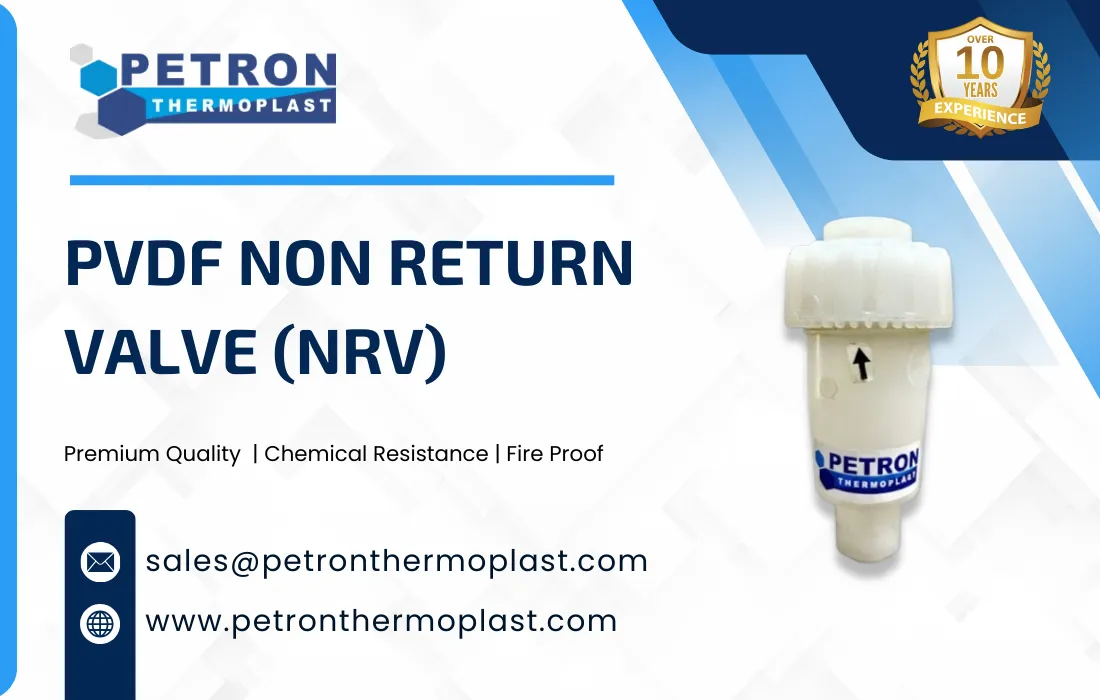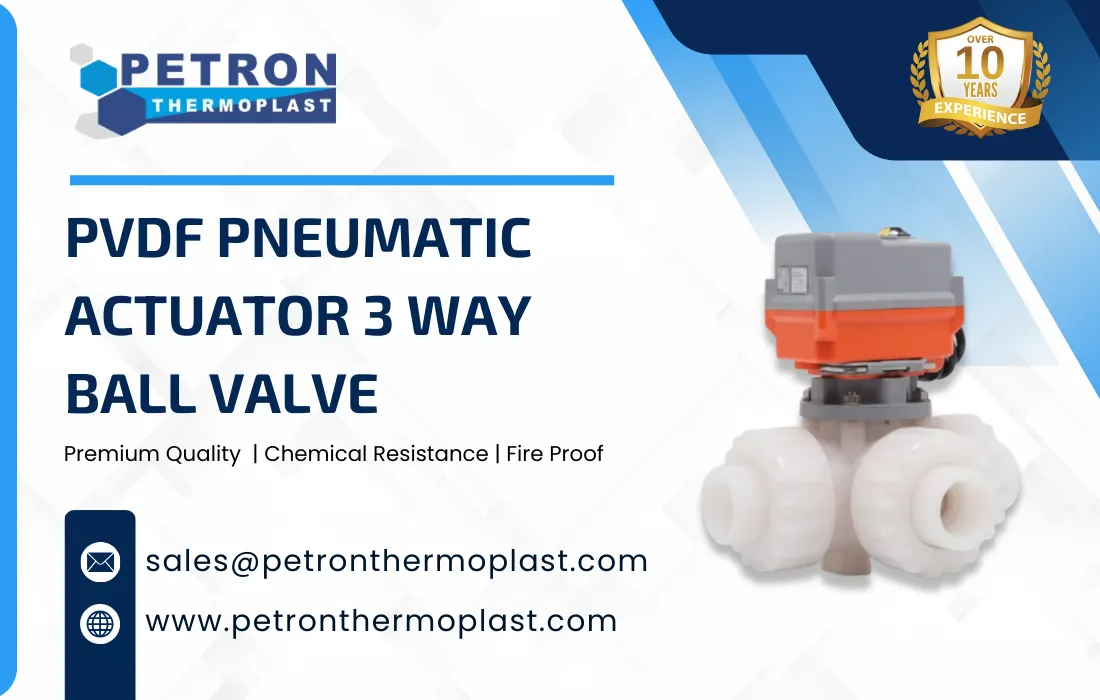
PVDF Diaphragm Valve
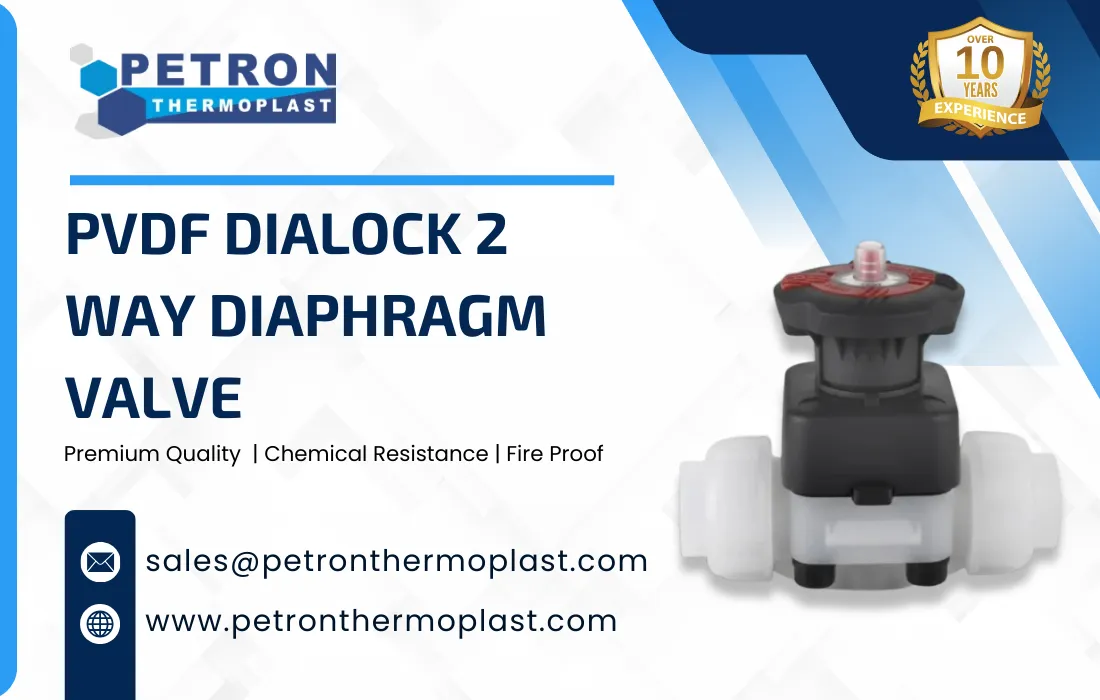
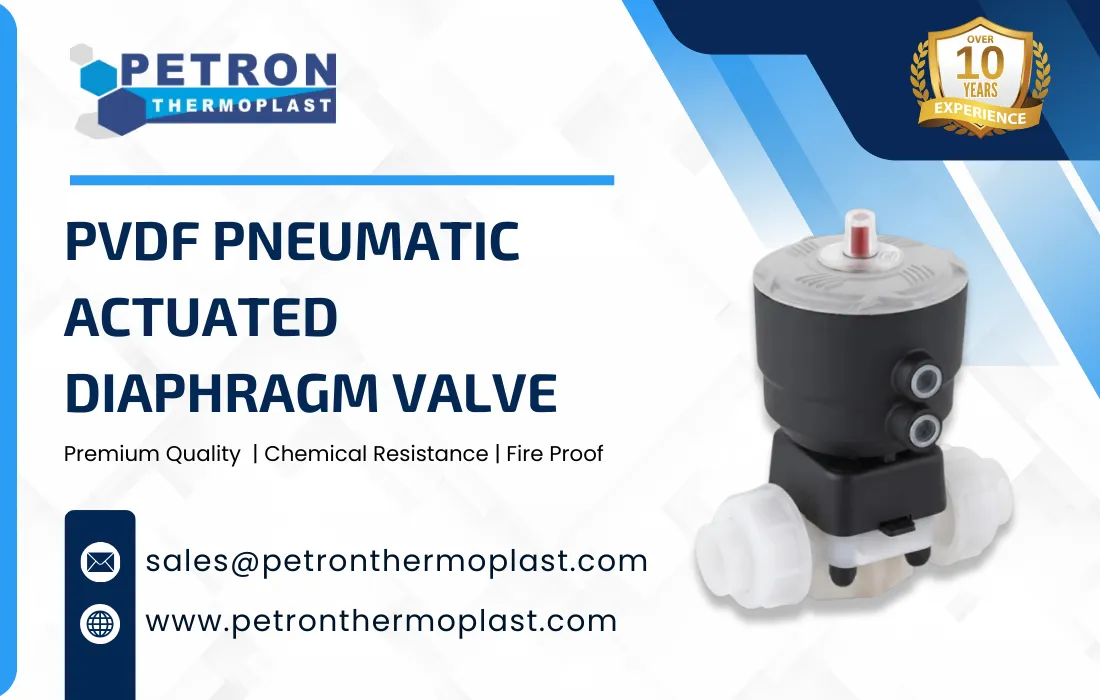
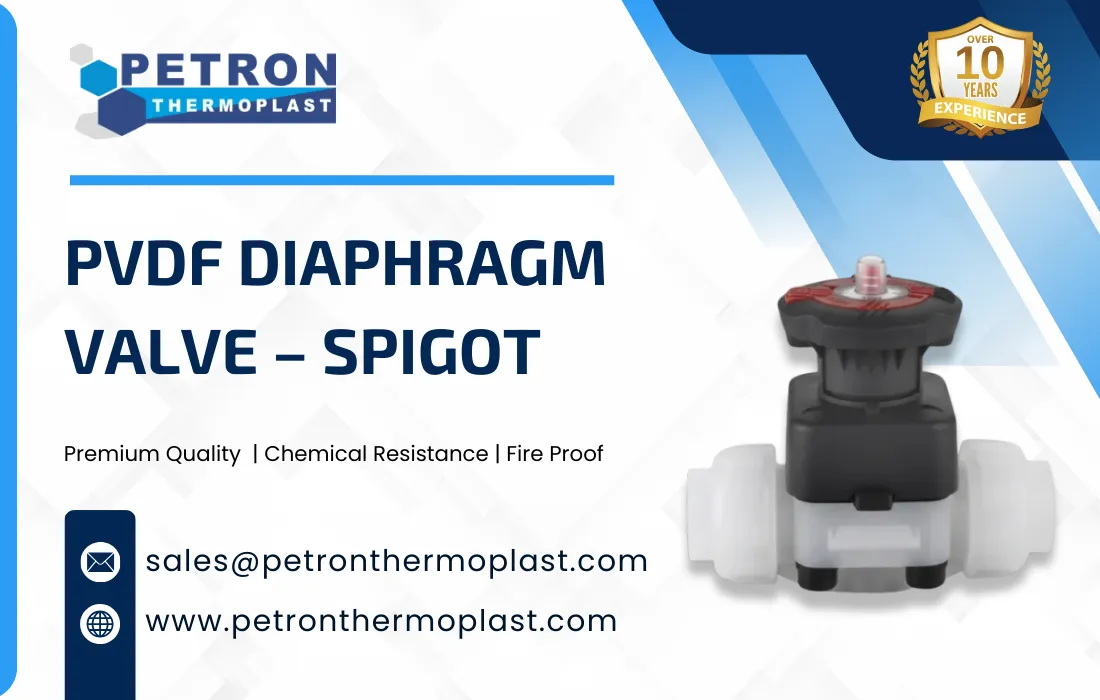
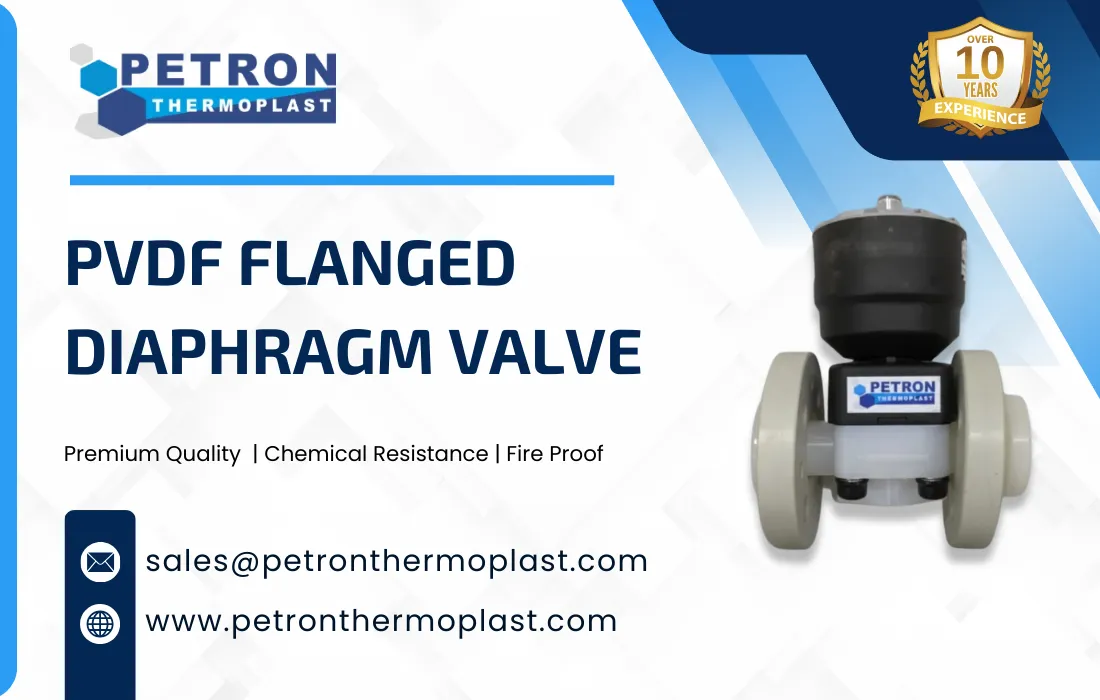
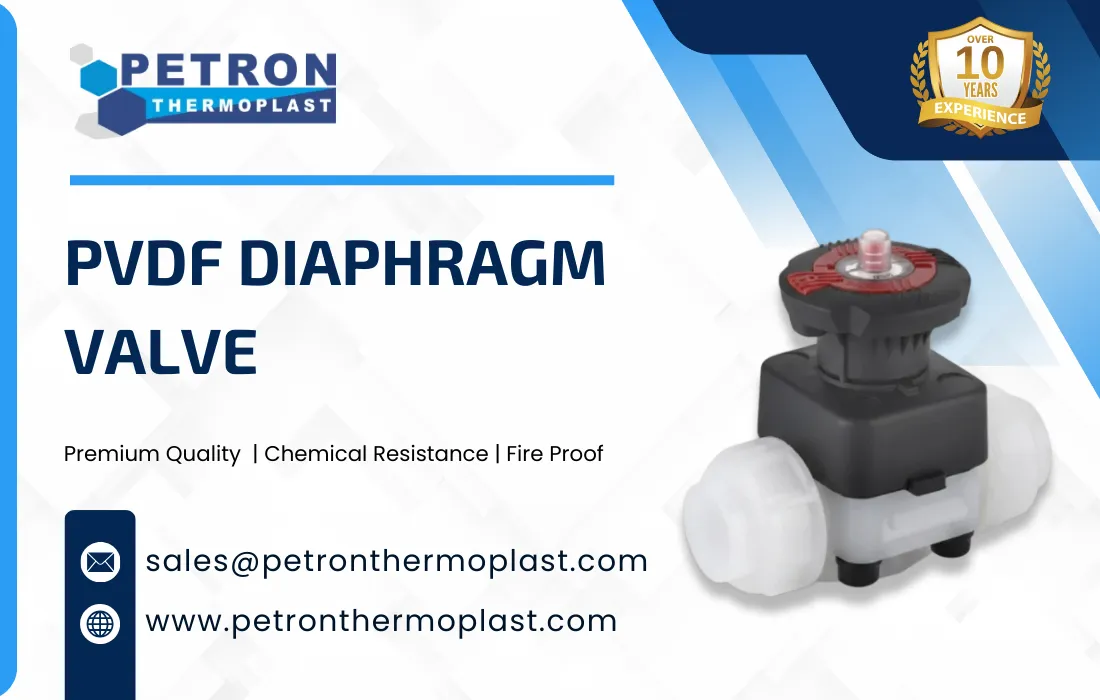
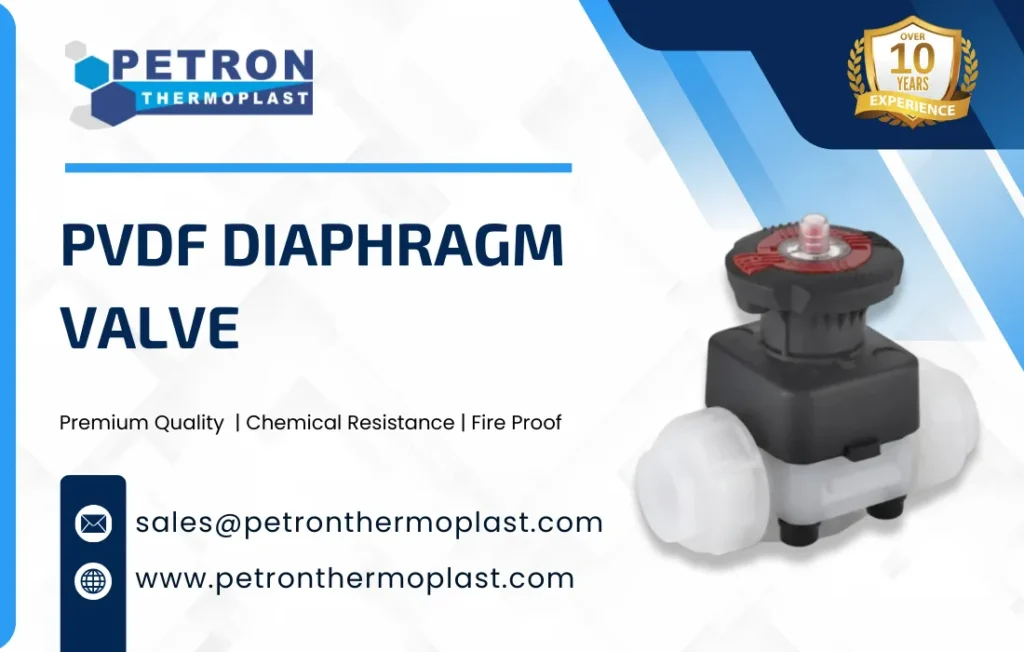
A PVDF Diaphragm Valve is a type of valve where a flexible diaphragm made of PVDF (Polyvinylidene Fluoride) is pressed against a valve seat to control, start, or stop fluid flow. A PVDF Diaphragm Valve is a chemically resistant valve that uses a PVDF diaphragm to reliably start, stop, or regulate fluid flow in corrosive or high-purity systems. The valve body and diaphragm are made from PVDF, providing excellent chemical resistance against acids, bases, and solvents. The flow is controlled by moving the diaphragm down to seal against the seat (closing) or lifting it (opening). Design is often used in corrosive or high-purity fluid systems because the fluid only contacts PVDF and the diaphragm, minimizing contamination.
The PVDF Diaphragm Valve is specifically engineered for controlling and throttling corrosive fluids in demanding industrial applications. Constructed from Polyvinylidene Fluoride (PVDF), this valve offers exceptional chemical resistance, purity, and strength. It is ideal for industries like chemical processing, water treatment, pharmaceuticals, and semiconductor manufacturing, where high performance and resistance to aggressive media are critical. Its leak-proof design, combined with a flexible diaphragm, ensures precise flow control with minimal maintenance.

- Chemical Resistance
- Low Maintenance Requirement
- Low Thermal Conductivity
- Long Service Life
- Easy Installation
- Corrosion Resistance
PVDF Diaphragm Valve Details

d: Outer pipe diameter (mm).
DN: Nominal diameter (mm).
PN: Pressure rating (bar).
H/H1: Overall height and actuator height.
Z: Total length/face-to-face dimension.
| d | DN | Seal Type | PN | B1 | E | H | H1 | Z |
| 20 | 15 | FKM/PTFE | 10 | 25 | 41 | 128 | 80 | 101 |
| 25 | 20 | FKM/PTFE | 10 | 30 | 50 | 150 | 80 | 119 |
| 32 | 25 | FKM/PTFE | 10 | 33 | 58 | 163 | 80 | 127 |
| 40 | 32 | FKM/PTFE | 10 | 30 | 72 | 184 | 80 | 145 |
| 50 | 40 | FKM/PTFE | 10 | 35 | 79 | 210 | 120 | 165 |
| 63 | 50 | FKM/PTFE | 10 | 46 | 98 | 248 | 120 | 195 |
| Parameter / Feature | Specification / Details |
| Body Material | PVDF (Polyvinylidene Fluoride) |
| Diaphragm Material | EPDM / FKM (Viton) / PTFE / PFA |
| Size Range | ½” to 6” (DN15 to DN150), up to DN300 |
| Pressure Rating | PN10 (≈10 bar / 150 PSI) |
| Temperature Range | -20°C to +120°C (depends on diaphragm material) |
| Connection Type | Flanged, Threaded, Socket, Spigot, True Union |
| Operation Type | Manual (handwheel) / Pneumatic / Electric |
| Flow Control | Linear throttling and on-off control |
| Standards | DIN, ANSI, JIS, ISO |
| Actuation Modes | Normally Open (NO), Normally Closed (NC), Double Acting |
| Control Pressure (Pneumatic) | Up to ~6–7 bar |
| Media Compatibility | Corrosive liquids, gases, high-purity fluids |
| — | — |
| Design Type | Weir type or straight-through diaphragm valve |
| Construction | Two-piece body (body + bonnet with diaphragm) |
| Main Components | Body, diaphragm, compressor, stem, actuator |
| Working Principle | Flexible diaphragm presses against seat/weir to stop flow |
| Sealing System | Leak-proof diaphragm isolation (no stem leakage) |
| Flow Path | Smooth flow with minimal turbulence |
| Surface Finish | Non-stick, corrosion-resistant PVDF surface |
| Weight | Lightweight compared to metal valves |
| Maintenance | Easy diaphragm replacement without pipeline removal |
| Isolation Feature | Fluid completely isolated from mechanical parts |
| Operating Mechanism | Screw-lift or actuator-driven diaphragm movement |
Excellent Corrosion Resistance: Ideal for handling aggressive chemicals, acids, and alkalis.
Leak-Proof Operation: Diaphragm design ensures tight shutoff and prevents media contamination.
High Purity: PVDF material ensures compatibility with high-purity and ultra-pure water systems.
Smooth Flow Control: Designed for throttling and on/off applications with minimal pressure drop.
Isolation of Fluids: Fluids are isolated from the valve body and actuator, enhancing durability.
Manual or Actuated Options: Available with handwheel or pneumatic/electric actuators.
Maintenance-Friendly Design: Easy to disassemble and service without removing from pipeline.
| Valve Size (inch / mm) | Max Operating Pressure (psi/bar) | Temperature Range (°C / °F) | Notes |
| ½” – 1″ (15–25 mm) | 145 psi / 10 bar | 0–120°C / 32–248°F | Standard PVDF diaphragm |
| 1½” – 2″ (40–50 mm) | 130 psi / 9 bar | 0–120°C / 32–248°F | Slightly lower pressure at larger sizes |
| 2½” – 3″ (65–80 mm) | 120 psi / 8 bar | 0–120°C / 32–248°F | Consult manufacturer for high-pressure options |
| 4″ – 6″ (100–150 mm) | 100 psi / 6.9 bar | 0–120°C / 32–248°F | Used in chemical and ultrapure gas lines |
| 8″ (200 mm) | 80 psi / 5.5 bar | 0–120°C / 32–248°F | Large valves have lower pressure ratings |

Custom Product Manufacturing Available
If you are searching for customized product designs that meet your requirements, don’t worry. Petron Thermoplast also offers custom product manufacturing services to meet the unique needs of various industries. Work with our expert engineers to create custom designs suited for your application.
Benefits of Using PVDF Diaphragm Valve
1. Excellent Chemical Resistance
- PVDF is highly resistant to acids, bases, and many aggressive chemicals.
- Ideal for handling corrosive fluids such as hydrochloric acid, sulfuric acid, and strong alkaline solutions.
- Minimizes risk of valve degradation and leakage, extending service life.
2. High Purity and Non-Contamination
- PVDF valves have a smooth, inert surface that does not react with fluids.
- Suitable for pharmaceutical, semiconductor, and food processing industries where contamination must be avoided.
- Ensures product integrity and compliance with strict industry standards.
3. Durability and Long Service Life
- PVDF material is mechanically strong and can withstand high pressures relative to other plastics.
- Resistant to UV, ozone, and hydrolysis, making it suitable for outdoor and wet applications.
4. Flexible and Tight Sealing
- The diaphragm design provides bubble-tight sealing, preventing leakage even with slurries or viscous fluids.
- Can be actuated manually, pneumatically, or electrically for precise flow control.
5. Low Maintenance
- Diaphragm valves have fewer moving parts compared to other valve types.
- PVDF’s resistance to chemical attack reduces wear, corrosion, and maintenance frequency.
6. Wide Temperature Range
- PVDF valves can operate effectively in temperatures from -40°C to around 140°C, making them versatile for various processes.
7. Easy to Install and Adaptable
- Lightweight compared to metal valves, simplifying installation and piping support requirements.
- Available in various sizes, end connections (flanged, threaded, socket), and automation options.
8. Environmentally Safe
- PVDF is non-toxic and compatible with many environmentally sensitive applications.
- Minimal risk of leaching harmful substances into the fluid stream.
Types of PVDF Diaphragm Valve
1. Based on Operation Mode
a) Manual PVDF Diaphragm Valve
- Operated by a handwheel or lever.
- Simple, cost-effective, and easy to maintain.
- Suitable for low-frequency operations or small pipelines.
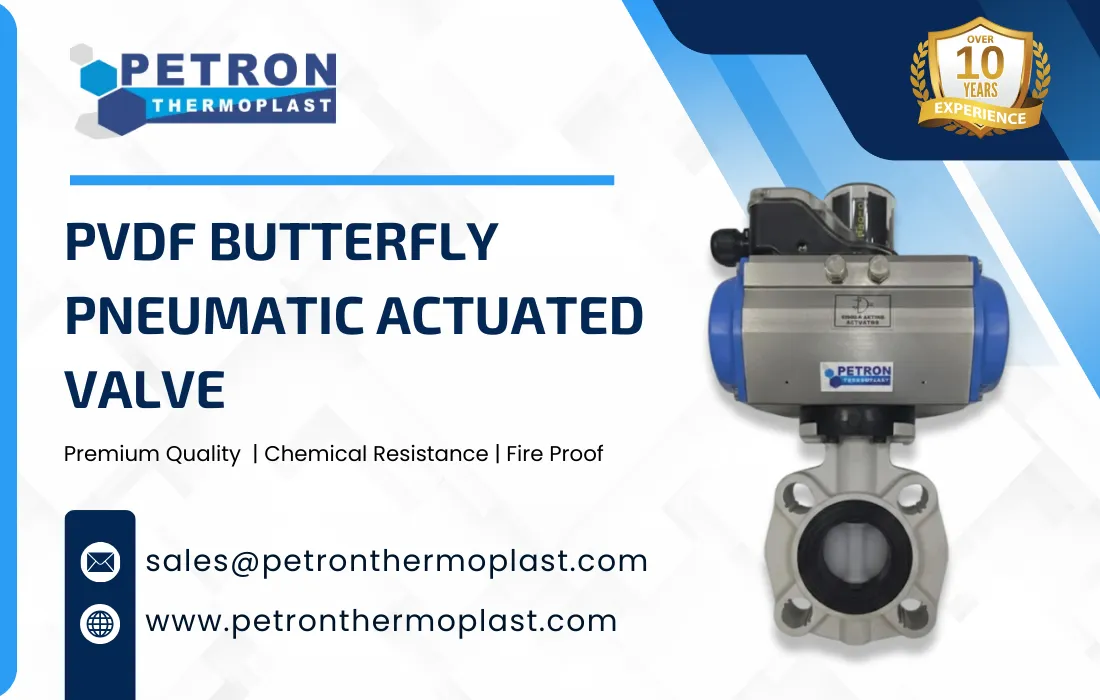
b) Pneumatic (Air-Operated) PVDF Diaphragm Valve
- Actuated by compressed air.
- Provides fast, precise, and remote control.
- Ideal for automated chemical processes and industrial systems.
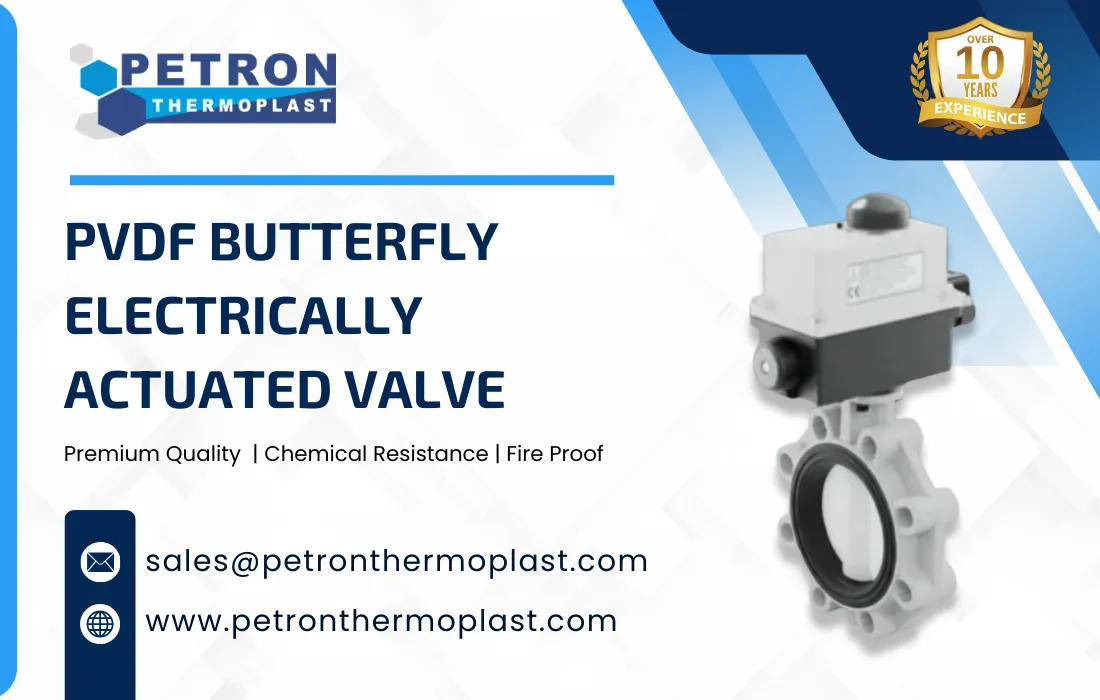
c) Electric Actuated PVDF Diaphragm Valve
- Operated using an electric motor.
- Suitable for automated systems where air supply is unavailable or precise flow control is required.
- Can be integrated with process control systems for remote operation.
4. Specialty Types
- Sanitary PVDF Diaphragm Valve – Designed for ultra-pure applications in pharma, biotech, and food.
- High-Temperature PVDF Valve – Enhanced PVDF material or design for higher temperature chemical processes.
- Corrosion-Resistant/Heavy-Duty PVDF Valve – Thicker body and diaphragm for handling abrasive or highly corrosive fluids.
2. Based on Flow Characteristic
a) Straight-Through (Two-Way) PVDF Diaphragm Valve
- Allows fluid to flow in one straight path.
- Used for on/off control or throttling.
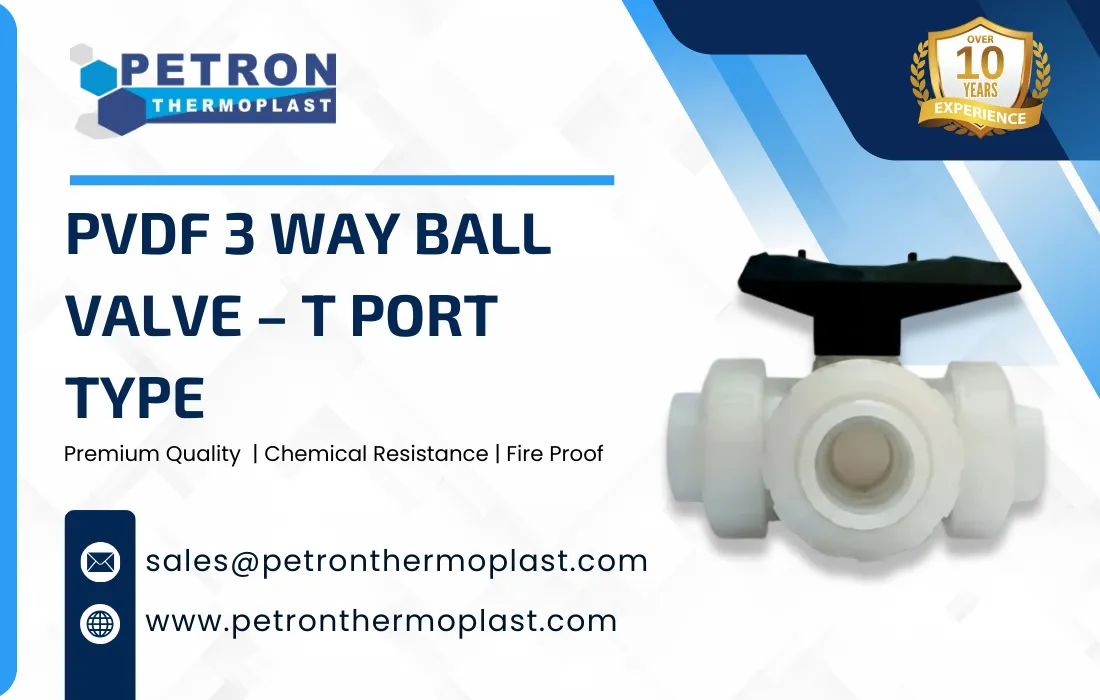
b) Three-Way PVDF Diaphragm Valve
- Has three ports to divert, mix, or split flow.
- Useful in processes that require switching between two pipelines or blending chemicals.
3. Based on End Connections
a) Flanged PVDF Diaphragm Valve
- Flanged ends for bolted connection to pipes.
- Common in larger systems and industrial setups.
b) Threaded PVDF Diaphragm Valve
- Screw-thread connections (usually NPT or BSP).
- Suitable for smaller pipelines and easier installation.
c) Socket-Weld / Fusion-Weld PVDF Diaphragm Valve
- Used for permanent, leak-proof connections in high-purity chemical lines.
- Often applied in semiconductor, pharmaceutical, and laboratory systems.
Applications of PVDF Diaphragm Valve
Process Industry
High Purity Applications
Electronic Industry
Electrical Industry
Semi-conductors Industry
Pharmaceutical Industry
Solar power panels
Sugar Industry
Paper & Pulp Industry
Nuclear Power Industry
Automotive Industry
DI water plants
Why Choose Petron Thermoplast?
A PVDF diaphragm valve in Petron Thermoplast is a practical choice for controlling fluid flow in environments that demand chemical resistance and high purity. It combines the simplicity of diaphragm valve operation with the added durability of PVDF lining, making it ideal for industries dealing with aggressive media. From its clean design to its protective lining, this valve offers a smart and long-lasting solution for many industrial applications.
If you’re looking for durable and chemical-resistant PVDF diaphragm valves, connect with Petron Thermoplast to explore reliable valve solutions built for long-term industrial use.